PCMag found that the Rokid Glasses deliver a sharp monochrome display via waveguide optics and include a 12MP camera for computer vision tasks like text translation and visual descriptions. The device supports flexible AI integration by allowing users to choose between ChatGPT or Qwen models, enabling reliable live captions and voice translations for accessibility and travel. However, the glasses lack in-glass navigation features, forcing users to rely on phone-based directions instead of receiving turn-by-turn guidance directly in their field of view. Additionally, there is a learning curve required to master the touch controls and voice commands effectively before the interface becomes intuitive. These smart glasses fit travelers and accessibility seekers who prioritize translation and captions over comprehensive smartphone replacement, while those needing navigation or seamless ecosystem integration should look elsewhere.
Full review
Waveguide optics deliver a sharp monochrome display
PCMag found that the Rokid Glasses utilize waveguide technology to project information directly into the wearer's field of view without blocking the real world. This approach contrasts sharply with prism-based smart glasses like the XReal One Pro or Rokid Max 2, which are bulkier and function more like wearable monitors. The waveguide system allows for a lightweight design that can be worn safely while walking on the street or sitting in a coffee shop, providing messages and answers without obstructing vision.
PCMag noted that this setup offers a large, sharp image that is reliable enough for regular use, marking it as the most refined waveguide smart glasses tested to date. The field of view measures 23 degrees, which provides sufficient real estate for reading text and viewing notifications without feeling cramped.
Unlike competitors such as the Even Realities G1 or Vuzix Z100, which suffered from inconsistent performance in earlier tests, the Rokid Glasses deliver a polished experience. The waveguide etching is visible when it catches ambient light, but otherwise, the lenses remain flat and clear, maintaining a natural look that does not scream technology to onlookers.
Design mimics regular eyewear with subtle tech cues
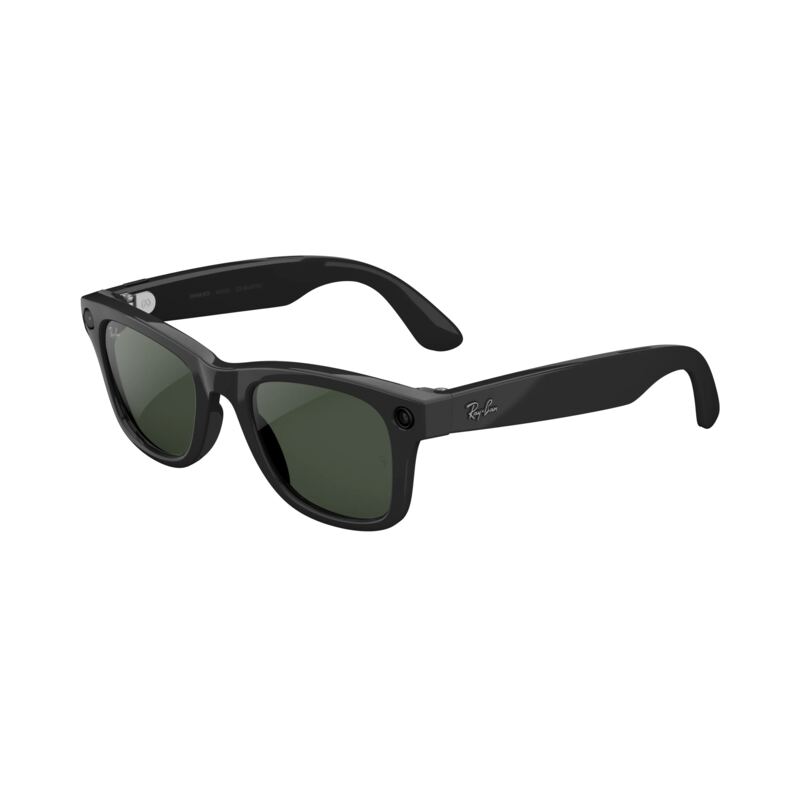
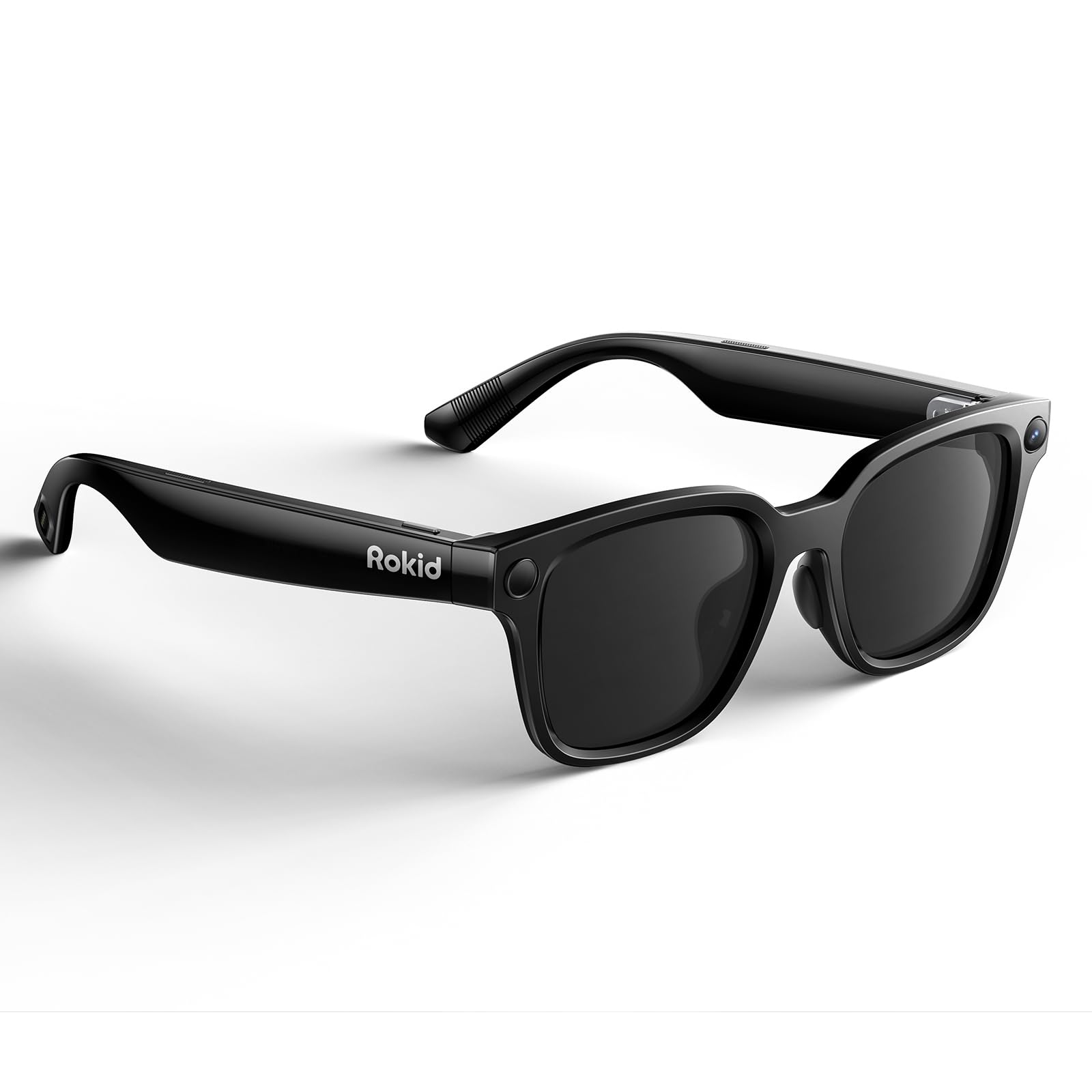
The hardware features simple rectangular frames made of glossy black plastic with slightly thick temples. Spring hinges allow for flexibility, and the only visible branding is a small silver-colored Rokid logo on the outside of each temple. Tiny black speaker grilles sit on the top edge, while pinhole microphones are positioned on both the top and bottom edges to capture voice commands accurately.
All physical controls are concentrated on the right temple. A camera button sits on the top edge near the hinge, and a touch-sensitive control strip is identified by a thin ridge on the outside surface. The magnetic charging connector is located discreetly on the right eartip. Only two clues reveal the glasses' nature: a camera lens in the upper-left corner of the front frame and the waveguide etching in the lenses.
PCMag described the design as looking like regular glasses at first glance, which helps them blend into everyday environments. The integration of speakers and microphones ensures that audio feedback is directional and clear, though users must still rely on voice commands or touch inputs to interact with the system.
Camera enables computer vision and visual translations
A significant advantage over previous waveguide models is the inclusion of a 12MP camera. PCMag highlighted that this hardware enables photo and video capture, as well as advanced computer vision features like text translation and verbal descriptions of surroundings. The camera lens blends into the black plastic frame but becomes apparent upon close inspection.
The device includes an indicator light to alert others when recording is active, addressing privacy concerns common with wearable cameras. This feature allows users to translate foreign text in real-time or have the AI describe objects for visually impaired users, making it a powerful tool for accessibility and travel.
Unlike the Even Realities G1 and Vuzix Z100, which lack cameras entirely, the Rokid Glasses leverage this sensor to provide context-aware assistance. The camera feeds data to the onboard processors, enabling features that go beyond simple notifications into the realm of interactive visual understanding.
AI integration supports ChatGPT and Qwen models
The Rokid Glasses offer flexible AI integration by allowing users to choose between two third-party assistant models: ChatGPT or Qwen. This choice gives users access to different language processing capabilities depending on their preference or specific needs.
PCMag found that this dual-model support enhances the utility of the glasses, particularly for tasks like live captions and voice translations. The AI assistants process audio input from the microphones and display text results in the waveguide display, creating a seamless loop for communication assistance.
The integration is wireless, connecting to a smartphone to handle heavy processing. This setup keeps the glasses lightweight while still providing access to powerful language models that can translate conversations or answer questions on the fly.
Live captions and translations aid accessibility
One of the strongest use cases for the Rokid Glasses is their ability to provide reliable live captions. PCMag noted that this feature makes them particularly valuable for users who are hard of hearing, allowing them to read conversations in real-time.
Voice translations are another key benefit, enabling users to understand foreign languages through translated subtitles displayed directly in their vision. This capability extends beyond simple phrase translation to full conversation support, making travel and international communication more accessible.
For users with poor vision, the glasses can describe surroundings or translate text from signs and menus. PCMag emphasized that these features make the Rokid Glasses a strong tool for accessibility, even if they are not yet a fully seamless mainstream experience.
Navigation limitations require reliance on phones
A notable drawback of the Rokid Glasses is the lack of in-glass navigation features. Users cannot receive turn-by-turn directions directly in their field of view, which limits their utility as a hands-free driving or walking companion.
Instead, users must rely on phone-based directions, looking down at their screen to check routes. This breaks the immersion and convenience that waveguide glasses promise, forcing users to split their attention between the real world and their device.
PCMag listed this absence of navigation as a con, noting that it prevents the glasses from feeling like a comprehensive replacement for smartphone interactions during travel or outdoor activities.
Touch controls demand a learning curve to master
The touch-sensitive control strip on the right temple requires users to learn specific gestures to operate the glasses effectively. PCMag found that there is a bit of a learning curve involved in mastering these inputs, which can be frustrating for new users.
Voice commands provide an alternative, but they also require precise enunciation and awareness of when to activate the microphone. The combination of touch and voice controls means users must invest time to find their preferred interaction method.
Despite this hurdle, PCMag concluded that the glasses are reliable enough for regular use once the user becomes familiar with the interface. The initial friction is a trade-off for the compact form factor and advanced feature set.
Prescription lens inserts add to the cost
Users who require prescription lenses must purchase separate inserts, which adds to the overall expense of the device. PCMag noted that these inserts are expensive, making the total cost of ownership higher than the base price suggests.
The standard lenses are flat and clear, but they do not correct vision issues. This means that anyone needing glasses will have to factor in the additional cost and wait time for custom inserts before fully utilizing the device.
This limitation affects accessibility for a significant portion of the population, as it requires an extra step and financial investment to make the Rokid Glasses usable for daily wear.
Features remain limited compared to mainstream expectations
While the Rokid Glasses are refined, PCMag found that they still fall short of delivering a fully seamless or mainstream experience. The feature set is limited, with no navigation and restricted integration into personal online presence.
The lack of deep ecosystem integration means users cannot easily access their emails, calendar events, or social media feeds directly through the glasses. This limits their utility to specific tasks like translation and captions rather than general information consumption.
PCMag did not wholeheartedly recommend any waveguide glasses yet, citing the learning curve and feature limitations as barriers to widespread adoption. The Rokid Glasses are a strong step forward but still require significant software development to reach their full potential.
Strengths
- +Provides accurate live captions and voice translations for accessibility and travel use cases.
- +Includes a built-in camera capable of capturing photos and video with an indicator light to alert others when recording.
- +Offers flexible AI integration by supporting both ChatGPT and Qwen assistant models.
Watch-outs
- −Lacks navigation features, requiring users to rely on phone-based directions rather than in-glass guidance.
- −Requires a learning curve to master touch controls and voice commands effectively.
How it compares
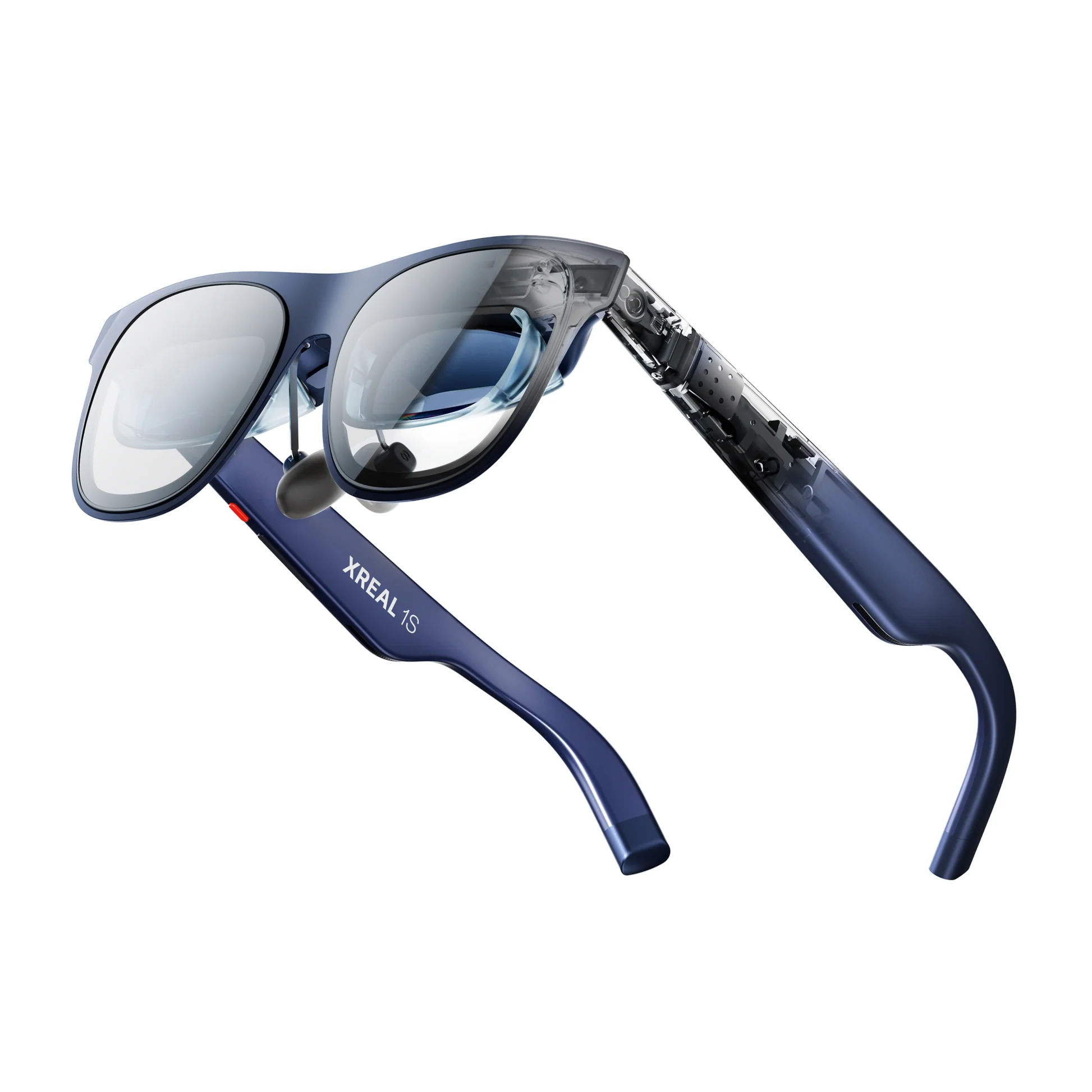
However, it lacks in-glass navigation features that might be expected compared to devices with spatial tracking like the Xreal 1S.
Rating sources
Counts as 4.02/5 in our score — this publisher's 156 scores on the site average 4.15, so its scores are adjusted up to compare fairly with other publishers.
Counts as 3.24/5 in our score — this publisher's 19 scores on the site average 3.87, so its scores are adjusted up to compare fairly with other publishers.
Our 3.6 score is the average of the 2 scored reviews above, each adjusted for how strictly its publisher scores; 3 more reviewed it without printing a score and are not in the average. More about methodology.