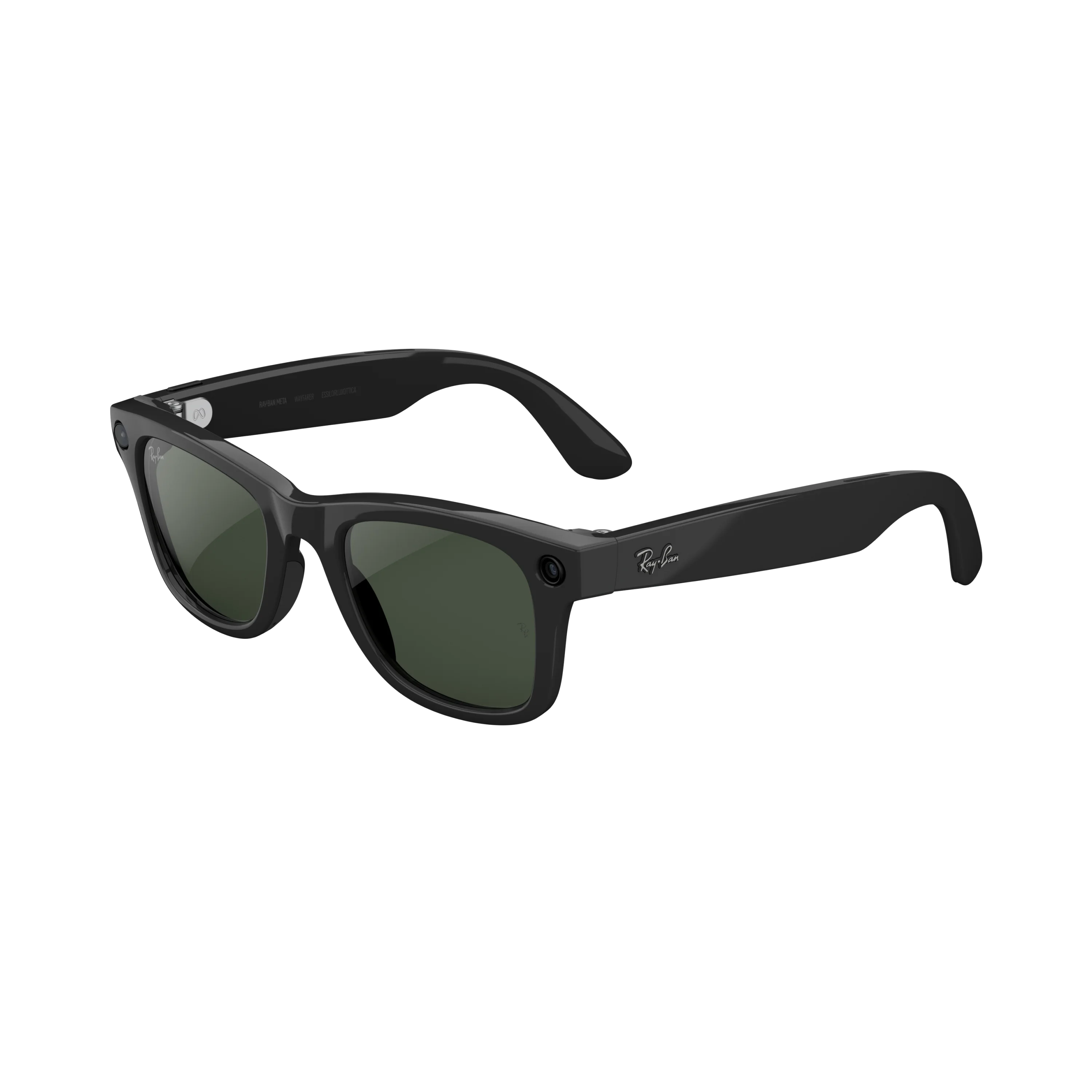
WIRED and PCMag found that the Ray-Ban Meta Gen 2 delivers an upgraded 12-megapixel camera capable of shooting photos and videos in up to 3K resolution, alongside open-ear speakers that provide clear audio for podcasts and phone calls. The glasses maintain a stylish design closely resembling classic Wayfarer frames while offering approximately eight hours of typical battery life, though heavy usage significantly reduces endurance. However, the device is heavy enough to leave deep red divots on the nose bridge after extended wear, and the Meta AI assistant can make errors or provide unhelpful responses in real-world scenarios. These smart glasses fit users who prioritize fashion and casual social recording but may disappoint those seeking all-day comfort or highly reliable artificial intelligence features.
Full review
3K camera resolution and video frame rates
The Ray-Ban Meta Gen 2 upgrades the visual capture capabilities with a 12-megapixel fixed-focus lens that records photos at a resolution of 3,024 by 4,032 pixels. PCMag found this sensor supports video recording up to 3K resolution at 30 frames per second, or 1080p at either 30 or 60 frames per second. This represents a significant jump from the first generation, which was limited to 1080p video capture alone.
WIRED noted that the Gen 2 allows for recording up to 60 frames per second and shooting videos in slow motion, features that add creative flexibility for social content creators. The glasses record a maximum of three minutes at a time before requiring a pause, which keeps storage usage manageable but limits long-form continuous filming.
PCMag highlighted that the capture light illuminates when taking pictures or videos to signal recording status. Captured content can be uploaded directly to a paired smartphone or live-streamed to social platforms like Facebook and Instagram via Bluetooth 5.3 and Wi-Fi 6 connectivity.
Battery life under heavy usage conditions
WIRED reported that the Gen 2 glasses offer an eight-hour battery life for typical mixed use, which is a substantial improvement over previous models. This duration allows users to wear the glasses throughout a standard workday or long outing without needing to recharge.
However, WIRED also found that actual endurance drops to approximately five or six hours with constant usage. If the user records high-definition video continuously, the battery depletes even faster than this reduced baseline. The eight-hour figure applies to general wear rather than intensive media capture scenarios.
PCMag described the battery performance as passable but underwhelming for power users who rely heavily on the camera and AI features throughout the day. The disparity between typical use and heavy usage means shoppers should plan charging sessions around their specific consumption habits.
Open-ear speaker audio clarity
WIRED found that music playback on the frame's speakers sounds fine, but wireless earbuds remain preferable for high-fidelity listening. The open-ear design allows users to hear their surroundings while consuming media, which is a core safety and usability feature of these smart glasses.
PCMag rated the audio quality as excellent, noting that podcasts and phone calls sound great with voices shining through clearly on the custom speakers. WIRED agreed that voices seem to shine on the glasses, making them particularly effective for communication tasks rather than immersive music experiences.
WIRED also observed that the touch controls along the sides of the frames work well enough, avoiding the oversensitive reactions common in other wearables that accidentally pause tracks or change volume during normal adjustments.
Meta AI assistant accuracy and utility
WIRED described the Meta AI features as both the best asset and biggest weakness of the Gen 2 glasses. The assistant can perform live language translation, provide whispered map directions, and identify objects in real time through the camera feed.
PCMag confirmed that users can trigger basic search queries, play music, or ask the glasses to interpret surroundings by saying Hey Meta. The AI is compatible with third-party integrations including Amazon Music, Spotify, iHeartRadio, WhatsApp, Messenger, Garmin, and Strava for fitness tracking overlays.
WIRED found that the AI assistant made errors in real-world scenarios, such as failing to identify a dead fish on a beach despite being close enough to smell it. The assistant correctly identified the object was dead but could not name the species, highlighting limitations in visual recognition accuracy.
Comfort and nose bridge pressure
WIRED reported that while the glasses are lightweight compared to older face computers, they are heavy enough to leave deep red divots on either side of the nose bridge after a couple of hours of wear. This physical discomfort is a recurring issue for users who plan extended usage sessions.
The pressure points are exacerbated by the lack of prescription lenses in some configurations, though WIRED noted this might be partially related to fit rather than weight alone. The divots appear even when wearing standard sunglasses or transition lenses.
WIRED preferred polarized lenses for outdoor use but found that the included transition lenses do not get dark enough on sunny days to prevent squinting. Meta offers polarized options on specific variants like the matte black sunglasses, which may alleviate some glare-related discomfort.
Design styles and frame availability
PCMag detailed that the Ray-Ban Meta Gen 2 is available in three distinct styles: Wayfarer with six color options, Skyler with seven colors, and Headliner with six colors. These silhouettes closely resemble classic Ray-Ban designs, maintaining a fashionable aesthetic for everyday wear.
WIRED observed that the Gen 2 feels very similar to the previous pair of Ray-Ban Meta glasses used by reviewers, weighing about the same and offering many of the same visual styles with new color additions like cosmic blue. The design philosophy prioritizes discreet technology integration within recognizable eyewear frames.
All three current models share similar functionality but differ in price, durability ratings, and specific feature sets like stabilization.
Storage capacity and media management
PCMag specified that the glasses contain 32GB of flash storage, which is sufficient to hold more than 500 photos or 100 videos at 30 seconds each. This internal memory allows for offline recording before transferring files to a paired smartphone.
WIRED found that captured content goes by default into the Meta AI app on the user's phone, sometimes requiring manual import from the glasses storage. This workflow can feel cumbersome for users who want seamless integration between capture and social sharing.
The combination of 32GB storage and limited recording duration means users must regularly manage their media library to avoid filling up the internal memory during extended trips or events where charging is not immediately available.
Privacy concerns and public perception
WIRED inserted every single concern about the proliferation of cameras in public, privacy, and surveillance technology into their review narrative. The discreet nature of the glasses means recording can happen without obvious indicators beyond the small capture light.
The integration with Meta's ecosystem raises additional questions about data handling and AI processing locations. WIRED noted that interacting with the AI requires stopping dead in tracks and staring at objects or people while speaking commands aloud, which draws attention to the user.
PCMag mentioned accessibility options like Be My Eyes volunteer services, but these features rely on continuous camera feeds being processed by Meta's servers, reinforcing the privacy trade-offs inherent in using smart glasses with always-on visual capabilities.
Strengths
- +Upgraded camera captures photos and videos in up to 3K resolution
- +Battery life extends to approximately 8 hours of typical use
- +Open-ear speakers provide clear audio for podcasts, music, and phone calls
- +Stylish design closely resembles classic Ray-Ban Wayfarer frames
Watch-outs
- −Heavy enough to leave deep red divots on the nose bridge after extended wear
- −Meta AI assistant can make errors or provide unhelpful responses
How it compares
Unlike the Viture Pro 2 or Xreal One Pro, it lacks any display functionality for media consumption, focusing instead on social recording and audio.
Rating sources
Counts as 3.84/5 in our score — this publisher's 31 scores on the site average 3.77, so its scores are adjusted up to compare fairly with other publishers.
Counts as 4.24/5 in our score — this publisher's 19 scores on the site average 3.87, so its scores are adjusted up to compare fairly with other publishers.
Counts as 4.52/5 in our score — this publisher's 156 scores on the site average 4.15, so its scores are adjusted up to compare fairly with other publishers.
Our 4.2 score is the average of the 3 scored reviews above, each adjusted for how strictly its publisher scores; 2 more reviewed it without printing a score and are not in the average. More about methodology.