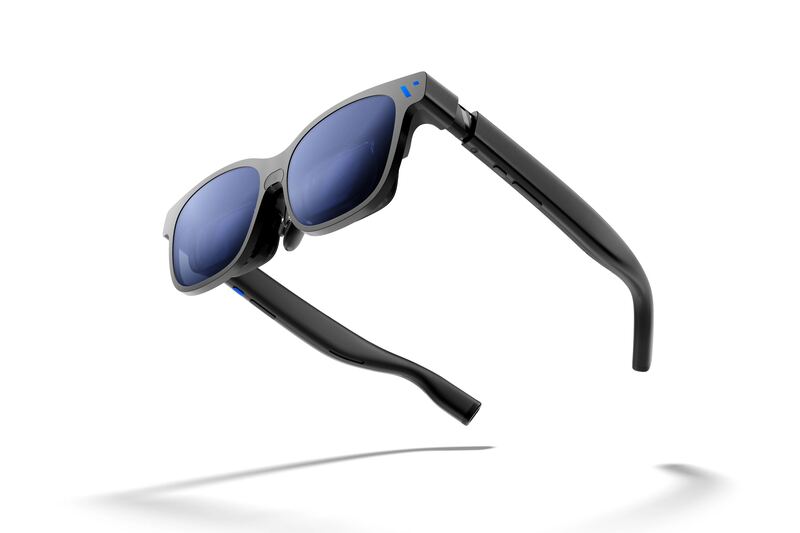
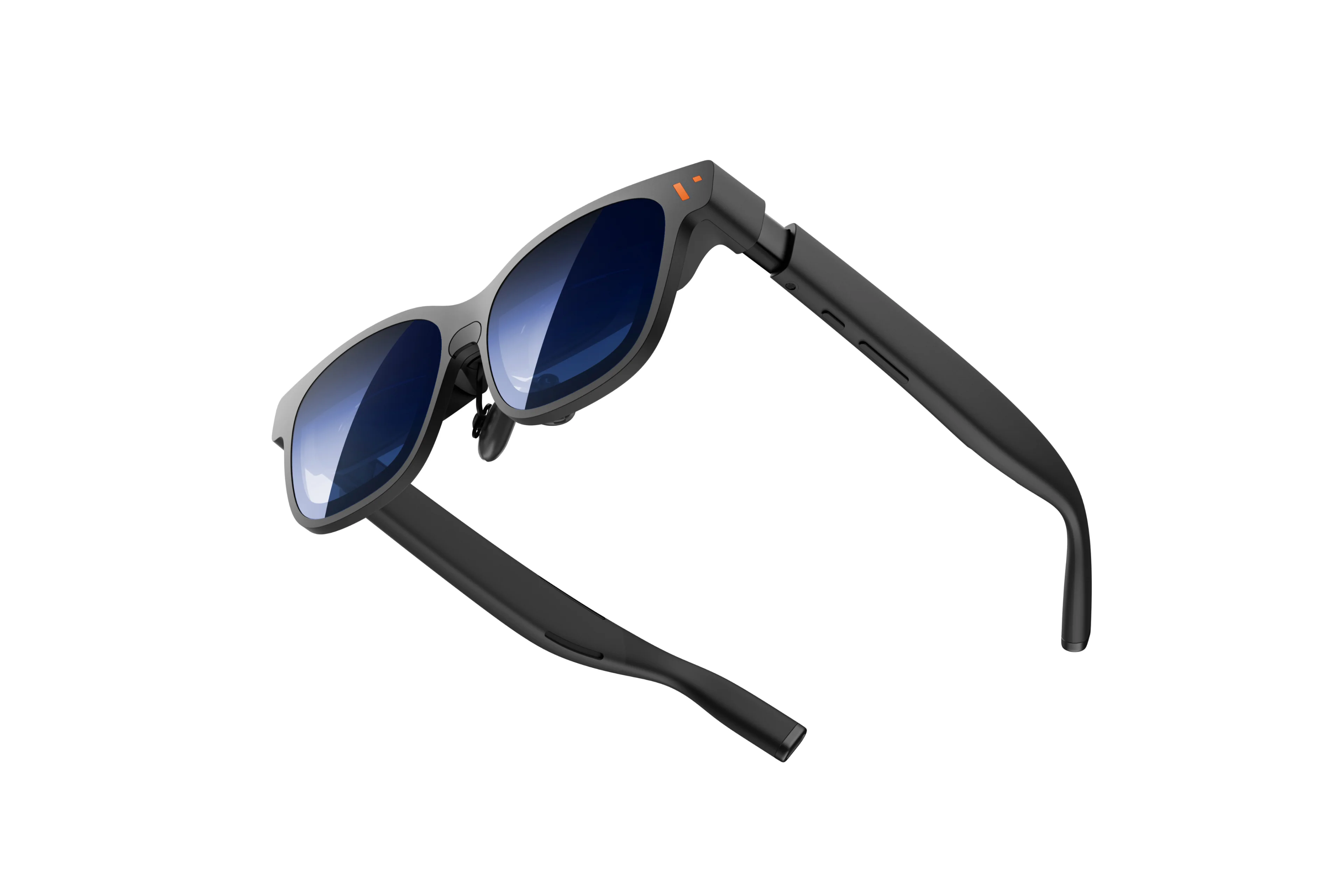
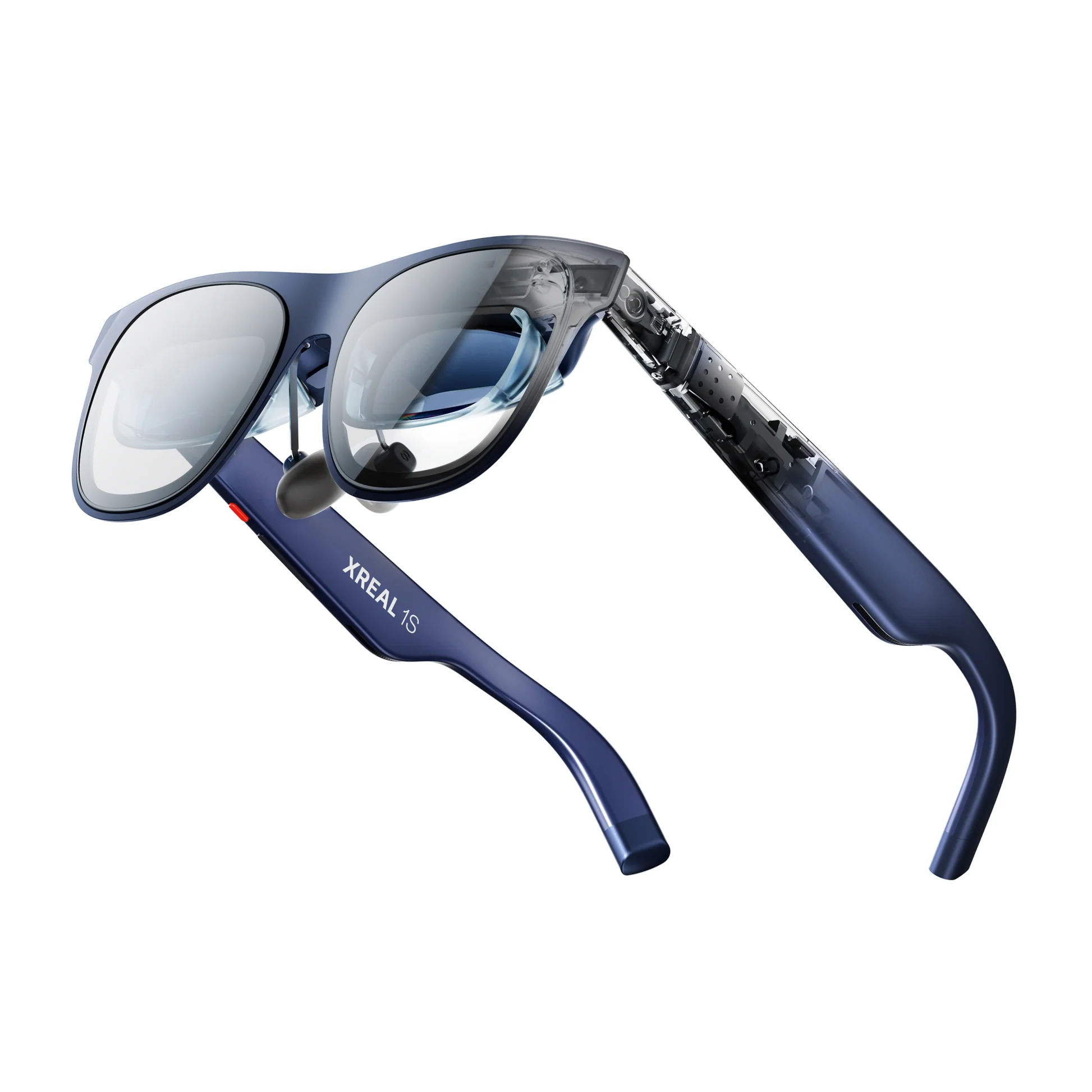
The Xreal 1S delivers a sharp mini-OLED display with 700 nits of brightness and Bose-tuned open-ear speakers, making it an excellent portable virtual screen for video entertainment. Gamespace found that the onboard X1 chip enables native 3DoF spatial tracking and real-time 2D-to-3D conversion without external accessories, while Ubergizmo noted its comfort during extended wear despite a slight weight increase. However, the computational load of this 3D processing significantly drops the frame rate to 30fps, causing stuttering and visual artifacts that make it unsuitable for fast-paced gaming or high-refresh-rate monitors. This device fits users seeking an immersive media experience on flights or commutes but should be avoided by those requiring smooth motion clarity for action games or advanced spatial computing workflows.
Full review
Visual sharpness and brightness improvements
Gamespace recorded a peak brightness of 700 nits in the XREAL 1S, matching the premium One Pro model while increasing resolution from 1080p to 1200p per eye. This jump delivers a noticeably sharper image that reviewers perceive immediately when upgrading from older models. The display utilizes mini-OLED panels with a default aspect ratio of 16:10 and supports additional ultrawide modes including 16:18, 21:9, and 32:9 to complement standard content.
Ubergizmo described the subjective viewing experience as similar to watching a good, large 1080p television. While the image favors immersion over absolute clarity during rapid head movements, the system compensates between Follow mode and Anchor mode to keep the display centered or fixed in virtual space respectively.
Comfort profile and thermal management
Thermal management remains a minor consideration rather than a critical failure point. Ubergizmo recorded heat buildup near the top of the frame reaching 96 degrees Fahrenheit during use. This warmth stays mild and does not touch the skin directly, ensuring it never becomes uncomfortable during typical usage scenarios involving video entertainment or casual gaming sessions.
Audio quality in noisy environments
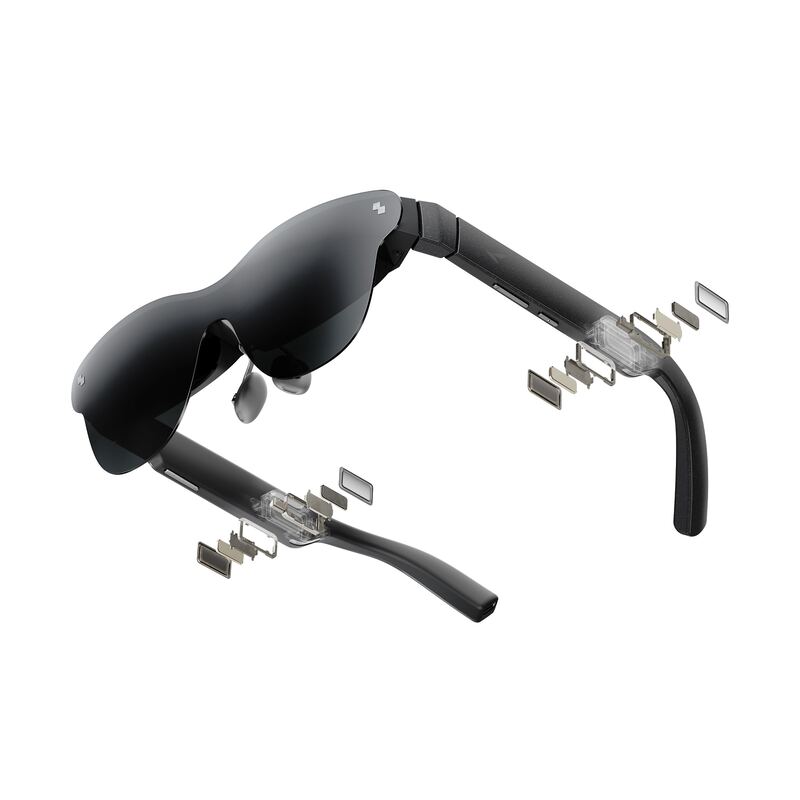
Gamespace highlighted the inclusion of Bose-tuned open-ear speakers featuring Spatial Sound 4.0 technology within the frame arms. This configuration allows for convenient headphone-free audio that maintains situational awareness while delivering immersive soundscapes tailored specifically for spatial media consumption and gaming experiences.
Ubergizmo found that the built-in audio is functional but not fully immersive, particularly when used in noisy environments like commercial flights. The open-ear design struggles to compete with ambient noise levels on airplanes or busy streets, making pairing with traditional headphones a necessary step for users who demand high-fidelity sound isolation during travel.
Real-time 3D conversion performance
Gamespace identified the onboard X1 chip as the component enabling native 2D-to-3D spatial conversion, offering four levels of intensity for games and video content. This feature allows users to watch movies or YouTube videos in true 3D without requiring external apps or complex setup procedures, leveraging real-time processing directly within the glasses.
The computational load required for this conversion significantly impacts performance by dropping the frame rate to 30fps. Gamespace noted that while this is perfect for passive media consumption like movies and video streaming, it is not optimal for games requiring high refresh rates or fast-paced action where smooth motion clarity is essential.
Connectivity requirements and setup
Ubergizmo emphasized that the XREAL 1S operates as a virtual display you wear rather than a standalone headset with onboard processing. It connects to phones, PCs, consoles, and handheld gaming devices via USB-C DisplayPort Alt Mode to mirror or extend a display directly in front of your eyes, relying entirely on the connected source for power and data.
Gamespace found that setup is straightforward for devices with native USB-C DP Alt connection support. However, connecting to a standard gaming PC requires additional hardware since only a couple of dedicated graphics cards offer direct DP Alt output. Users must utilize a powered HDMI or DisplayPort to USB-C cable to bridge the gap between their desktop computer and the glasses.
Spatial tracking capabilities
Gamespace confirmed that the XREAL 1S supports adjustable screen distances from 1 meter to 10 meters, creating a virtual screen size ranging from 32 inches up to 500 inches. The glasses feature native 3DoF spatial tracking for both head-following and anchored display modes without needing external accessories.
Ubergizmo noted that while the base unit provides 3DoF tracking, advanced 6DoF capabilities are available when paired with the optional XREAL Eye accessory. This flexibility allows users to choose between simple plug-and-play functionality or more complex spatial computing workflows depending on their specific needs and budget constraints.
Electrochromic dimming technology
Gamespace detailed the inclusion of 3-stage electrochromic dimming lenses that automatically adjust tint based on head gaze direction. This feature helps manage brightness and glare in varying lighting conditions, enhancing comfort when moving between indoor environments and brighter outdoor settings without manual intervention.
The dimming system works in tandem with the 700-nit peak brightness to ensure optimal visibility across different scenarios. By dynamically controlling light transmission through the lenses, the glasses maintain image clarity while reducing eye strain during prolonged viewing sessions, a critical factor for users who spend hours watching content on the go.
Ideal use cases and limitations
Ubergizmo concluded that the XREAL 1S is best understood as a portable, immersive virtual screen designed primarily for video entertainment and casual gaming. It excels in scenarios like air travel where it offers a far superior experience compared to built-in seatback screens, including those found in business class cabins.
Gamespace pointed out that while the glasses fit in your pocket and offer a massive virtual display, they are not designed for advanced multitasking workflows or heavy gaming on high-refresh-rate monitors. Shoppers seeking a true augmented reality device with full spatial computing capabilities should look elsewhere, as this product focuses strictly on delivering a high-quality portable screen experience.
Strengths
- +Features an onboard X1 chip that enables native 3DoF spatial tracking and screen anchoring without external accessories.
- +Incorporates electrochromic dimming lenses that automatically adjust tint based on head gaze direction.
- +Includes Bose-tuned open-ear speakers with Spatial Sound 4.0 for convenient headphone-free audio.
Watch-outs
- −Real-time 2D-to-3D conversion significantly drops the frame rate to 30fps, causing stuttering and visual artifacts in games.
How it compares
The Xreal 1S features an onboard X1 chip enabling native 3DoF spatial tracking, a capability not explicitly detailed for the Viture Beast which relies on head tracking modes. However, its real-time 2D-to-3D conversion drops frame rates to 30fps, making it less suitable for fast-paced gaming compared to the high-refresh-rate support of the Viture Pro 2.
Rating sources
Counts as 4.41/5 in our score — this publisher's 1 scores on the site average 4.10, so its scores are adjusted up to compare fairly with other publishers.
Our 4.5 score is the average of the 2 scored reviews above, each adjusted for how strictly its publisher scores; 3 more reviewed it without printing a score and are not in the average. More about methodology.