IGN found that the RayNeo Air 4 Pro delivers a compelling personal cinema experience with dual micro OLED displays and Bang & Olufsen-tuned open-ear speakers, while Tom's Guide highlighted its industry-first HDR10 support via a Pixelworks Vision 4000 chip for brighter highlights and deeper shadows. However, the constant USB-C connection throws off the balance of the glasses and leaves a cable dangling behind the ear, which can be intrusive during long sessions. The device also feels bulky and warm after an hour or more of continuous use due to heat buildup in the forehead bar. This setup is ideal for travelers seeking a private viewing screen on flights or trains, but those prioritizing all-day comfort or wireless mobility should look elsewhere.
Full review
MicroLED display and HDR10 capabilities
IGN recorded the display's refresh rate at 120Hz and noted that resolution scales based on content mode: it maxes out at 1080p for standard 2D viewing but jumps to 4K when rendering stereoscopic 3D video. This flexibility allows the glasses to handle a wide variety of media formats without requiring external upscaling hardware, provided the source device supports DisplayPort video over USB-C.
A significant differentiator in this generation is the inclusion of HDR10 support via an integrated Pixelworks Vision 4000 chip. Tom's Guide highlighted this feature as a major leap forward for wearable displays, noting that the dedicated processing chip delivers noticeably brighter highlights and deeper shadows compared to standard SDR smart glasses. This enhancement transforms the viewing experience from a flat projection into something with greater depth and contrast, making it particularly effective for cinematic content where lighting nuances are critical.
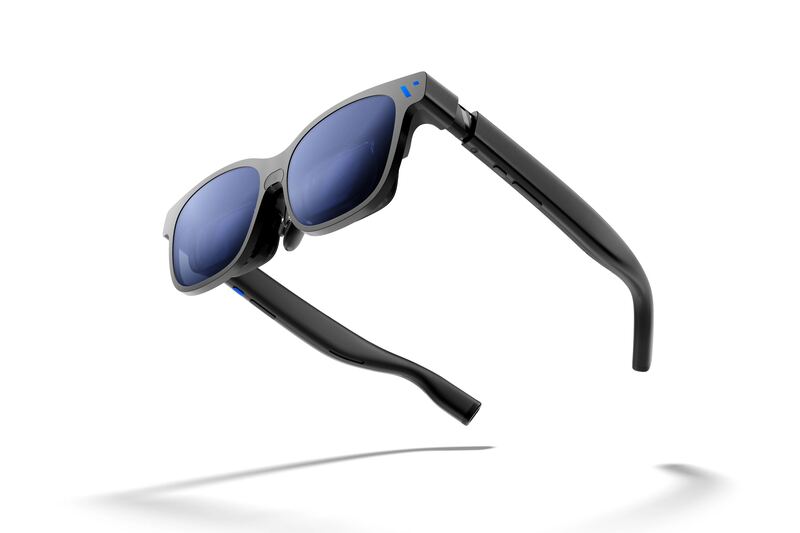
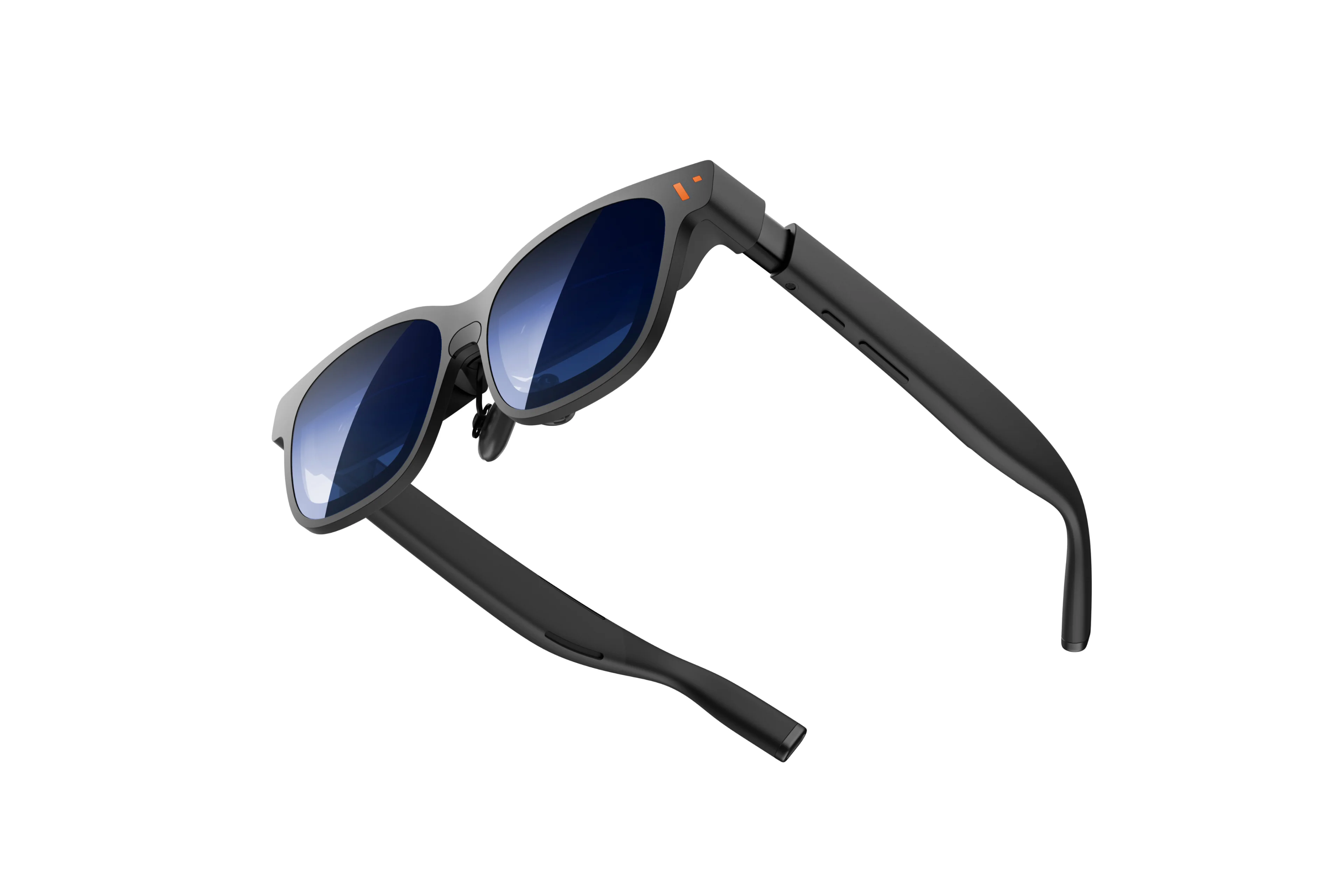
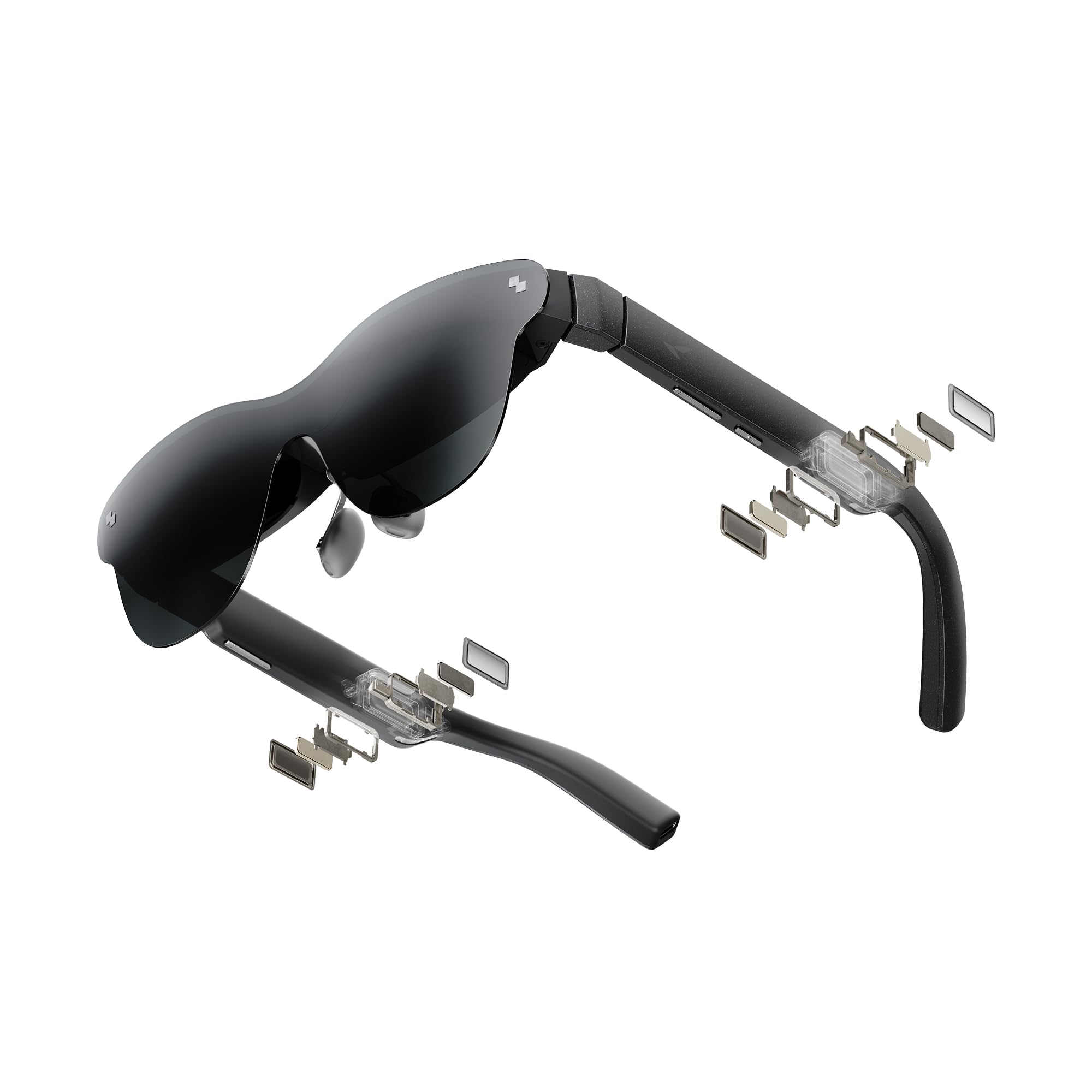
Despite the high-end display technology, the physical form factor remains compact enough to pass as regular Wayfarer-style sunglasses when folded. The glossy, reflective cover plate on the front prevents outside light from interfering with the projected image, ensuring that the virtual screen remains visible even in moderately lit environments. This design choice helps maintain privacy and visual immersion, allowing users to watch content without revealing exactly what is being displayed to bystanders.
Bang & Olufsen audio tuning modes
Audio performance relies on Bang & Olufsen-tuned open-ear speakers embedded within the thick temples of the frame. IGN found that these four built-in drivers provide a clear, immersive soundscape that complements the visual experience without requiring traditional earbuds or over-ear headphones. The open-ear design allows users to remain aware of their surroundings while still enjoying high-quality audio, which is particularly useful for travel scenarios where situational awareness is necessary.
The system includes multiple sound profile modes accessible through physical controls on the frame. Phonearena noted that these profiles allow users to tailor the audio output to different environments or preferences. One specific mode, dubbed 'Whisper' mode, was highlighted by reviewers as a unique feature for private listening. This setting reduces the outward leakage of sound significantly, ensuring that media consumption does not disturb others in close proximity, such as fellow passengers on an airplane.
The integration of Bang & Olufsen branding extends beyond mere marketing; the tuning reflects a focus on clarity and balance rather than just raw volume. IGN observed that the audio remains crisp even at higher volumes, with minimal distortion during dynamic scenes in movies or games. This level of acoustic refinement positions the RayNeo Air 4 Pro as a strong contender for users who prioritize an all-in-one sensory experience over separate audio accessories.
Comfort and physical design trade-offs
IGN reported that despite the initial awkwardness of the bulky top bar housing the circuitry and prisms, the overall weight distribution is manageable for most users. The glasses feature adjustable temples with three vertical angles to align the display precisely with the user's eyes, though many found the out-of-the-box settings sufficient without needing frequent adjustments.
However, the necessity of a constant USB-C connection introduces ergonomic challenges that cannot be ignored. IGN specifically noted that the cable attached to the end of the right temple throws off the balance of the glasses, creating a dangling wire behind the ear that can feel intrusive during long sessions. This tethered design means users are physically connected to their host device at all times, limiting mobility and potentially causing discomfort if the connection is pulled or snagged.
Thermal management also presents a minor issue for some users. IGN mentioned that the core circuitry located in the forehead bar can get warm after an hour or so of continuous use. While this heat buildup was not described as painful, it contributes to a feeling of bulkiness that may deter users who plan to wear the glasses for multiple hours straight without breaks. The inclusion of spare nose pads helps with fit customization, but the thermal and balance issues remain inherent to the current design architecture.
$299 price point versus competitors
At a retail price of $299, the RayNeo Air 4 Pro positions itself aggressively against other wearable displays that often cost double this amount. IGN emphasized that this pricing strategy makes high-fidelity AR smart glasses accessible to a much broader audience without sacrificing core features like HDR support or premium audio tuning. The value proposition is further strengthened by the inclusion of industry-first HDR10 capabilities, which are typically reserved for more expensive models in the category.
Phonearena described the device as offering 'awesome' performance at this price point, suggesting that the cost-to-feature ratio is highly favorable. For consumers who have been hesitant to enter the smart glasses market due to high entry costs, the RayNeo Air 4 Pro serves as a low-risk introduction to wearable display technology. The inclusion of premium components like microLED panels and Bang & Olufsen speakers at this price level disrupts the traditional pricing hierarchy established by earlier generations of similar devices.
The competitive landscape for smart glasses has historically been dominated by high-end, expensive options that cater to early adopters willing to pay a premium. By undercutting these competitors significantly while maintaining robust specifications, RayNeo is targeting mainstream consumers who want a personal cinema experience without the financial burden. This approach forces other manufacturers to reconsider their pricing strategies and feature sets if they hope to remain relevant in an increasingly crowded market.
Travel and portable media consumption
The RayNeo Air 4 Pro excels as a travel companion, offering a private viewing experience that eliminates the need for bulky monitors or uncomfortable handheld devices. IGN described the glasses as 'headphones for your eyes,' teleporting the user to an empty movie hall where they can watch content on a massive virtual screen without disturbing others. This makes them ideal for flights, train rides, or hotel stays where space is limited and shared environments require discretion.
Gaming on the go also benefits from this form factor. IGN noted that playing games like those on a Nintendo Switch or PlayStation 5 becomes significantly more comfortable when viewed through the glasses compared to holding a small handheld device for extended periods. The large virtual screen reduces neck strain associated with craning one's head over a phone, while the immersive audio creates a cohesive entertainment bubble that isolates the user from their surroundings.
Compatibility is straightforward thanks to USB-C connectivity, which supports DisplayPort video out. This means the glasses work seamlessly with modern smartphones, laptops, and gaming consoles without requiring complex wireless pairing or additional adapters.
Strengths
- +Supports HDR10 content via a Pixelworks Vision 4000 chip, delivering brighter highlights and deeper shadows compared to standard displays.
- +Features Bang & Olufsen-tuned open-ear speakers with multiple sound profile modes including a whisper mode for private listening.
- +Priced at $299, offering significant value compared to competitors that often cost double this amount.
Watch-outs
- −Requires a constant USB-C connection to the host device, which can throw off balance and leave a cable dangling behind the ear.
- −The glasses can feel bulky and warm during extended use.
How it compares
The RayNeo Air 4 Pro supports HDR10 content via a dedicated chip, a feature absent in the Viture Beast which lacks this specific high dynamic range support. However, it requires a constant USB-C connection that throws off balance, unlike the wireless operation of the Xreal One Pro.
Rating sources
Counts as 4.16/5 in our score — this publisher's 181 scores on the site average 4.00, so its scores are adjusted up to compare fairly with other publishers.
Counts as 4.03/5 in our score — this publisher's 15 scores on the site average 4.13, so its scores are adjusted up to compare fairly with other publishers.
Counts as 4.02/5 in our score — this publisher's 156 scores on the site average 4.15, so its scores are adjusted up to compare fairly with other publishers.
Our 4.1 score is the average of the 3 scored reviews above, each adjusted for how strictly its publisher scores; 1 more reviewed it without printing a score and is not in the average. More about methodology.