Verdict
Head-to-head · Best Smart Glasses

RayNeo Air 4 Pro vs Xreal 1S

Which is the better buy? Side-by-side on rating, price, strengths, and watch-outs — with the published ratings we averaged to get there.

Verdict is reader-supported. As an Amazon Associate we earn from qualifying purchases. Some links on this page are affiliate links — if you click through and buy, we may earn a small commission at no extra cost to you. Our ratings are sourced from independent publications, not sponsors.
The short answer

Xreal 1S comes out ahead by a clear margin (4.5 vs 4.1). Xreal 1S is best for: users seeking an immersive media experience with spatial anchoring who do not require smooth motion clarity. Read the strengths below before deciding.

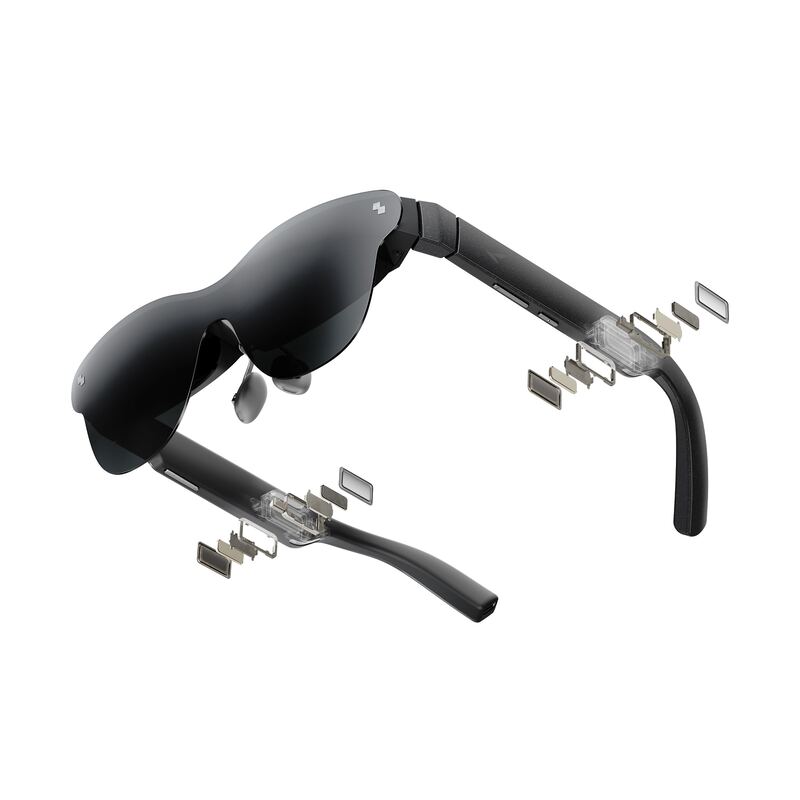
RayNeo Air 4 Pro
Ranked #5 in Best Smart Glasses
RayNeo Air 4 Pro
3 sources

IGN found that the RayNeo Air 4 Pro delivers a compelling personal cinema experience with dual micro OLED displays and Bang & Olufsen-tuned open-ear speakers, while Tom's Guide highlighted its industry-first HDR10 support via a Pixelworks Vision 4000 chip for brighter highlights and deeper shadows. However, the constant USB-C connection throws off the balance of the glasses and leaves a cable dangling behind the ear, which can be intrusive during long sessions. The device also feels bulky and warm after an hour or more of continuous use due to heat buildup in the forehead bar. This setup is ideal for travelers seeking a private viewing screen on flights or trains, but those prioritizing all-day comfort or wireless mobility should look elsewhere.

Strengths
  • — Supports HDR10 content via a Pixelworks Vision 4000 chip, delivering brighter highlights and deeper shadows compared to standard displays.
  • — Features Bang & Olufsen-tuned open-ear speakers with multiple sound profile modes including a whisper mode for private listening.
  • — Priced at $299, offering significant value compared to competitors that often cost double this amount.
Watch-outs
  • — Requires a constant USB-C connection to the host device, which can throw off balance and leave a cable dangling behind the ear.
  • — The glasses can feel bulky and warm during extended use.
Xreal 1S
Higher ratedRanked #2 in Best Smart Glasses
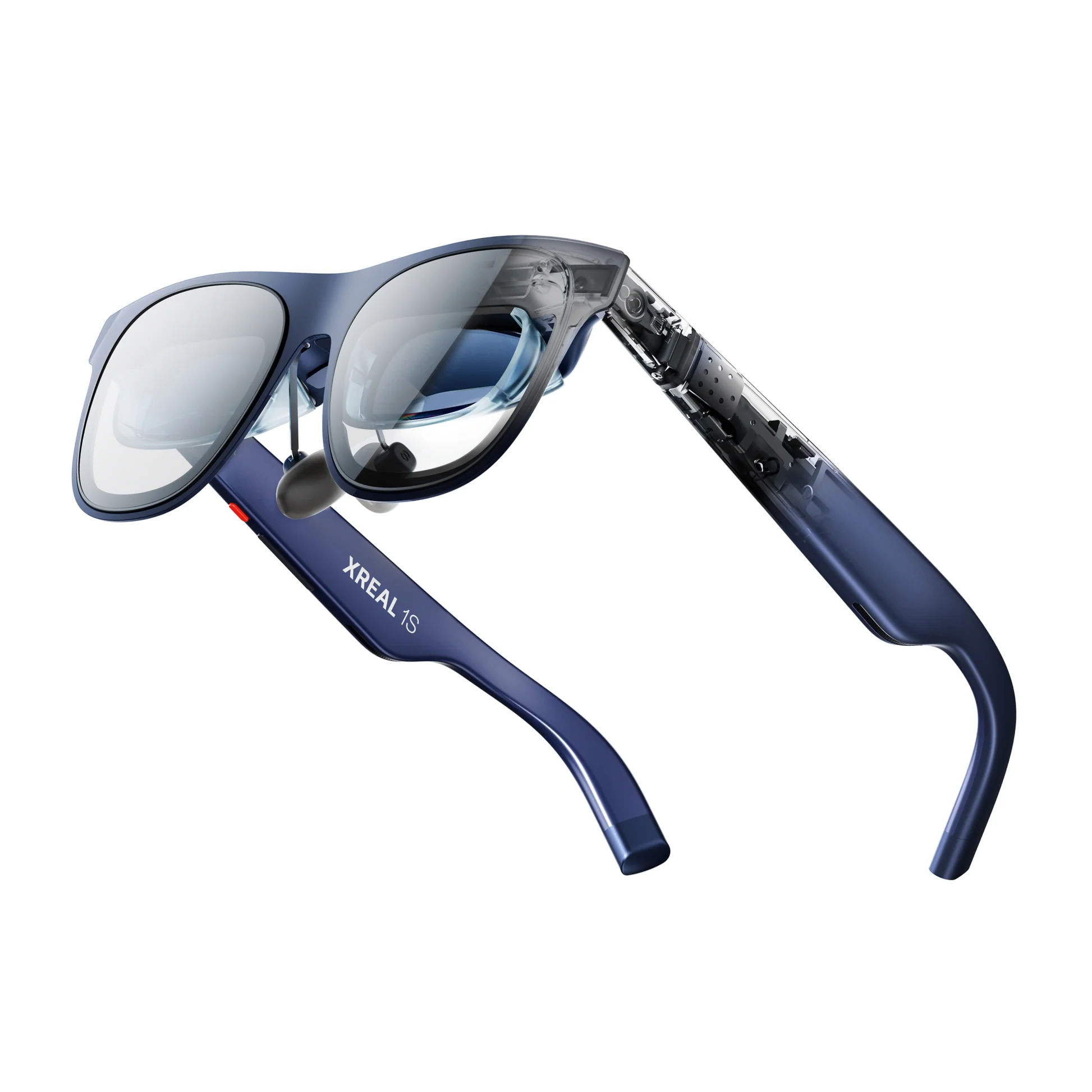
Xreal 1S
2 sources$449as of Oct 17

The Xreal 1S delivers a sharp mini-OLED display with 700 nits of brightness and Bose-tuned open-ear speakers, making it an excellent portable virtual screen for video entertainment. Gamespace found that the onboard X1 chip enables native 3DoF spatial tracking and real-time 2D-to-3D conversion without external accessories, while Ubergizmo noted its comfort during extended wear despite a slight weight increase. However, the computational load of this 3D processing significantly drops the frame rate to 30fps, causing stuttering and visual artifacts that make it unsuitable for fast-paced gaming or high-refresh-rate monitors. This device fits users seeking an immersive media experience on flights or commutes but should be avoided by those requiring smooth motion clarity for action games or advanced spatial computing workflows.

Strengths
  • — Features an onboard X1 chip that enables native 3DoF spatial tracking and screen anchoring without external accessories.
  • — Incorporates electrochromic dimming lenses that automatically adjust tint based on head gaze direction.
  • — Includes Bose-tuned open-ear speakers with Spatial Sound 4.0 for convenient headphone-free audio.
Watch-outs
  • — Real-time 2D-to-3D conversion significantly drops the frame rate to 30fps, causing stuttering and visual artifacts in games.

How they stack up

RayNeo Air 4 Pro

The RayNeo Air 4 Pro supports HDR10 content via a dedicated chip, a feature absent in the Viture Beast which lacks this specific high dynamic range support. However, it requires a constant USB-C connection that throws off balance, unlike the wireless operation of the Xreal One Pro.

Xreal 1S

The Xreal 1S features an onboard X1 chip enabling native 3DoF spatial tracking, a capability not explicitly detailed for the Viture Beast which relies on head tracking modes. However, its real-time 2D-to-3D conversion drops frame rates to 30fps, making it less suitable for fast-paced gaming compared to the high-refresh-rate support of the Viture Pro 2.

Specs side-by-side

SpecRayNeo Air 4 ProXreal 1S
Display TypeDual micro OLEDmini-OLED x2
Resolution1080p per eye1920 x 1200
Field of View47 degrees52°
Brightnessup to 1200 nits700 nits
Weight2.6 oz2.89 oz
ConnectivityUSB-CUSB-C (DisplayPort Alt Mode)
← See the full ranking of best smart glasses