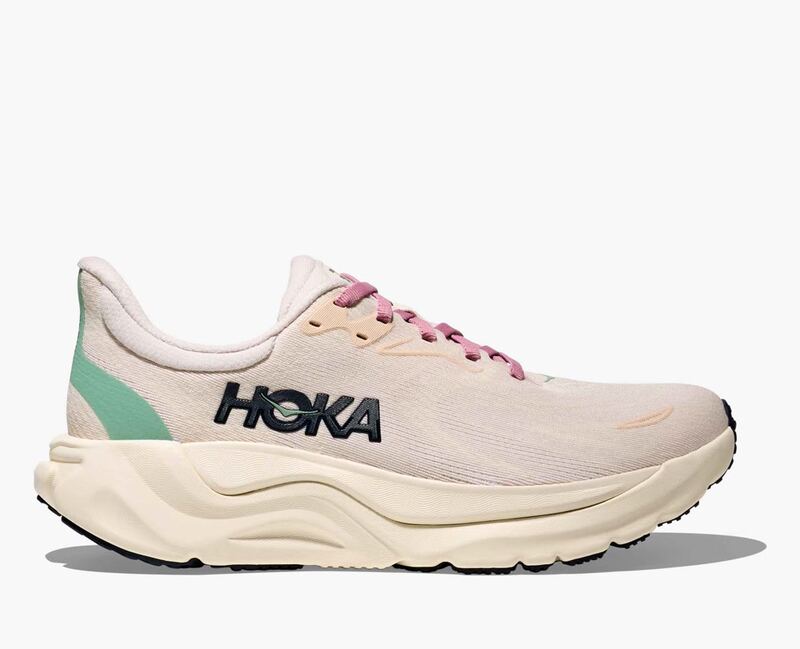
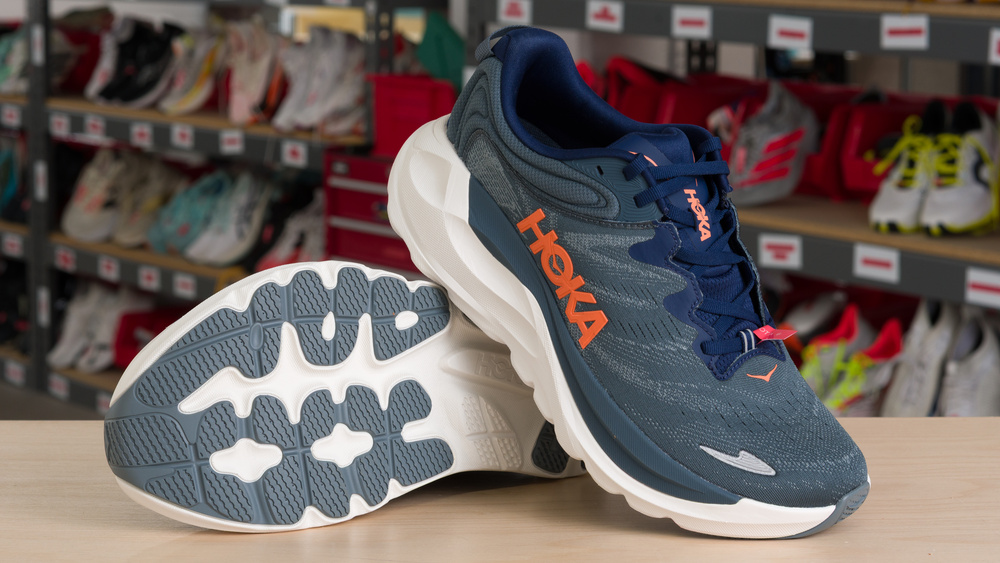
After a long wait, the Hoka Gaviota 6 updates a popular stability shoe with a better fit and more support. Reviewers noted the roomy, wide-fit design and excellent medial support, plus an engineered mesh upper that feels comfortable and secure. Lab tests were less kind to the CMEVA foam, which is dated enough to deliver poor shock absorption and low energy return. It is lighter than most maximal stability shoes, but for many runners the performance doesn't justify $180. Runners who need maximum stability and room for wide feet are the fit; anyone after a livelier ride should look at the Saucony Hurricane 24 or Nike Structure Plus.
Full review
Weight drops to 283 grams from 310
The Hoka Gaviota 6 represents a significant evolution in Hoka's stability shoe lineup, with a redesigned upper and updated internal structure that dramatically alters how the shoe feels on foot. Reviewers from RunRepeat noted that the Gaviota 6 features a more technical mesh upper with an internal ghillie lacing system, which improves midfoot lockdown and provides a more secure wraparound feel compared to the previous model's softer jacquard mesh. The updated upper design, according to Flawless Shoe Reviews, gives the shoe better stability when cornering or changing direction, though it also makes the forefoot feel slightly more snug than in the Gaviota 5. The weight reduction from the Gaviota 5's 310g to the Gaviota 6's 283g is substantial, as noted by Flawless Shoe Reviews, making the shoe feel lighter and more agile. However, this comes at the cost of some plushness, as Prevention.com's Jordan Levy observed that while the shoes are lightweight, they're not as forgiving for long walks as the Gaviota 5.
Stability and Support Features
The most significant update in the Gaviota 6 is the introduction of the enhanced H-Frame stability system, which fundamentally changes how the shoe performs underfoot. According to Flawless Shoe Reviews, this new system makes the Gaviota 6 feel firmer, more controlled, and much more stable through the midfoot and heel compared to its predecessor. The H-Frame provides strong full-length medial stability, making the Gaviota 6 borderline motion control while maintaining a surprisingly low weight for a stability shoe. Doctors of Running's Matt Klein PT DPT PhD OCS GCS SCS FAAOMPT noted that the redesigned H-frame provides strong full-length medial stability that makes this shoe borderline motion control all while keeping the weight surprisingly low for a stability shoe of this size. However, the increased stability comes at the cost of some comfort for those who prefer a softer, more plush ride, as noted by Flawless Shoe Reviews, which found that the Gaviota 6 feels noticeably firmer for walking and standing all day compared to the Gaviota 5.
Real-World Performance Testing
Testing across multiple platforms reveals that the Gaviota 6 delivers a more performance-oriented ride compared to its predecessor, with runners noting improved responsiveness and control during easy to moderate-paced runs. RunRepeat's lab tests showed that while the shoe offers respectable cushioning with 122 SA in the heel and 111 SA in the forefoot, it doesn't deliver impressive shock absorption by any means. The CMEVA foam used in the midsole, as noted by RunRepeat, feels outdated and delivers disappointing shock absorption and energy return. The heel stack height measured at 36.0 mm, which is 3.0 mm less than Hoka's stated 39.0 mm, aligns with the underwhelming shock absorption results. However, Prevention.com's Jordan Levy, who logged over 100 miles in the shoes, found them to be extremely supportive for both walking and running, with excellent stability during treadmill sessions. The lack of a rocker outsole, as noted by Prevention.com, made walking more comfortable compared to other Hoka models like the Clifton 10s and Arahi 8s.
Comfort and Fit Analysis
Fit and comfort are where the Gaviota 6 shows its most significant departure from the Gaviota 5. Flawless Shoe Reviews reported that the upper now feels more secure with a ghillie lacing system, but the forefoot feels slightly more snug than in the previous model. The toe box, while roomy compared to most Hoka shoes, is narrower than the Gaviota 5, which may be restrictive for runners with broader feet or bunions. Doctors of Running's Matt Klein PT DPT PhD OCS GCS SCS FAAOMPT found the fit to be true to size in his normal Men's US size 10, with a lower volume engineered mesh upper that keeps the feet securely in place. However, he noted that the midfoot can bump slightly, which is a fairly common Hoka issue, particularly for those with flat feet. RunRepeat's testing revealed that the shoe offers a roomy fit compared with most Hoka models, which is a standout feature for runners with wide feet, but the updated upper design does reduce the plushness that made the Gaviota 5 popular for long walks and standing all day.
Only 45.4% energy return in the heel
Despite its improvements, the Gaviota 6 has notable drawbacks that prevent it from being a perfect choice for all runners. RunRepeat's lab tests revealed that the CMEVA foam feels outdated and delivers disappointing shock absorption and energy return, with only 45.4% energy return in the heel and 52.4% in the forefoot, which is considered low for a shoe at this price point. Additionally, Flawless Shoe Reviews noted that while the Gaviota 6 feels more stable and performance-oriented, it's less plush for walking and standing all day compared to the Gaviota 5, which may disappoint runners seeking maximum comfort for long periods. The shoe's firmness, while beneficial for stability, may not appeal to those who prefer a softer, more forgiving ride, particularly for those with flat feet or posterior tibial tendon issues who might find the control too restrictive.
Built for recovery miles, not race pace
The Hoka Gaviota 6 is best suited for runners who need maximum stability and want one of the most supportive platforms ever done, particularly those with wide feet who have struggled with the snug fit of many Hoka models. According to RunRepeat, runners seeking a comfort-focused stability shoe for easy runs, recovery miles, or long walks will find the Gaviota 6 a strong fit, especially those who need support without the plushness that might be too soft for their needs. Doctors of Running's Matt Klein PT DPT PhD OCS GCS SCS FAAOMPT recommends it for those who want a wider-fitting, rockered shoe with full-length stability, particularly for recovery, daily, and long miles. However, Prevention.com's Jordan Levy noted that the shoe is not ideal for those looking to pick up the pace, as it's more suited for easy to moderate-paced runs. RunRepeat also warns that runners seeking a more lively yet still stable ride should look elsewhere, as the outdated CMEVA foam limits the true potential of the Gaviota 6.
Less lively than the Saucony Hurricane 24
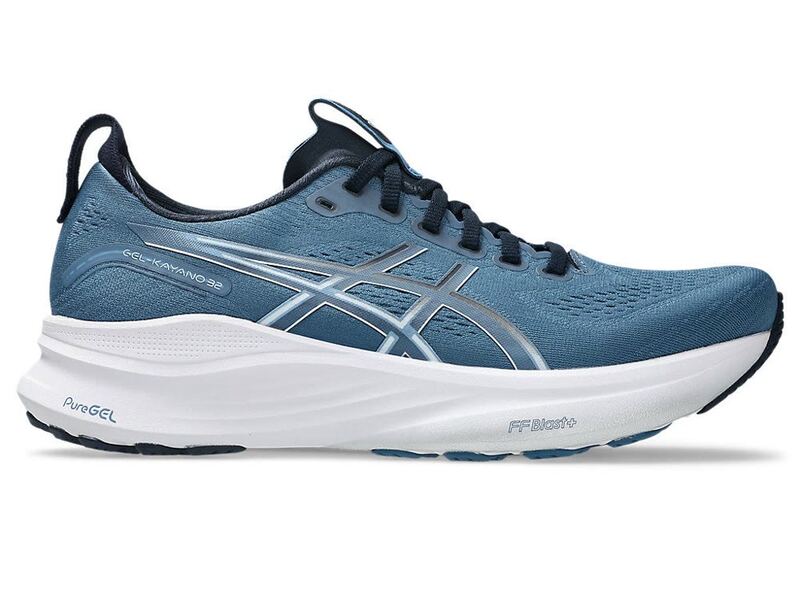
When compared to other stability shoes, the Gaviota 6 sits firmly at the top end of Hoka's stability range, offering the most structure and protection. Flawless Shoe Reviews noted that the Gaviota 6 now sits firmly at the top end of Hoka's stability range, offering the most structure and the most protection, while the ASICS Gel-Kayano 32 remains the better option if your priority is plush cushioning for long walks, standing all day, or very easy long runs. The Hoka Arahi 8 sits below the Gaviota as a mild-to-moderate stability shoe that feels quicker and less bulky, making it a better choice for runners seeking a lighter, more streamlined option. RunRepeat's comparison shows that while the Gaviota 6 offers excellent stability and a roomy fit, it falls short in energy return and shock absorption compared to alternatives like the Saucony Hurricane 24, which provides a better balance of cushioning and support for runners seeking a more lively yet still stable ride. The Gaviota 6's price point of $180 makes it a premium option, but its outdated foam technology may not justify the cost for runners seeking maximum performance.
100+ miles logged despite the $180 price
The $180 price point for the Hoka Gaviota 6 is considered high, especially when considering the outdated CMEVA foam technology that delivers disappointing shock absorption and energy return. RunRepeat's verdict that the price feels hard to justify in 2026 is echoed by the fact that the shoe's performance in lab tests shows average shock absorption and low energy return, with only 45.4% energy return in the heel and 52.4% in the forefoot. However, the weight reduction from the Gaviota 5's 310g to the Gaviota 6's 283g is significant, making it more agile and less bulky, which may justify the price for runners who value performance over plushness. Prevention.com's Jordan Levy, who logged over 100 miles in the shoes, found them to be extremely supportive, comfortable, and lightweight, making them worth adding to a sneaker lineup, particularly for those consistently into walking and running. The Gaviota 6's value proposition depends on whether the user prioritizes stability and control over plushness and energy return, with the updated H-frame technology providing significant improvements in the former category.
Strengths
- +Roomy fit compared with most HOKA models, especially accommodating for wide feet
- +Excellent stability with full-length H-frame support that provides strong medial stability
- +Light weight for a maximal stack height stability shoe at 10 oz
- +Comfort-focused upper with engineered mesh that fits wide and stretches comfortably
Watch-outs
- −Outdated CMEVA foam delivers disappointing shock absorption and energy return
- −High price for the performance offered, especially when compared to newer alternatives
- −Heel bevel angled medially, which may cause slight firmness in ride
How it compares
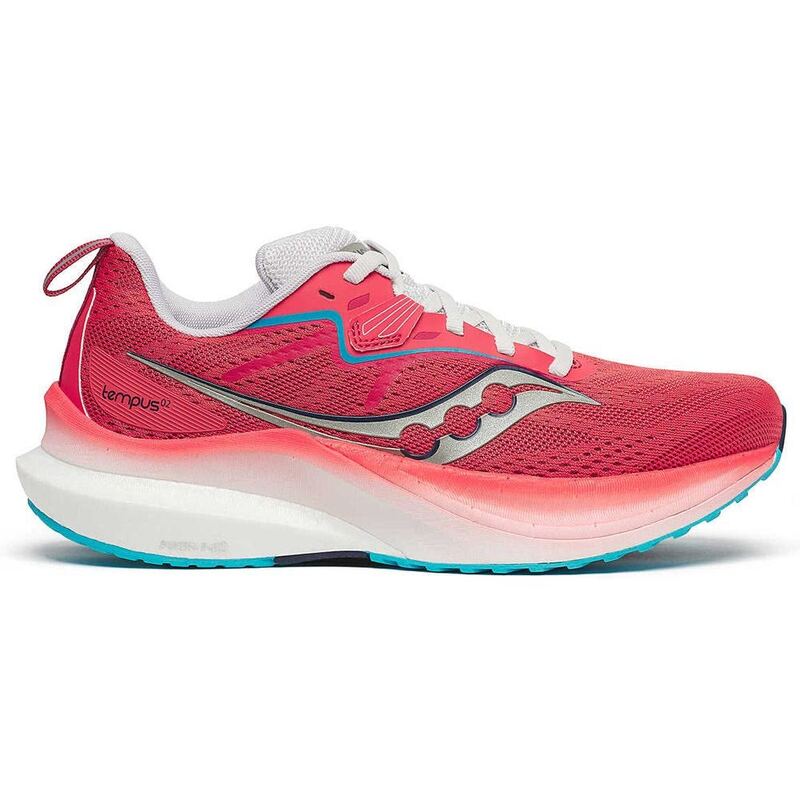
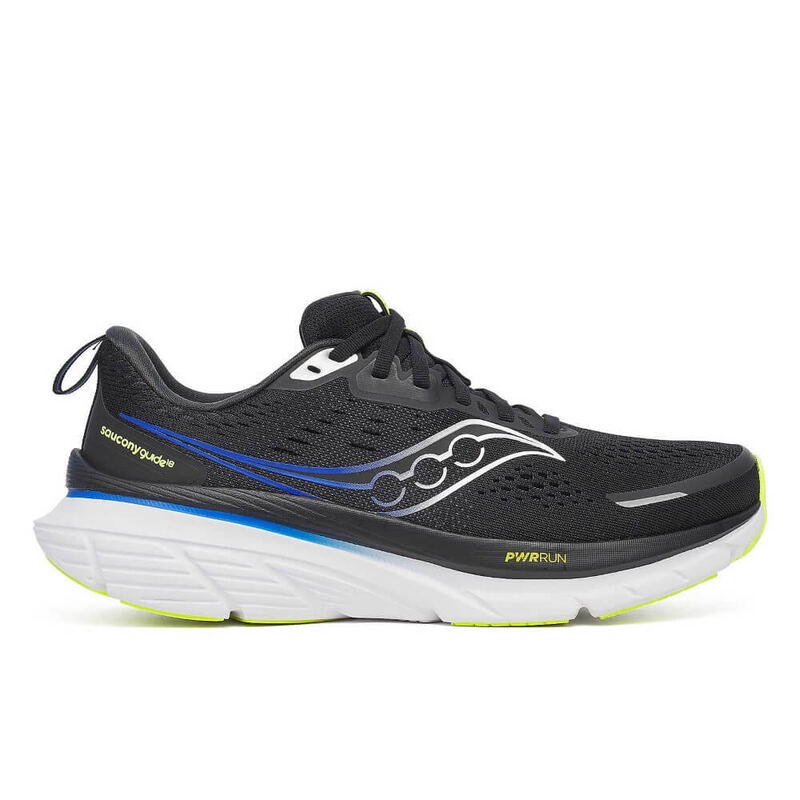
The Hoka Gaviota 6 provides a roomier fit and better stability than the Saucony Tempus 2, but its outdated CMEVA foam delivers poor shock absorption compared to the ASICS GT-2000 14. It's also more expensive than the Saucony Guide 18 despite offering less energy return.
Rating sources
“An excellent, long awaited update, the Hoka Gaviota 6 will appease both runners with high stability needs and those needing an all-day, highly stable walking/standing shoe.”
“I also appreciated that this model does not have a rocker outsole (the Clifton 10s and Arahi 8s do); without that design feature, I found walking to be much more comfortable.”
Our 4.7 score is the average of the 4 scored reviews above; 2 more reviewed it without printing a score and are not in the average. Ratings marked * were derived from the reviewer’s written analysis or video transcript — the publisher didn’t print an explicit numeric score, so we inferred one from their own words. Click through to verify. More about methodology.