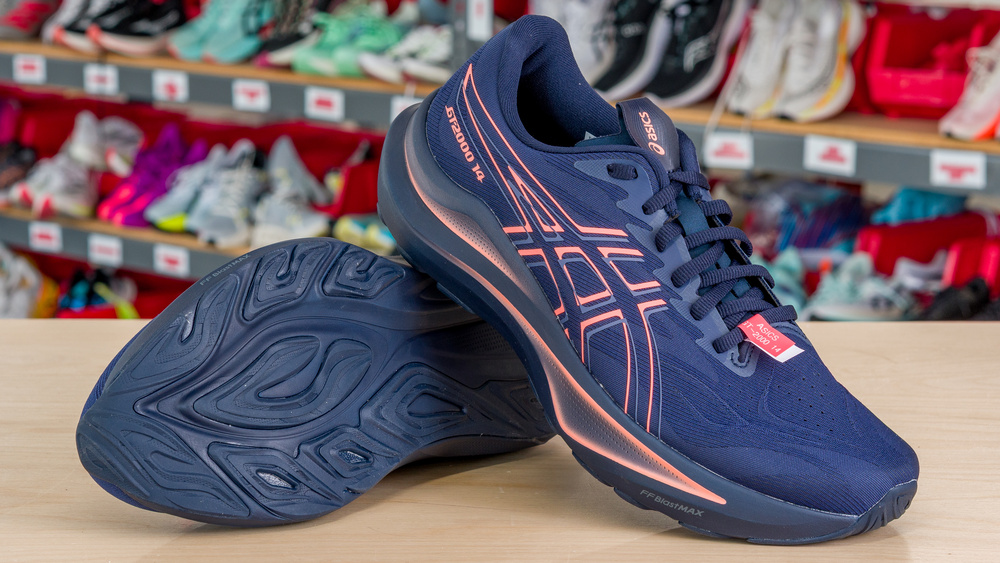
The ASICS GT-2000 14 remains a reliable stability shoe, with RTINGS.com calling it 'one of the most dependable stability shoes you can buy.' The switch to FF Blast Max foam improves shock absorption and energy return compared to previous versions, while the outsole offers exceptional durability. However, the narrow and tapered toebox limits ventilation and may feel restrictive for some runners, as noted by both RunRepeat and Doctors of Running. This shoe is best suited for runners with moderate to high stability needs who want a balanced, supportive daily trainer rather than those seeking maximum cushioning or a more energetic ride.

Full review
Cushioning Evolution
The ASICS GT-2000 14 introduces a significant upgrade in midsole technology with the switch from FF Blast+ to FF Blast Max foam. This change delivers a noticeably softer and more bouncy ride, particularly under the forefoot, according to Flawless Shoe Reviews' James McCormack. The new foam provides a springier feel that's more forgiving than the firmer 2000 13, while still maintaining adequate heel support through the integrated 3D Guidance System and PureGEL insert. RunRepeat's lab testing confirmed that the heel absorption measured 132 SA and forefoot 110 SA, indicating a smooth yet protective ride that's better suited for long runs and heel strikers compared to previous iterations.
Professional reviewers noted that the FF Blast Max foam offers a more energetic underfoot experience than the previous FF Blast+ formulation. According to Runners World's Jeff Dengate, the new foam doesn't bottom out despite being softer, and testers reported a smooth heel-to-toe transition without dead spots. The 2000 14's midsole stack heights were measured at 36.9 mm in the heel and 28.2 mm in the forefoot, which RTINGS.com found to be a balanced approach that avoids maximalist territory while still delivering ample cushioning. However, the increased softness does result in a slight weight increase of 2.8g for men's models compared to the 2000 13.
Stability Performance
The GT-2000 14 maintains its reputation for delivering moderate stability without feeling intrusive, as noted by Doctors of Running's Matthew Klein. The shoe employs ASICS' 3D Guidance System rather than a traditional medial post, using geometry and foam compression to provide support. This approach creates a gentle nudge through the medial sidewalls and a broad base through the midfoot and forefoot that helps center the foot. Road Trail Run's Michael Ellenberger and Matt Kolat both praised the shoe's ability to provide unobtrusive stability that doesn't compromise comfort or performance. Klein emphasized that the 3D system works well without feeling like a medial wedge, and the shoe's stability features were effective during both walking and running activities.
RTINGS.com's analysis showed that the GT-2000 14 delivers consistent stability across different foot strike patterns. The shoe's design includes a broad base through the midfoot and forefoot, with medial and lateral sidewalls that help center the foot. The platform width measurements were 36.9 mm at the heel, 28.2 mm at the forefoot, and the overall stability was rated as high. However, the shoe's stability system does require a proper fit to work effectively, and the stiff heel counter can cause pressure issues for runners with heel sensitivities, as noted by both Doctors of Running and Flawless Shoe Reviews.
Fit and Upper Construction
The upper construction of the GT-2000 14 features a woven engineered mesh that provides a secure, breathable fit. According to Flawless Shoe Reviews, the upper is comfortable and holds the foot well with plenty of space in the forefoot. The tongue is thin and padded, helping to prevent slipping, while the heel counter is firm enough to provide stability but not so rigid as to cause discomfort. RunRepeat's testing showed that the fit is true to size with a normal width and slightly lower volume, though the toe box is described as slightly tapered. The upper's breathability was noted as a potential limitation by some reviewers, with Doctors of Running's Matt Klein mentioning that while the mesh is comfortable, it's not particularly translucent or majorly perforated.
Both RTINGS.com and RunRepeat highlighted that the upper construction is well-suited for runners with normal width feet. The fit was described as secure and locking in well, with the tongue providing good protection against lace biting. However, the laces were criticized by Road Trail Run's Matt Kolat for being too short, which limits the ability to use a runners knot for additional ankle security. The heel counter was noted as firm and supportive, but potentially problematic for runners with sensitive heels, as mentioned by Doctors of Running's Klein. The overall upper construction was praised for its premium feel and materials, with Michael Ellenberger from Road Trail Run noting that the materials are indistinguishable from ASICS' more top-end trainers.
Outsole Design and Durability
The GT-2000 14 features a redesigned outsole with a new rubber configuration that improves traction and ride quality. Road Trail Run's Michael Ellenberger noted that the outsole has wavy patches of rubber that offer good grip, with a single piece of rubber spanning the length of the shoe under the arch to limit flex and boost stability. The medial side uses a single piece of rubber from heel to big toe, while the lateral side employs smaller patches to encourage flexibility. RTINGS.com confirmed that the outsole's exceptional durability was one of the standout features, with the new rubber configuration providing steady footing on all types of surfaces. RunRepeat's lab work showed that the outsole's durability was rated as good, with the new design improving flexibility while maintaining traction.
The outsole's design includes a more noticeable forefoot rocker that helps with smoother transitions from heel strike through toe-off, according to Flawless Shoe Reviews. The shoe also incorporates a toe spring that holds toes in slight extension, facilitating push-off but potentially causing issues for runners sensitive in the forefoot. The rubber patches are strategically placed to deliver an amplified toe-off with added stability, as described by Runners World's Jeff Dengate. However, the outsole lacks horizontal cutaways like previous versions, which some reviewers noted makes toe-off and transitions slower, according to Road Trail Run's Matt Kolat.
Performance in Real-World Use
Professional reviewers consistently praised the GT-2000 14 for its versatility as a daily trainer that performs well across various running scenarios. Road Trail Run's Matt Kolat noted that the shoe can handle easy long runs, marathon pace work, and even uptempo sessions, though it's not built for fast intervals or racing. The shoe's performance was described as enjoyable and lively, with Michael Ellenberger from Road Trail Run stating it feels modern and competent, especially for a stability daily trainer. Runners World's Jeff Dengate emphasized that the shoe delivers enough cushioning and stability without feeling clunky or stiff, making it suitable for runners seeking a fun underfoot feeling that still offers plenty of guidance.
The shoe's performance was also evaluated for its ability to handle different foot strike patterns and running styles. Doctors of Running's Matthew Klein noted that the GT-2000 14 provides a more traditional feeling stability shoe with new age tech, making it best for those with higher stability needs wanting more cushioning and stability than recent prior versions. The shoe's moderate stack height of 36.5 mm in the heel and 28.5 mm in the forefoot was seen as a sweet spot for daily training, as noted by Flawless Shoe Reviews. However, the shoe's performance was described as modest for today's standards, especially for forefoot strikers or heavier runners, according to RunRepeat's analysis, which recommended the ASICS Gel Kayano 32 as a cushy alternative.
Where It Falls Short
Despite its many strengths, the GT-2000 14 has several notable drawbacks that reviewers have identified. The most commonly cited issue is the narrow and tapered toebox, which RunRepeat's lab testing showed as potentially restrictive for runners needing extra room for toe splay. This was particularly problematic for runners with wider feet or those who prefer a more roomy fit, with RunRepeat recommending Altra Experience Form or Adidas Supernova Solution as alternatives. Road Trail Run's Matt Kolat criticized the laces as being far too short, limiting the ability to use a runners knot for additional ankle security, which could be problematic for runners with wider feet.
The shoe's breathability was another area of concern, with Doctors of Running's Matthew Klein noting that while the upper is comfortable, it's not particularly breathable. The dense upper construction limits ventilation, which could be an issue for runners who experience overheating during longer runs. Additionally, the shoe's transition from heel to push-off was described as clunky by Doctors of Running's Klein, who noted that the increased posteriorly flared heel makes for a less smooth rearfoot transition. The heel bevel was also criticized by Runners World's Jeff Dengate, who noted that the bevel isn't quite as gradual as found on the 2000 13, potentially causing issues for heel strikers who clip the back portion of the shoe during landing. Finally, the shoe's weight, while still reasonable, was noted as being slightly heavier than the 2000 13, with Runners World reporting a 2.8g increase for men's models.
Who It's Best For
The ASICS GT-2000 14 is best suited for runners who need moderate stability and want a daily trainer that feels supportive yet comfortable. According to RunRepeat, it's ideal for those with narrow feet who want a daily trainer that feels stable with every step, or those who disliked the flat feel of FF Blast+ in earlier GT 2000 versions and prefer the new FF Blast Max's better underfoot experience. The shoe is also recommended for runners who need a supportive ride, excellent outsole durability, and versatility for everyday use. Road Trail Run's Matt Kolat noted that it's particularly good for runners who use it for daily training and want to pick up pace easily, while also providing protection with regards to cushioning and support.
Doctors of Running's Matthew Klein recommended the GT-2000 14 for runners with higher stability needs who want more cushioning and stability than recent prior versions, essentially returning to a favorite for fans of original medial support GT-2000s. The shoe is also suitable for runners who want a do-it-all daily trainer that works well as a walking shoe or lifestyle trainer, as noted by Flawless Shoe Reviews. However, it's not recommended for heavier runners or those who crave maximum underfoot cushioning, as RunRepeat's analysis suggests the setup feels modest for today's standards. Runners who prefer a more roomy fit should consider alternatives like Altra Experience Form or Adidas Supernova Solution, while those seeking maximum cushioning should look at the ASICS Gel Kayano 32.
Comparison to Alternatives
The GT-2000 14 competes directly with other stability shoes in the market, with several reviewers comparing it to the Brooks Adrenaline 24 and ASICS Gel-Kayano 31. According to Doctors of Running, the GT-2000 14 offers a more traditional feeling stability shoe with new age tech, making it a strong option for runners who want a shoe with more aggressive medial stability but don't want the full support of a Kayano. RunRepeat's comparison table showed that the GT-2000 14 has a similar price point to the Brooks Adrenaline 24 at $140, though the Kayano 31 is priced at $160. The GT-2000 14 offers a more balanced approach with moderate stability, while the Kayano 31 provides more comprehensive support for runners with severe overpronation.
When compared to the ASICS GT-2000 13, the GT-2000 14 represents a significant upgrade with the new FF Blast Max foam and redesigned outsole. Road Trail Run's Michael Ellenberger noted that the 2000 14 feels more modern and lively than its predecessor, while Flawless Shoe Reviews' James McCormack emphasized that it brings the bounce back for those who loved the cushioning in the GT-2000 12 but felt let down by the 13. The GT-2000 14 also differs from the GT-1000 13, which is described as a more traditional stability shoe with a firmer feel, according to Flawless Shoe Reviews. The GT-2000 14's design makes it more suitable for runners seeking a balance between stability and cushioning, while the GT-1000 13 is better for those who prefer a more traditional approach to stability.
Strengths
- +Improved FF Blast Max foam provides stronger shock absorption with 132 SA in the heel and 110 SA in the forefoot
- +Outstanding outsole durability with dependable traction for everyday use
- +Full-length medial stability system offers consistent support from heel to forefoot
- +Well-crafted upper with secure fit and good lock-down for normal to narrow width feet
Watch-outs
- −Tapered toebox may feel restrictive and limits toe splay, especially for those needing extra room
- −Limited breathability due to dense upper material, which can feel warm during long runs
How it compares
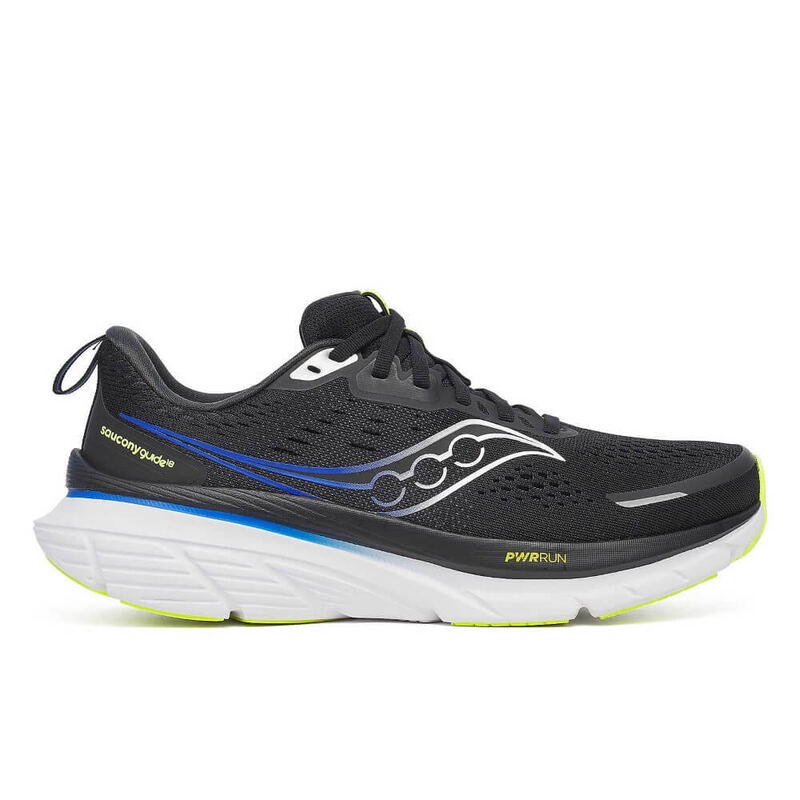
The ASICS GT-2000 14 offers better shock absorption than the Hoka Arahi 8 and provides more consistent support from heel to forefoot than the Saucony Guide 18. However, it's less breathable than the New Balance Fresh Foam X 860 v14 and has a more restrictive toebox than the Hoka Gaviota 6.
Who this is for
At a glance: runners wanting balanced support and durability.
Why you’d buy the ASICS GT-2000 14
- Improved FF Blast Max foam provides stronger shock absorption with 132 SA in the heel and 110 SA in the forefoot.
- Outstanding outsole durability with dependable traction for everyday use.
- Full-length medial stability system offers consistent support from heel to forefoot.
Why you’d skip it
- Tapered toebox may feel restrictive and limits toe splay, especially for those needing extra room.
- Limited breathability due to dense upper material, which can feel warm during long runs.
Rating sources
“The ASICS GT-2000 14 is best for those with higher stability needs wanting more cushioning and stability than recent prior versions - and perhaps a return to a favorite for fans of original medial support GT-2000s.”
Our 4.2 score is the average of these published ratings. Ratings marked * were derived from the reviewer’s written analysis or video transcript — the publisher didn’t print an explicit numeric score, so we inferred one from their own words. Click through to verify. More about methodology.