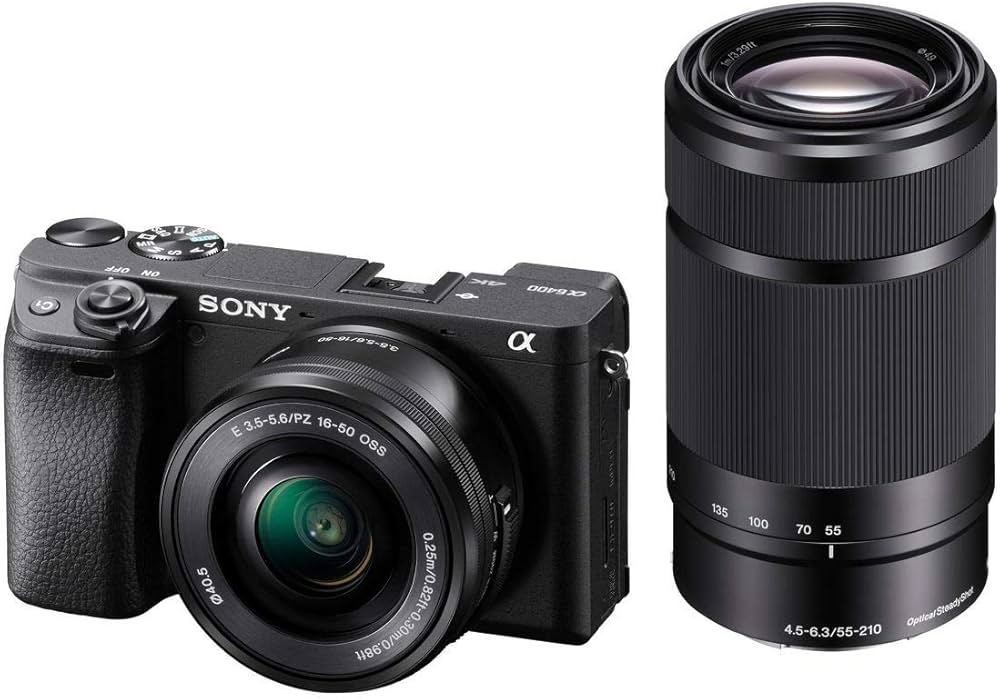
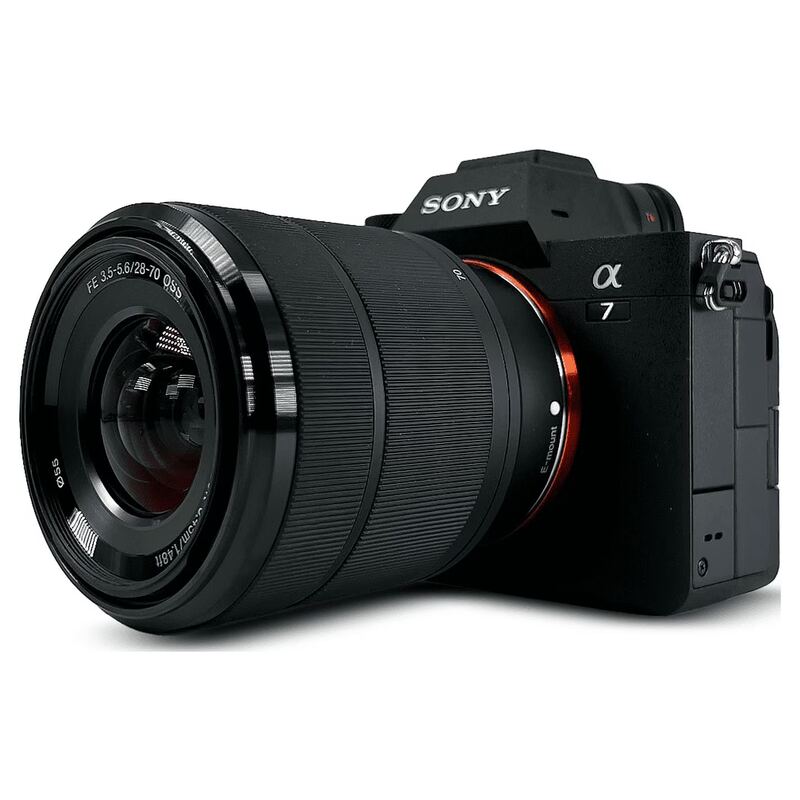
The Sony α6400 stands out primarily for its exceptional autofocus system, which DPReview calls 'one of the best implementations out there' and 'game-changing' for its price range. RTINGS.com notes its 11fps continuous RAW shooting and 4K video capabilities. However, reviewers like Alik Griffin criticize its handling and ergonomics, while others point out the lack of in-body stabilization and confusing menu system. Despite these drawbacks, it's considered one of the most capable APS-C cameras at its price point, particularly for those prioritizing autofocus performance over user experience.

Full review
Autofocus Excellence
The Sony α6400's autofocus system stands as its most significant achievement, with professional reviewers consistently praising its industry-leading implementation. DPReview's Carey Rose noted that the camera's Real-time Tracking AF system 'basically includes Eye AF' and is 'among the best autofocus implementations we've ever seen.' RTINGS.com confirmed the system's capability with 8.3ms input lag at 120Hz, while Peter Ferenczi emphasized that the a6400's AF tech 'borrows heavily from the a7 III, which itself uses a system derived from the pro-specced a9'—a quantum leap forward in AF performance. The camera's ability to track subjects reliably, even with the silent full-electronic shutter mode, makes it particularly suitable for family documentation and run-and-gun video shooting, though some reviewers noted rolling shutter artifacts with fast movement.
However, the autofocus system isn't without its quirks. The system can be confusing at first, with redundant or unnecessary settings according to DPReview's Rishi Sanyal. The camera's tap-to-track feature in video must be enabled and disabled in the menu, which adds complexity. Additionally, while the system excels in tracking, it still lacks in-body stabilization, which may limit video and low-light shooting capabilities. Some users have reported that the autofocus can be overly sensitive, causing the camera to lock onto unintended subjects, though this is generally considered a minor inconvenience compared to the overall system's excellence.
Image Quality and Performance
Sony's α6400 delivers impressive image quality with its 24.2MP APS-C Exmor CMOS sensor and BIONZ X processor. The camera achieves ISO performance that's considered excellent for its class, with DPReview's Carey Rose noting that the JPEG and Raw image quality are 'up there with the best.' Shotkit's Daniel Stark, who tested the camera during a wedding and studio portrait shoot, reported that the camera handled various lighting conditions well, though he noted that low-light performance could be better. The camera's continuous shooting rate of 11 fps with full RAW capture is particularly impressive for a camera in this price range.
Image quality is further enhanced by the camera's detailed 4K video capabilities, with RTINGS.com highlighting that the camera's 4K video is 'very detailed' and that it has 'no official video record limit, more overheat-resistant than predecessor.' However, the camera's 4K/30p mode comes with a 1.2x crop factor, which some reviewers found limiting. The camera's ability to shoot in RAW and JPEG simultaneously, along with its excellent burst rates, makes it a strong contender for both still photography and video work. The camera's 921.6k-dot tilting touchscreen and 2.36m-dot OLED EVF provide excellent viewing experiences for both stills and video.
Build Quality and Design
The α6400's build quality is described as 'built like a tank' by Alik Griffin, who also noted its compact and lightweight design. The camera's weather-sealing is a significant feature, with RTINGS.com praising the 'claimed weather-sealing' and 'compact, lightweight design.' However, the ergonomics are a point of contention among reviewers. DPReview's Barney Britton noted that 'the ergonomics of the a6x00 series of cameras has never been our favorite,' and that 'the handling frustrations matter much less' only when the autofocus system is working well. Amateur Photographer's Andy Westlake criticized the 'out-dated body design' and 'awkward handling' that challenges the camera's achievements, while Shotkit's Daniel Stark mentioned that 'the Sony a6400 buttons are closer together to accommodate the small body and I had a problem accidentally hitting buttons I didn't want to.'
The camera's design includes a 3.0-inch tilting touchscreen with 921.6k dots, which can be tilted up 180° for selfies or down almost 90°, according to DPReview. The electronic viewfinder is a 2.36m-dot OLED EVF, which is considered excellent for its class. The camera's grip is substantial and feels like a professional camera, though some reviewers noted that the small body makes it feel cramped. The camera's weight is just under a pound (body only), making it ideal for travel, but the button placement can be problematic for some users.
Video Capabilities
The α6400's video capabilities are a standout feature, particularly its detailed 4K video recording and slow-motion capabilities. RTINGS.com noted that the camera's 4K video is 'very detailed' and that it 'has no official video record limit, more overheat-resistant than predecessor.' The camera's ability to record 4K at 30p comes with a 1.2x crop factor, which some reviewers found limiting. However, the camera's video performance is enhanced by its ability to shoot in 100mbps video, which is impressive for a camera in this price range. The camera's tap-to-track autofocus in video mode is particularly useful, though it must be enabled and disabled in the menu, according to DPReview.
Despite its video capabilities, the camera lacks in-body stabilization, which may limit video and low-light shooting. The camera's 4K video is described as 'very detailed' by RTINGS.com, but some reviewers noted that it has 'pronounced rolling shutter artifacts in video and using silent shutter,' which can be problematic for fast-moving subjects. The camera's 11fps continuous shooting rate with full RAW capture is also beneficial for video work, as it allows for capturing more frames when needed. The camera's ability to record video in various formats and its 4K capabilities make it a strong contender for videographers.
User Experience and Interface
The α6400's menu system has been updated from its predecessor, but reviewers have noted that it's still not as intuitive as some competitors. DPReview's Rishi Sanyal commented that 'the menus have been updated, but other manufacturers' menus are easier to navigate,' while Shotkit's Daniel Stark noted that 'the touchscreen functionality on the Sony a6400 (left) compared to the Canon 6D mark II (right)' was limited. The camera's customizable 'My Menu' is a good feature, but the default AWB behavior can result in JPEG colors that are too 'cool,' according to DPReview's Carey Rose.
The camera's touchscreen is described as having 'limited touch screen functionality' by Shotkit, and the camera's button layout can be problematic, with some users accidentally hitting buttons due to the small body size. The camera's ergonomics are described as 'hit-and-miss' by DPReview, and the handling is criticized by Amateur Photographer's Andy Westlake as 'awkward' and 'out-dated body design.' The camera's ability to 'remember' exposure settings between stills and video is also noted as a shortcoming, with DPReview stating that 'it doesn't remember your exposure settings between stills and video.'
Where It Falls Short
Despite its many strengths, the α6400 has several notable shortcomings that impact its overall appeal. The camera's ergonomics and handling are consistently criticized by reviewers, with DPReview's Barney Britton noting that 'the ergonomics of the a6x00 series of cameras has never been our favorite,' and that 'the handling frustrations matter much less' only when the autofocus system is working well. The camera's touchscreen functionality is limited, with Shotkit's Daniel Stark stating that 'the touchscreen functionality on the Sony a6400 (left) compared to the Canon 6D mark II (right)' was limited. The camera's lack of in-body stabilization is also a significant drawback, particularly for video and low-light shooting, as noted by RTINGS.com.
Additionally, the camera's default AWB behavior can result in JPEG colors that are too 'cool,' according to DPReview's Carey Rose, and the camera's menu system, while updated, is still not as intuitive as some competitors. The camera's SD slot is UHS-I with slow write times, and it lacks lossless or uncompressed Raw options, which are important for professional photographers. The camera's ability to 'remember' exposure settings between stills and video is also noted as a shortcoming, with DPReview stating that 'it doesn't remember your exposure settings between stills and video.' The camera's lack of in-camera Raw processing and lossy compressed Raws are also drawbacks for advanced users.
Who It's Best For
The Sony α6400 is best suited for photographers who prioritize autofocus performance and image quality over ergonomics and user interface. It's ideal for enthusiasts and professionals who need a camera that can handle a wide range of shooting scenarios, from sports and wildlife to portraits and video work. According to DPReview's Carey Rose, 'parents, enthusiasts and pros alike will appreciate the class-leading pro-grade AF system that's also simple enough to use you can just 'set and forget'.' The camera's compact size and lightweight design make it perfect for travel, and its 11fps continuous shooting rate with full RAW capture is beneficial for action photography.
However, the camera may not be ideal for users who prioritize handling and user experience over performance. The camera's ergonomics and button placement can be problematic, and the menu system, while updated, is still not as intuitive as some competitors. The lack of in-body stabilization is also a drawback for video and low-light shooting. For those who want a camera that is engaging and fun to use, the Fujifilm X-T30 or Panasonic Lumix GX9 may be better choices, according to DPReview's comparison. The camera is also not ideal for users who need lossless or uncompressed Raw options, or those who require in-camera Raw processing.
How It Compares to Alternatives
When compared to its main competitors, the Sony α6400 stands out primarily for its autofocus system, which is considered among the best in its price range. DPReview's comparison with the Fujifilm X-T30 noted that 'the Fujifilm is far more engaging and responsive, with faster burst rates and better video,' but 'the Sony's autofocus system is really best-in-class.' The Panasonic Lumix GX9 is another natural point of comparison, with DPReview noting that 'the GX9 is a less impressive video camera thanks to a crop in all 4K modes (though the a6400 has a 1.2x crop in 4K/30p), but its built-in stabilizer will give you smoother footage.' The camera's autofocus system is also superior to that of the Olympus E-M5 III, which 'does snap focus pretty quickly to a given spot in a way that would have astounded me 20 years ago,' but lacks modern tracking features.
However, the α6400's competitors offer other advantages that may outweigh its autofocus superiority. The Fujifilm X-T30, for example, is noted for its 'film simulations are fun to experiment with, and it offers pleasing color out-of-camera in most any situation.' The Panasonic GX9 has better in-body stabilization, which helps with low-light shooting and video, but lacks the advanced autofocus capabilities of the α6400. The camera's lack of in-camera Raw processing and lossy compressed Raws are also drawbacks compared to some competitors, though these features are less critical for casual users.
Strengths
- +Industry-leading autofocus implementation with 425 phase- and contrast-detect AF points
- +11fps continuous RAW shooting capability
- +Detailed 4K video with 100mbps recording and slow motion
- +Tilting 3.0" 921.6k-Dot touchscreen for selfies and vlogging
Watch-outs
- −Ergonomics are hit-and-miss with no substantive changes from predecessor
- −Lacks in-body stabilization limiting video and low-light performance
How it compares
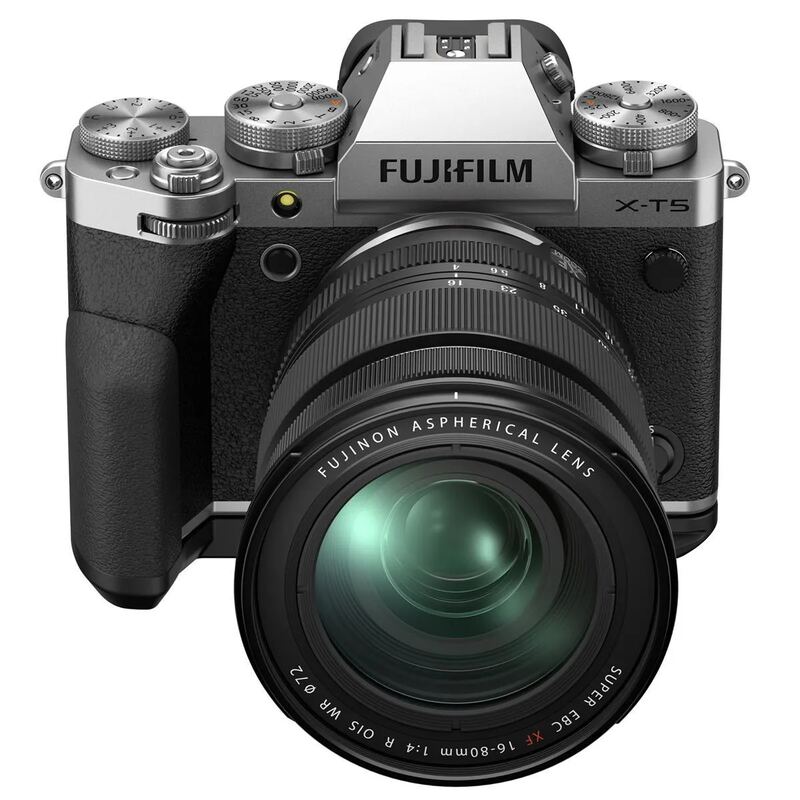
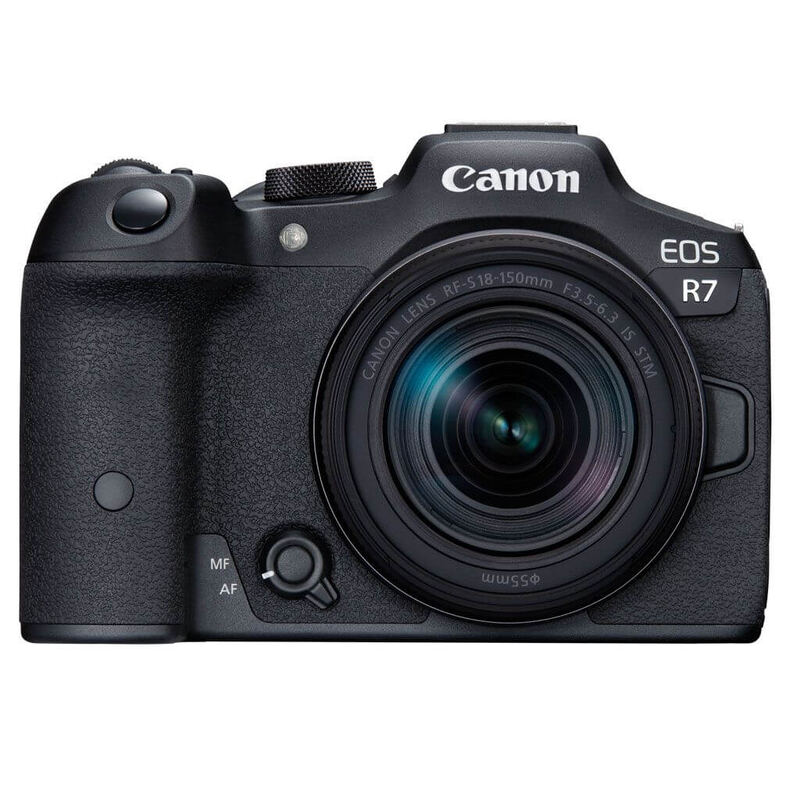
The Sony α6400 excels in autofocus performance compared to the Canon EOS R50, but lacks the 4K/60p recording and 10-bit color depth of the Sony α6700. Unlike the Fujifilm X-T5, it has a more compact design and better low-light performance, though the X-T5 provides higher frame rates and better in-body stabilization.
Who this is for
At a glance: Photographers prioritizing autofocus.
Why you’d buy the Sony α6400
- Industry-leading autofocus implementation with 425 phase- and contrast-detect AF points.
- 11fps continuous RAW shooting capability.
- Detailed 4K video with 100mbps recording and slow motion.
Why you’d skip it
- Ergonomics are hit-and-miss with no substantive changes from predecessor.
- Lacks in-body stabilization limiting video and low-light performance.
Rating sources
“It is absolutely one of the most capable APS-C inter”
“The Sony A6400 is a small, lightweight APS-C camera designed for photographers and videographers looking to maximize versatility and image quality without compromising performance.”
Our 4.1 score is the average of these published ratings. Ratings marked * were derived from the reviewer’s written analysis or video transcript — the publisher didn’t print an explicit numeric score, so we inferred one from their own words. Click through to verify. More about methodology.