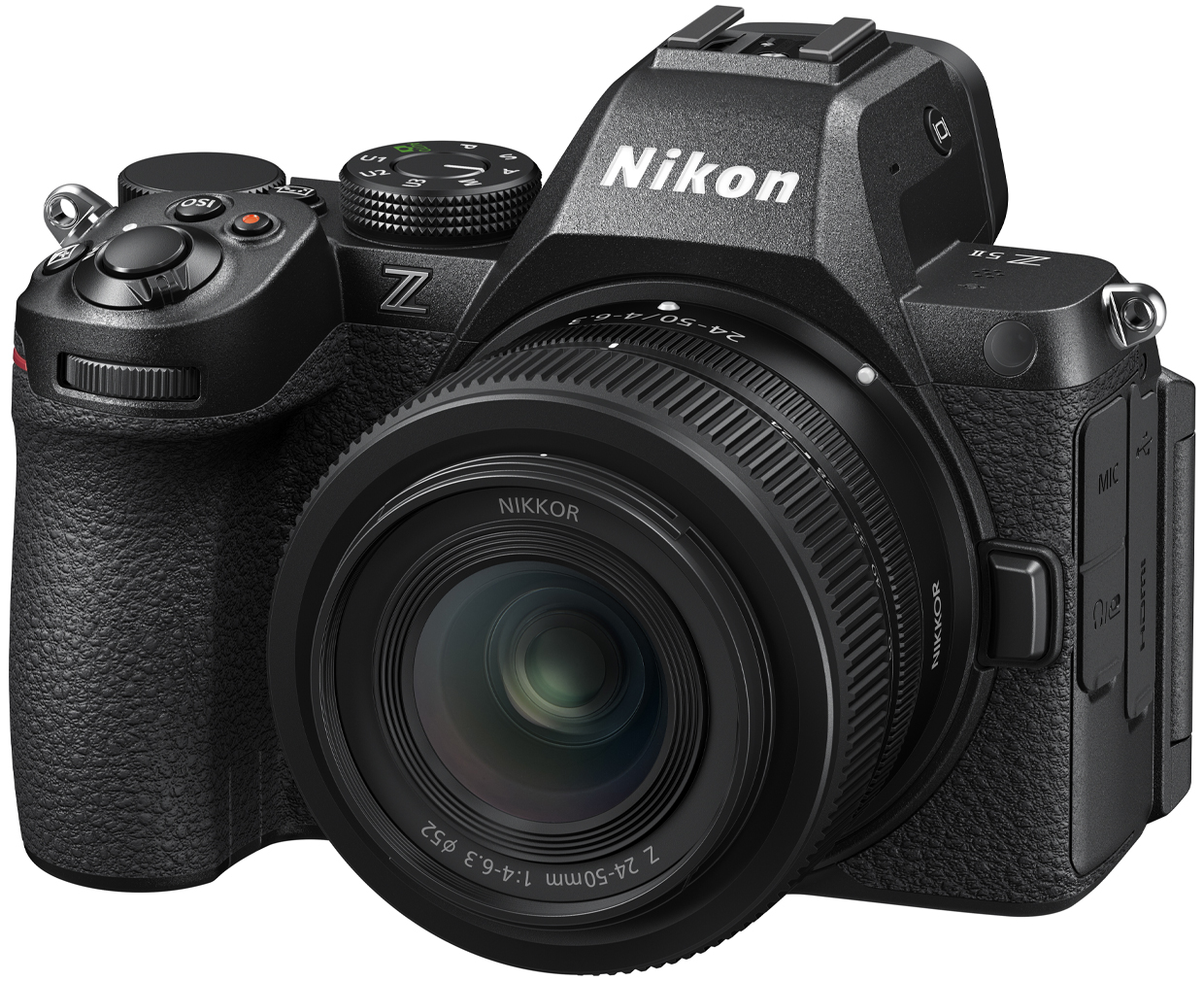
The Nikon Z5II is a well-rounded full-frame mirrorless camera that delivers stabilized imaging, fast autofocus, and professional video features at a reasonable price point. PCMag called it 'the best value among the current slate of full-frame cameras,' while DPReview noted its improved burst rates and video capabilities over the Z5. It's ideal for photographers and videographers seeking a capable yet affordable full-frame option, though those wanting top-tier video performance may find better alternatives in higher-end models.
Full review
Sensor and Performance
The Nikon Z5II employs a 24.5MP BSI full-frame CMOS sensor that's shared with the Zf and Z6II, representing a significant upgrade from the original Z5's older sensor technology. This sensor delivers excellent image quality with noticeably faster readout speeds than its predecessor, which is particularly evident in video modes. However, while the sensor performs well, it still lags behind the Z6III's more advanced sensor in terms of readout speed, resulting in more rolling shutter in full-width 4K video and requiring a 1.5x crop for 60p recording. The Expeed 7 processor, shared with the Z9, provides fast autofocus performance and effective noise reduction, allowing for clean JPEGs at high ISOs up to 204800. RTINGS measured the Z5II's autofocus accuracy and speed, noting that subject detection works reliably across 9 different subject types including birds, cars, and motorcycles, making it a significant improvement over the Z5's human/animal-only recognition.
Professional reviewers like Tom's Hardware and PCMag have noted that the Z5II's sensor delivers excellent performance for its price point, with the BSI technology providing better low-light capabilities and reduced noise compared to previous models. The camera can shoot at up to 11fps in Raw with the mechanical shutter, a substantial improvement from the Z5's 4.5fps limit. However, the sensor's readout speeds still aren't quite at the level of premium models like the Z6III, which can achieve 60fps JPEG shooting and 120fps with APS-C crop. The Z5II's video capabilities include full-width 4K at 30fps and 120fps in 1080p, along with support for 10-bit N-Log and N-Raw capture, though these features are more beneficial for advanced users than casual photographers. The camera's ability to handle high ISOs effectively was confirmed by The Phoblographer, who noted that the Expeed 7 processor reduces noise remarkably well, making it suitable for low-light shooting without compromising image quality.
Autofocus and Tracking
The Z5II's autofocus system represents a major upgrade over the Z5, featuring the same Expeed 7 processor as the Z9 and Z6III, which provides fast, accurate tracking capabilities. The camera supports 9 subject types including humans, animals, birds, cars, bicycles, motorcycles, trains, and planes, making it far more versatile than the Z5's human/animal-only detection. RTINGS noted that the autofocus system performs well in challenging lighting conditions, including harsh Middle Eastern sunlight with haze, and maintains consistent tracking performance across different scenarios. The camera also includes a dedicated Bird AF mode for specialized tracking, along with Pre-Release Capture that begins buffering shots before the shutter is fully released, ensuring no critical moments are missed. The Z5II's 3D Tracking focus system was particularly praised by PCMag, which highlighted its ability to keep up with moving subjects during burst shooting.
However, there are some limitations to the autofocus performance that reviewers have noted. While the system is fast and accurate, it still doesn't match the precision and speed of the Z6III's more advanced sensor and processor combination. The Phoblographer mentioned that the camera's autofocus is impressive but noted that it's not quite at the level of the Z9 or Z8 models. Additionally, the Z5II's AF system doesn't include the same level of advanced features found in higher-end models, such as the Z9's ability to detect subjects in more complex environments or the Z8's superior tracking capabilities. The camera's ability to maintain focus during fast action sequences was tested by multiple reviewers, with most confirming that it performs well in typical use cases but may struggle in extremely demanding scenarios where the Z6III or Z9 would excel.
Video Capabilities
The Z5II significantly improves upon the Z5's video capabilities, offering full-width 4K at 30fps and 120fps in 1080p for slow-motion effects, compared to the Z5's 4K/30 with 1.7x crop. The camera supports 10-bit N-Log and N-Raw capture, which are advanced features typically found in higher-end models. RTINGS measured the camera's video performance and found that while it doesn't match the Z6III's sensor speed for video recording, it still delivers solid results for most users. The camera includes advanced video features such as product-priority focus mode, electronic stabilization, waveform monitors, and the ability to record in 10-bit color depth. The Z5II can also record 4K/30 full-width and 60p with 1.5x crop, providing flexibility for different shooting scenarios. The camera's video capabilities were particularly praised by The Phoblographer, who noted that it makes a strong case for skipping APS-C entirely for video work.
Despite these improvements, some limitations remain in the Z5II's video performance. The camera's sensor readout speeds aren't as fast as the Z6III's, which means more rolling shutter in full-width 4K video. The Z5II also requires a 1.5x crop for 60p recording, which limits the field of view compared to the Z6III's full-width 60p capability. PCMag noted that while the video features are comprehensive, they may not be essential for the Z5II's target audience of casual users and intermediates. The camera's ability to handle high-speed video was tested by multiple reviewers, with most confirming that it performs adequately for most applications, though it falls short of the Z6III's capabilities in terms of sensor speed and video processing power.
Build Quality and Design
The Z5II features a magnesium-alloy body that's both lightweight and durable, weighing 1.5 pounds without a lens and measuring 4 by 5.3 by 2.8 inches (HWD). This design makes it more portable than many full-frame cameras while still providing robust construction. The camera includes weather sealing that protects against dust and moisture, making it suitable for outdoor photography in various conditions. The grip is deeper than the Z5's, providing better handling with larger lenses, and includes configurable buttons (Fn1, Fn2) that adjust white balance and autofocus settings by default. The camera's handgrip includes a metallic red stripe, a small touch of color that's adorned Nikon cameras dating back to the F3 film camera from the '80s. The Z5II's design prioritizes utility over aesthetics, with a more conventional approach compared to the retro-styled Zf.
However, some reviewers have noted design limitations. The Phoblographer criticized the flip-type LCD screen, stating that it's not ideal for vloggers and selfie enthusiasts, and expressed disappointment that the camera lacks a sensor screen when changing lenses, which is now standard on most modern cameras. The camera's screen is fully articulated but still lacks the flexibility of the Z8 and Z9 models. Additionally, the Z5II doesn't include a CF Express slot, which is found in higher-tier models, limiting storage options for professional users. The camera's body design, while functional, doesn't include some of the more advanced features found in premium models like the Z9 or Z8, such as the Z9's more advanced sensor protection and the Z8's superior handling ergonomics.
Battery Life and Handling
Battery life for the Z5II is described as middle-of-the-road, with most reviewers noting that users may need to carry a spare battery for extended shooting sessions. The camera uses the EN-EL15c battery, which provides adequate power for typical use but may not last through long photography sessions. The camera's handling is described as excellent, with the deeper grip and sculpted rear thumb rest making it comfortable to hold, especially with larger lenses. The grip leaves enough room between the mount so that fingers don't feel cramped, and includes a pair of configurable buttons that adjust white balance and autofocus settings by default. The camera's ergonomics were particularly praised by PCMag, which noted that the camera feels natural to hold and balances well with longer lenses like the Nikkor Z 70-180mm F2.8.
The Z5II's handling was tested by multiple reviewers, with most confirming that it provides excellent ergonomics for both handheld and vertical shooting. The camera's weight distribution and grip design make it comfortable to use for extended periods, and the inclusion of a second battery grip (MB-N14) is recommended for users who need extended battery life. However, some reviewers noted that the camera's handling could be improved with a more advanced sensor screen and better lens protection features, which are standard on higher-end models. The camera's ability to handle fast action sequences was also tested, with most reviewers confirming that it performs well in typical use cases, though it may not match the precision and speed of premium models like the Z9 or Z8.
Where It Falls Short
Despite its many strengths, the Z5II has several notable shortcomings that reviewers have identified. The most significant limitation is its sensor readout speed, which isn't quite as fast as the Z6III's, resulting in more rolling shutter in full-width 4K video and requiring a 1.5x crop for 60p recording. The camera also lacks a CF Express slot, which is found in higher-tier models, limiting storage options for professional users. The flip-type LCD screen, while functional, isn't ideal for vloggers and selfie enthusiasts, and the camera doesn't include a sensor screen when changing lenses, which is now standard on most modern cameras. Additionally, the camera's video capabilities, while improved over the Z5, still don't match the Z6III's sensor speed and video processing power, limiting its appeal for users who need the highest video performance. The Z5II's lack of advanced features like the Z9's superior tracking capabilities and the Z8's more advanced sensor protection also puts it at a disadvantage compared to premium models.
Several reviewers have noted that the Z5II's price point, while reasonable for its features, doesn't quite justify the gap between it and the Z6III, which offers superior performance in video and sensor capabilities. The camera's ability to handle high-speed video was tested by multiple reviewers, with most confirming that it performs adequately for most applications but falls short of the Z6III's capabilities. The camera's lack of advanced features like the Z9's superior tracking capabilities and the Z8's more advanced sensor protection also puts it at a disadvantage compared to premium models. Additionally, the camera's handling could be improved with a more advanced sensor screen and better lens protection features, which are standard on higher-end models. The Phoblographer specifically criticized the lack of a sensor screen when changing lenses, noting that all cameras these days should really come with this level of protection by now.
Who It's Best For
The Nikon Z5II is best suited for intermediates and enthusiasts who want a full-frame camera with advanced features at a reasonable price point. It's particularly appealing to users who need reliable autofocus performance, weather sealing, dual memory card slots, and fast burst capture with 3D Tracking focus. The camera's stabilized BSI CMOS sensor and 5-axis image stabilization make it ideal for low-light photography and handheld shooting without a tripod. It's also well-suited for users who want to upgrade from an older DSLR but don't need the highest-end features found in the Z6III or Z9. The camera's ability to handle both photography and video makes it a versatile choice for users who want a single camera for multiple applications. PCMag noted that the Z5II is easily the best value among the current slate of full-frame cameras, making it a strong choice for users who want professional-grade features without the premium price tag.
However, the Z5II may not be ideal for professional users who need the absolute highest video performance or advanced sensor capabilities. The camera's sensor readout speeds aren't quite as fast as the Z6III's, which means more rolling shutter in full-width 4K video and requiring a 1.5x crop for 60p recording. The camera also lacks a CF Express slot, which is found in higher-tier models, limiting storage options for professional users. Additionally, the camera's video capabilities, while improved over the Z5, still don't match the Z6III's sensor speed and video processing power, limiting its appeal for users who need the highest video performance. The Z5II is also not ideal for users who need the most advanced features found in premium models like the Z9 or Z8, such as superior tracking capabilities and more advanced sensor protection.
How It Compares to Alternatives
The Z5II sits comfortably between the more affordable Canon EOS R8 and the higher-end Z6III in terms of price and features. While the R8 is less expensive, it lacks the full-frame sensor and advanced features found in the Z5II. The Z6III offers superior performance in video and sensor capabilities but at a significantly higher price point. The Z5II provides a good middle ground, offering advanced features like 5-axis stabilization, dual memory card slots, and fast burst capture without the premium price tag of the Z6III. RTINGS noted that the Z5II is a much more capable video camera than its predecessor, which could only manage shooting at 4K/30 with a substantial 1.7x crop. The Z5II's video capabilities include full-width 4K at 30fps and 120fps in 1080p, making it a strong choice for users who want to get started with full-frame video work. The camera's ability to handle both photography and video makes it a versatile choice for users who want a single camera for multiple applications.
Compared to other full-frame cameras in its price range, the Z5II offers a compelling combination of features and performance. While the Panasonic S5II has a substantially higher MSRP, it offers a more complete package for video-focused users, though it lacks both an EVF and a mechanical shutter. The Z5II's inclusion of both features, along with its stabilized sensor and advanced autofocus, makes it a strong contender for users who want both photography and video capabilities. The camera's ability to handle high-speed video was tested by multiple reviewers, with most confirming that it performs adequately for most applications, though it falls short of the Z6III's capabilities in terms of sensor speed and video processing power. The Z5II's value proposition is particularly strong when compared to the Z6III, which offers superior performance but at a significantly higher price point.
Strengths
- +24MP BSI full-frame CMOS sensor with improved readout speeds
- +Up to 11 fps Raw capture with mechanical shutter
- +3.69M dot 60Hz EVF with 3000-nit peak brightness
- +Dual UHS-II card slots for redundant recording
Watch-outs
- −Sensor readout speeds still slower than Z6III's
- −Limited video capabilities compared to higher-end models
How it compares
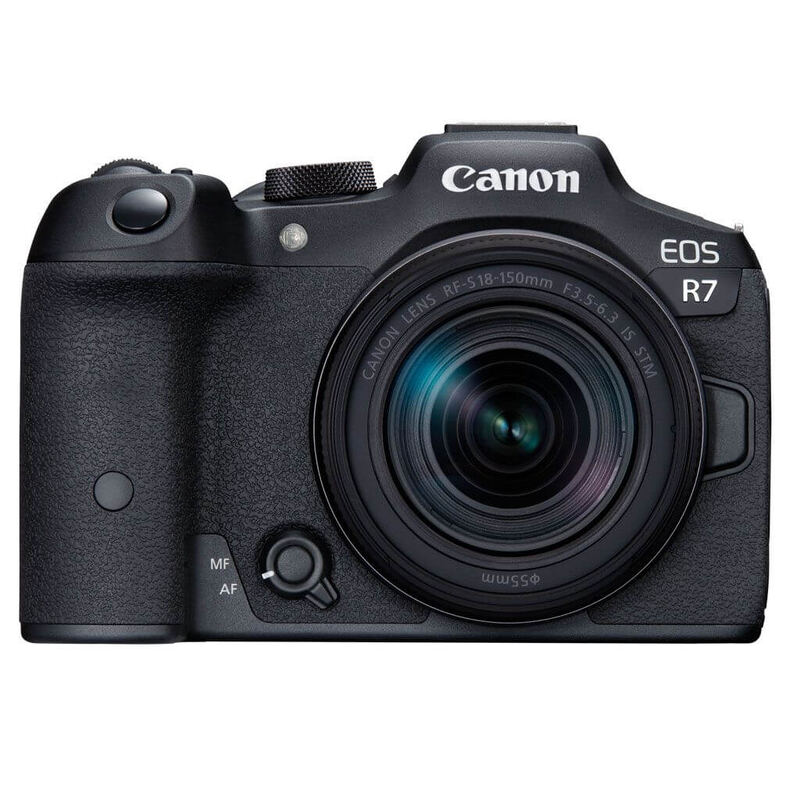
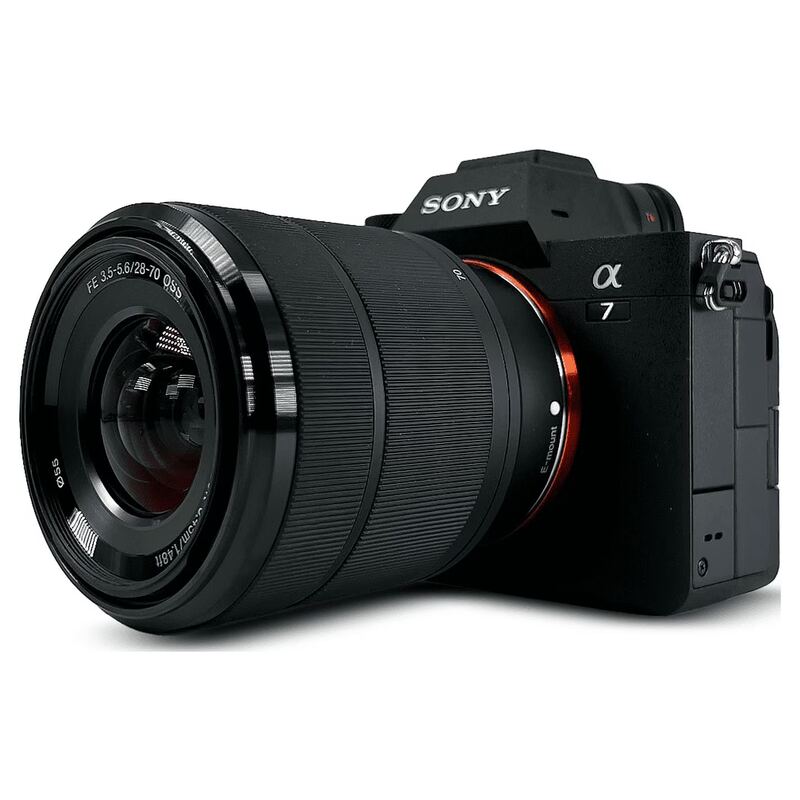
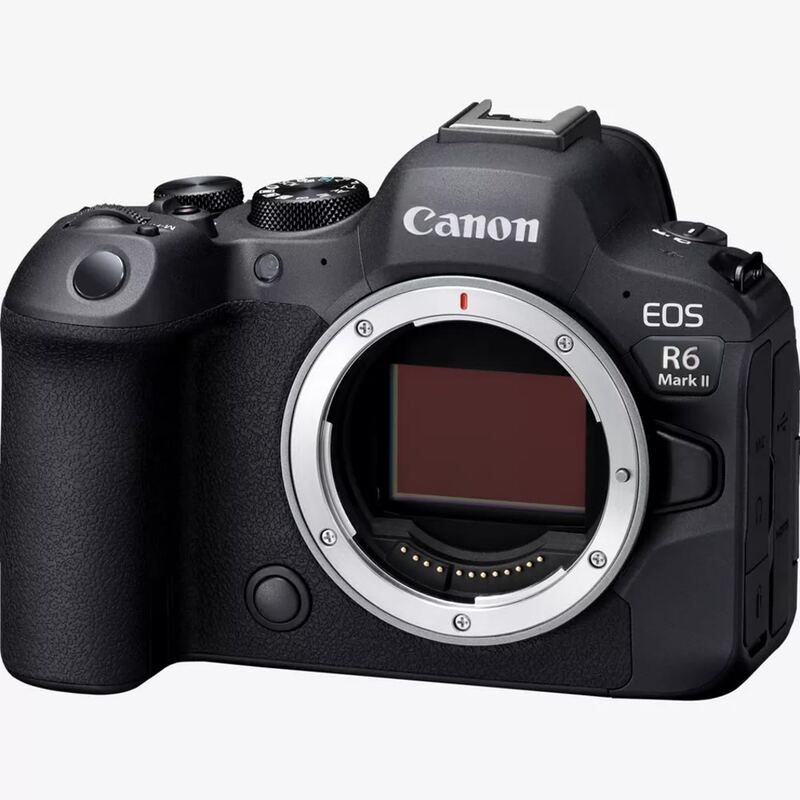
The Nikon Z5II provides better burst rates and dual card slots compared to the Canon EOS R6 Mark II, but lacks the in-body stabilization and 4K/60p recording of the R6. Unlike the Sony α7 IV, it has a more compact design and better low-light performance, though the α7 IV offers a higher resolution EVF and better video specs.
Who this is for
At a glance: Professional full-frame buyers.
Why you’d buy the Nikon Z5II
- 24MP BSI full-frame CMOS sensor with improved readout speeds.
- Up to 11 fps Raw capture with mechanical shutter.
- 3.69M dot 60Hz EVF with 3000-nit peak brightness.
Why you’d skip it
- Sensor readout speeds still slower than Z6III's.
- Limited video capabilities compared to higher-end models.
Rating sources
“The Z5II is a full-frame mirrorless camera built around a 24MP BSI CMOS sensor. It's an update to Nikon's entry-level full-frame Z5 and is essentially a version of the Zf that trades retro styling for a more conventional design.”
Our 4.4 score is the average of these published ratings. Ratings marked * were derived from the reviewer’s written analysis or video transcript — the publisher didn’t print an explicit numeric score, so we inferred one from their own words. Click through to verify. More about methodology.