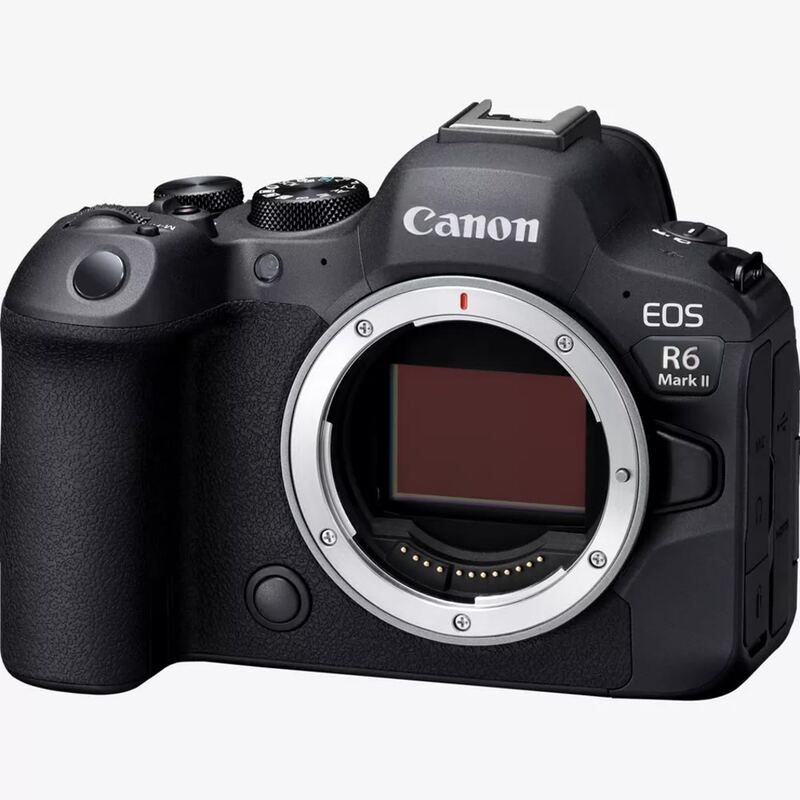
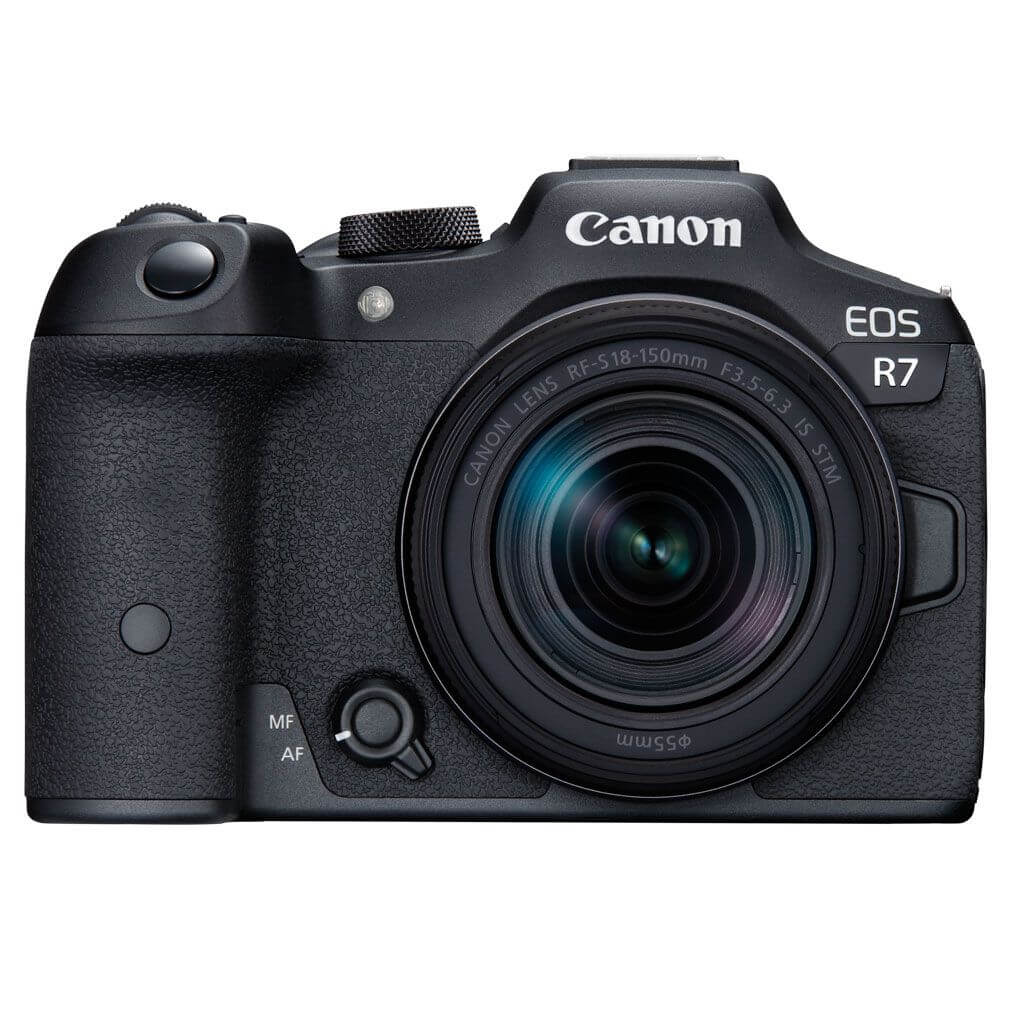
The Canon EOS R7 is a 32.5MP APS-C mirrorless camera running Canon's latest Digic X processor and Dual Pixel AF system. DPReview praised its fast continuous shooting, up to 30 fps with electronic shutter and 15 fps with mechanical shutter, along with improved video specs including oversampled UHD 4K up to 30p and sub-sampled 4K/60p. Access to the video functions is fiddly, and the EVF resolution falls short of the R5. Canon positions it as the pricier sister model to the EOS R10, aimed at enthusiast photographers and wildlife shooters who want high-resolution imaging and fast burst rates.
Full review
Sensor and Image Quality
The Canon EOS R7 features a 32.5MP APS-C CMOS sensor that represents a significant upgrade over previous 32.5MP cameras in Canon's lineup. According to dpreview.com, this sensor is described as 'new' and distinct from earlier versions, though the exact manufacturing differences remain unclear. The sensor is not backside-illuminated or stacked, which affects its high-speed readout capabilities. The DIGIC X processor works in conjunction with this sensor to deliver faster continuous shooting speeds than any previous 32.5MP camera. The R7's sensor offers 651 AF zones covering approximately 100% of the frame, which is identical to the R3's system. The sensor's resolution is higher than the R3's (32.5 vs 24.1MP), and it provides excellent image quality with clean high ISO performance. Thedigtalpicture.com notes that while the sensor is not BSI or stacked, it still delivers impressive results, particularly in terms of dynamic range and detail reproduction. The camera's ability to shoot at up to 30fps with electronic shutter and 15fps with mechanical shutter demonstrates the sensor's speed capabilities.
EOS R3-derived tracking across 651 zones
The EOS R7 inherits the advanced autofocus system from the EOS R3, making it one of the most capable APS-C cameras in terms of subject tracking. The autofocus system includes 651 zones covering approximately 100% of the frame, with 5,915 manually selectable areas covering 90% x 100% of the frame. According to dpreview.com, the system allows any AF area mode to initiate tracking, which is a significant improvement over previous models. The camera can recognize humans, animals, or vehicles and prioritize them accordingly. The AF system can track subjects across the entire frame, with a working range of EV -5 to 20. Thephoblographer.com praises the autofocus as 'absolutely phenomenal' for bird photography, noting that it outperforms both the EOS R5 and EOS R6. However, the system does have some limitations, including occasional random object detection issues and the lack of automatic tripod detection for IBIS. The system is particularly effective in low-light conditions, with exposure preview enabled during focus tracking providing accurate results.
Continuous Shooting and Buffer
The EOS R7 delivers impressive continuous shooting capabilities with up to 30fps using the electronic shutter and 15fps with the mechanical shutter. DPReview notes that the camera can capture around 100 compressed Raw images when shooting at 15fps with mechanical shutter, and around 65 shots in 30fps mode, which is two to three times more than the R10 can manage. The buffer depth is significantly improved compared to the R10, making it more practical for shooting bursts of action. The camera's ability to shoot at 15fps with full AF using mechanical shutter is particularly notable, as it eliminates rolling shutter concerns. The shutter is able to sync with flashes at up to 1/250 sec in mechanical shutter mode or 1/320 in electronic front curtain mode. However, the e-shutter isn't fast enough for use with flash. The camera's buffer performance is crucial for action photography, and the R7's improvements in this area make it particularly suitable for sports and wildlife photography.
4K at 60p and oversampled 4K from 7K
The EOS R7 offers robust video capabilities with 4K/60p sub-sampled from the full sensor width, as well as oversampled 4K at up to 30p from the full 7K area of the sensor. According to dpreview.com, the camera can capture full-width 4K at up to 60p or apply a 1.81x crop and use a native 3840 x 2160 pixel region. The R7 can also shoot 4K/60p using a native 3840 x 2160 pixel crop of the sensor, though this requires a larger crop than the R10 due to the higher resolution sensor. The camera supports 10-bit video as 'PQ' true HDR footage or C-Log 2, which provides excellent flexibility for post-production work. The video specs are improved over the R10 and previous 32.5MP Canon sensors. The camera also features 5-axis in-body image stabilization that provides approximately 7-stops of shake correction. However, the video function access is described as 'fiddly' and difficult to consistently use accurately by dpreview.com. The camera's video capabilities make it suitable for both amateur and professional videographers, particularly those working in wildlife or sports environments where stabilization is crucial.
Dual UHS-II slots beat the R5's CF Express requirement
The Canon EOS R7 features a compact design that's significantly smaller than its full-frame counterparts, measuring 132 x 90 x 92 mm and weighing 530 g. The camera has a weather-sealed body that's suitable for challenging conditions, making it ideal for outdoor photography. The grip is notably absent from the design, which may be a drawback for photographers with larger hands. According to petewalkden.co.uk, the camera is small enough to be comfortable for extended use, though it can cause hand pain when attached to larger lenses like the 500mm prime. The camera features dual UHS-II SD card slots, which is a significant advantage over the R5's CF Express card requirement. The viewfinder is a 2.36 million dot OLED screen with a 120 fps refresh rate, while the LCD screen is a 3-inch 1.62 million dot vari-angle touchscreen. The camera's ergonomics are described as more welcoming to new customers but potentially divisive among Canon loyalists. The layout of the screen can be customized, and the buttons are positioned for easy access, though some users find the ISO button placement awkward.
IBIS doesn't detect when it's on a tripod
Thephoblographer.com points out that the camera lacks a truly blackout-free shutter outside of electronic shutter mode, which can be problematic for certain shooting scenarios. The rolling shutter effect, while not pronounced, is still visible and can be an issue for fast-moving subjects. The IBIS system doesn't automatically detect when the camera is on a tripod, which can be inconvenient for static shots. Additionally, the camera's high ISO performance, while impressive, is not as good as some competitors like Fujifilm's XH2s. The lens ecosystem is also a concern, as the non-L glass lenses are not worthy of this camera's capabilities, according to the same reviewer. The ISO button placement is awkward, and some users have reported issues with the Canon Control Ring Adapter and certain third-party lenses. The camera's low-light performance, while better than average, is still less than ideal for extreme conditions, and the lack of a dedicated grip can be problematic for extended shooting sessions.
Aimed at wildlife and sports shooters, not low light
The Canon EOS R7 is best suited for wildlife, sports, and action photographers who need a compact, high-performance camera with excellent autofocus capabilities. According to dpreview.com, the camera is ideal for enthusiasts who want a more expensive sister model to the EOS R10, targeting a similar market as the existing EOS 90D DSLR and EOS M6 II. The camera's 32.5MP sensor and fast continuous shooting make it particularly appealing to photographers who need detailed images and quick capture speeds. Thephoblographer.com recommends it for bird photographers, wildlife photographers, sports photographers, and anyone who shoots Canon RF cameras in the full-frame segment. The camera's weather-sealed body and dual card slots make it suitable for outdoor photography in challenging conditions. However, it's not ideal for photographers who primarily work in low-light conditions or those who require a camera with a more robust lens ecosystem. The camera's compact design and lightweight build make it suitable for travel photographers who need portability without sacrificing performance.
30fps electronic shutter for $1499 body-only
The Canon EOS R7 is positioned as an affordable alternative to higher-end models, with a body-only price of $1499 and $1899 with the new 18-150mm F3.5-6.3 IS STM zoom lens. According to MPB's review, the camera offers 'excellent value' for its price point, particularly for hybrid shooters wanting strong performance in an affordable package. The camera's performance-to-price ratio is exceptional, especially when compared to other APS-C cameras on the market. Thephoblographer.com describes it as 'insanely affordable' while still delivering 'fantastic' performance. The camera's ability to shoot at 30fps with electronic shutter and 15fps with mechanical shutter, combined with its advanced autofocus system, makes it a compelling choice for photographers who need speed and accuracy. However, the camera's value is somewhat diminished by the lack of affordable, high-quality lenses that match its capabilities. The dual card slots and weather-sealed body add value for outdoor photographers, but the camera's limitations in low-light performance and lens ecosystem may affect its overall value proposition for some users.
Strengths
- +32.5MP APS-C CMOS sensor with Dual Pixel AF and Canon's Dual Pixel Raw mode
- +Up to 30 fps shooting with electronic shutter and 15 fps with mechanical shutter
- +Oversampled UHD 4K up to 30p and sub-sampled 4K/60p capabilities
- +Twin UHS-II SD card slot for enhanced reliability and backup
Watch-outs
- −Video function access requires moving power button one stage beyond 'On' position, which can be fiddly
- −EVF resolution is lower than that of the EOS R5, appearing pixelated at times
How it compares
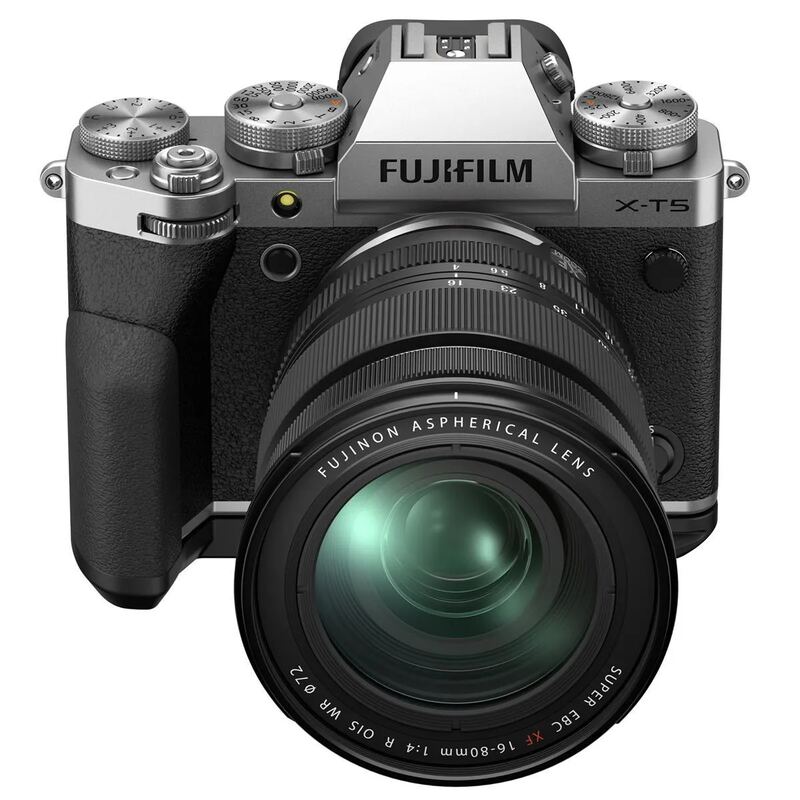
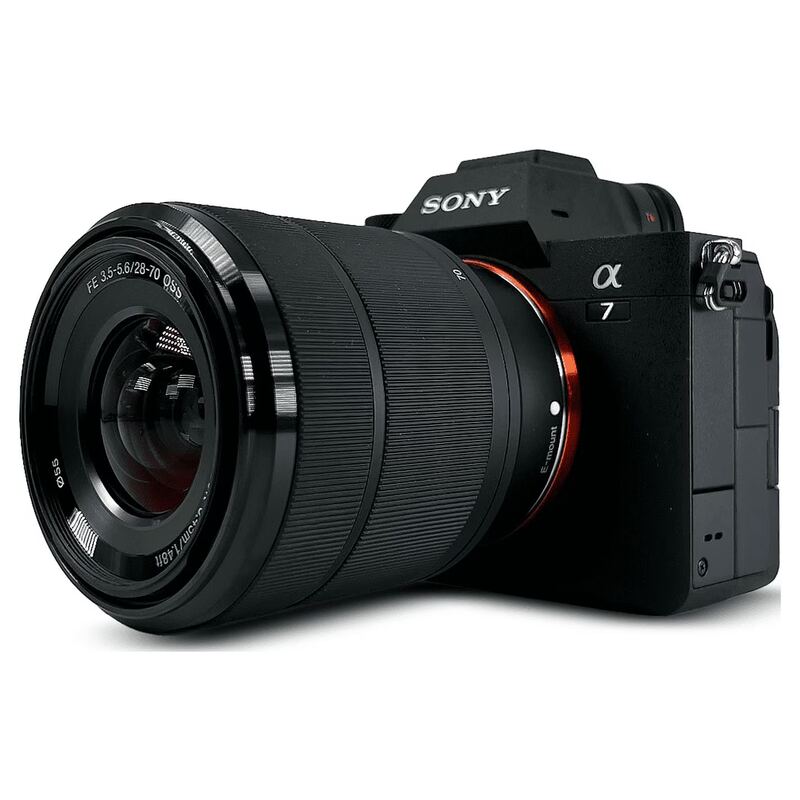
The Canon EOS R7 surpasses the Sony α6400 in burst rate and video capabilities, but unlike the Fujifilm X-T5, it lacks the higher frame rate and in-body stabilization. Compared to the Sony ZV-E10 II, it offers better video specs and dual card slots, though the ZV-E10 II provides better portability and vlog mode.
Rating sources
Counts as 4.50/5 in our score — this publisher's 15 scores on the site average 3.50, so its scores are adjusted up to compare fairly with other publishers.
Counts as 4.30/5 in our score — this publisher's 14 scores on the site average 4.30, so its scores are adjusted down to compare fairly with other publishers.
“The Canon EOS R7 is a 32.5MP APS-C mirrorless camera built around Canon's RF mount. It sits as a more expensive sister model to the EOS R10, launched alongside it.”
“In my opinion the best camera I've ever had the pleasure of using.”
Not in the average — we derived this score from the review's words, and a publisher printed a score for this product, so the printed number counts instead.
“The R7 removes the few remaining excuses to remain on a DSLR platform.”
Not in the average — we derived this score from the review's words, and a publisher printed a score for this product, so the printed number counts instead.
Our 4.4 score is the average of 2 of the scored reviews above, each adjusted for how strictly its publisher scores. 2 derived scores above are not in the average because a publisher printed a score for this product. Ratings marked * were derived from the reviewer’s written analysis or video transcript — the publisher didn’t print an explicit numeric score, so we inferred one from their own words. Click through to verify. More about methodology.