Verdict
Head-to-head · Best Mirrorless Cameras For Travel

Canon EOS R7 vs Sony α6400

Which is the better buy? Side-by-side on rating, price, strengths, and watch-outs — with the published ratings we averaged to get there.

The short answer

Canon EOS R7 comes out ahead by a clear margin (4.4 vs 4.1). The gap is mostly about Wildlife and sports shooters — read the strengths below before deciding.

Canon EOS R7
Higher ratedRanked #2 in Best Mirrorless Cameras For Travel
Canon EOS R7
$1,448as of May 29

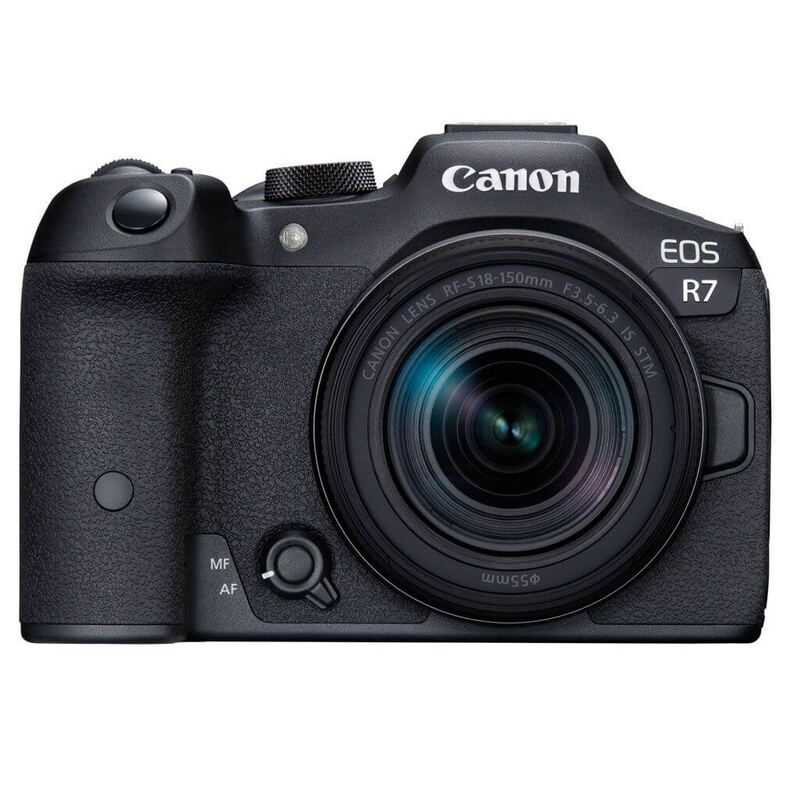
The Canon EOS R7 is a 32.5MP APS-C mirrorless camera featuring Canon's latest Digic X processor and Dual Pixel AF system. DPReview praised its fast continuous shooting capabilities at up to 30 fps with electronic shutter and 15 fps with mechanical shutter, along with improved video specs including oversampled UHD 4K up to 30p and sub-sampled 4K/60p. However, the camera's video function access is described as fiddly and the EVF resolution is noted as inferior to the R5. It's positioned as a more expensive sister model to the EOS R10, targeting enthusiast photographers and wildlife shooters who value high-resolution imaging and fast burst rates.

Strengths
  • 32.5MP APS-C CMOS sensor with Dual Pixel AF and Canon's Dual Pixel Raw mode
  • Up to 30 fps shooting with electronic shutter and 15 fps with mechanical shutter
  • Oversampled UHD 4K up to 30p and sub-sampled 4K/60p capabilities
Watch-outs
  • Video function access requires moving power button one stage beyond 'On' position, which can be fiddly
  • EVF resolution is lower than that of the EOS R5, appearing pixelated at times
Sony α6400
Ranked #4 in Best Mirrorless Cameras For Travel
Sony α6400
$848as of May 29

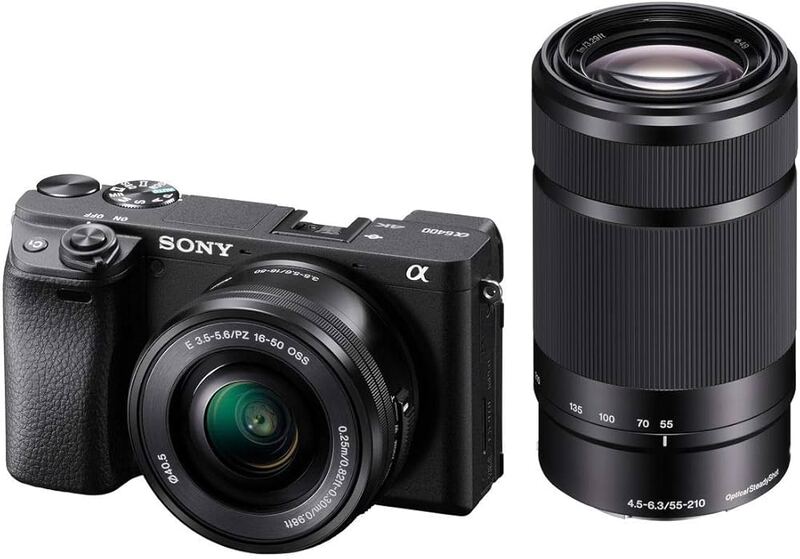
The Sony α6400 stands out primarily for its exceptional autofocus system, which DPReview calls 'one of the best implementations out there' and 'game-changing' for its price range. RTINGS.com notes its 11fps continuous RAW shooting and 4K video capabilities. However, reviewers like Alik Griffin criticize its handling and ergonomics, while others point out the lack of in-body stabilization and confusing menu system. Despite these drawbacks, it's considered one of the most capable APS-C cameras at its price point, particularly for those prioritizing autofocus performance over user experience.

Strengths
  • Industry-leading autofocus implementation with 425 phase- and contrast-detect AF points
  • 11fps continuous RAW shooting capability
  • Detailed 4K video with 100mbps recording and slow motion
Watch-outs
  • Ergonomics are hit-and-miss with no substantive changes from predecessor
  • Lacks in-body stabilization limiting video and low-light performance

How they stack up

Canon EOS R7

The Canon EOS R7 surpasses the Sony α6400 in burst rate and video capabilities, but unlike the Fujifilm X-T5, it lacks the higher frame rate and in-body stabilization. Compared to the Sony ZV-E10 II, it offers better video specs and dual card slots, though the ZV-E10 II provides better portability and vlog mode.

Sony α6400

The Sony α6400 excels in autofocus performance compared to the Canon EOS R50, but lacks the 4K/60p recording and 10-bit color depth of the Sony α6700. Unlike the Fujifilm X-T5, it has a more compact design and better low-light performance, though the X-T5 provides higher frame rates and better in-body stabilization.

Specs side-by-side

SpecCanon EOS R7Sony α6400
Sensor32.5MP APS-C CMOS24.2MP APS-C Exmor CMOS
Stabilization5-axis In-Body Image Stabilizer (up to 7 stops)No in-body stabilization
VideoUHD 4K up to 30p, 4K/60p4K/30p, 1080 up to 60p/120p
AutofocusDual Pixel CMOS AF II with 651 AF areas425 Phase- & Contrast-Detect AF Points
Burst RateUp to 30 fps electronic, 15 fps mechanicalUp to 11 fps
Display2.36M dot OLED viewfinder3.0" 921.6k-Dot Tilting
EVF0.39" 2.36M dot OLED Electronic ViewfinderXGA Tru-Finder 2.36m-Dot OLED
Weight530 gLess than 1 lb (body only)
← See the full ranking of best mirrorless cameras for travel