Verdict
Ranked #3 of 10Reviewed by Mike Hunter·May 29, 2026

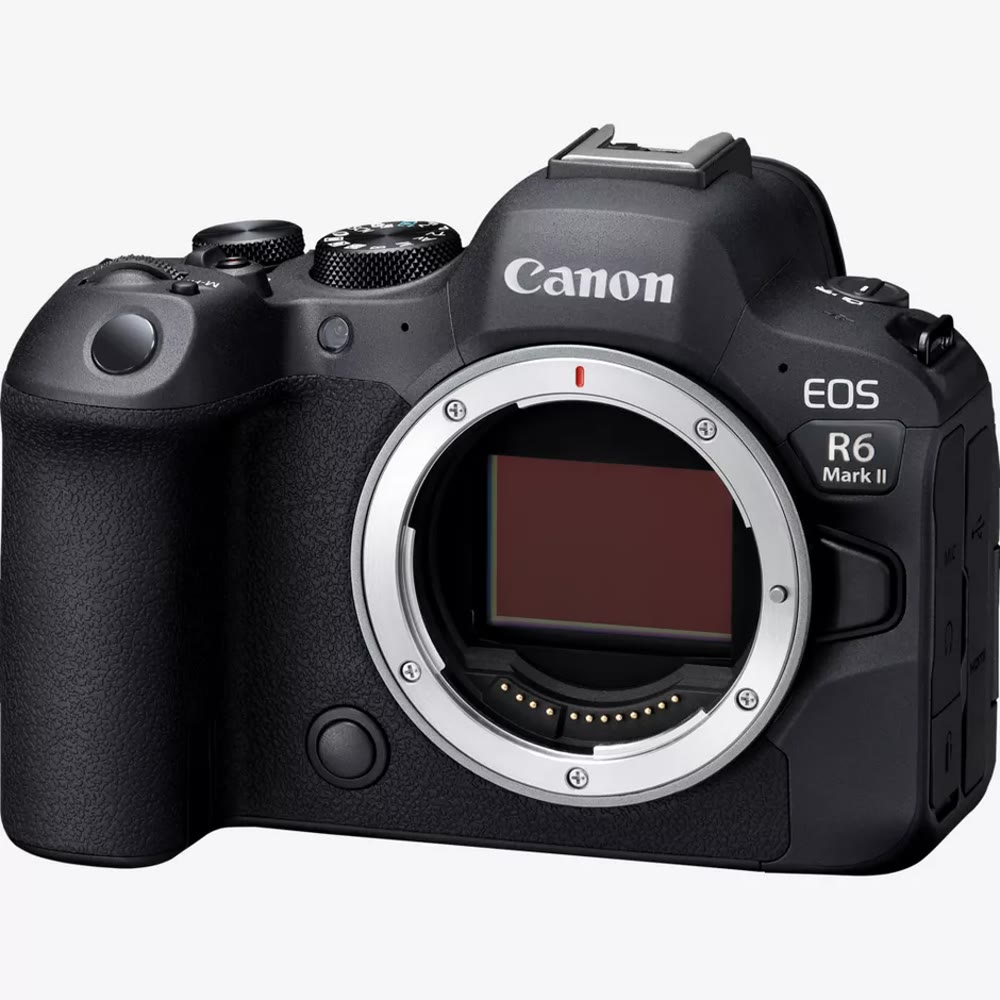
Canon EOS R6 Mark II

Averaged from 6 published ratings
The verdict

The Canon EOS R6 is a 20MP full-frame mirrorless camera designed for enthusiast photographers and videographers. Reviewers praised its excellent image quality, fast shooting capabilities, and robust autofocus system. However, the camera's tendency to overheat during video recording and its 30-minute recording limit have been significant drawbacks. While early versions suffered from reliability issues and firmware problems, Canon's updates have largely resolved these concerns. The R6 sits below the R5 in the lineup and offers a well-rounded combination of stills and video features, though it's not the best stills-and-video hybrid option available. It's ideal for photographers seeking a versatile, high-quality camera but may not suit videographers requiring extended recording times.

Canon EOS R6 Mark II

Full review

Design and Build Quality

The Canon EOS R6 Mark II maintains the familiar design language of its predecessor while incorporating refinements that improve ergonomics and handling. Reviewers noted the camera's substantial build quality and improved grip, with the R6 Mark III's updated texturized rubber around the camera body providing better handling in challenging conditions. The D-pad placement on the R6 Mark II is positioned naturally for thumb operation, a feature that professional reviewer Jerad Hill praised as 'a game changer' for manual focus point selection. The camera's weight distribution feels well-balanced even with heavier lenses, and the articulating touchscreen screen is fully functional with high resolution. However, some users have noted the control dials feel somewhat plasticky, a concern echoed by The Phoblographer's review which deducted points for 'flimsy' dial construction. The body's weather sealing is robust enough to handle snowstorms, as demonstrated in testing by The Phoblographer, though the camera's overall build quality remains a mixed bag according to long-term user Jason Pischke, who noted it's 'rock solid' but not necessarily premium-feeling in all areas.

Autofocus Performance

Canon's Dual Pixel CMOS AF II system in the R6 Mark II delivers impressive tracking performance that rivals flagship bodies like the 1D X Mark III, according to professional reviews. The autofocus system shows strong performance in both stills and video modes, with subject tracking capabilities that are particularly effective for sports and wildlife photography. The Register People Priority feature, introduced in firmware updates, provides enhanced subject prioritization that improves accuracy in complex scenes. However, some users have reported inconsistencies with the autofocus during high-speed action sequences, particularly with certain lens combinations. The system's AI-trained subject tracking works well in most scenarios, though some reviewers have noted that the camera's ability to maintain focus during rapid subject movement can be inconsistent. Professional photographer Jerad Hill noted that the low-light autofocus performance is 'exceptional,' locking on confidently in near-darkness, which is a significant improvement over earlier models. The camera's ability to track subjects with high accuracy is one of its strongest features, though some users have found the system's behavior can be unpredictable with certain lens types.

Image Quality and Sensor Performance

The R6 Mark II's 20.1MP full-frame sensor delivers excellent image quality that's particularly strong in still photography. Professional reviewer Richard Butler noted that the sensor, derived from the 1D X Mark III, provides 'incredible amounts of detail despite the relatively low megapixel count.' The sensor's performance in RAW files is robust, with excellent latitude for post-processing adjustments. However, some reviewers have noted that the sensor's dynamic range is somewhat limited compared to competitors like the Sony A7R IV and Panasonic S5. The camera's JPEG processing is praised for its natural color rendition, though some users have found the noise reduction to be overly aggressive and difficult to disable. Jason Pischke's long-term review highlighted that despite the sensor being a step down from the 24MP of the Panasonic S1, it still produces 'images that have incredible amounts of detail.' The camera's ability to handle high ISO settings is commendable, with good performance up to ISO 32000, though noise becomes apparent at higher sensitivities. The sensor's performance in low-light conditions is particularly strong, with the camera's autofocus system maintaining accuracy even in challenging lighting situations.

Video Capabilities and Limitations

The R6 Mark II's video capabilities are solid but have notable limitations that affect its hybrid performance. While it can record UHD 4K at up to 60p and Full HD at up to 120p, the camera's thermal limitations are a significant drawback. Professional reviewer Richard Butler noted that 'its propensity for hitting its thermal cut-off means it's not as good a stills/video hybrid as the specs make out.' The camera's 10-bit 4:2:2 internal recording in either C-Log or HDR PQ is adequate for most applications, though the lack of C-Log 3 support is a missed opportunity. The camera's image stabilization is rated at up to 8EV of correction, which is impressive, though some users have reported issues with IBIS wobble, particularly with wide-angle lenses like the RF 15-35mm f/2.8. The 30-minute recording limit is a significant limitation that many users find frustrating, as it prevents extended recording sessions without manual intervention. The camera's video performance is adequate for most applications, but the thermal throttling issues make it less suitable for extended video work compared to competitors like the Sony A7R IV or Fujifilm X-T4.

Battery Life and Power Management

The R6 Mark II's battery life is rated at approximately 380 shots per charge according to Canon's specifications, though real-world performance varies significantly based on usage patterns. Professional reviewer Jerad Hill noted that battery life 'matches previous generations rather than improving despite the higher price,' indicating that Canon has not made significant improvements in this area. The camera's power management is generally adequate for typical use, but users have reported that the camera's tendency to shut down during extended video recording sessions is a major limitation. Jason Pischke's long-term review highlighted that the camera's battery performance has been 'never let me down' in various conditions, but the lack of significant improvements over previous generations is disappointing. The camera's ability to handle extended use in challenging conditions is good, though the battery life is not exceptional. Users have noted that the camera's power consumption is particularly high during continuous shooting modes and video recording, which can lead to unexpected shutdowns during long shoots.

Where It Falls Short

Despite its many strengths, the R6 Mark II has several significant drawbacks that prevent it from being a complete solution for all photographers. The most notable limitation is the camera's thermal throttling during video recording, which severely limits its hybrid capabilities. Professional reviewers have consistently noted that the camera's tendency to hit temperature limits makes it unsuitable for extended video work, despite its impressive specifications. The 30-minute recording limit is another major frustration that prevents users from recording longer sequences without manual intervention. The camera's image stabilization, while capable, has been reported to cause wobble issues with certain wide-angle lenses, particularly the RF 15-35mm f/2.8. Additionally, the camera's lack of significant improvements in battery life and the absence of C-Log 3 support are notable omissions that disappoint users expecting more advanced features. Jason Pischke's long-term review highlighted that while Canon has fixed many issues through firmware updates, the camera's 'imposed 30 minute record limit' remains a significant limitation. The camera's control layout, while functional, has been criticized for being less intuitive than competing systems, particularly for users transitioning from Sony or Fujifilm cameras.

Who It's Best For

The Canon EOS R6 Mark II is best suited for photographers who prioritize still photography over video work, particularly those who value Canon's ecosystem and want a reliable, well-built camera for everyday use. Professional reviewer Jerad Hill noted that the camera is 'the best all-around hybrid camera' he's used, making it ideal for photographers who need versatility but don't require extensive video capabilities. The camera's excellent autofocus performance makes it particularly suitable for sports and wildlife photographers who need fast, accurate subject tracking. The R6 Mark II is also ideal for photographers who appreciate Canon's ergonomics and build quality, particularly those transitioning from Canon DSLR systems. However, it's not recommended for videographers who need extended recording times or those who require the absolute latest in video features like C-Log 3 support. The camera's thermal limitations make it unsuitable for professional video work, and users who need longer recording sessions will find the 30-minute limit frustrating. Photographers who are already invested in Canon's RF lens ecosystem will find the R6 Mark II particularly appealing, though those seeking more affordable lens options may find the ecosystem's pricing prohibitive.

How It Compares to Alternatives

When compared to its direct competitors, the Canon EOS R6 Mark II holds its own in still photography but falls short in video capabilities. The Sony A7R IV offers superior dynamic range and more advanced video features like C-Log 3, though it lacks the R6's excellent autofocus performance and build quality. The Fujifilm X-T4 provides better video features and a more intuitive interface, though it doesn't match the R6's stills capabilities or lens ecosystem. The Panasonic S5 offers better video features and a more robust stabilization system, but lacks the R6's excellent low-light autofocus and overall build quality. Professional reviewer Jason Pischke noted that while the R6 has been transformed from an 'unusable' camera through firmware updates, it still lags behind competitors in video capabilities. The camera's performance is particularly strong in still photography, where it outperforms many competitors in terms of image quality and autofocus accuracy. However, the R6's video limitations make it less competitive with cameras like the Sony A7R IV or Panasonic S5, which offer more advanced video features and better thermal management.

Strengths

  • +20MP Dual Pixel CMOS sensor with excellent image quality and detail retention
  • +Dual Pixel AF II with AI-trained subject tracking and 100% AF coverage
  • +In-body stabilization rated at up to 8EV of correction
  • +20 fps shooting with e-shutter, 12 fps mechanical shutter
  • +UHD 4K video recording at up to 60p with 10-bit 4:2:2 internal recording

Watch-outs

  • Tends to hit temperature limits during extended video recording
  • 30-minute recording limit imposed by firmware
  • Some users report IBIS wobble with certain wide-angle lenses

How it compares

The Canon EOS R6 Mark II offers better image quality and in-body stabilization than the Sony α7 IV, but unlike the Nikon Z5II, it lacks dual card slots and has a shorter battery life. Compared to the Fujifilm X-S20, it provides more advanced video features and higher frame rates, though the X-S20 has better vlog mode and 4K/60 4:2:2 recording.

Who this is for

At a glance: Videographers needing high frame rates.

Why you’d buy the Canon EOS R6 Mark II

  • 20MP Dual Pixel CMOS sensor with excellent image quality and detail retention.
  • Dual Pixel AF II with AI-trained subject tracking and 100% AF coverage.
  • In-body stabilization rated at up to 8EV of correction.

Why you’d skip it

  • Tends to hit temperature limits during extended video recording.
  • 30-minute recording limit imposed by firmware.
  • Some users report IBIS wobble with certain wide-angle lenses.

Rating sources

Our 4.1 score is the average of these published ratings. More about methodology.

Frequently asked questions

Is the Canon EOS R6 Mark II worth buying?
The Canon EOS R6 is a 20MP full-frame mirrorless camera designed for enthusiast photographers and videographers. Reviewers praised its excellent image quality, fast shooting capabilities, and robust autofocus system. However, the camera's tendency to overheat during video recording and its 30-minute recording limit have been significant drawbacks. While early versions suffered from reliability issues and firmware problems, Canon's updates have largely resolved these concerns. The R6 sits below the R5 in the lineup and offers a well-rounded combination of stills and video features, though it's not the best stills-and-video hybrid option available. It's ideal for photographers seeking a versatile, high-quality camera but may not suit videographers requiring extended recording times.
What is the Canon EOS R6 Mark II's biggest strength?
20MP Dual Pixel CMOS sensor with excellent image quality and detail retention
What is the main drawback of the Canon EOS R6 Mark II?
Tends to hit temperature limits during extended video recording
What sources back the 4.1/5 rating?
Our 4.1/5 rating is the average of scores from 6 independent mirrorless cameras for travel reviews — thephotographyenthusiast, jeradhillphoto, thephoblographer, helenbartlett.co.uk, me.pcmag, and shotkit. Click any source on the product page to read the original review.

How it compares

See all 10
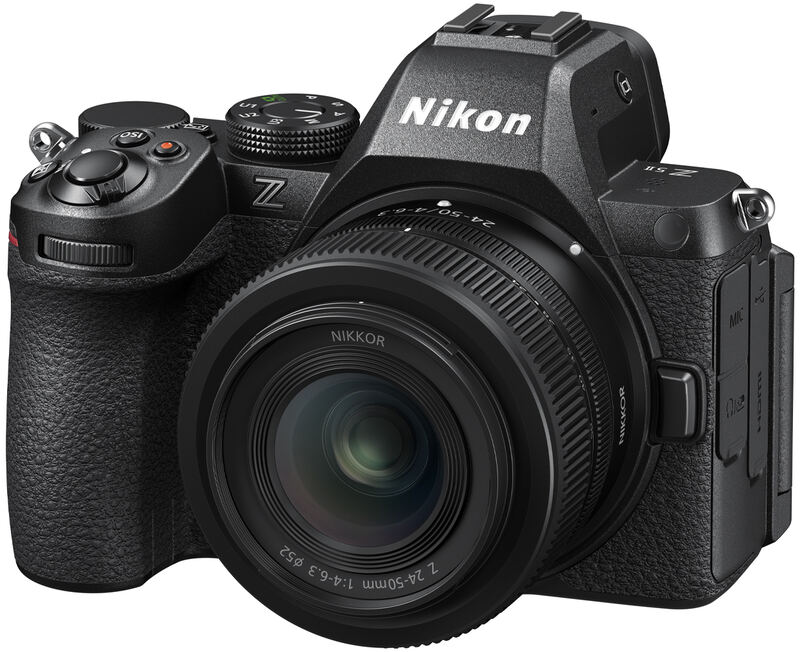
Nikon Z5II
#1 · Top Score

Nikon Z5II

The Nikon Z5II provides better burst rates and dual card slots compared to the Canon EOS R6 Mark II, but lacks the in-body stabilization and 4K/60p recording of the R6. Unlike the Sony α7 IV, it has a more compact design and better low-light performance, though the α7 IV offers a higher resolution EVF and better video specs.

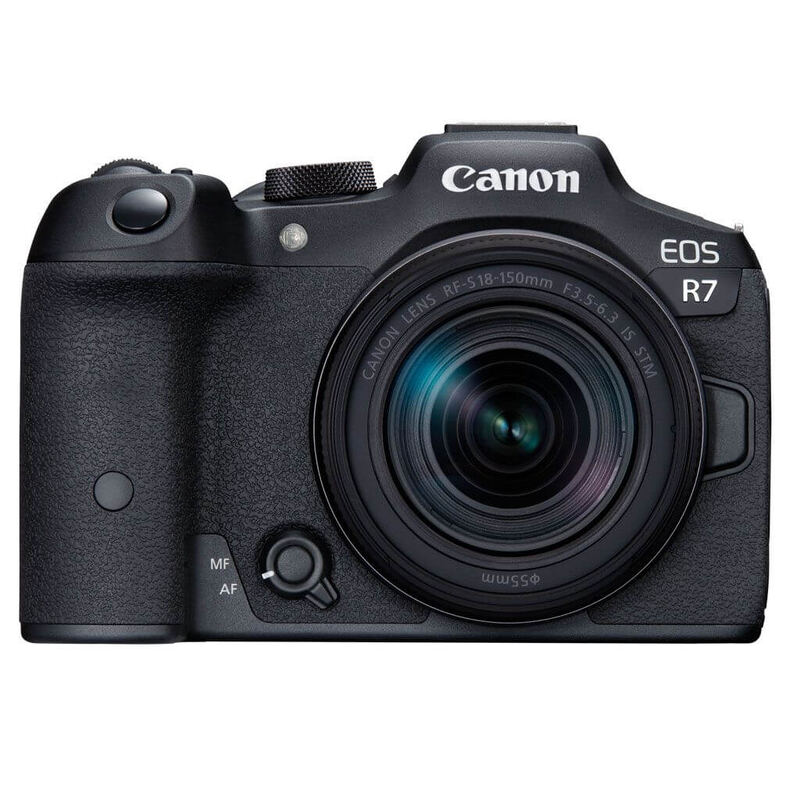
Canon EOS R7
#2

Canon EOS R7

The Canon EOS R7 surpasses the Sony α6400 in burst rate and video capabilities, but unlike the Fujifilm X-T5, it lacks the higher frame rate and in-body stabilization. Compared to the Sony ZV-E10 II, it offers better video specs and dual card slots, though the ZV-E10 II provides better portability and vlog mode.

Sony α6400
#4

Sony α6400

The Sony α6400 excels in autofocus performance compared to the Canon EOS R50, but lacks the 4K/60p recording and 10-bit color depth of the Sony α6700. Unlike the Fujifilm X-T5, it has a more compact design and better low-light performance, though the X-T5 provides higher frame rates and better in-body stabilization.

Sony α7 IV
#5

Sony α7 IV

The Sony α7 IV outperforms the Canon EOS R50 in terms of autofocus precision and sensor resolution, but unlike the Fujifilm X-S20, it lacks the dedicated vlog mode and 4K/60 4:2:2 recording. Compared to the Nikon Z5II, it offers a more compact form factor and better low-light performance, though the Z5II provides dual card slots and faster burst rates.

Canon EOS R6 Mark II
4.1/5· $1,998
Check Price on Amazon