The Lenovo Legion Go S gets pitched as the better Steam Deck, and its AMD Z1 Extreme chipset, 32GB of RAM, and 1TB SSD back that up on portable AAA gaming. PCMag's Zackery Cuevas called it a 'better Steam Deck' that surpasses expectations, and digitalchumps reviewer Will Silberman watched it run demanding titles like The Last of Us Part II smoothly. Reviewers criticized the loud fan noise and the limitation that blocks background game updates during sleep mode. Gamers who want SteamOS compatibility and high performance should look; anyone who values quiet operation or battery efficiency shouldn't.
Full review
SteamOS Transformation
Lenovo's decision to ship the Legion Go S with Valve's SteamOS fundamentally repositions this handheld from a capable but unfocused device into a genuinely competitive gaming platform. PCMag's Zackery Cuevas noted that the SteamOS model 'trims the Windows desktop layer, reduces background overhead, and channels more of the Legion Go S's power toward actual gameplay.' This architectural shift delivers tangible benefits: lower idle power draw, snappier UI behavior, and notably improved frame rates in demanding titles. The SteamOS edition eliminates the bloat associated with Windows 11 while providing a controller-first interface optimized for gaming. DigitalChumps' Will Silberman emphasized that 'SteamOS, on the other hand, is a perfect fit on the Legion Go S' and that 'the OS itself is lightweight' with easy game access through Steam credentials. The transformation is so significant that Gaming Age's Matthew Pollesel stated the SteamOS version 'easily outperformed both' the Legion Go and ROG Ally X, even when those devices ran Windows. Trusted Reviews' Reece Bithrey confirmed that 'the way to think of the Legion Go S SteamOS is a Steam Deck Plus of sorts,' providing upgrades over Valve's own handheld while maintaining the familiar SteamOS ecosystem.
The SteamOS implementation on the Legion Go S also addresses several long-standing issues with the Windows version. Windows Forum's analysis revealed that 'Windows 11 brings breadth and compatibility, but it also carries background services, driver layers, and desktop UX metaphors that are ill-fitted to a controller-first device.' SteamOS eliminates these desktop artifacts, delivering a streamlined experience that boots directly into Steam's Big Picture interface. The OS leverages Proton for Windows-native game compatibility, which in practice translates to better performance and efficiency. The Legion Go S's SteamOS model also benefits from the 'Powered by SteamOS' initiative that Valve launched in early 2025, granting OEMs access to an OS tuned specifically for handheld gaming. This partnership has enabled Lenovo to create a device that performs at a higher level than its Windows counterpart. The OS choice is so impactful that it transforms what was 'just okay' into a contender that stands 'shoulder-to-shoulder with Valve's Steam Deck.'
Hardware Performance
The Legion Go S Z2 Go model features an AMD Ryzen Z2 Go processor paired with 32GB of LPDDR5X memory and a 1TB NVMe PCIe Gen4 SSD, delivering impressive performance for a portable gaming device. DigitalChumps' Will Silberman reported that 'the AMD Z1 Extreme chipset...utterly blew me away in terms of its processing power on such a small device,' though he noted his model had the Z2 Go variant. The device's performance was particularly evident in demanding titles, with Silberman noting that 'framerates were consistent regardless of game' and that 'I was able to hit a stable 55-60 FPS in some games' even when playing at Medium/Low settings. Trusted Reviews' Reece Bithrey also confirmed that the Z2 Go SoC provides 'beefier performance than the Steam Deck' and that 'the option of either AMD's Ryzen Z2 Go or Z1 Extreme chips, which are more potent than the ageing chip inside the Steam Deck.' The 1920x1200 WUXGA LCD display with 120Hz refresh rate and VRR support provides a crisp, immersive gaming experience with excellent color accuracy. Gaming Age's Matthew Pollesel noted that 'the screen is a little bigger (despite the overall package being roughly the same size)'. The 8-inch display with 500 nits peak brightness supports the visual demands of modern games while maintaining readability in various lighting conditions.
The hardware configuration translates into real-world gaming performance that exceeds expectations for a portable device. PCMag's Zackery Cuevas benchmarked the SteamOS build against the identically specced Windows model and found the Steam-based Go S averaged 39fps in Cyberpunk 2077 versus 23fps on Windows - 'a 69% increase from the Windows version of the same machine.' The same pattern held in Guardians of the Galaxy (56fps) and Shadow of the Tomb Raider (49fps against 36fps on Windows), though Cuevas cautions that 'neither chip is exactly future-proof' and that current top-quality games 'are often incompatible with handheld consoles or require extremely low graphics settings to run.' The Z2 Go chip's efficiency was evident in battery usage. However, the performance comes with thermal considerations. DigitalChumps' Will Silberman reported that 'the fan was quite loud even on the home screen' and that 'even when playing 2D titles, the fan felt like it was running at full speed.' This thermal management issue affects the user experience, particularly when trying to play quietly, though it's mitigated by the device's overall performance gains. The 55.5Wh battery capacity provides adequate power for extended gaming sessions, though battery life remains a point of contention among reviewers.
Design and Ergonomics
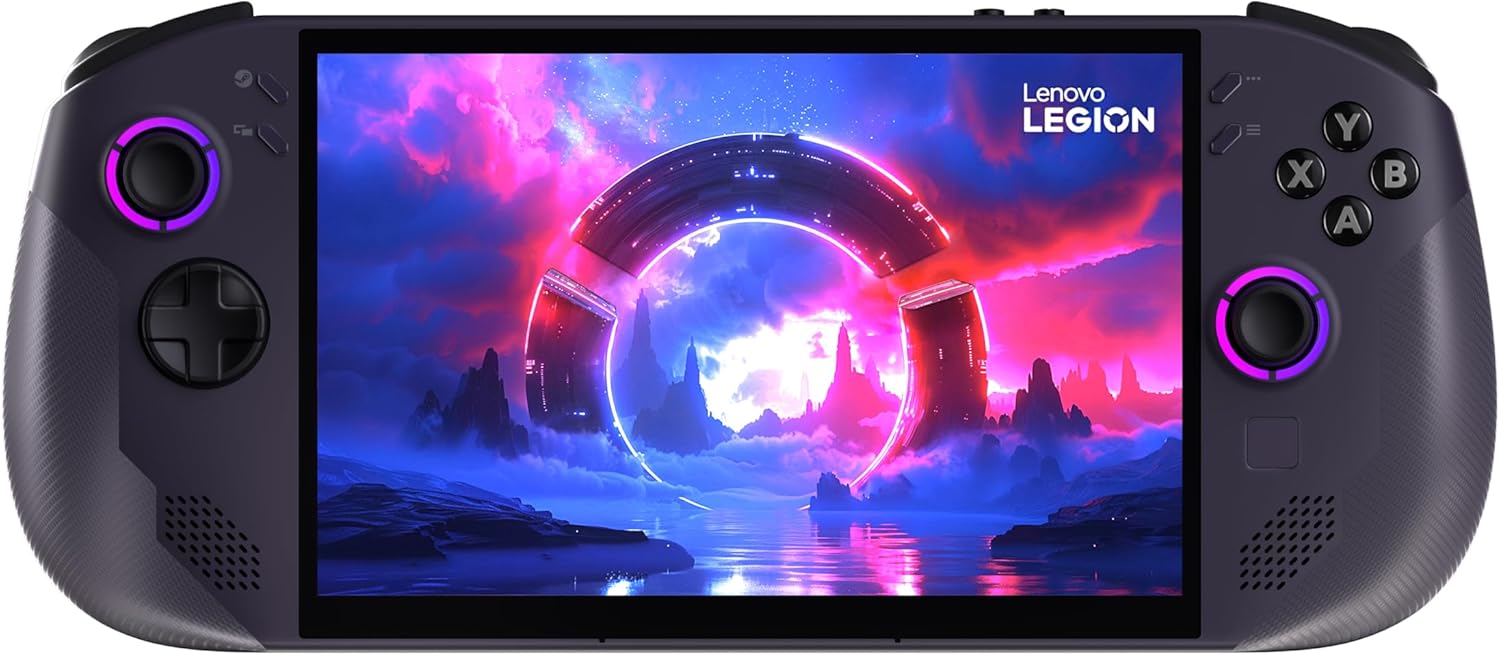
The Legion Go S features a well-executed design that prioritizes comfort and functionality for extended gaming sessions. Trusted Reviews' Reece Bithrey noted that 'It’s comfortable to hold for extended periods, with controls in sensible places' and that 'It’s the same layout as an Xbox controller and feels familiar' The device's ergonomic design includes textured polymer surfaces to reduce slip, well-placed triggers and paddles, and hall-effect joysticks that mitigate long-term drift issues common in cheaper handhelds. DigitalChumps' Will Silberman emphasized that 'the Legion Go S feels perfect in hand' and that 'the joysticks are positioned in a natural state, mirroring that of the XBOX/PC controller.' The SteamOS model swaps the white finish of some Windows SKUs for a darker Nebula purple, creating a distinctive visual identity while maintaining the same comfortable control layout. The device's dimensions are roughly 1.6 pounds (730g), which is slightly heavier than the Steam Deck but still manageable for extended use. The right-side touchpad remains small. However, the touchpad's inclusion is appreciated for its utility in secondary functions, even if it's not a substitute for larger trackpads.
The Legion Go S's physical design elements contribute to its overall user experience and gaming comfort. Gaming Age's Matthew Pollesel highlighted that 'the overall experience feels like an improvement over Valve's handheld' and that 'the rumble, for starters, was incredibly loud' on the Windows version, which was reportedly resolved with the SteamOS installation. The device includes dual USB-C ports, microSD expansion, and programmable back paddles, which are welcome practical touches. The adjustable trigger travel and programmable paddles are particularly appreciated by reviewers who noted these features as 'thoughtful details' that enhance the gaming experience. The device's build quality and attention to detail are evident in its sculpted grips and textured surfaces, which provide a secure hold during intense gaming sessions. The SteamOS model's design maintains the same ergonomic comfort as the Windows version while offering a more streamlined, controller-focused experience that aligns with the operating system's philosophy. The overall form factor is compact enough for portability while providing sufficient surface area for comfortable grip during extended gaming sessions.
Display Quality
The 8-inch WUXGA LCD display with 1920x1200 resolution, 120Hz refresh rate, and VRR support provides a high-quality visual experience that enhances gaming immersion. Trusted Reviews' Reece Bithrey noted that 'the Legion Go S SteamOS has a large and decently detailed IPS screen with a higher 120Hz refresh rate.' Trusted Reviews' own measurements are more qualified than that summary suggests: full sRGB coverage but only 77% DCI-P3 and 76% Adobe RGB, a middling black level, and a colour temperature that leans blue. DigitalChumps' Will Silberman was warmer, writing that 'I know some folks prefer the brightness and contrast of OLED screens, but the Legion Go S' screen is vibrant as is and has excellent color accuracy,' and that 'Thanks to the LCD screen, text was crisp and easily readable.' The 16:10 aspect ratio offers a widescreen immersive experience that's particularly beneficial for modern gaming titles, and the 120Hz refresh rate with VRR keeps motion clean in fast-paced games. The 1920x1200 resolution provides sharp visuals that make even small text readable, which is particularly important for a device that relies on touch input for navigation.
The display quality on the Legion Go S is consistent with its performance in demanding gaming scenarios. Gaming Age's Matthew Pollesel noted that 'the screen is a little bigger (despite the overall package being roughly the same size)'. The 120Hz refresh rate and VRR support provide smooth gameplay, which is essential for competitive gaming. The 16:10 aspect ratio offers a familiar widescreen experience that's particularly beneficial for modern gaming titles. The display's performance was particularly evident in graphically intensive titles where the high resolution and refresh rate provided a clear advantage. The LCD screen's crisp text readability and excellent color accuracy contribute to an overall satisfying visual experience. However, the display's limitations become apparent when comparing it to OLED alternatives, which typically offer better contrast ratios and deeper blacks. The 500 nits peak brightness is sufficient for most gaming scenarios, though it may not be as impressive as OLED displays in very bright environments. The display's performance is consistent with the device's overall approach to balancing performance, efficiency, and portability.
Fan runs loud even during light use
Battery life on the Legion Go S presents a mixed picture, with reviewers noting both strengths and weaknesses in this area. Trusted Reviews' Reece Bithrey observed that 'the battery life of this Lenovo option could be better, though' and that 'the 55.5Wh battery capacity provides adequate power for extended gaming sessions.' The device's battery performance varies significantly depending on the game being played and the settings used. DigitalChumps' Will Silberman noted that 'the fan was quite loud even on the home screen' and that 'even when playing 2D titles, the fan felt like it was running at full speed,' which suggests that power consumption is high even during light usage. The SteamOS optimization does improve efficiency, but the 55.5Wh capacity is still modest for a device that can deliver high performance. PCMag's Zackery Cuevas mentioned that 'the only real downside I experienced was that I was playing on Medium/Low most of the time,' indicating that performance optimization is necessary for extended battery life. The device's power management is particularly important given its high-performance hardware and the need for extended gaming sessions. The Rapid Charge support is a welcome feature, but it doesn't fully compensate for the battery's limited capacity during extended gaming sessions. The battery life is adequate for casual gaming but may be insufficient for users who require extended portable gaming without access to power sources.
The battery performance of the Legion Go S is a critical factor in its overall user experience, particularly for portable gaming scenarios. Gaming Age's Matthew Pollesel noted that 'the rumble, for starters, was incredibly loud' on the Windows version, which was reportedly resolved with the SteamOS installation, though he didn't specifically address battery life improvements. The device's 55.5Wh battery capacity is typical for a portable gaming handheld, but its efficiency is crucial for extended use. The SteamOS optimization does reduce background overhead and improve efficiency, but the hardware's power demands remain significant. The device's thermal management issues, particularly the loud fan operation, contribute to power consumption concerns. Reviewers have noted that the device's performance peaks during gaming but requires careful power management during extended sessions. The battery's capacity is sufficient for short gaming sessions but may not meet the needs of users who require extended portable gaming without access to power sources.
Software Experience
The SteamOS experience on the Legion Go S is praised for its simplicity and efficiency, though some reviewers noted areas for improvement. Trusted Reviews' Reece Bithrey highlighted that 'SteamOS is slick and fast' and that 'the OS itself is lightweight' with easy game access through Steam credentials. DigitalChumps' Will Silberman emphasized that 'the OS itself is lightweight' and that 'accessing games is easy as cake – just log in with your Steam credentials and all of your games (including those in your shared family libraries) are available at your fingertips.' The interface boots directly into Steam's Big Picture mode, eliminating desktop distractions and providing a streamlined gaming experience. However, some reviewers noted limitations in the installation process. Silberman mentioned that 'I couldn't put the device to sleep and let games install' and that 'downloading and installing large games required me to keep the device on and most likely plugged in.' This limitation is particularly frustrating for users who want to download games during downtime. The SteamOS installation process is described as 'incredibly easy' by Gaming Age's Matthew Pollesel, who noted that 'the difference in performance makes it absolutely worthwhile.' The OS's integration with Proton for Windows-native game compatibility is a significant advantage, though it requires some initial setup and configuration for optimal performance.
The software experience on the Legion Go S is characterized by its streamlined approach and controller-first design, which aligns well with the device's gaming-focused purpose. PCMag's Zackery Cuevas found SteamOS "just built from the ground up for this exact purpose: gaming" - it "loads faster than Windows, the interface is clean and easy to read, and it's incredibly easy to start playing." The interface is designed to boot directly into Steam's Big Picture interface, removing desktop clutter and providing a focused gaming environment. The device's performance benefits from the OS's minimal overhead, which translates to better frame rates and lower power consumption. However, some reviewers noted that the SteamOS experience is not without its quirks. DigitalChumps' Will Silberman mentioned that 'I couldn't put the device to sleep and let games install' and that 'downloading and installing large games required me to keep the device on and most likely plugged in.' This limitation is particularly notable when compared to console devices like the PS5, Xbox, or Nintendo Switch, which can download updates while in sleep mode. The SteamOS implementation is generally well-received for its efficiency and performance gains, but the installation process and update handling could be improved. The OS's integration with Proton is a significant advantage for running Windows-native games, though it requires some initial setup and configuration for optimal performance. The overall software experience is considered a major improvement over the Windows version, with reviewers noting that 'the difference in performance makes it absolutely worthwhile.'
Touchpad too small for FPS aiming
Despite its many strengths, the Legion Go S has notable shortcomings that affect the overall user experience. The most significant issue is the loud fan operation, which becomes particularly problematic during quiet gaming sessions. DigitalChumps' Will Silberman reported that 'the fan was quite loud even on the home screen' and that 'even when playing 2D titles, the fan felt like it was running at full speed,' which makes it unsuitable for quiet environments or late-night gaming. The thermal management issues are exacerbated by the device's high-performance hardware and the need for efficient cooling. Gaming Age's Matthew Pollesel noted that 'the rumble, for starters, was incredibly loud' on the Windows version, which was reportedly resolved with the SteamOS installation, though he didn't specifically address the fan issue. The device's fan noise is so significant that it could potentially double as a white noise machine, which is both a benefit and a drawback depending on the user's needs. The loud fan operation is particularly problematic when trying to play quietly, as it makes the device unsuitable for environments where noise levels matter. The thermal management issues are further compounded by the device's power consumption, which is high even during light usage.
Another significant limitation is the small touchpad, which is largely relegated to in-game bindings or secondary inputs rather than serving as a precision aiming device in FPS titles. DigitalChumps' Will Silberman noted that 'the right-side touchpad remains small; on Windows it served as a cursor substitute for occasional desktop tasks, but on the SteamOS edition it's largely relegated to in-game bindings or secondary inputs' and that 'the pad's small surface limits its viability as a precision aiming device in FPS titles.' This limitation affects the device's versatility, particularly for users who rely on touchpad functionality for precise control. The touchpad's small size is a design compromise that prioritizes space efficiency over functionality, which may be frustrating for users who need precise control. Additionally, the device's update handling is suboptimal, with reviewers noting that 'I couldn't put the device to sleep and let games install' and that 'downloading and installing large games required me to keep the device on and most likely plugged in.' This limitation is particularly frustrating for users who want to download games during downtime, as it requires keeping the device powered on and connected to a power source. The update handling is a significant drawback when compared to console devices that can download updates while in sleep mode.
SteamOS convenience without the DIY install
The Lenovo Legion Go S SteamOS model is best suited for users who prioritize gaming performance and SteamOS integration over Windows compatibility and are willing to accept its limitations. It's ideal for gamers who want a powerful portable gaming device that can handle demanding titles with ease, particularly those who already use Steam and want a dedicated gaming platform without the complexity of Windows. Trusted Reviews' Reece Bithrey noted that 'if you want a potent handheld option with the convenience of SteamOS without any of the faff of installing it yourself' then the Legion Go S is worth considering. The device is particularly appealing to users who value performance over battery life, as the 55.5Wh battery capacity is modest for a device that delivers high performance. The SteamOS experience is well-suited for users who prefer a console-style interface and don't require Windows compatibility. DigitalChumps' Will Silberman emphasized that 'the OS itself is lightweight' and that 'accessing games is easy as cake' with Steam credentials, making it ideal for users who want a simple, streamlined gaming experience. The device is also appealing to users who want a more powerful alternative to the Steam Deck, particularly those who value the higher resolution screen and better performance of the Z2 Go chip. The Legion Go S is not recommended for users who need Windows compatibility or who require a device with extended battery life, as these are areas where the device falls short.
The Legion Go S SteamOS model is specifically designed for users who want a dedicated gaming handheld with high performance and SteamOS integration. It's particularly appealing to Steam users who want a purpose-built gaming platform without the complexity of Windows. Gaming Age's Matthew Pollesel noted that 'the difference between the handheld as a Windows machine and it as a SteamOS machine is big enough that it makes it a lot more interesting' and that 'the Legion Go S running on SteamOS seemed to easily outperform both' the Legion Go or ROG Ally X. The device is ideal for users who want a powerful portable gaming solution that can handle demanding titles, particularly those who value the performance gains of the Z2 Go chip over the Steam Deck's older hardware. The device is also well-suited for users who don't mind the loud fan operation and are willing to accept the thermal management limitations for the performance benefits. It's not recommended for users who require Windows compatibility or who need a device with extended battery life, as these are areas where the device falls short. The Legion Go S is best for users who want a potent handheld option with the convenience of SteamOS without any of the faff of installing it themselves, as noted by Trusted Reviews' Reece Bithrey. It's particularly appealing to users who value performance over battery life and are willing to trade off some comfort features for better gaming performance.
Strengths
- +Runs graphically intensive games smoothly with consistent framerates
- +Features an 8in WUXGA LCD touchscreen with 120Hz refresh rate and VRR
- +Powered by AMD Z1 Extreme chipset with 32GB RAM and 1TB SSD for high performance
- +SteamOS is lightweight and integrates seamlessly with Steam accounts
Watch-outs
- −Fan runs loudly even during light usage
- −Game installation and updates cannot be done while device is in sleep mode
How it compares
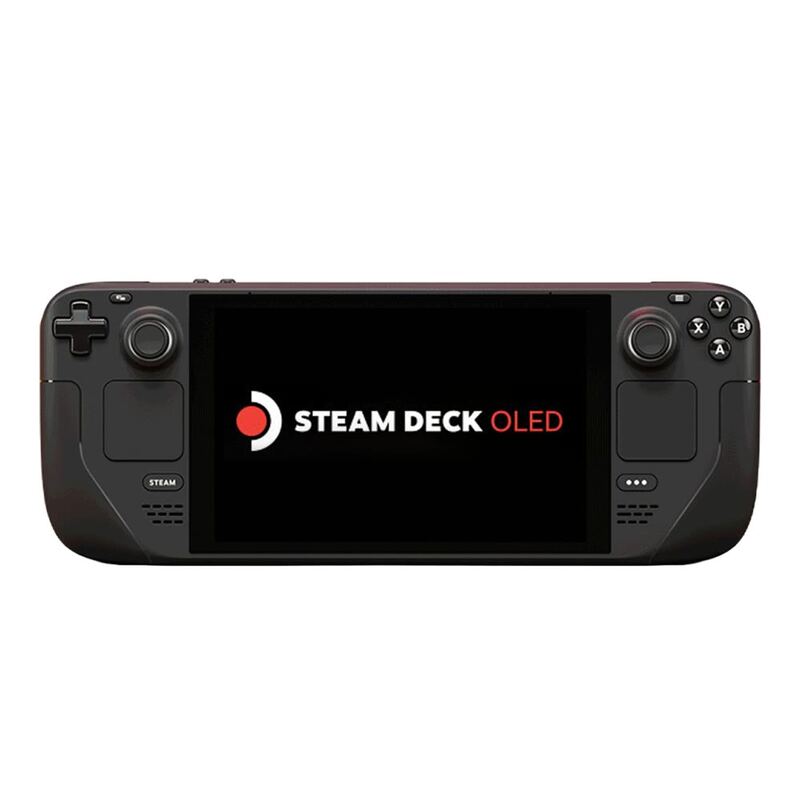
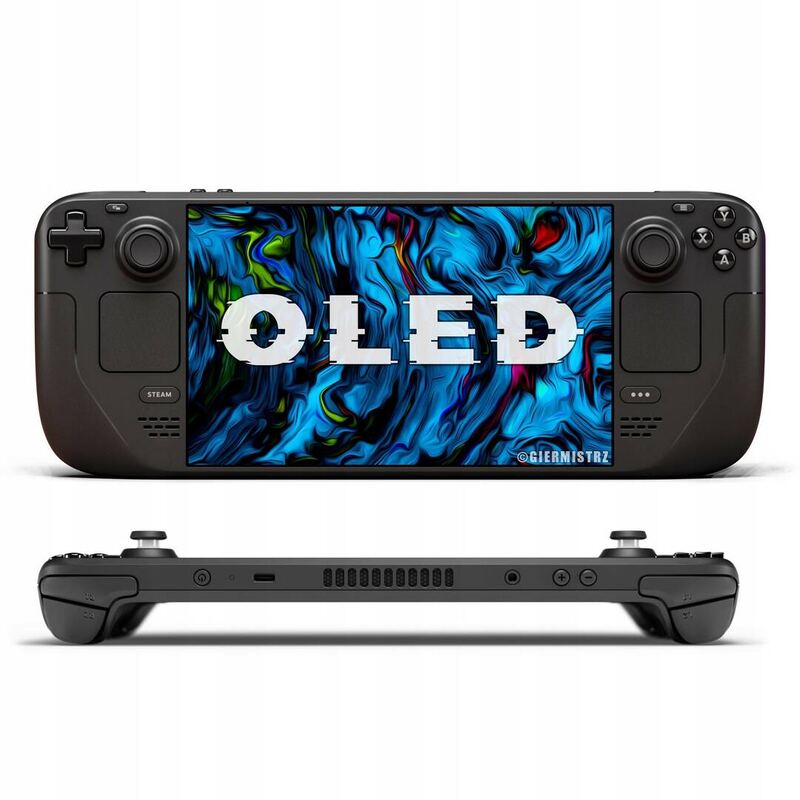
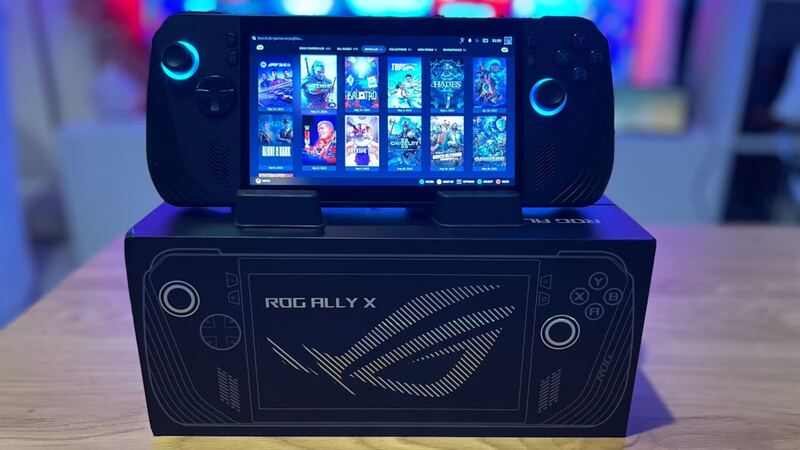
The Lenovo Legion Go S outperforms the Steam Deck OLED and Valve Steam Deck OLED in terms of hardware specs, featuring a Z1 Extreme chipset and 32GB RAM, making it superior for graphically intensive games. Unlike the ASUS ROG Ally X, it avoids the Xbox UI but suffers from loud fan noise and lacks the OLED screen quality of the Valve model.
Rating sources
“Where it struggles as a Windows device compared to the ROG Ally X or the Legion Go, the Legion Go S running on SteamOS seemed to easily outperform both.”
Our 4.2 score is the average of these published ratings. Ratings marked * were derived from the reviewer’s written analysis or video transcript — the publisher didn’t print an explicit numeric score, so we inferred one from their own words. Click through to verify. More about methodology.