Verdict
Head-to-head · Best Handheld Gaming PCs

Lenovo Legion Go S (Z2 Go, SteamOS) vs Steam Deck OLED

Which is the better buy? Side-by-side on rating, price, strengths, and watch-outs — with the published ratings we averaged to get there.

The short answer

Steam Deck OLED comes out ahead by a narrow margin (4.2 vs 4.5). The gap is mostly about Visual quality enthusiasts — read the strengths below before deciding.

Lenovo Legion Go S (Z2 Go, SteamOS)
Ranked #6 in Best Handheld Gaming PCs
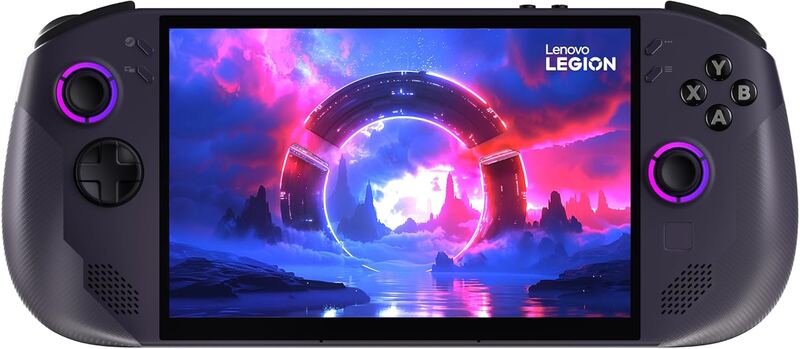
Lenovo Legion Go S (Z2 Go, SteamOS)
$730as of Jul 6

The Lenovo Legion Go S is praised as a superior Steam Deck alternative, delivering strong performance for portable AAA gaming with its AMD Z1 Extreme chipset, 32GB RAM, and 1TB SSD. PCMag's Zackery Cuevas called it a 'better Steam Deck' that surpasses expectations, while digitalchumps reviewer Will Silberman noted its ability to run demanding titles like The Last of Us Part II smoothly. However, reviewers criticized the loud fan noise and the limitation that prevents background game updates during sleep mode. This handheld is ideal for gamers seeking SteamOS compatibility and high performance, but may not suit users prioritizing quiet operation or battery efficiency.

Strengths
  • Runs graphically intensive games smoothly with consistent framerates
  • Features an 8in WUXGA LCD touchscreen with 120Hz refresh rate and VRR
  • Powered by AMD Z1 Extreme chipset with 32GB RAM and 1TB SSD for high performance
Watch-outs
  • Fan runs loudly even during light usage
  • Game installation and updates cannot be done while device is in sleep mode
Steam Deck OLED
Higher ratedRanked #1 in Best Handheld Gaming PCs
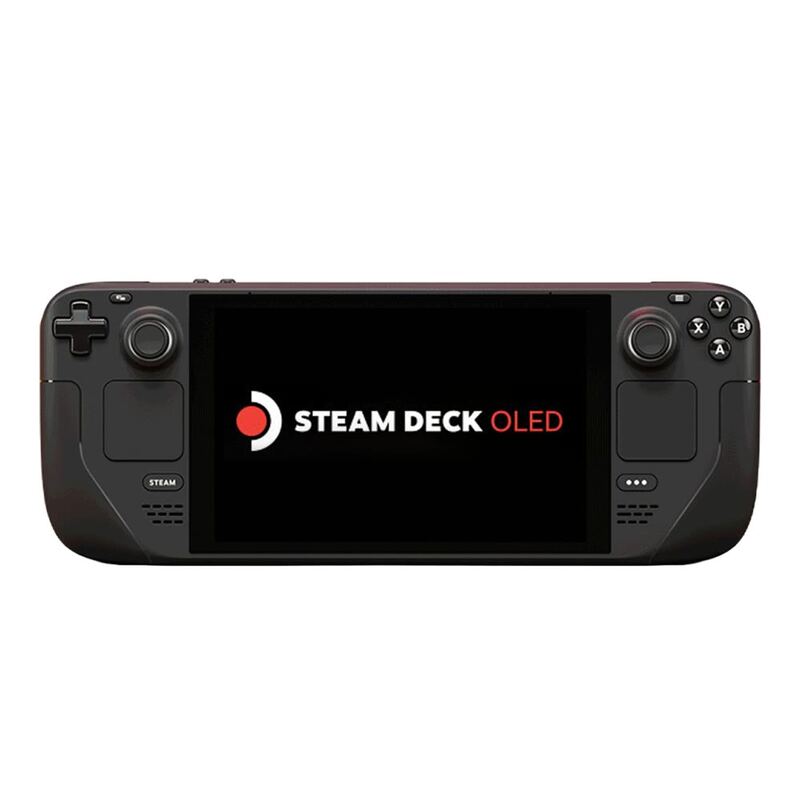
Steam Deck OLED
$1,074.87as of Jul 6

The Steam Deck OLED represents a significant visual upgrade over its predecessor, with reviewers praising the OLED screen's color accuracy, HDR support, and 90Hz refresh rate. Birchtree noted the display's superiority over the original LCD model, calling it 'spectacular' and 'eye-searingly delightful.' The device also features improved Wi-Fi 6E, slightly better battery life, and quieter fans. However, some reviewers noted that the fan noise remains audible in quiet settings, and the battery improvement is modest. This model appeals to users seeking enhanced visual quality and performance over the original Steam Deck, though those prioritizing battery life or silent operation may find it lacking.

Strengths
  • OLED screen delivers exceptional color reproduction and HDR support with 1,000 nits max brightness
  • 90Hz refresh rate improves game smoothness and reduces input latency
  • Quieter fans compared to the original Steam Deck model
Watch-outs
  • Fan noise still audible in quiet environments, though improved from original
  • Battery life improvement is marginal and not as good as Nintendo Switch

How they stack up

Lenovo Legion Go S (Z2 Go, SteamOS)

The Lenovo Legion Go S outperforms the Steam Deck OLED and Valve Steam Deck OLED in terms of hardware specs, featuring a Z1 Extreme chipset and 32GB RAM, making it superior for graphically intensive games. Unlike the ASUS ROG Ally X, it avoids the Xbox UI but suffers from loud fan noise and lacks the OLED screen quality of the Valve model.

Steam Deck OLED

The Steam Deck OLED excels in display quality over the Valve Steam Deck OLED with its vibrant HDR and 1,000 nits peak brightness, though the latter offers better battery life and a more refined overall experience. Compared to the MSI Claw 8, it lacks the larger 8-inch screen and superior battery capacity, but provides a more polished SteamOS experience.

Specs side-by-side

SpecLenovo Legion Go S (Z2 Go, SteamOS)Steam Deck OLED
ProcessorAMD Z1 ExtremeRevised AMD 'Van Gogh' 6nm
Display8in WUXGA (1900 x 1200)7.4" OLED
Memory32GB16GB LPDDR5 6400MT/s
Storage1TB M.2 SSD512GB and 1TB options
GraphicsAMD Ryzen Z2 Go8 RDNA 2 CUs, 1.6GHz
Refresh Rate120Hz90Hz
Battery~55.5Wh50Whr battery
← See the full ranking of best handheld gaming pcs