Verdict
Head-to-head · Best Handheld Gaming PCs

GPD Win 3 vs Lenovo Legion Go S (Z2 Go, SteamOS)

Which is the better buy? Side-by-side on rating, price, strengths, and watch-outs — with the published ratings we averaged to get there.

The short answer

GPD Win 3 comes out ahead by a narrow margin (4.3 vs 4.2). The gap is mostly about Windows users wanting hybrid design — read the strengths below before deciding.

GPD Win 3
Higher ratedRanked #4 in Best Handheld Gaming PCs
GPD Win 3
$798.95as of Jul 6

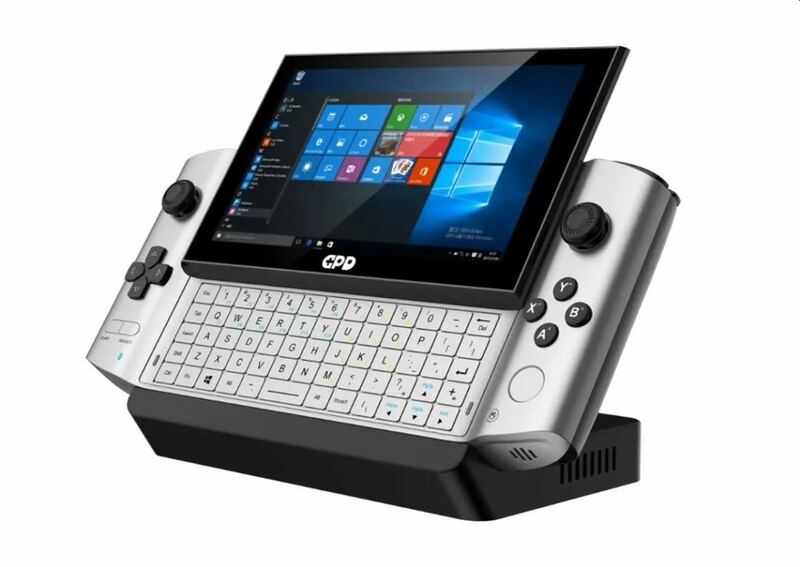
The GPD Win 3 is a portable Windows PC featuring a 5.5-inch 720p touchscreen with sliding keyboard, powered by Intel's 11th gen Tiger Lake-U processor and Iris Xe graphics. Reviewers noted its Switch-like design with integrated controller and dual-mode operation (gamepad/mouse). The device offers solid performance for its form factor, though some users reported issues with controller button feedback and accidental key presses during screen sliding. It's best suited for portable gaming and productivity tasks rather than extended typing sessions.

Strengths
  • 5.5-inch 720p touchscreen with sliding keyboard design
  • Intel Tiger Lake-U processor (i5-1135G7 or i7-1165G7) with integrated Iris Xe graphics
  • 16 GB LPDDR4X RAM running at 4,266 MHz for improved gaming performance
Watch-outs
  • Controller buttons have weak feedback compared to Sony DualShock or Nintendo Switch
  • Display sliding mechanism occasionally registers unintended key presses during use
Lenovo Legion Go S (Z2 Go, SteamOS)
Ranked #6 in Best Handheld Gaming PCs
Lenovo Legion Go S (Z2 Go, SteamOS)
$730as of Jul 6

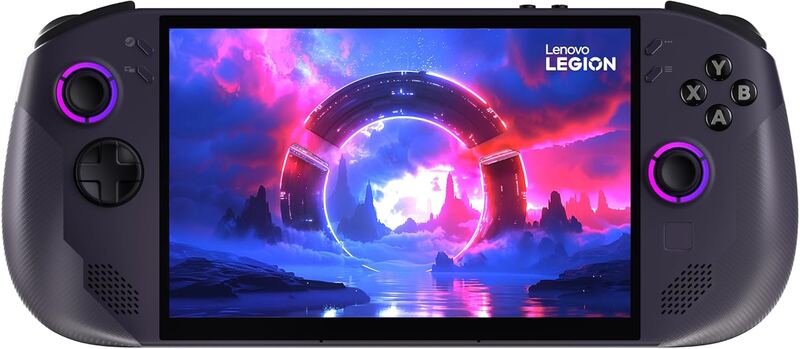
The Lenovo Legion Go S is praised as a superior Steam Deck alternative, delivering strong performance for portable AAA gaming with its AMD Z1 Extreme chipset, 32GB RAM, and 1TB SSD. PCMag's Zackery Cuevas called it a 'better Steam Deck' that surpasses expectations, while digitalchumps reviewer Will Silberman noted its ability to run demanding titles like The Last of Us Part II smoothly. However, reviewers criticized the loud fan noise and the limitation that prevents background game updates during sleep mode. This handheld is ideal for gamers seeking SteamOS compatibility and high performance, but may not suit users prioritizing quiet operation or battery efficiency.

Strengths
  • Runs graphically intensive games smoothly with consistent framerates
  • Features an 8in WUXGA LCD touchscreen with 120Hz refresh rate and VRR
  • Powered by AMD Z1 Extreme chipset with 32GB RAM and 1TB SSD for high performance
Watch-outs
  • Fan runs loudly even during light usage
  • Game installation and updates cannot be done while device is in sleep mode

How they stack up

GPD Win 3

The GPD Win 3 offers a unique sliding keyboard design and Windows compatibility, unlike the Steam Deck OLED or Valve Steam Deck OLED which are Linux-based. However, it lacks the performance of the MSI Claw 8 and Lenovo Legion Go S, and its controller feedback is inferior to the ASUS ROG Ally X's button layout.

Lenovo Legion Go S (Z2 Go, SteamOS)

The Lenovo Legion Go S outperforms the Steam Deck OLED and Valve Steam Deck OLED in terms of hardware specs, featuring a Z1 Extreme chipset and 32GB RAM, making it superior for graphically intensive games. Unlike the ASUS ROG Ally X, it avoids the Xbox UI but suffers from loud fan noise and lacks the OLED screen quality of the Valve model.

Specs side-by-side

SpecGPD Win 3Lenovo Legion Go S (Z2 Go, SteamOS)
ProcessorIntel Core i5-1135G7 or i7-1165G7AMD Z1 Extreme
Display5.5-inch 1280 x 7208in WUXGA (1900 x 1200)
Memory16 GB LPDDR4X32GB
Storage1 TB NVMe SSD1TB M.2 SSD
GraphicsIntel Iris Xe Graphics G7AMD Ryzen Z2 Go
Refresh Rate60 Hz120Hz
Battery44 Wh~55.5Wh
← See the full ranking of best handheld gaming pcs