Verdict
The Best 6Aggregated review·38 sources·updated November 1, 2026·checked November 1, 2026

Best VR Headsets

Top 6 vr headsets reviewed and ranked.

This guide aggregates 38 published reviews across 6 products; the thinnest-sourced pick rests on 4. How we rank.

Verdict is reader-supported. As an Amazon Associate we earn from qualifying purchases. Some links on this page are affiliate links — if you click through and buy, we may earn a small commission at no extra cost to you. Our ratings are sourced from independent publications, not sponsors.
Quick answer

Meta Quest 2 is our top pick for vr headsets — an averaged 4.6/5 across 3 published reviews. Runner-up: Meta Quest 3S (~$349).

At a glance6 products ▾
1Meta Quest 2Top Pick
3 sources
Best for: Casual gamers seeking low-barrier entry into VR
Check Price on Amazon
2 sources
$349
$349 · Check Price on Amazon
9 sources
$599.99Best for: Mainstream buyers willing to pay for premium mixed-reality features
$599.99 · Check Price on Amazon
5 sources
$1,849.99Best for: Dedicated PC VR enthusiasts who value tracking precision
$1,849.99 · Check Price on Amazon
3 sources
$1,179.83Best for: Simulation enthusiasts seeking maximum tracking accuracy
$1,179.83 · Check Price on Amazon
3 sources
Best for: Users prioritizing visual fidelity and low weight
Check Price on Amazon

The full ranking

How we rank →
Meta Quest 2
#1 · Top Pick
Best for: Casual gamers seeking low-barrier entry into VR
Meta Quest 2
3 sources
▾Why it's ranked here

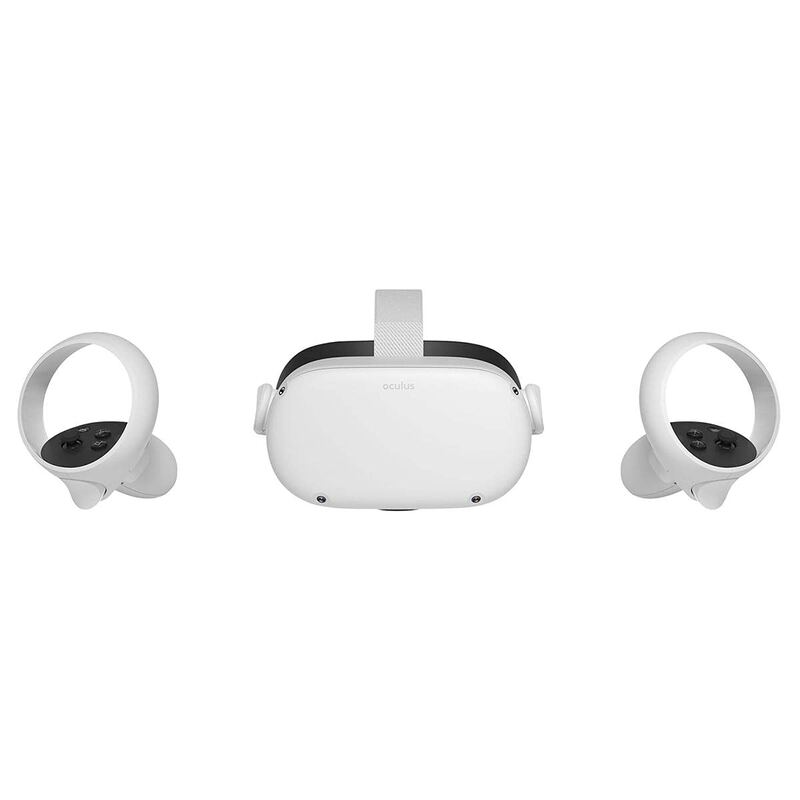
The Meta Quest 2 offers a wireless standalone experience that eliminates the need for an external gaming PC or console, making virtual reality accessible to a broader audience without expensive hardware investments. Trusted Reviews found this design strikes a balance between accessibility and performance, while WIRED reported that the headset is smaller, lighter, and less front-heavy than its predecessor despite higher-resolution displays. However, battery life remains short during extended use sessions, requiring users to plan around charging cycles, and pupil distance adjustment requires removing the headset from your face to change settings. This product fits casual gamers seeking a low-barrier entry into VR with a massive library of games, but those prioritizing long uninterrupted playtime or convenient on-the-fly fit adjustments should look elsewhere.
Strengths
  • — Wireless standalone design removes the need for a gaming PC or console to function.
  • — Improved screen resolution and lighter, less front-heavy build compared to its predecessor.
Watch-outs
  • — Battery life remains short during extended use sessions.
  • — Pupil distance adjustment requires removing the headset from your face to change settings.
Meta Quest 3S
#2
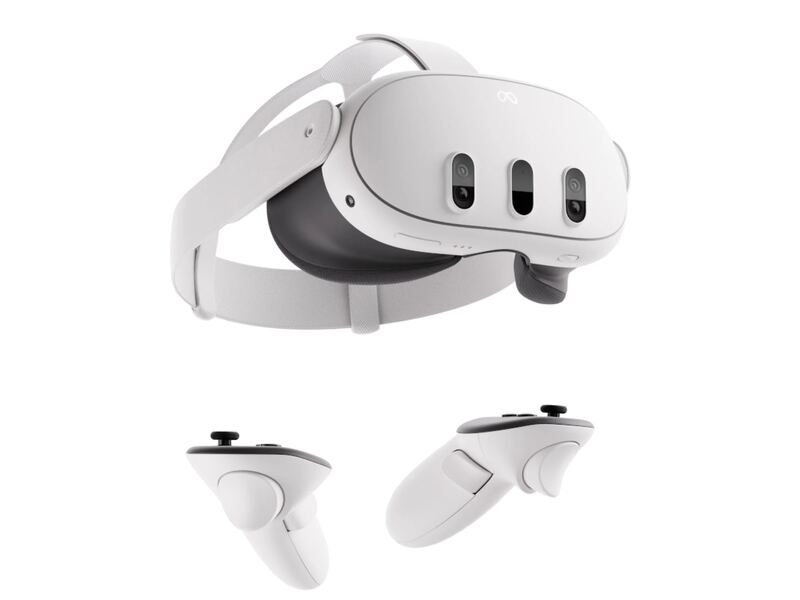
Meta Quest 3S
2 sources$349as of Nov 1
▾Why it's ranked here

IGN found the Meta Quest 3S to be a cost-effective entry point into mixed reality that retains the high-performance Snapdragon XR2 Gen2 platform of its premium sibling. Club386 noted that while it utilizes older Fresnel lenses, the headset still supports up to 120Hz refresh rates and offers comparable performance across applications. Tom's Hardware highlighted the device as a compelling upgrade for users moving from the Quest 2 due to its inclusion of color passthrough technology at a lower price point. This model is best suited for new VR adopters or budget-conscious consumers who prioritize processing power over optical sharpness.

Strengths
  • — Priced at $299.99 for a significant discount compared to the standard Quest 3 model.
  • — Features the same Snapdragon XR2 Gen2 processor and 8GB of RAM as the more expensive Quest 3.
Watch-outs
  • — Uses Fresnel lenses which result in a smaller sweet spot and narrower field of vision compared to pancake lens models.
  • — Limited IPD adjustment range restricted between 58mm and 68mm with only three fixed modes.
Meta Quest 3
#3
Best for: Mainstream buyers willing to pay for premium mixed-reality features
Meta Quest 3
9 sources$599.99as of Nov 1
▾Why it's ranked here

The Meta Quest 3 delivers high-resolution full-color passthrough and powerful standalone performance via the Snapdragon XR2 Gen 2 processor. WIRED found that this mixed-reality capability allows users to interact with digital objects layered over physical surroundings, while IGN recorded that the hardware upgrade supports complex games without a tethered PC. The redesigned Touch Plus controllers offer improved ergonomics and haptic feedback, though the stock facial interface and strap are often uncomfortable for extended sessions. WIRED noted that the software library still lacks fully integrated spatial computing applications despite the advanced hardware. The significant price increase over the Quest 2 targets mainstream buyers willing to pay for premium features, while budget-conscious users may find the cost prohibitive.

Strengths
  • — Delivers high-resolution full-color passthrough that enables genuine mixed-reality experiences by blending virtual objects with the real world.
  • — Powered by the Qualcomm Snapdragon XR2 Gen 2 processor for improved graphics performance in standalone mode.
Watch-outs
  • — Stock facial interface and strap are often described as uncomfortable, prompting many users to purchase third-party upgrades like the Elite Strap.
  • — The $499 starting price represents a significant increase over the previous Quest 2 model.
Valve Index
#4
★ Premium Pick
Best for: Dedicated PC VR enthusiasts who value tracking precision
Valve Index
5 sources$1,849.99as of Nov 1
▾Why it's ranked here

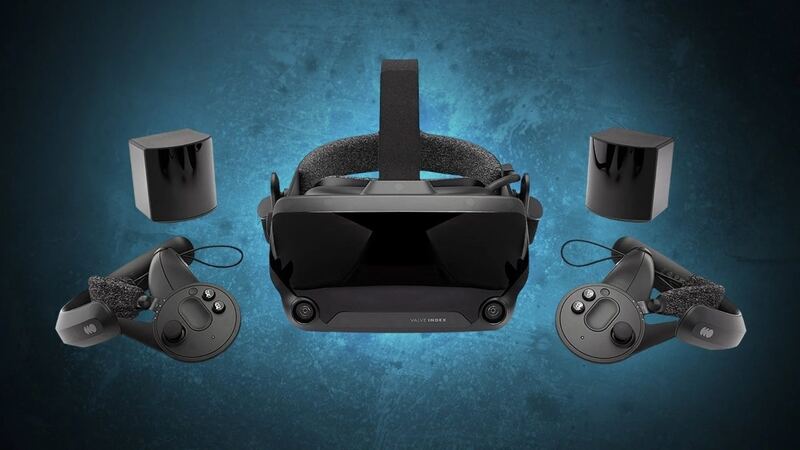
Laptop Mag found the display to be sharp and smooth, supporting refresh rates up to 144 Hz that reduce motion sickness, while Space reported the headset is highly comfortable with a configurable design suitable for long sessions. The Knuckles controllers offer finger tracking that reviewers described as feeling natural for picking things up, though Thevirtualreviewer noted that the 1440 x 1600 resolution per eye is outdated and can show a screen-door effect in modern comparisons. Laptop Mag criticized the lack of customizable safety barriers compared to competitors like Oculus or Vive, which limits physical awareness during intense gameplay. This premium hardware suits dedicated PC VR enthusiasts who value tracking precision and comfort, but budget-conscious buyers should look elsewhere due to the high cost.

Strengths
  • — Laptop Mag found the display to be sharp and smooth, supporting refresh rates up to 144 Hz.
  • — The Valve Index controllers (Knuckles) offer finger tracking that reviewers described as feeling natural for picking things up.
Watch-outs
  • — Laptop Mag criticized the lack of customizable safety barriers compared to competitors like Oculus or Vive.
  • — Thevirtualreviewer noted that the 1440 x 1600 resolution per eye is outdated and can show a screen-door effect in modern comparisons.
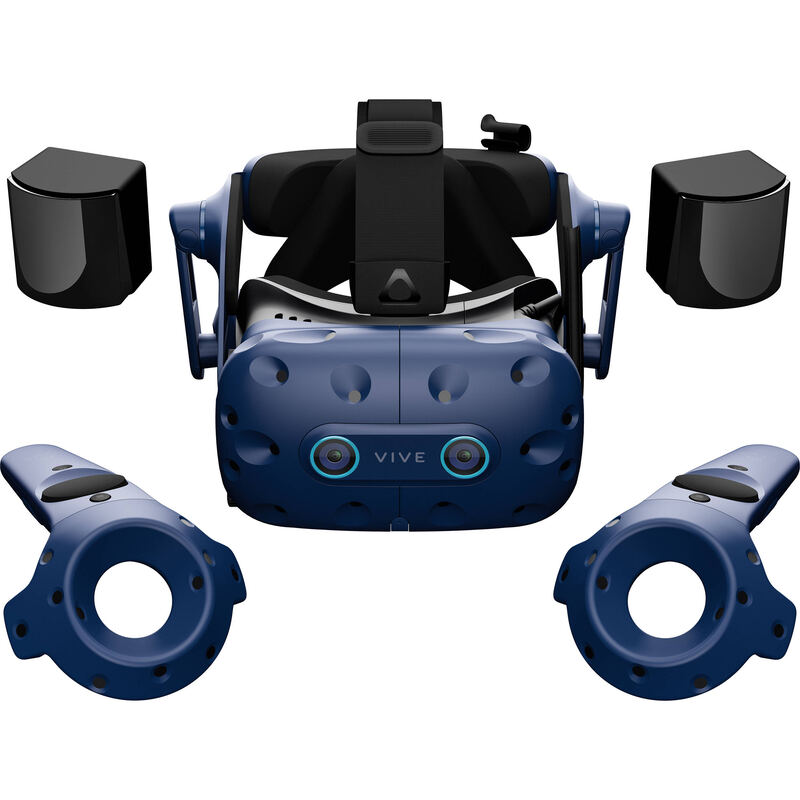
HTC Vive Pro 2
#5
Best for: Simulation enthusiasts seeking maximum tracking accuracy
HTC Vive Pro 2
3 sources$1,179.83as of Oct 29
▾Why it's ranked here

The HTC Vive Pro 2 delivers a sharp 5K-class image across dual LCD panels and a 'true' 120-degree field of view, which Pocket-lint.com found creates a wider sweet spot with minimal screen-door effect. Thevirtualreviewer noted that SteamVR Tracking 2.0 base stations provide rock-solid precision superior to inside-out systems, though this requires an expensive setup involving external hardware and a high-end PC. However, the headset suffers from HTC winding down active development, meaning official support is tapering off with no new features expected. This product fits simulation enthusiasts seeking maximum visual fidelity and tracking accuracy, but casual users or those wanting standalone convenience should look elsewhere due to the high cost and complex installation.

Strengths
  • — Pocket-lint found the display offers a 'true' 120-degree field of view with dual-stack lenses that provide a wider sweet spot.
  • — Thevirtualreviewer noted the dual LCD panels deliver a sharp 5K-class image (4896 x 2448 combined) that minimizes screen-door effect.
Watch-outs
  • — Thevirtualreviewer pointed out that HTC has wound down active development, meaning official support is tapering off with no new features expected.
  • — High cost and expensive setup
Pimax Dream Air
#6
Best for: Users prioritizing visual fidelity and low weight
Pimax Dream Air
3 sources
▾Why it's ranked here

The Pimax Dream Air dramatically reduces weight to under 170g and delivers exceptional visual clarity via Sony micro-OLED panels at 3840 x 3552 pixels per eye. Tom's Guide found that integrated Tobii eye tracking enables Dynamic Foveated Rendering, which helps maintain performance on recommended RTX 3080 or RTX 4070 GPUs despite the high pixel count. However, Gamesradar reported that the stock headstrap and face gasket can cause discomfort and significant light leakage if not adjusted properly. The headset is ideal for users prioritizing visual fidelity and low weight who have powerful hardware, but those seeking a wider field of view or plug-and-play comfort should look elsewhere.

Strengths
  • — Weighs under 170g, making it significantly lighter than previous Pimax models and competitors like the Bigscreen Beyond.
  • — Features Sony micro-OLED panels with a resolution of 3840 x 3552 pixels per eye for exceptional visual clarity.
Watch-outs
  • — Requires a high-end GPU, with Pimax recommending at least an RTX 3080 or RTX 4070 for optimal performance.
  • — The stock headstrap and face gasket design can cause discomfort or light leakage if not adjusted properly.
Reviews aggregated from
Tom's HardwareTom's GuideWIREDPCMagTechRadarPC GamerThevirtualreviewer

Spec comparison

6 products
vs
SpecMeta Quest 2Meta Quest 3S
Resolution Per Eye1832 x 19201832 x 1920 per eye
Refresh Rate72 - 120 Hz90-120Hz
Display TypeRGB LCDLCD, 1832 x 1920 pixels per eye
Tracking TypeInside-out tracking—
Field Of View110 degrees horizontal—
Display Resolution2412x2288 pixels per eye1832 × 1920 pixels per eye
Dimensions10.24"D x 7.36"W x 4.96"H—
Resolution1832 x 1920—

Frequently asked questions

What's the top pick among vr headsets right now?
Meta Quest 2 is the top pick for vr headsets — 4.6/5 averaged from 3 published reviews. The Meta Quest 2 offers a wireless standalone experience that eliminates the need for an external gaming PC or console, making virtual reality accessible to a broader audience without expensive hardware investments. Trusted Reviews found this design strikes a balance between accessibility and performance, while WIRED reported that the headset is smaller, lighter, and less front-heavy than its predecessor despite higher-resolution displays. However, battery life remains short during extended use sessions, requiring users to plan around charging cycles, and pupil distance adjustment requires removing the headset from your face to change settings. This product fits casual gamers seeking a low-barrier entry into VR with a massive library of games, but those prioritizing long uninterrupted playtime or convenient on-the-fly fit adjustments should look elsewhere.
When was this guide last updated?
This guide was last re-checked in October 2026. Prices, links, and source ratings are re-verified on a rolling basis, and the ranking updates when the underlying scores change.

Related guides

Browse all →