Verdict
The Best 5Reviewed by Mike Hunter·May 25, 2026

Best AI Mini PCs for Local LLM

Top 5 AI mini PCs for running local large language models, reviewed and ranked.

Quick answer

Apple Mac Studio M4 Max is our top pick for ai mini pcs for local llm — an averaged 4.5/5 across 3 published reviews at about $3,699. Runner-up: Mac mini M4 Pro 64 GB (~$2,599).

At a glance

Tap any product for the full review
(3 sources)
$3,699Best for: Apple users who want the fastest local-LLM inference and 100B-class model headroom
$3,699 · Buy at apple.com
(4 sources)
$2,599Best for: Best for Mac users — highest bandwidth in 64 GB tier
$2,599 · Buy at apple.com
(4 sources)
$1,999.99Best for: Best for largest local models — 128 GB headroom
$1,999.99 · Check Price on Amazon
(3 sources)
$1,999Best for: Open-platform tinkerers who want 128 GB of local-LLM headroom on Windows or Linux
$1,999 · Buy at frame.work
(4 sources)
$3,499Best for: Best for AI clustering — dual 10GbE networking
$3,499 · Check Price on Amazon
Verdict is reader-supported. As an Amazon Associate we earn from qualifying purchases. Some links on this page are affiliate links — if you click through and buy, we may earn a small commission at no extra cost to you. Our ratings are sourced from independent publications, not sponsors.
Reviews aggregated from
MacworldMinipcreviewPCWorldTom's HardwareAppleinsiderGeekculturePCMagMarkellisreviews

The full ranking

How we rank →
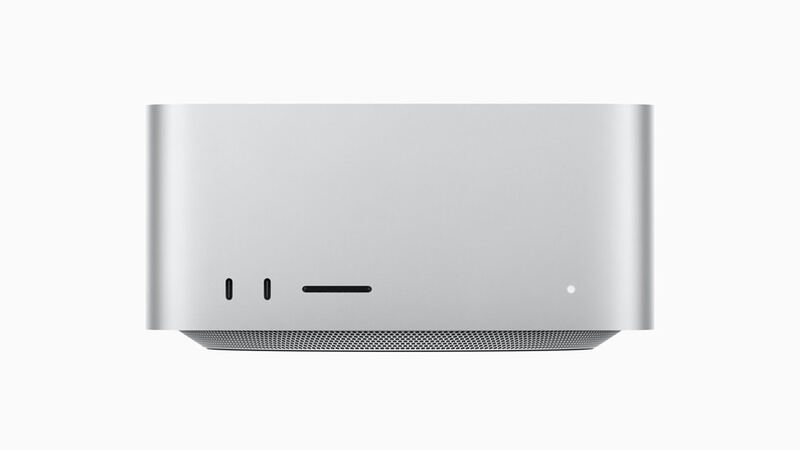
Apple Mac Studio M4 Max
#1 · Top Score
Best for: Apple users who want the fastest local-LLM inference and 100B-class model headroom
Apple Mac Studio M4 Max
from 3 sources$3,699

The Mac Studio M4 Max is the highest-performance local-LLM machine in this group, built around the bandwidth that actually governs token speed. At up to 546 GB/s it more than doubles the Mac mini M4 Pro's 273 GB/s and the Strix Halo boxes' 256 GB/s, and community testing puts 70B models at roughly 22-25 tokens/sec, dramatically faster than the others here. Macworld (4.5/5) and AppleInsider (4.5/5) both praised its performance and composure, with AppleInsider noting it is 'faster than the Apple Silicon Mac Pro, for half, and sometimes a quarter, of the price.' Its 128 GB unified memory ceiling fits 100B-class quants while staying cool and quiet. The catch is price: it costs roughly double the 128 GB GMKtec EVO-X2 or Beelink GTR9 Pro, and it is macOS-only, so Linux and CUDA tooling are out.

Strengths
  • Highest memory bandwidth here at 546 GB/s, the single most important spec for token generation speed
  • Up to 128 GB unified memory runs 70B models at roughly 22-25 tokens/sec and fits 100B-class quants
Watch-outs
  • By far the most expensive pick here, roughly double the 128 GB Strix Halo boxes
  • Unified memory is soldered and configured at purchase, with steep Apple upgrade pricing
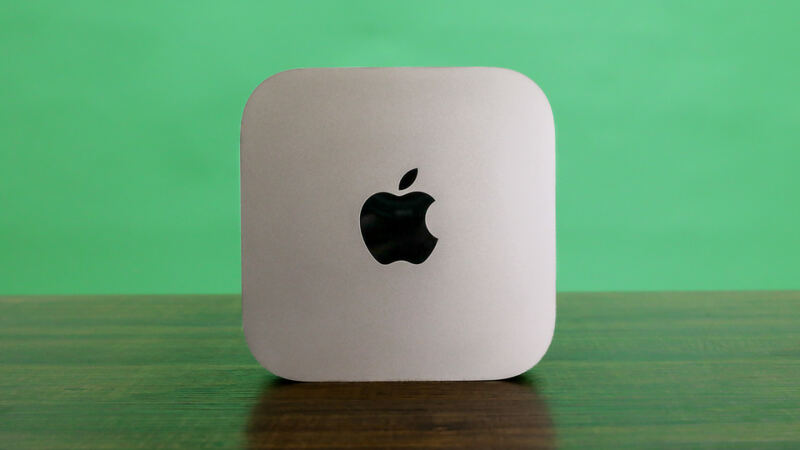
Mac mini M4 Pro 64 GB
#2
Best for: Best for Mac users — highest bandwidth in 64 GB tier
Mac mini M4 Pro 64 GB
from 4 sources$2,599as of Apr 25

The Mac mini M4 Pro delivers exceptional performance and energy efficiency in a compact form factor, with its M4 Pro processor and 64 GB unified memory handling demanding multitasking tasks effortlessly. PCMag's Joe Osborne praised its silent operation and powerful specs, while Notebookcheck's Sebastian Bade noted its impressive build quality and high price point. However, reviewers consistently criticized the lack of upgradability, expensive configuration options, and limited warranty coverage. For local-LLM use, the 273 GB/s memory bandwidth makes it the fastest 64GB-class mini PC at this price; reviewer benchmarks put 70B Q4 inference at roughly 8–10 tokens/sec, making it ideal for buyers who need 70B-class models on a Mac. Step up to a Mac Studio if you need to run 120B+ models locally.

Strengths
  • Super fast and efficient M4 Pro SoC with 12 CPU cores and 16-core GPU
  • Silent operation under average load with efficient cooling system
Watch-outs
  • No maintenance options due to permanently soldered unified memory
  • High surcharges for RAM and SSD upgrades, especially with proprietary modules
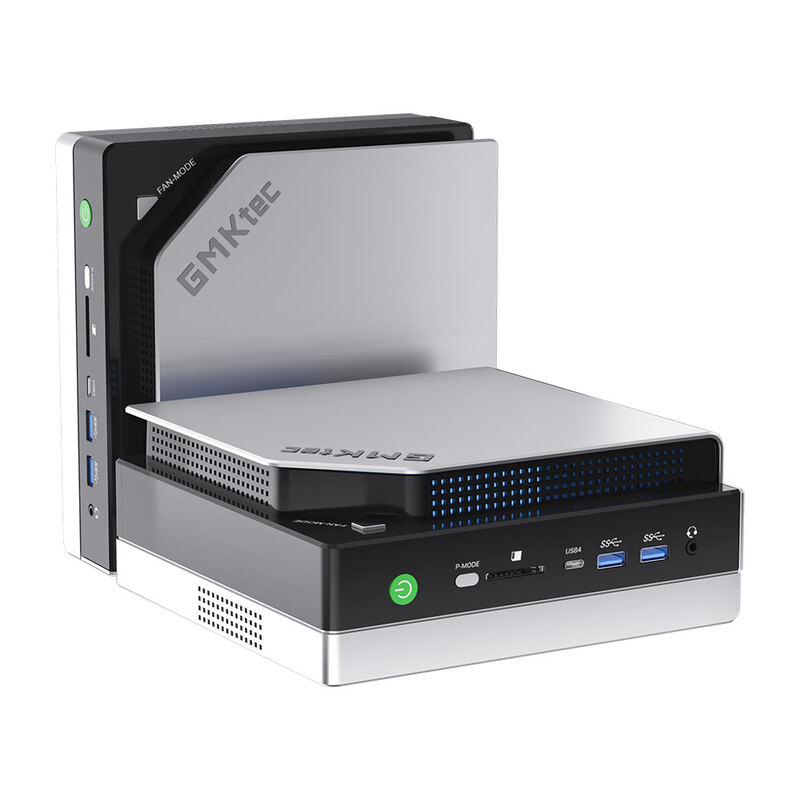
GMKtec EVO-X2
#3
Best for: Best for largest local models — 128 GB headroom
GMKtec EVO-X2
from 4 sources$1,999.99as of May 29

The GMKtec EVO-X2 stands out as the best 128 GB-class mini PC for buyers who actually need to fit a 120B-parameter local model. PCWorld praised its 'excellent combination of CPU, GPU, and NPU performance at desktop workstation level,' while TechRadar highlighted that it competes directly with Nvidia's DGX Spark at roughly half the price. The XDNA 2 NPU contributes 50 TOPS to a 126 TOPS platform total when CPU and Radeon 8060S iGPU are factored in. With 128 GB LPDDR5X unified memory at 256 GB/s, it comfortably loads GPT-OSS 120B Q4 (~70 GB) and gives strong single-user inference for 70B-class models in the 6–8 tokens/sec range. It loses to the Mac mini M4 Pro on overall reviewer rating (4.4 vs 4.6) primarily because reviewers weight build polish and ecosystem; for raw RAM headroom on Linux/Windows, the EVO-X2 is the more capable machine.

Strengths
  • 128 GB LPDDR5X unified memory at 256 GB/s — fits 120B-class models locally
  • AMD Ryzen AI Max+ 395 with 50 TOPS XDNA 2 NPU (126 TOPS platform total CPU+GPU+NPU)
Watch-outs
  • Memory is soldered — no future RAM upgrades
  • Single 2.5G Ethernet port limits AI clustering compared to the Beelink GTR9 Pro
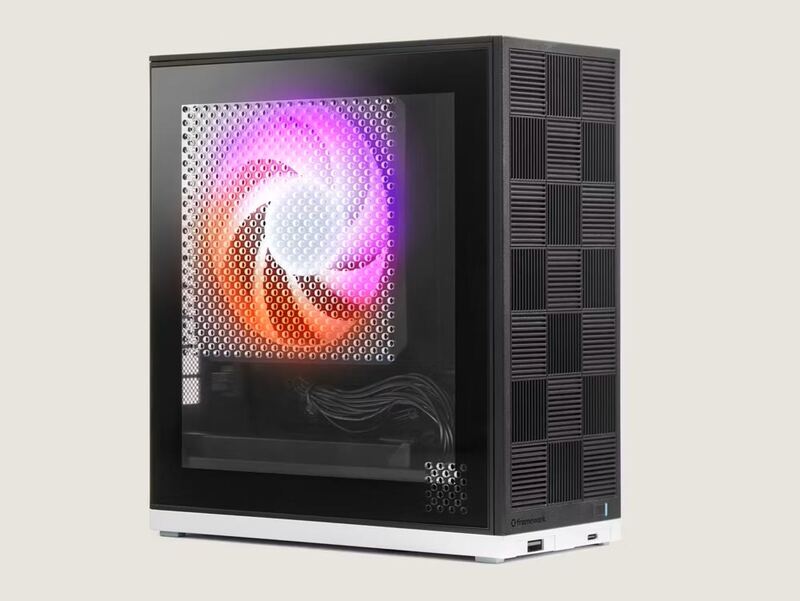
Framework Desktop (Ryzen AI Max+ 395)
#4
Best for: Open-platform tinkerers who want 128 GB of local-LLM headroom on Windows or Linux
Framework Desktop (Ryzen AI Max+ 395)
from 3 sources$1,999

The Framework Desktop puts AMD's Strix Halo silicon into an open, repairable chassis aimed squarely at local AI. PCWorld awarded it 4.5/5 and an Editors' Choice, writing that 'it's not just for tinkering, this machine can legitimately run the latest AI models locally, something few desktops this size can do.' With 128 GB of LPDDR5X-8000 unified memory, AMD's driver can assign up to 96 GB as VRAM, enough to run GPT-OSS 120B, which AMD says runs about ten times faster than Llama 3 70B on this chip. ServeTheHome called it 'our third-favorite AMD Strix Halo mini PC so far,' and Tom's Hardware noted 'the mix of powerful graphics and plentiful RAM is why Framework is pushing this as an AI system.' It runs Windows or Linux, so the full open-source AI stack is available, unlike on the Mac Studio. Bandwidth and price are the limits.

Strengths
  • 128 GB LPDDR5X-8000 unified memory lets you assign up to 96 GB as VRAM for local models
  • Explicitly built and marketed for local LLM work; runs GPT-OSS 120B at usable speeds
Watch-outs
  • Soldered LPDDR5X means no future memory upgrades despite Framework's repairable reputation
  • 256 GB/s bandwidth trails the Mac Studio M4 Max badly, so token speed is mid-pack
Beelink GTR9 Pro
#5
Best for: Best for AI clustering — dual 10GbE networking
Beelink GTR9 Pro
from 4 sources$3,499as of May 29

The Beelink GTR9 Pro is the same AMD Ryzen AI Max+ 395 / 128 GB LPDDR5X silicon as the GMKtec EVO-X2 — same 50 TOPS NPU, same 126 TOPS platform total, same memory ceiling — with two distinguishing features: dual 10GbE Intel E610 networking and an industrial-grade metal chassis. Reviewers at jasondeegan.com, starryhope, and minipcreviewer praised its workstation-class AI performance and high-bandwidth networking, while one outlier review flagged firmware-stage BSOD issues that pulled the averaged rating down to 3.6/5. Pick this over the EVO-X2 specifically if you want to cluster two boxes for distributed inference or share a 10GbE NAS at line rate. Otherwise, the EVO-X2 delivers the same LLM throughput for $300 less.

Strengths
  • Dual 10GbE LAN with Intel E610 controllers — the only mini PC at this size with high-throughput networking for AI clustering and NAS
  • AMD Ryzen AI Max+ 395 with 50 TOPS XDNA 2 NPU (126 TOPS platform total) and 128 GB LPDDR5X unified memory
Watch-outs
  • Premium price point of ~$2,000 — $300 more than the GMKtec EVO-X2 for the same Strix Halo silicon
  • 3.27 kg metal chassis makes it heavy and less portable

Spec comparison

5 products
SpecApple Mac Studio M4 MaxMac mini M4 Pro 64 GBGMKtec EVO-X2Framework Desktop (Ryzen AI Max+ 395)Beelink GTR9 Pro
CPUApple M4 Max (16-core: 12P + 4E)Apple M4 Pro 12-CoreAMD Ryzen AI Max+ 395 (16 cores, 32 threads)AMD Ryzen AI Max+ 395 (16-core)AMD Ryzen AI Max+ 395
GPU40-core Apple GPUApple M4 Pro 16-Core GPURadeon 8060S (RDNA 3.5, 40 cores)Radeon 8060S (RDNA 3.5)Radeon 8060S iGPU (RDNA 3.5)
RAMUp to 128 GB unified memory64 GB Unified Memory128 GB LPDDR5X 8,000 MHzUp to 128 GB LPDDR5X-8000 (soldered)128 GB LPDDR5X 8,000 MHz
Memory Bandwidth546 GB/s256 GB/s
StorageUp to 8 TB SSD2 TB SSD2 TB PCIe 4.0 SSDUp to 8 TB PCIe 4.0 NVMe2 TB PCIe 4.0 SSD
ConnectivityThunderbolt 5, 10Gb Ethernet, HDMI 2.1Thunderbolt 5, Wi-Fi 6EWi-Fi 6, Bluetooth 5.22x USB4 40Gbps, HDMI 2.1, 2x DP 2.1, 5GbEDual 10GbE (Intel E610), Wi-Fi 7
Dimensions7.7 x 7.7 x 3.7 in8.9 x 8.1 x 3.9 in (4.5 L)
NPU16-core Neural EngineXDNA 2, 50 TOPS (126 TOPS platform total)XDNA 2, 50 TOPSXDNA 2, 50 TOPS (126 TOPS platform total)

Frequently asked questions

What is the best ai mini pcs for local llm?
Apple Mac Studio M4 Max is our top pick for ai mini pcs for local llm, with an averaged rating of 4.5/5 from 3 published reviews. The Mac Studio M4 Max is the highest-performance local-LLM machine in this group, built around the bandwidth that actually governs token speed. At up to 546 GB/s it more than doubles the Mac mini M4 Pro's 273 GB/s and the Strix Halo boxes' 256 GB/s, and community testing puts 70B models at roughly 22-25 tokens/sec, dramatically faster than the others here. Macworld (4.5/5) and AppleInsider (4.5/5) both praised its performance and composure, with AppleInsider noting it is 'faster than the Apple Silicon Mac Pro, for half, and sometimes a quarter, of the price.' Its 128 GB unified memory ceiling fits 100B-class quants while staying cool and quiet. The catch is price: it costs roughly double the 128 GB GMKtec EVO-X2 or Beelink GTR9 Pro, and it is macOS-only, so Linux and CUDA tooling are out.
Is there a cheaper alternative worth considering?
Framework Desktop (Ryzen AI Max+ 395) (around $1,999) rates 4.4/5 in our analysis. The Framework Desktop puts AMD's Strix Halo silicon into an open, repairable chassis aimed squarely at local AI. PCWorld awarded it 4.5/5 and an Editors' Choice, writing that 'it's not just for tinkering, this machine can legitimately run the latest AI models locally, something few desktops this size can do.' With 128 GB of LPDDR5X-8000 unified memory, AMD's driver can assign up to 96 GB as VRAM, enough to run GPT-OSS 120B, which AMD says runs about ten times faster than Llama 3 70B on this chip. ServeTheHome called it 'our third-favorite AMD Strix Halo mini PC so far,' and Tom's Hardware noted 'the mix of powerful graphics and plentiful RAM is why Framework is pushing this as an AI system.' It runs Windows or Linux, so the full open-source AI stack is available, unlike on the Mac Studio. Bandwidth and price are the limits.
How does Verdict rank these products?
Every rating on Verdict is the numerical average of scores published by independent review sites, YouTube reviewers, and Reddit buyer reports. No editor adjusts the order — the ranking is whatever the source data produces. See our methodology page for the full process.
When was this guide last updated?
This guide was last re-checked in May 2026. We re-run our research pipeline for each category on a rolling basis so prices and rankings reflect current market reality.

Related guides

Browse all →