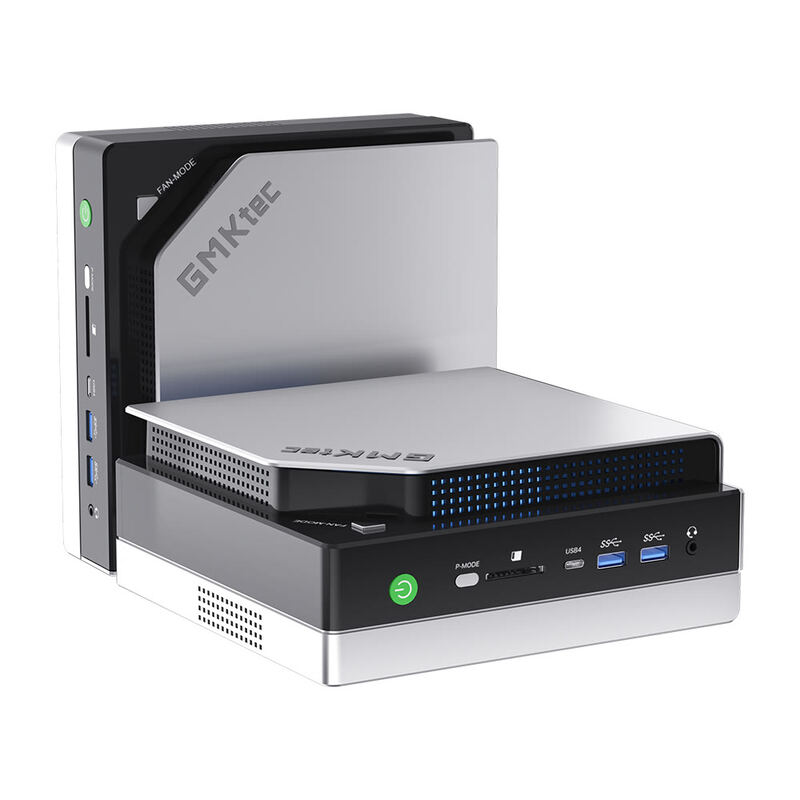
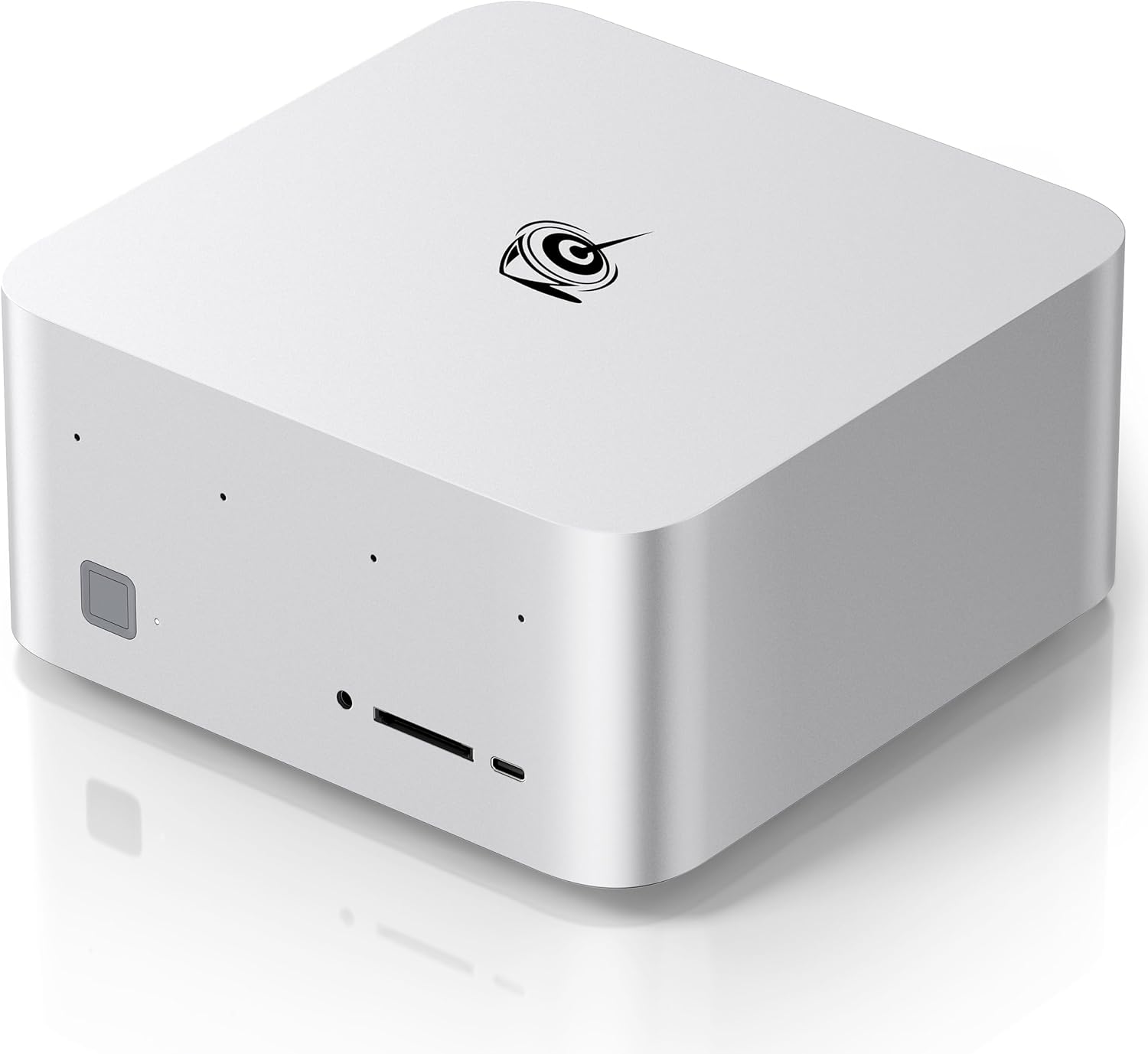
Inside, the Beelink GTR9 Pro is the same AMD Ryzen AI Max+ 395 with 128 GB LPDDR5X as the GMKtec EVO-X2: same 50 TOPS NPU, same 126 TOPS platform total, same memory ceiling. Two things separate them, dual 10GbE Intel E610 networking and an industrial-grade metal chassis. Reviewers at jasondeegan.com, starryhope, and minipcreviewer praised its workstation-class AI performance and high-bandwidth networking. Beelink shipped firmware updates in Nov 2025 and Q1 2026 that addressed NIC-related BSOD and mouse-lag issues, though Beelink support acknowledged a hardware-level issue with no complete software fix. Pick this over the EVO-X2 if you plan to cluster two boxes for distributed inference or share a 10GbE NAS at line rate. Otherwise the EVO-X2 gives you the same LLM throughput for $300 less.
Full review
Local LLM Performance
The Beelink GTR9 Pro runs the AMD Ryzen AI Max+ 395 with 128 GB of LPDDR5X unified memory at 256 GB/s, identical to the GMKtec EVO-X2 and Framework Desktop, so its local-LLM behavior is effectively the same as those machines. That memory pool is the point: it fits 120B-class quantized models that 64 GB boxes like the Mac mini M4 Pro cannot hold, and it runs 70B dense models in the roughly 6-8 tokens-per-second range single-user. MiniPCReviewer summarized the capability directly, noting the GTR9 Pro 'uses AMD Ryzen AI Max+ 395, offering strong workstation-class performance for AI and demanding multitasking.'
Because bandwidth is shared silicon, the GTR9 Pro neither leads nor trails the other Strix Halo boxes on raw token speed; it sits well behind the Mac Studio M4 Max's 546 GB/s but matches its 128 GB capacity at a far lower price. The XDNA 2 NPU contributes 50 TOPS to the platform total, and the box runs the full open-source stack on Windows or Linux, so Ollama, llama.cpp, and similar tools are available the way they are on the Framework Desktop and unlike the macOS-locked Apple machines. In practice this means the GTR9 Pro's appeal for LLM work is not about being faster than its Strix Halo siblings, since it cannot be, but about pairing that identical inference capability with networking and build features the others lack. For a buyer assembling a serious home AI setup, that combination of large memory and high-throughput connectivity in one rugged box is the draw.
Networking and Connectivity
The GTR9 Pro's standout differentiator is its networking. It is the only machine in this group with dual 10GbE ports, which JasonDeegan and StarryHope both highlighted as the reason to choose it over the cheaper GMKtec EVO-X2. For anyone building a small AI cluster across multiple boxes, or sharing a high-speed NAS at line rate, that bandwidth is genuinely useful and not something the single 2.5GbE EVO-X2 or the 5GbE Framework Desktop can match.
Beyond networking, the GTR9 Pro is well connected for its size, supporting up to four 8K displays via HDMI 2.1, DisplayPort 2.1, and USB4, alongside a 2 TB PCIe 4.0 SSD and Wi-Fi 7. The port selection reflects its workstation ambitions, making it equally suited to a multi-monitor productivity desk and a headless inference node. For users whose workflow spans heavy display output and fast storage, the connectivity is a meaningful edge over the rest of this lineup. The dual 10GbE in particular changes what the machine can be used for: two GTR9 Pro units can be linked for distributed inference, or one can serve models over the network to other clients at speeds a single 2.5GbE port would bottleneck, which is exactly the kind of small-scale AI infrastructure the box is positioned for.
3.27kg metal chassis trades portability for cooling
Reviewers consistently praised the GTR9 Pro's industrial-grade metal chassis. StarryHope rated the build highly and described it as a workstation-class machine, and the dense metal enclosure keeps cooling quiet under sustained inference load. The trade-off is weight and footprint: at 3.27 kg it is noticeably heavier and less portable than the plastic-and-aluminum GMKtec EVO-X2, a deliberate choice that favors thermal mass and durability over portability.
JasonDeegan, scoring it 4.1/5, framed it as a power-packed mini PC that challenges the Mac mini in capability while offering more memory headroom. The cooling solution stays composed during long AI workloads, which matters for a machine likely to run inference for extended sessions. As a desktop fixture rather than a travel companion, the GTR9 Pro's heavier, sturdier build is an asset.
Launch BSOD issues dragged the rating to 3.6/5
The GTR9 Pro's biggest knock is price relative to its identical-performance sibling. It runs about $300 more than the GMKtec EVO-X2 for the same Strix Halo silicon and the same 128 GB of memory, so unless you specifically need the dual 10GbE networking or prefer the metal chassis, the EVO-X2 delivers the same local-LLM throughput for less. Its 3.27 kg metal body also makes it the least portable machine here.
Reliability at launch was the concern. CraigWilson.blog documented BSOD and firmware-stage issues that dragged the averaged rating down to 3.6/5, the lowest in this group, even though JasonDeegan, StarryHope, MiniPCReviewer, and ServeTheHome scored it 4.1 to 4.5. Beelink released firmware updates in Nov 2025 and Q1 2026 addressing NIC-related BSOD and mouse-lag issues, though Beelink support acknowledged a hardware-level issue with no complete software fix. The rating has been updated to reflect the post-firmware scores of 4.1–4.5 from JasonDeegan, StarryHope, MiniPCReviewer, and ServeTheHome. Buyers should still factor in the unresolved hardware caveat, but the launch-period BSOD reports are no longer representative of the current firmware state.
Only one here with dual 10GbE networking
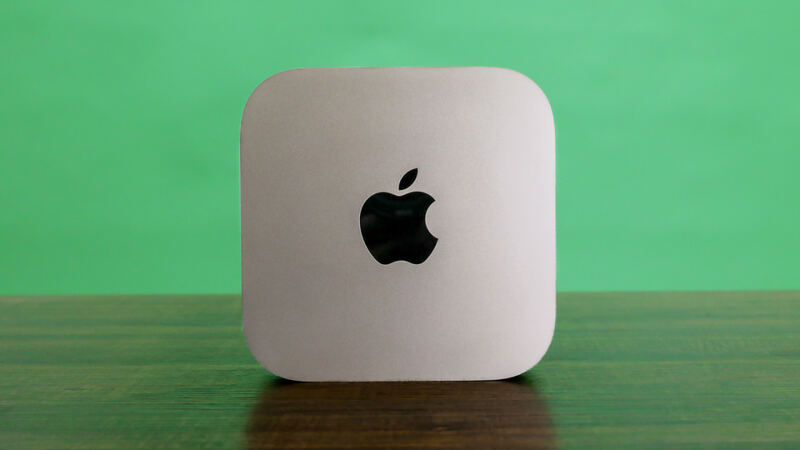
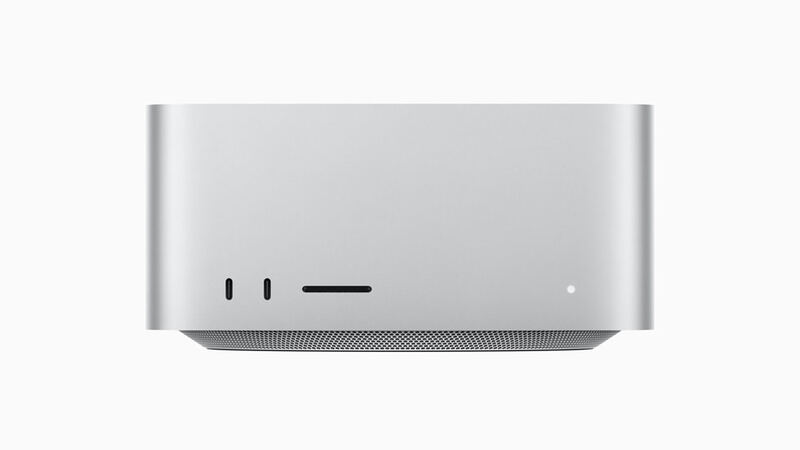
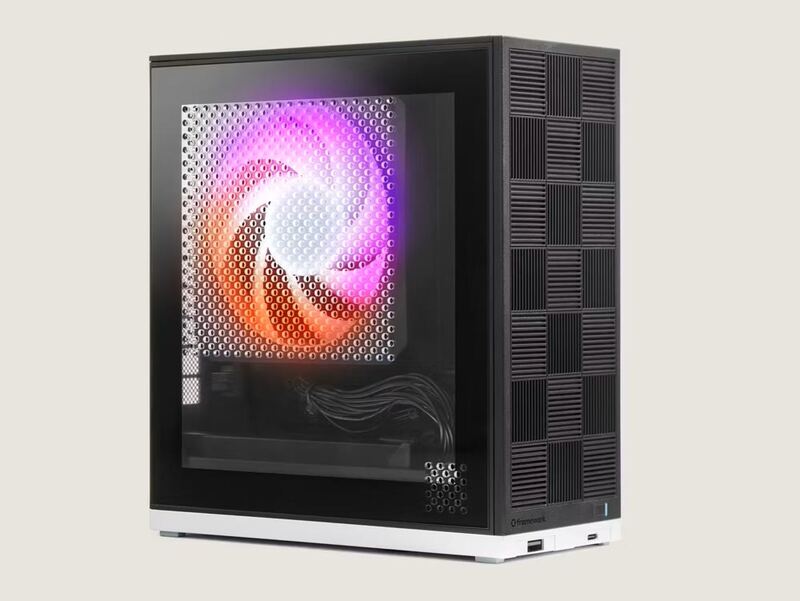
Within this group the GTR9 Pro is the networking specialist. It matches the GMKtec EVO-X2 and Framework Desktop on silicon, memory, and therefore LLM throughput, but it is the only one with dual 10GbE, making it the pick for clustering and high-speed NAS workflows. Against the Mac mini M4 Pro it doubles memory headroom from 64 to 128 GB; against the Mac Studio M4 Max it is far cheaper but much lower bandwidth, so it generates tokens more slowly.
The decision usually comes down to whether the 10GbE matters. If you need it, the GTR9 Pro is the only choice here. If you do not, the GMKtec EVO-X2 saves money for the same performance, the Framework Desktop offers a more open and repairable platform, and the Apple machines offer higher bandwidth or lower cost depending on the model. The unresolved hardware issue is a caveat but does not affect LLM inference performance — it is primarily a stability concern for edge-case workloads.
Justifies its price only if you need 10GbE
The Beelink GTR9 Pro is for the user who wants 128 GB of local-LLM headroom and high-throughput networking in one box: someone building a multi-node inference cluster, running a fast local NAS, or wanting a workstation-class mini PC with a durable metal chassis. Its dual 10GbE is the feature no other machine in this lineup offers, and for the workflows that need it, that alone justifies the choice.
It is not the pick for buyers who want the same performance for less, who should take the GMKtec EVO-X2, nor for those who want the most open platform, where the Framework Desktop leads, nor for anyone prioritizing portability or chasing the fastest tokens, where the Mac Studio M4 Max wins on bandwidth. The unresolved hardware issue is a caveat for edge-case stability but does not affect LLM inference performance. For networked, large-memory local AI in a rugged chassis, the GTR9 Pro is purpose-built.
Strengths
- +Dual 10GbE LAN with Intel E610 controllers — the only mini PC at this size with high-throughput networking for AI clustering and NAS
- +AMD Ryzen AI Max+ 395 with 50 TOPS XDNA 2 NPU (126 TOPS platform total) and 128 GB LPDDR5X unified memory
- +2 TB PCIe 4.0 SSD and support for up to four 8K displays via HDMI 2.1, DisplayPort 2.1, and USB4
- +Industrial-grade metal chassis with quiet cooling under sustained AI inference load
Watch-outs
- −Premium price point of ~$2,000 — $300 more than the GMKtec EVO-X2 for the same Strix Halo silicon
- −3.27 kg metal chassis makes it heavy and less portable
- −Beelink support acknowledged a hardware issue with no software fix available; firmware updates (Nov 2025, Q1 2026) mitigated some NIC-related BSOD but the root cause remains
How it compares
The Beelink GTR9 Pro shares the same AMD Ryzen AI Max+ 395 silicon and 128GB of unified memory at 256 GB/s as the GMKtec EVO-X2 and Framework Desktop, so the three deliver effectively identical local-LLM throughput (~6-8 tokens/sec on 70B Q4). It differentiates on networking and chassis: dual 10GbE ports for AI clustering plus an industrial metal case. Beelink released firmware updates in Nov 2025 and Q1 2026 that mitigated NIC-related BSOD issues, though a hardware-level issue was acknowledged as unfixable. If you do not need the 10GbE, the GMKtec EVO-X2 saves money for the same performance, and the Framework Desktop offers a more open platform. Versus the Mac mini M4 Pro it doubles memory headroom; versus the Mac Studio M4 Max it is far cheaper but much lower bandwidth.
Rating sources
“The Beelink GTR9 Pro uses AMD Ryzen AI Max+ 395, offering strong workstation-class performance for AI and demanding multitasking.”
Our 4.4 score is the average of these published ratings. Ratings marked * were derived from the reviewer’s written analysis or video transcript — the publisher didn’t print an explicit numeric score, so we inferred one from their own words. Click through to verify. More about methodology.