Verdict
Ranked #3 of 5Reviewed by Mike Hunter·May 24, 2026

Sony A7R V

Averaged from 2 published ratings
The verdict

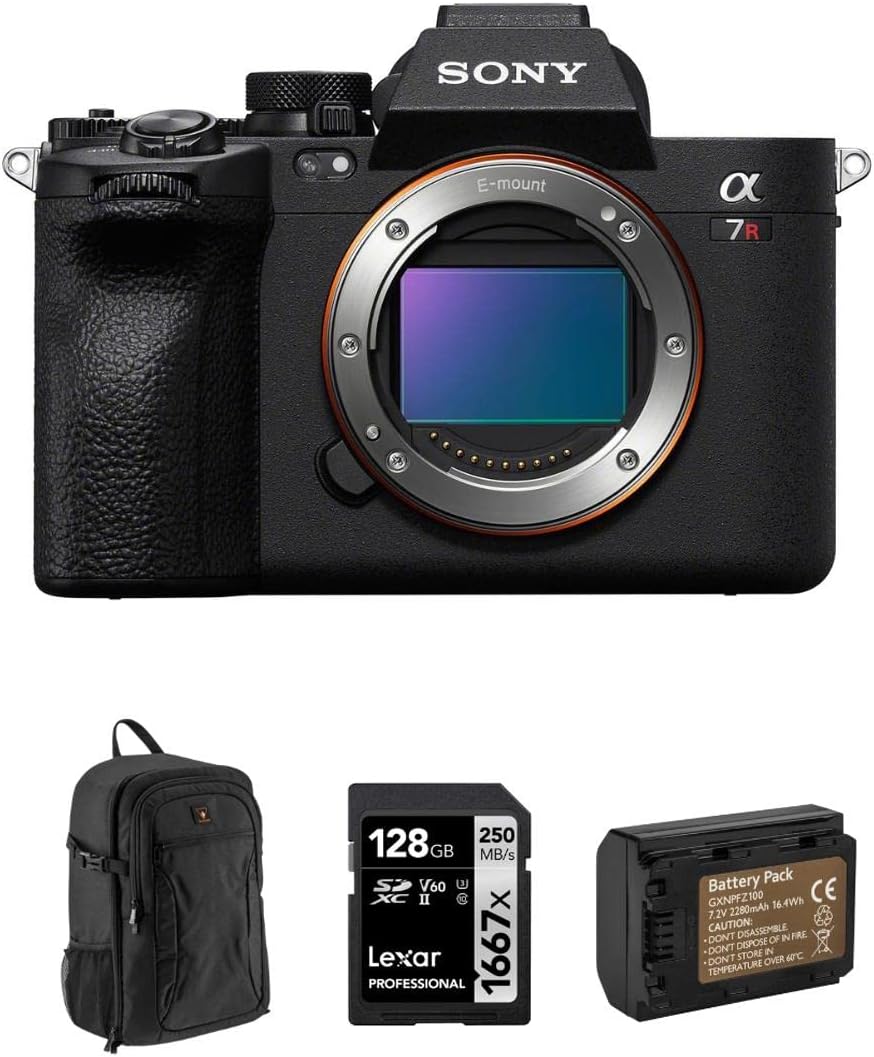
The Sony A7R V is the pixel-peeper's flagship — 61 MP with Sony's best AI-assisted autofocus. Tom's Guide and TechRadar both 4.5/5. If you shoot landscapes, fashion, or commercial work where resolution is the priority, nothing else in this price bracket comes close. The non-stacked sensor means it's not the pick for fast-action sports where the Z8 and A1 II dominate.

Sony A7R V

Full review

Autofocus Revolution and AI Tracking

The most transformative upgrade in the Sony A7R V is its autofocus system, powered by a dedicated AI processing unit that significantly enhances subject recognition capabilities. DPReview notes that while the predecessor could identify people, faces, and eyes, the A7R V expands this to include animals, birds, insects, cars, trains, and aircraft with distinct modes for each. This allows photographers to fine-tune tracking sensitivity and search range for specific subjects, making it exceptionally robust for complex scenes. PCMag highlights that this AI-driven tracking is snappier and more reliable, contributing to the camera feeling faster overall despite sharing the same sensor as the previous generation. The system’s ability to lock onto eyes even when partially obscured or in difficult lighting conditions has been praised as a major leap forward for both stills and video work.

Image Quality and Sensor Performance

Retaining the 60-megapixel BSI CMOS sensor from the A7R IV, the A7R V delivers exceptional detail and dynamic range, though reviewers note the visual improvement over the previous model is incremental. A Reddit user in r/SonyAlpha reported that the actual visual jump from the 33MP A7 IV to the 61MP A7R V is only about 10-15%, suggesting that the higher resolution primarily benefits those who require extensive cropping or large-format prints. DPReview confirms that the new Bionz XR processor unlocks the full potential of the sensor, offering improved noise handling and color science. However, the massive file sizes can be a double-edged sword; wedding photographers on Reddit warn that 60MP files consume significant storage and slow down post-processing workflows, leading some to use the camera’s new reduced-resolution Raw options (26MP or 15MP) to mitigate these issues.

Build Quality and Ergonomic Improvements

The A7R V features a refined magnesium alloy body with improved dust and splash protection, including a new sensor guard function that closes the shutter when the power is off to minimize dust accumulation. PCMag’s Jim Fisher noted that while the sensor dust issue remains a common headache for mirrorless cameras, this new feature shows promise in reducing the need for frequent cleanings. The ergonomics have been updated with a deeper grip and a redesigned rear thumb rest, making it comfortable to handle even with heavier lenses like the Sigma 150-600mm Sports zoom. The camera weighs 1.6 pounds without a lens, maintaining a professional feel without being overly bulky. Ken Rockwell emphasizes that the new, larger electronic viewfinder alone justifies the $400 price increase over the A7R IV, offering a brighter and more detailed viewing experience that enhances composition and focus verification.

Video Capabilities and Limitations

While primarily a stills-focused camera, the A7R V offers robust video features, including 8K/24p and 4K/60p recording with 10-bit 4:2:2 internal recording. However, reviewers point out significant limitations in its video performance. DPReview and PCMag both highlight that the sensor readout speed is relatively slow, leading to noticeable rolling shutter effects, especially when using the electronic shutter. This makes the A7R V less suitable for fast-paced action or situations requiring silent shooting, such as weddings, where the distortion can be distracting. Reddit users comparing the A7R V to the A7 V note that the latter’s partially stacked sensor handles rolling shutter much better, making it a more versatile choice for hybrid shooters who prioritize video quality. Additionally, the 4K/60p mode applies a 1.24x crop, which can be limiting for wide-angle shots.

Stabilization and Handling

The in-body image stabilization (IBIS) system has been significantly upgraded, now rated at up to 8.0EV of compensation according to CIPA standards. DPReview explains that this improvement is achieved through more sophisticated algorithms and processing power, allowing for smoother handheld shots even with non-stabilized lenses. While CIPA tests can sometimes overstate real-world benefits, reviewers agree that the stabilization is noticeably more effective in practice, particularly for low-light photography and video. The dual-hinged, fully articulating rear screen is another standout feature, praised for its flexibility and durability. PCMag describes it as a 'clever' design that allows for intuitive angle adjustments, making it easier to shoot from high or low angles without awkward wrist positioning. This screen, combined with the improved EVF, enhances the overall user experience.

Where It Falls Short

Despite its many strengths, the A7R V has notable drawbacks that may deter some buyers. The most significant issue is the slow sensor readout speed, which limits the effectiveness of the electronic shutter and causes pronounced rolling shutter in video. PCMag notes that this limits the camera’s utility for high-speed action or silent shooting scenarios. Additionally, the high resolution results in large file sizes that can overwhelm storage and slow down editing workflows, a concern echoed by wedding photographers on Reddit. Some users also report that the camera’s menu system, while improved, remains complex and overwhelming for beginners. Finally, the price point of $3,899 is steep, and while the upgrades are substantial, the marginal gain in image quality over the A7R IV may not justify the cost for all users, especially those who do not require the highest resolution.

Who It Is Best For

The Sony A7R V is ideal for professional photographers and serious enthusiasts who prioritize high-resolution stills and advanced autofocus capabilities. It is particularly well-suited for landscape, studio, and portrait photographers who benefit from the 60MP sensor’s detail and dynamic range. The improved IBIS and ergonomic enhancements make it a strong choice for handheld shooting in challenging conditions. However, it is less suitable for hybrid shooters who need robust video performance, as the rolling shutter issues and cropped 4K modes limit its versatility. Wedding photographers may find the large file sizes and slow readout speed problematic, making the A7 V a more practical alternative. Ultimately, the A7R V is best for those who need the highest possible image quality and are willing to manage the associated workflow challenges.

Value and Comparison to Alternatives

At $3,899, the A7R V is a premium investment, but its value is justified for users who need its specific strengths. Compared to the A7R IV, the $400 price increase is offset by the improved autofocus, larger EVF, and better stabilization, making it a worthwhile upgrade for existing Sony users. However, for those considering a switch from other brands, the A7 V offers a more balanced package with better video performance and a lower price point, albeit with lower resolution. Ken Rockwell suggests that the A7R V’s resale value is strong, potentially recouping much of the initial cost. For photographers who do not require 60MP resolution, the A7 IV or A7 V may offer better value, while those needing higher speed and video capabilities might look to the A1 or A9 III. The A7R V stands out as a top-tier choice for resolution-focused shooters, but its niche appeal means it is not a one-size-fits-all solution.

Strengths

  • +61 MP back-illuminated sensor — highest resolution in this list by a wide margin, ideal for landscape and commercial work
  • +AI Processing Unit drives human/animal/bird/vehicle/insect subject recognition with dedicated neural-network silicon
  • +8K 24p, 4K 60p 10-bit internal — more than enough for stills shooters who need occasional video
  • +4-axis multi-angle LCD is unique on this list — combines vertical tilt with articulating design
  • +Dual SD + CFexpress Type A slots — flexible media options

Watch-outs

  • Rolling shutter is noticeable when panning fast subjects — not a stacked sensor like the A1 II or Nikon Z8
  • Buffer fills quickly at 61 MP + burst — ~26 compressed RAW before slowdown
  • No 10 fps with full AF/AE tracking — drops to 7 fps with mechanical shutter

How it compares

The resolution king at 61MP with Sony’s best AI AF; lower burst speed than the stacked-sensor bodies.

Who this is for

At a glance: high-resolution work — landscape, studio, and commercial photography.

Why you’d buy the Sony A7R V

  • 61 MP back-illuminated sensor — highest resolution in this list by a wide margin, ideal for landscape and commercial work.
  • AI Processing Unit drives human/animal/bird/vehicle/insect subject recognition with dedicated neural-network silicon.
  • 8K 24p, 4K 60p 10-bit internal — more than enough for stills shooters who need occasional video.

Why you’d skip it

  • Rolling shutter is noticeable when panning fast subjects — not a stacked sensor like the A1 II or Nikon Z8.
  • Buffer fills quickly at 61 MP + burst — ~26 compressed RAW before slowdown.
  • No 10 fps with full AF/AE tracking — drops to 7 fps with mechanical shutter.

Rating sources

Our 4.5 score is the average of these published ratings. More about methodology.
Frequently asked questions

Is the Sony A7R V worth buying?
The Sony A7R V is the pixel-peeper's flagship — 61 MP with Sony's best AI-assisted autofocus. Tom's Guide and TechRadar both 4.5/5. If you shoot landscapes, fashion, or commercial work where resolution is the priority, nothing else in this price bracket comes close. The non-stacked sensor means it's not the pick for fast-action sports where the Z8 and A1 II dominate.
What is the Sony A7R V's biggest strength?
61 MP back-illuminated sensor — highest resolution in this list by a wide margin, ideal for landscape and commercial work
What is the main drawback of the Sony A7R V?
Rolling shutter is noticeable when panning fast subjects — not a stacked sensor like the A1 II or Nikon Z8
What sources back the 4.5/5 rating?
Our 4.5/5 rating is the average of scores from 2 independent full-frame mirrorless cameras reviews — tomsguide and techradar. Click any source on the product page to read the original review.

How it compares

See all 5
Sony A7R V
4.5/5· $3,551
Check Price on Amazon