Verdict
Head-to-head · Best Full-Frame Mirrorless Cameras

Nikon Z8 vs Sony A7R V

Which is the better buy? Side-by-side on rating, price, strengths, and watch-outs — with the published ratings we averaged to get there.

The short answer

Nikon Z8 and Sony A7R V score essentially the same (4.5 vs 4.5). Pick the one whose trade-offs match your priorities — the strengths and watch-outs below are where they actually differ.

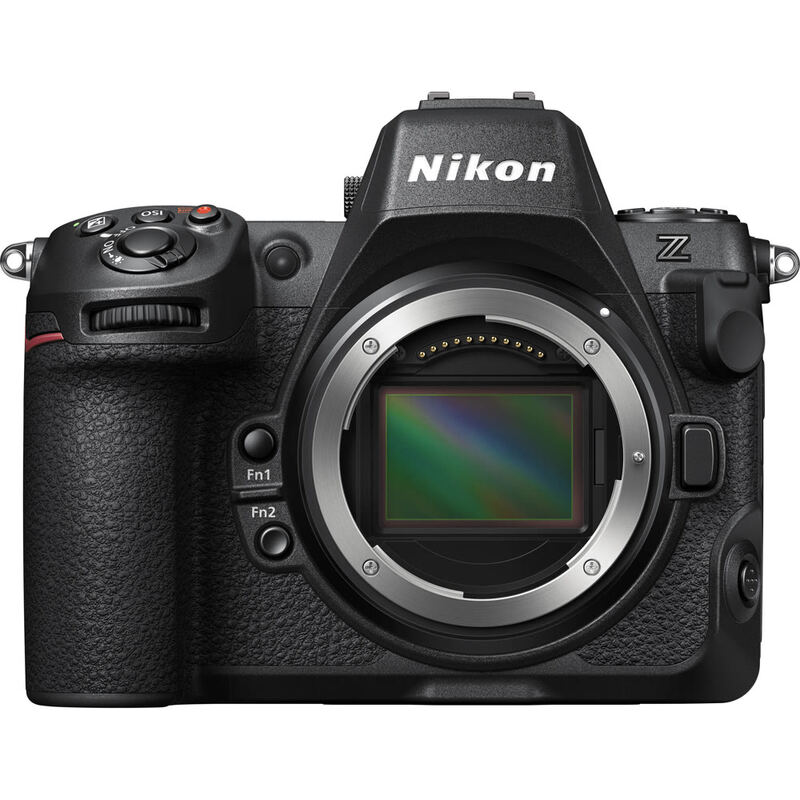
Nikon Z8
Ranked #2 in Best Full-Frame Mirrorless Cameras
Nikon Z8
$3,499as of May 26

The Nikon Z8 is the enthusiast-pro flagship of the year — Z9 internals in a smaller body at a lower price. PhotographyBlog rates it 4.5/5 and DPReview gave it their Gold Award. The stacked sensor, no-mechanical-shutter design, and 8.3K ProRes RAW make it the most video-capable option at this tier without stepping up to the $6,500 A1 II. Weight and battery life are the main tradeoffs versus smaller rivals.

Strengths
  • 45.7 MP stacked BSI CMOS sensor inherited from the flagship Z9 at 25% less weight and ~60% lower price
  • Mirrorless design with no mechanical shutter — silent, zero shutter blackout, rated to 1/32,000s electronic
  • 8.3K/60p ProRes RAW internal recording — matches the Z9 for professional video workflows
Watch-outs
  • Larger and heavier than the Sony A7R V at 910g (vs 723g) — not as comfortable for travel/street
  • Battery life (330 shots CIPA) trails the Sony A1 II (530 shots) — two batteries recommended for shoots
  • XQD/CFexpress card slot adds media cost compared to the Sony A7R V's dual SD
Sony A7R V
Ranked #3 in Best Full-Frame Mirrorless Cameras
Sony A7R V
$3,551as of May 24

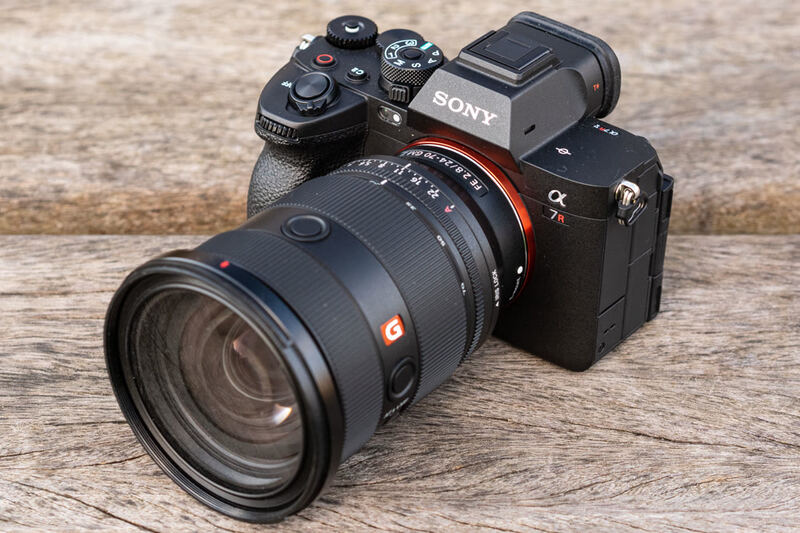
The Sony A7R V is the pixel-peeper's flagship — 61 MP with Sony's best AI-assisted autofocus. Tom's Guide and TechRadar both 4.5/5. If you shoot landscapes, fashion, or commercial work where resolution is the priority, nothing else in this price bracket comes close. The non-stacked sensor means it's not the pick for fast-action sports where the Z8 and A1 II dominate.

Strengths
  • 61 MP back-illuminated sensor — highest resolution in this list by a wide margin, ideal for landscape and commercial work
  • AI Processing Unit drives human/animal/bird/vehicle/insect subject recognition with dedicated neural-network silicon
  • 8K 24p, 4K 60p 10-bit internal — more than enough for stills shooters who need occasional video
Watch-outs
  • Rolling shutter is noticeable when panning fast subjects — not a stacked sensor like the A1 II or Nikon Z8
  • Buffer fills quickly at 61 MP + burst — ~26 compressed RAW before slowdown
  • No 10 fps with full AF/AE tracking — drops to 7 fps with mechanical shutter

How they stack up

Nikon Z8

Z9 internals (45.7MP stacked, 8.3K/60p) in a smaller body for less money — the value-per-capability leader of the flagships.

Sony A7R V

The resolution king at 61MP with Sony’s best AI AF; lower burst speed than the stacked-sensor bodies.

Specs side-by-side

SpecNikon Z8Sony A7R V
Sensor45.7MP Stacked BSI CMOS61MP BSI CMOS
ISO64–25600 (exp. 32–102400)100–32000 (exp. 50–102400)
Video8.3K/60p RAW, 4K/120p8K/24p, 4K/60p
StabilizationIBIS, up to 6 stopsIBIS, up to 8 stops
Weight910 g723 g
StorageCFexpress Type B + SD UHS-IIDual CFexpress Type A / SD UHS-II
← See the full ranking of best full-frame mirrorless cameras