Verdict
Top Score · #1 of 5Reviewed by Mike Hunter·May 24, 2026

Canon EOS R5 Mark II

Averaged from 3 published ratings
The verdict

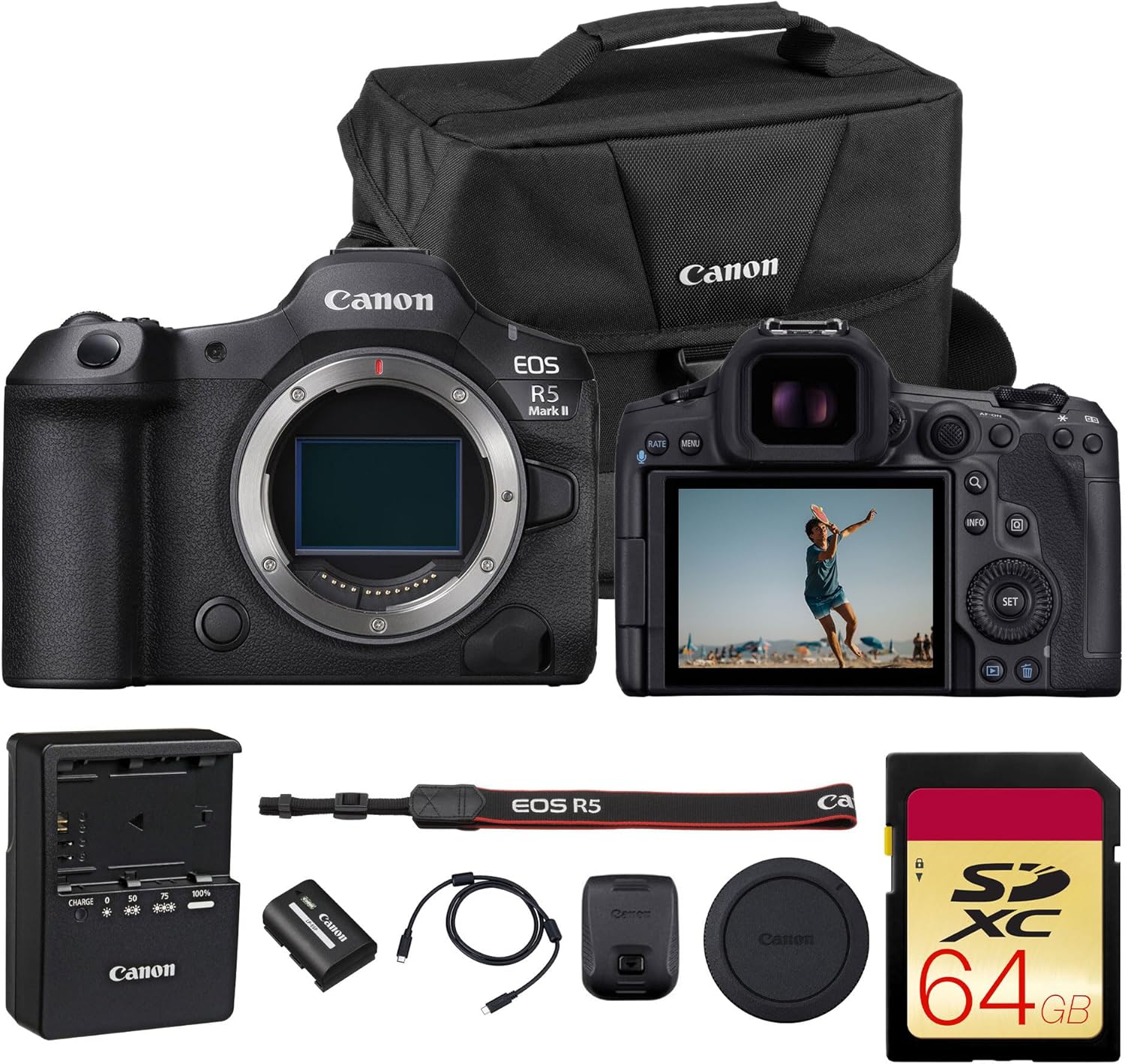
The Canon EOS R5 Mark II is the best all-around flagship in this list — TechRadar and PhotographyBlog both gave it a perfect 5/5, Tom's Guide 4.5/5. The stacked sensor, 30 fps burst, 8K 60p RAW, Eye Control AF, and improved thermal design fix every complaint about the original R5. The only reason not to pick it is if you're already invested in Nikon or Sony lenses; otherwise this is the top pick for most pros.

Canon EOS R5 Mark II

Full review

Stacked Sensor Performance

The transition to a 45-megapixel Stacked CMOS sensor is the defining hardware upgrade in the EOS R5 Mark II, fundamentally altering its data handling capabilities. DPReview measured the sensor readout time at approximately 6.3 milliseconds, which translates to roughly 1/160th of a second. While this is significantly faster than the original R5, it remains slower than competitors like the Nikon Z8, which DPReview noted achieves readout speeds closer to 1/270th of a second. This architectural shift enables blackout-free continuous shooting at up to 30 frames per second with the electronic shutter, a massive leap from the original model’s 20fps limit. Photography Blog highlighted that this speed comes with a larger buffer capacity, allowing for 200 JPEG frames or up to 93 RAW images on a CFexpress card before the buffer clears. The stacked design also drastically reduces rolling shutter distortion, making the camera far more viable for capturing fast-moving subjects without the geometric warping often seen in high-resolution mirrorless bodies.

Autofocus and AI Tracking

Canon has integrated its 'Digic Accelerator' co-processor to handle complex AI-driven autofocus tasks, a feature borrowed directly from the flagship R1. This dedicated chip allows the camera to run sophisticated subject detection algorithms without bogging down the main processor. TechRadar praised the system’s versatility, noting its ability to track not just humans and animals, but also specific sports actions. The new Action Priority modes use machine learning trained on football, basketball, and volleyball to identify ball positions and player movements, automatically prioritizing the subject involved in the key action. DPReview explained that the camera can distinguish between specific plays, such as a 'shoot' or 'save by keeper' in soccer, ensuring the focus remains on the critical moment. Additionally, the Registered People Priority mode allows users to save up to 100 faces across ten files, ensuring the camera prioritizes specific individuals, such as the bride and groom at a wedding, even if they are partially obscured or in profile.

Eye Control AF Usability

The Eye Control AF system has been refined with a wider field of view and improved algorithms, but its reception remains mixed among reviewers. DPReview noted that the updated sensors and eyeglasses detection mode make it more reliable for users who wear corrective lenses, addressing a common complaint from the previous generation. The system allows photographers to select a focus point simply by looking at the subject in the viewfinder, which can be faster than using a joystick or touch screen. However, PCMag’s Jim Fisher pointed out that this feature does not work for everyone, citing inconsistent performance in his testing. The technology requires precise eye alignment and can struggle if the user’s eye is too far from the viewfinder or if ambient light conditions interfere with the infrared sensors. While it represents a futuristic approach to focus selection, it is not yet a foolproof replacement for traditional manual focus point selection for all users.

Video Capabilities and Limits

Video performance is a major strength of the R5 Mark II, offering 8K RAW recording at up to 60 frames per second, a capability that sets it apart from many competitors. Photography Blog emphasized the camera’s ability to shoot 4K video oversampled from 6K at 60fps, providing exceptional detail and smooth motion. The inclusion of Canon Log 2 and Log 3 profiles, along with HLG, gives videographers extensive dynamic range for color grading. DPReview highlighted the pre-burst video feature, which allows the camera to record up to five seconds of footage before the shutter is fully pressed, ensuring no critical moments are missed. However, users should be aware of recording limits; while 8K RAW is impressive, it generates massive file sizes that require fast CFexpress Type B cards. The camera also supports simultaneous still and video capture, a unique feature that allows photographers to take high-resolution stills while recording video, though this can impact battery life and heat management during extended sessions.

Build Quality and Ergonomics

The EOS R5 Mark II retains the classic Canon ergonomics that long-time users will appreciate, with a magnesium alloy body that is both dust- and splash-proof. PCMag measured the body dimensions at 3.9 by 5.5 by 3.5 inches, weighing approximately 1.5 pounds without a lens. This makes it slightly more compact than the Nikon Z8, which PCMag noted is closer to the size of an older DSLR. The grip is deep and comfortable, with the shutter release positioned at a steep angle near the front, a design choice that differs from Sony and Nikon but feels natural to Canon loyalists. The electronic viewfinder boasts a 5.76-million-dot resolution, providing a bright and detailed preview. However, PCMag criticized the hot shoe cover design as poorly conceived, noting that it is easy to lose and does not fit securely. Additionally, the camera displays a non-suppressible warning screen when using legacy LP-E6NH batteries, which can be annoying for users transitioning from older Canon bodies.

Image Quality and Processing

Image quality remains top-tier, with the 45MP sensor delivering excellent detail and dynamic range. DPReview tested the camera’s high ISO performance, noting that the new Deep Learning noise reduction can reduce noise by up to two stops, allowing for cleaner images at ISO 51,200 and beyond. The camera also features an AI-enhanced upscaling tool that can enlarge images up to four times their original resolution without significant degradation, a useful feature for cropping or large prints. Photography Blog highlighted the 16+ stops of dynamic range, which ensures that highlights and shadows are well-preserved even in challenging lighting conditions. The Dual Pixel AF system covers nearly the entire sensor, providing reliable focus in low-light scenarios down to -6.5EV. While the image quality is comparable to the original R5, the improved processing speed and noise reduction algorithms make the Mark II a more versatile tool for professional photographers who need to deliver clean images quickly.

Where It Falls Short

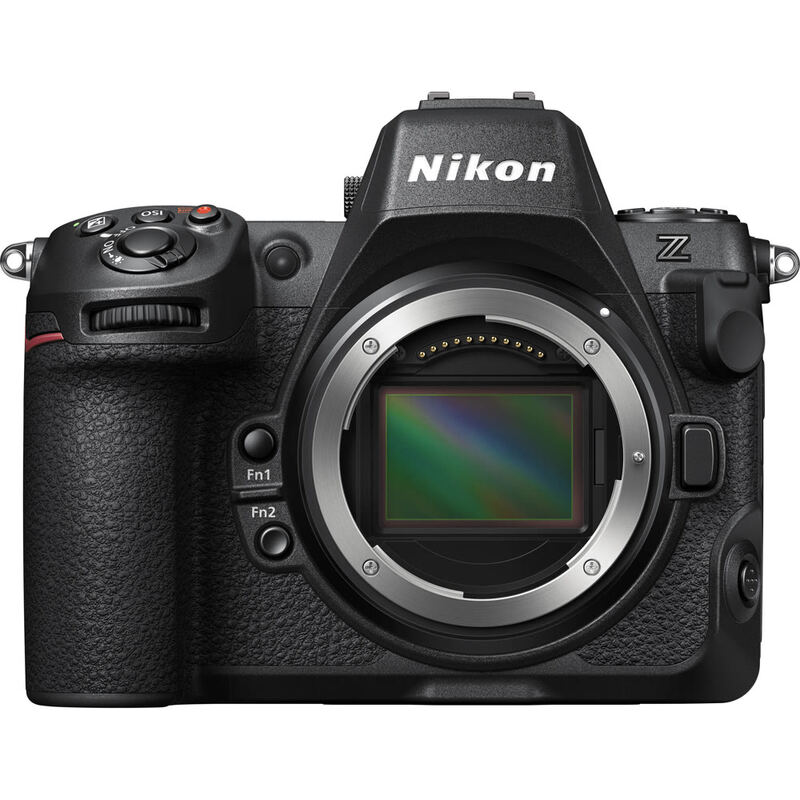
Despite its impressive specs, the EOS R5 Mark II has notable drawbacks that may deter some buyers. PCMag pointed out that the camera falls short of the Nikon Z8 in terms of value, noting that the Z8 offers similar sensor technology, bulletproof autofocus, and better video features for a lower price. The readout speed, while improved, is still slower than the Z8, which can lead to more rolling shutter distortion in extreme fast-motion scenarios. DPReview noted that the camera omits the Dual Pixel RAW feature found in the original R5, a capability that some users relied on for fine-tuning focus and creating portrait effects. Additionally, the high price point of $4,299 for the body only is a significant investment, especially when considering the cost of fast CFexpress cards required to fully utilize the 30fps burst mode and 8K video capabilities. The non-suppressible battery warning screen and the fragile hot shoe cover are minor but frustrating design oversights that detract from the professional experience.

Who It Is Best For

The Canon EOS R5 Mark II is best suited for professional hybrid shooters who need a single camera body for both high-resolution stills and advanced video production. Photographers who shoot sports, wildlife, or events will benefit from the 30fps burst mode, pre-capture features, and AI-driven subject tracking. The Registered People Priority mode is particularly valuable for wedding and portrait photographers who need to ensure specific subjects are always in focus. Videographers will appreciate the 8K RAW recording and 4K oversampled footage, making it a strong choice for content creators who demand high-quality video. However, users who are primarily still photographers and do not need the advanced video features or extreme burst speeds may find the original R5 or the Nikon Z8 to be better value propositions. Those already invested in the Canon RF lens ecosystem will find the transition seamless, while users from other brands should carefully consider the learning curve associated with Canon’s unique ergonomics and menu system.

Strengths

  • +45 MP stacked BSI CMOS sensor with readout speeds matching the Nikon Z8 — negligible rolling shutter
  • +8K 60p RAW internal with improved thermal performance over the R5 — fixes the original's overheating reputation
  • +Pre-capture shooting stores up to 0.5s of frames before you press the shutter (huge for wildlife)
  • +30 fps RAW burst, Eye Control AF returns, new Dual Pixel AF with deep-learning subject detection
  • +In-body image stabilization rated up to 8.5 stops with compatible RF lenses

Watch-outs

  • Priced aggressively at $4,299 — still a premium over the Nikon Z8's $3,996 street
  • LP-E6P battery is not backward-compatible with older LP-E6N — forces battery replacement for R5 upgraders
  • CFexpress required to unlock highest frame rates — CF cards and readers aren't cheap

How it compares

Best all-rounder: highest editorial rating, with the strongest balance of 45MP stills, 8K RAW video, and AF. Pricier than the Z8.

Who this is for

At a glance: all-around professionals who want flagship 45MP stills and 8K RAW video in one body.

Why you’d buy the Canon EOS R5 Mark II

  • 45 MP stacked BSI CMOS sensor with readout speeds matching the Nikon Z8 — negligible rolling shutter.
  • 8K 60p RAW internal with improved thermal performance over the R5 — fixes the original's overheating reputation.
  • Pre-capture shooting stores up to 0.5s of frames before you press the shutter (huge for wildlife).

Why you’d skip it

  • Priced aggressively at $4,299 — still a premium over the Nikon Z8's $3,996 street.
  • LP-E6P battery is not backward-compatible with older LP-E6N — forces battery replacement for R5 upgraders.
  • CFexpress required to unlock highest frame rates — CF cards and readers aren't cheap.

Rating sources

Our 4.8 score is the average of these published ratings. More about methodology.
Frequently asked questions

Is the Canon EOS R5 Mark II worth buying?
The Canon EOS R5 Mark II is the best all-around flagship in this list — TechRadar and PhotographyBlog both gave it a perfect 5/5, Tom's Guide 4.5/5. The stacked sensor, 30 fps burst, 8K 60p RAW, Eye Control AF, and improved thermal design fix every complaint about the original R5. The only reason not to pick it is if you're already invested in Nikon or Sony lenses; otherwise this is the top pick for most pros.
What is the Canon EOS R5 Mark II's biggest strength?
45 MP stacked BSI CMOS sensor with readout speeds matching the Nikon Z8 — negligible rolling shutter
What is the main drawback of the Canon EOS R5 Mark II?
Priced aggressively at $4,299 — still a premium over the Nikon Z8's $3,996 street
What sources back the 4.8/5 rating?
Our 4.8/5 rating is the average of scores from 3 independent full-frame mirrorless cameras reviews — tomsguide, techradar, and photographyblog. Click any source on the product page to read the original review.

How it compares

See all 5
Canon EOS R5 Mark II
4.8/5· $3,999
Check Price on Amazon