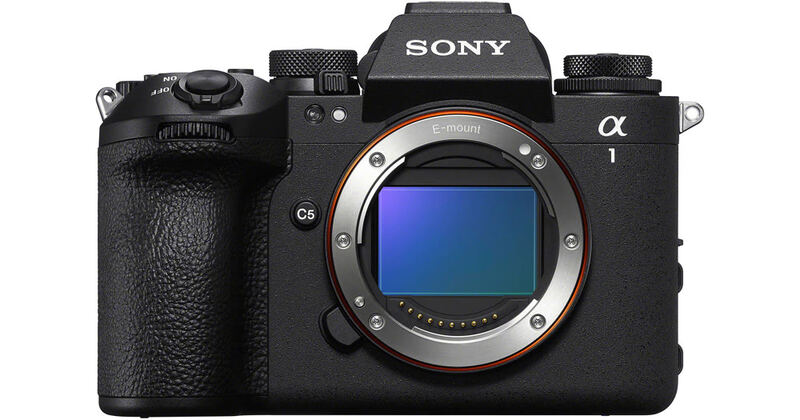
The Nikon Z8 is the enthusiast-pro flagship of the year — Z9 internals in a smaller body at a lower price. PhotographyBlog rates it 4.5/5 and DPReview gave it their Gold Award. The stacked sensor, no-mechanical-shutter design, and 8.3K ProRes RAW make it the most video-capable option at this tier without stepping up to the $6,500 A1 II. Weight and battery life are the main tradeoffs versus smaller rivals.

Full review
The Z9 Experience in a Smaller Body
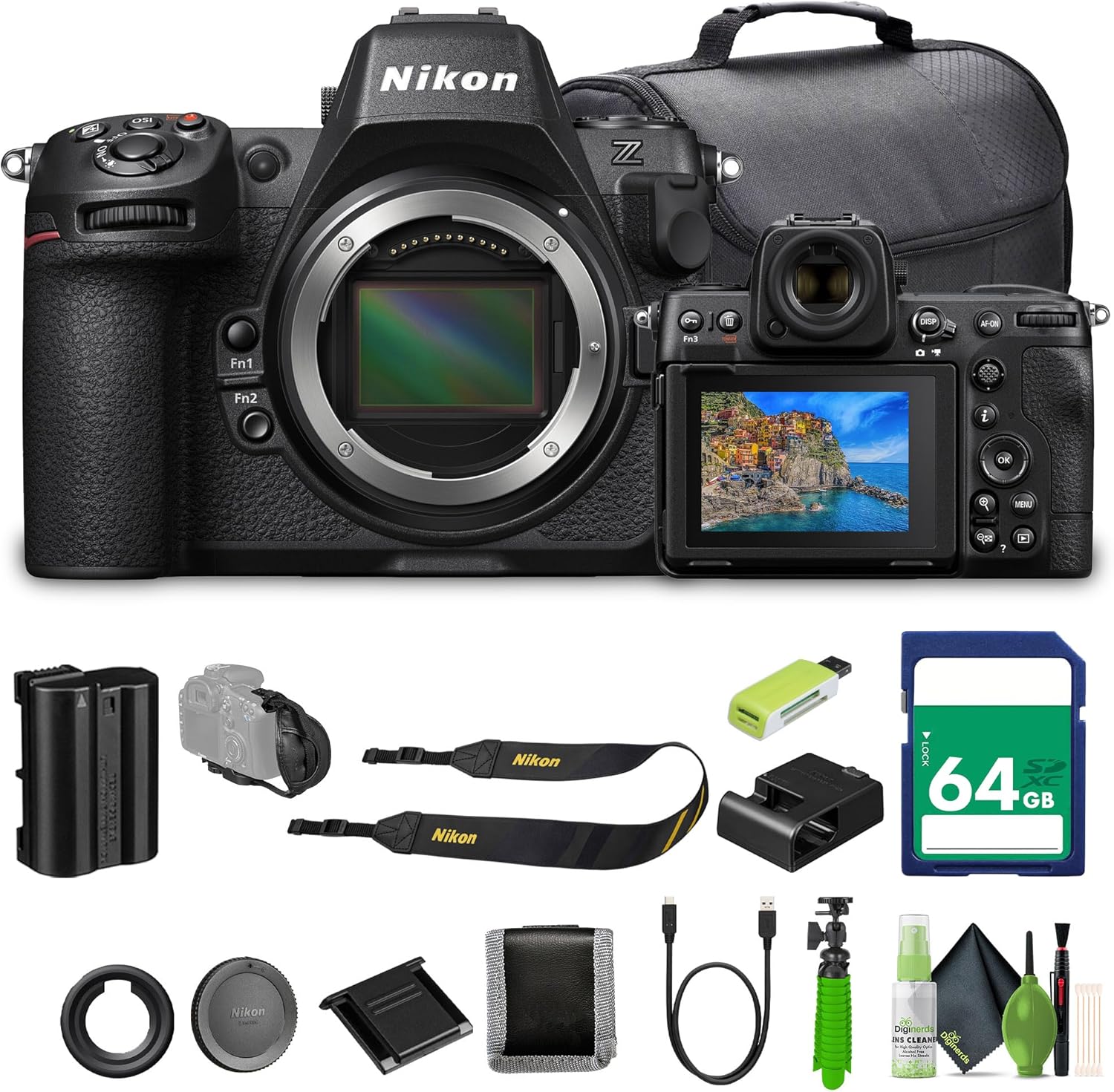
The Nikon Z8 is fundamentally a downsized version of the flagship Z9, sharing the same 45.7-megapixel stacked CMOS sensor and Expeed 7 processor. According to DPReview, this architectural decision allows the Z8 to replicate the Z9’s core capabilities, including 20fps raw shooting and 30fps JPEG capture, without the bulk or $5,500 price tag of its larger sibling. PCMag notes that while the body is slightly smaller than the legendary D850 it succeeds, it remains heavier than competitors like the Sony a7R V and Canon EOS R5, weighing in at approximately 2 pounds. This weight comes from a magnesium alloy chassis that Nikon claims offers weather sealing comparable to the D850, though not quite reaching the tighter seals of the D6 or Z9. The result is a camera that feels dense and robust, prioritizing durability and grip comfort over portability, which appeals to professionals who need a reliable workhorse for outdoor conditions.
Blazing Fast Burst and Autofocus Performance
Performance metrics for the Z8 are among the highest in the full-frame category, driven by its stacked sensor design. DPReview highlights that the camera can shoot 20fps with full-resolution raw files and 30fps with full-sized JPEGs, with a buffer capable of holding over 1,000 JPEGs or 685 HEIF compressed raw files. For even faster action, the Z8 offers a pre-burst capture mode and a 120fps shooting rate for 11MP cropped JPEGs, a feature Photography Blog describes as an impressive ace up its sleeve for tracking fast-moving subjects. The autofocus system includes dedicated subject recognition for humans, animals, birds, and vehicles, with a specific airplane detection mode added to improve tracking accuracy for aviation photographers. Reddit users transitioning from Sony cameras have noted that while the Z8’s autofocus is highly capable, some find the focus stickiness settings require customization to match their preferences, particularly when switching between subjects quickly.
Video Capabilities and 8K Recording
The Z8 is a formidable video tool, offering 8K/60p recording in N-RAW and 8K/30p in ProRes 422 HQ, H.265, or H.264 formats. DPReview points out that the camera can also oversample 4K footage from 8K capture at up to 60p, providing exceptional detail for high-end video production. However, there is a notable limitation compared to the Z9: the Z8 can only record for up to 90 minutes continuously, whereas the Z9 allows for 125 minutes, likely due to heat management constraints in the smaller body. PCMag praises the internal N-RAW and ProRes video capture options, which eliminate the need for external recorders for many professional workflows. The camera also supports 10-bit HEIF files for HDR images using the HLG curve, adding flexibility for hybrid shooters who need both high-quality stills and video in a single package.
Build Quality and Ergonomic Design
The Z8’s design is heavily influenced by the D850, with a deep grip that provides a secure hold even with larger lenses. PCMag notes that the camera’s controls are familiar and comfortable, with backlit buttons and a dual-axis touch LCD that enhances usability in low-light conditions. The electronic viewfinder (EVF) is a standout feature, offering a 3.68-million-dot display with minimal lag, thanks to a dedicated sensor feed that ensures a blackout-free experience during high-speed bursts. Photography Blog emphasizes that the absence of a mechanical shutter not only reduces noise but also eliminates the risk of shutter failure, a significant advantage for a camera expected to endure heavy use. However, the lack of a mechanical shutter means users must rely on the electronic shutter for all captures, which some photographers may find less intuitive for certain lighting scenarios.
Where It Falls Short
Despite its impressive specs, the Z8 has notable drawbacks that reviewers and users have highlighted. Battery life is a frequent complaint, with PCMag noting that the EN-EL15c battery offers average performance, especially when using the EVF or recording 8K video. Reddit users have echoed this concern, with some reporting that they need to carry multiple batteries for extended shoots. Additionally, the camera’s weight and size, while manageable for many, are still larger than competitors like the Sony a7R V, which may be a deterrent for photographers prioritizing portability. Another issue is the lack of a mechanical shutter, which, while reducing wear and tear, can lead to rolling shutter effects in extreme lighting conditions, although Nikon claims the stacked sensor mitigates this. Finally, the Z8’s price point of $3,999 places it in direct competition with the Canon EOS R5 and Sony a7R V, but some users feel the lens ecosystem for Nikon Z is still catching up, particularly in the mid-range prime category.
Who It's Best For
The Nikon Z8 is ideal for professional photographers and videographers who demand high-resolution stills and fast burst rates in a single body. It is particularly well-suited for wildlife, sports, and action photographers who benefit from the 20fps raw shooting and advanced autofocus subject recognition. Hybrid shooters who need both high-quality video and stills will appreciate the 8K recording capabilities and internal ProRes support. However, photographers who prioritize portability or have a limited budget may find the Z8’s weight and price prohibitive. Those who rely heavily on mechanical shutters or prefer a more extensive lens ecosystem might look elsewhere. Ultimately, the Z8 is a strong fit for users who need the performance of the Z9 but prefer a more compact and affordable option, making it a versatile tool for a wide range of professional applications.
How It Compares to Alternatives
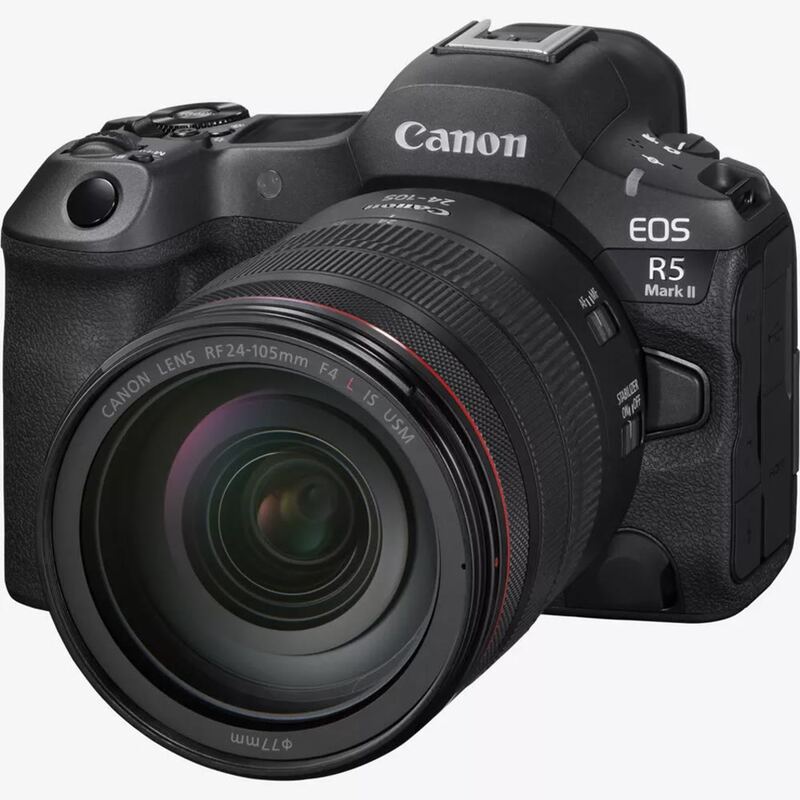
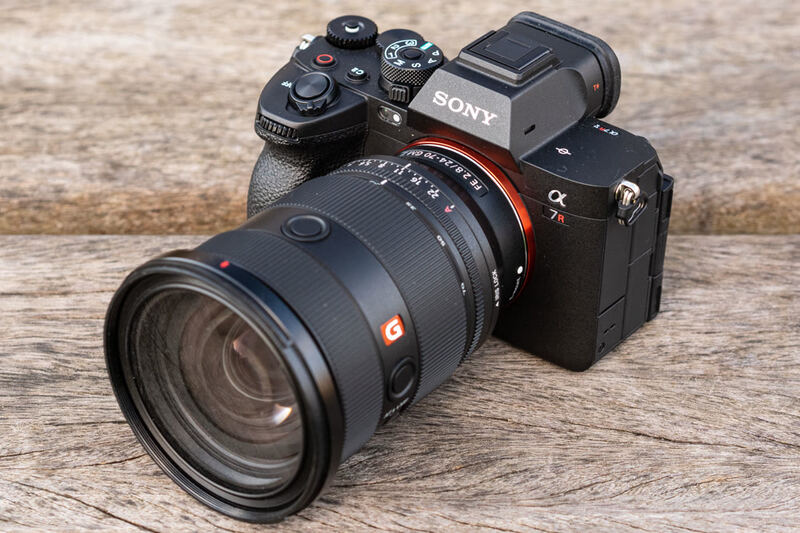
When compared to its main rivals, the Nikon Z8 holds its own but has distinct advantages and disadvantages. Against the Canon EOS R5, the Z8 offers faster burst rates and better video capabilities, including 8K/60p N-RAW recording, while the R5 provides a more extensive lens ecosystem and a slightly lighter body. The Sony a7R V, on the other hand, offers a higher resolution sensor and a more compact design, but lacks the Z8’s 8K video options and faster burst rates. PCMag notes that the Z8 is as excellent as the a7R V in many respects but is a better performer for video and fast action. Reddit users have also pointed out that while Sony’s lens selection is broader, Nikon’s Z-mount lenses, particularly the lightweight telephoto primes, are highly regarded for their optical quality and build. The Z8’s position in the market is unique, offering a balance of high resolution, speed, and video capabilities that few competitors can match.
Value at This Price
At $3,999, the Nikon Z8 represents a significant value proposition for photographers seeking flagship-level performance without the $5,500 price tag of the Z9. DPReview and PCMag both highlight that the Z8 delivers nearly identical features to the Z9, including the same sensor and processor, making it a compelling option for those who do not need the larger body or extended battery life. The inclusion of 8K video, 20fps raw shooting, and advanced autofocus subject recognition justifies the price for professional users. However, the cost of accessories, such as the optional battery grip and high-speed CFexpress Type B cards, can add to the overall investment. For enthusiasts or semi-professionals, the Z8 may be a steep price, but for those who need its capabilities, it offers a level of performance that is difficult to find at this price point. The Z8’s value is further enhanced by its durability and weather sealing, which ensure longevity in demanding environments.
Strengths
- +45.7 MP stacked BSI CMOS sensor inherited from the flagship Z9 at 25% less weight and ~60% lower price
- +Mirrorless design with no mechanical shutter — silent, zero shutter blackout, rated to 1/32,000s electronic
- +8.3K/60p ProRes RAW internal recording — matches the Z9 for professional video workflows
- +20fps RAW burst (120fps at reduced 11MP JPEG) with full AF/AE tracking and 493-point phase-detect AF
- +3D Tracking AF with 9 subject-detect modes (people, animals, birds, vehicles, aircraft, motorcycles, trains, planes, bicycles)
Watch-outs
- −Larger and heavier than the Sony A7R V at 910g (vs 723g) — not as comfortable for travel/street
- −Battery life (330 shots CIPA) trails the Sony A1 II (530 shots) — two batteries recommended for shoots
- −XQD/CFexpress card slot adds media cost compared to the Sony A7R V's dual SD
How it compares
Z9 internals (45.7MP stacked, 8.3K/60p) in a smaller body for less money — the value-per-capability leader of the flagships.
Who this is for
At a glance: enthusiast-pros wanting Z9 performance and 8K RAW in a smaller, lower-cost body.
Why you’d buy the Nikon Z8
- 45.7 MP stacked BSI CMOS sensor inherited from the flagship Z9 at 25% less weight and ~60% lower price.
- Mirrorless design with no mechanical shutter — silent, zero shutter blackout, rated to 1/32,000s electronic.
- 8.3K/60p ProRes RAW internal recording — matches the Z9 for professional video workflows.
Why you’d skip it
- Larger and heavier than the Sony A7R V at 910g (vs 723g) — not as comfortable for travel/street.
- Battery life (330 shots CIPA) trails the Sony A1 II (530 shots) — two batteries recommended for shoots.
- XQD/CFexpress card slot adds media cost compared to the Sony A7R V's dual SD.
Rating sources
Our 4.5 score is the average of these published ratings. More about methodology.