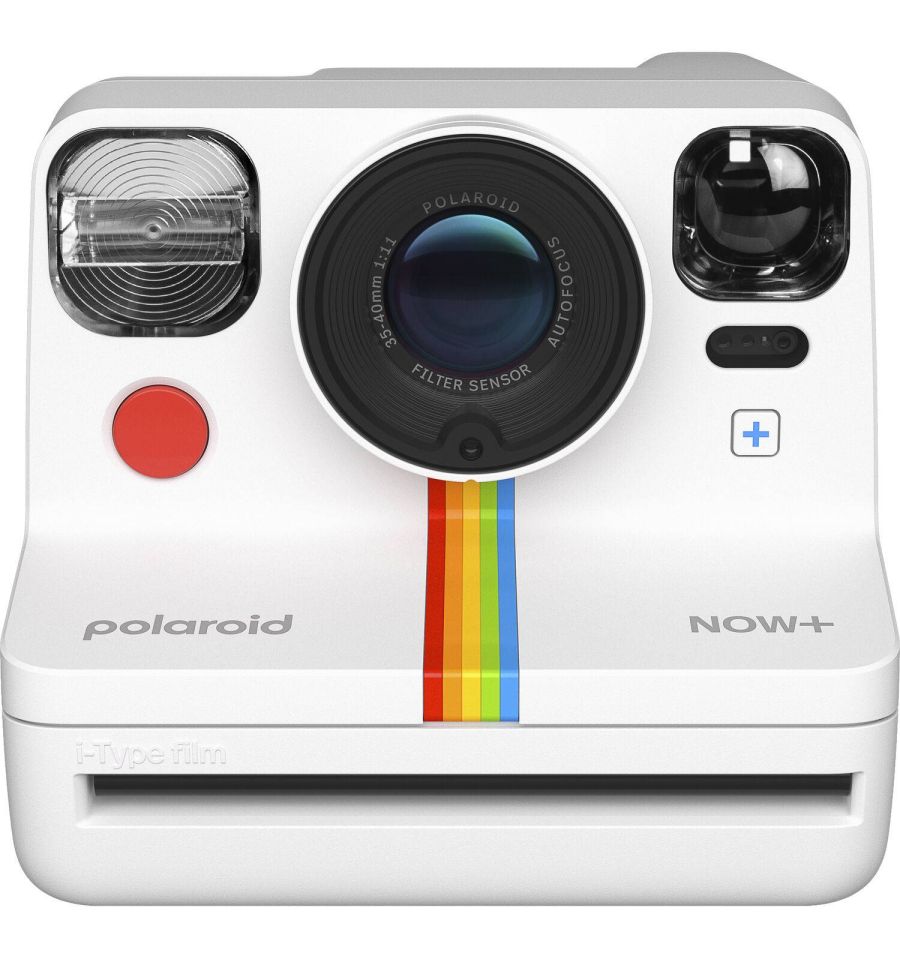
The Polaroid Now Generation 2 hands you a nostalgic instant camera with a few modern conveniences. It has a built-in battery, charges over USB, and ships with a picture frame and lanyard. The build reads plasticky and heavy to some. Beginners looking for an accessible way in will do well; serious photographers who want advanced controls won't.
Full review
451 grams with a USB-C charging port
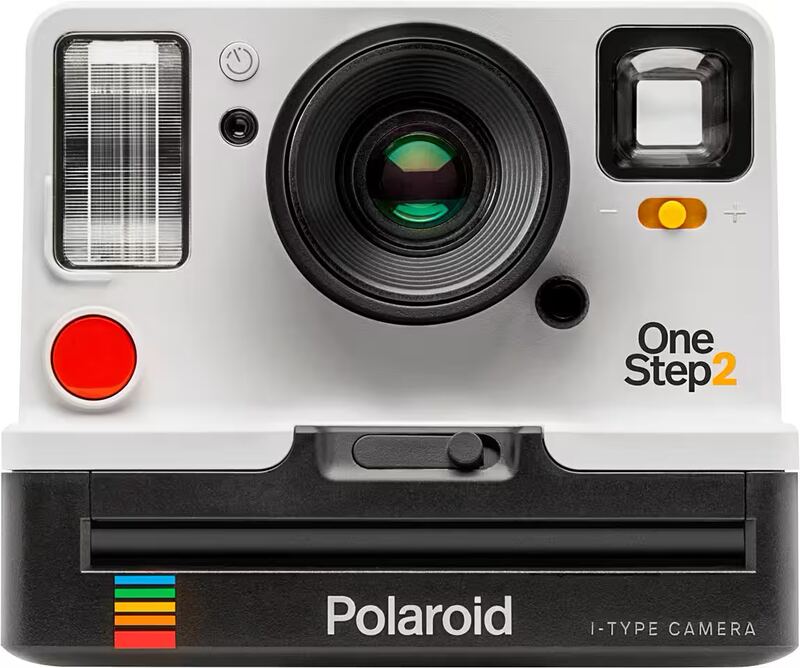
The Polaroid Now+ Generation 2 maintains the classic, boxy silhouette that defines the Polaroid brand, evoking memories of 1970s instant cameras while incorporating modern conveniences. Measuring 150.16 x 112.2 x 95.48mm and weighing 451.5g without film, it's a substantial device that feels both nostalgic and functional. The camera's design is faithful to vintage Polaroid aesthetics, with a bright optical viewfinder and a simple one-button operation that makes it intuitive for beginners. However, Digital Camera World's James Artaius notes that while it's visually appealing, its bulkiness makes it less convenient to carry around. The camera features a USB-C charging port, an upgrade from the original Micro USB, and includes a tripod socket for stability. The build quality is solid, though the camera's weight and size may be off-putting for those seeking a more portable option. The color options—Arctic Blue, Black, Coral, and White—offer variety, but the design remains largely unchanged from the original model.
Performance and Autofocus Issues
Autofocus performance remains a major point of contention among reviewers. Dan Finnen of Dan Finnen Writing found that the autofocus system is unreliable, often failing to detect subjects on the first half-press of the shutter. He notes that the camera switches between two lenses—one for closer subjects and another for farther ones—but lacks an indicator to show which lens is active. This leaves users frustrated, especially when they're shooting in environments where focus is critical. Jim Grey from Down the Road describes the autofocus as 'fussy to use,' and he experienced consistent issues with soft images even when subjects were well within the camera's range. The camera's inability to clearly indicate focus mode or allow manual focus adjustments makes it difficult to achieve sharp results, particularly in challenging lighting conditions. The camera's flash is also criticized for being too weak, often failing to adequately illuminate subjects unless the room is already well lit. These issues compound when users attempt to take handheld selfies, which the camera struggles to focus on at arm's length, a limitation that pushes users toward competing Instax models.
Image Quality and Film Considerations
Image quality in the Polaroid Now+ Generation 2 is a mixed bag. While the camera is praised for its ability to produce images that capture the essence of classic Polaroid photography, it falls short in consistency. Jim Grey found that even with color film, images often came out overexposed, especially when shooting in direct sunlight or with subjects wearing dark clothing. He noted that exposure adjustments had to be made manually each time, a tedious process that undermines the camera's ease-of-use appeal. The camera's flash is described as insufficiently powerful, often resulting in underexposed images when the subject is not close to the light source. Dan Finnen reported that while sharpness is acceptable when the camera is in focus, the exposure meter often misreads lighting conditions, leading to blurry or washed-out images. The camera's performance with black-and-white I-Type film was particularly disappointing, with nearly every image in a pack being overexposed. Despite these issues, reviewers like Myles Katherine of Myles Katherine Photography appreciate the nostalgic charm and the ability to experiment with creative features like double exposure modes, which are enabled by the camera's app integration.
App Integration and Creative Features
The Polaroid Now+ Generation 2's app integration is one of its most significant strengths, offering users access to manual exposure controls, aperture adjustments, and creative features like double exposure and light painting. According to Digital Camera World's James Artaius, the app unlocks a range of creative possibilities, including physical lens filters and a lens cap, which enhances the camera's versatility. The app also allows for bulb mode and extended shutter speeds, which are particularly useful for night photography or artistic light painting. However, the reliance on the app for exposure control is a double-edged sword. While the app provides manual exposure control, it isn't intuitive and requires users to adjust settings each time they use the camera. The app is essential for using features like manual exposure adjustment, which is otherwise unavailable through physical controls. The camera's design does not include a dial or switch for exposure adjustments, forcing users to rely on the phone app, which can be inconvenient during use. Despite this, the app's ability to enable creative modes and enhance the overall user experience makes it a valuable addition to the camera's feature set.
750mAh battery lasted six weeks in testing
Battery performance in the Polaroid Now+ Generation 2 is a mixed bag. The camera is powered by an internal 750mAh lithium-ion battery, which is rated for approximately 120 exposures. Jim Grey noted that the battery holds a charge well between uses, and after six weeks and four packs of film, the camera still showed a green light when powered on. However, the camera's reliance on a rechargeable battery is a departure from older Polaroid models, which used film packs with built-in batteries. This shift reduces environmental waste but introduces a dependency on charging, which may be inconvenient for users who travel frequently or do not have access to power sources. The inclusion of a USB-C charging port is a welcome upgrade from the original Micro USB, but the camera's battery life is not extensively tested in real-world scenarios. The camera's power management is adequate for casual users, but those planning extended photo sessions may find the battery life limiting. Overall, while the battery is reliable for typical use, it's not a standout feature compared to other instant cameras in the market.
Autofocus that often misses the subject
Despite its nostalgic appeal and creative app features, the Polaroid Now+ Generation 2 has several notable shortcomings that detract from its overall value. The most significant issue is the unreliable autofocus system, which often fails to detect subjects properly, leading to soft or blurry images. This is a recurring complaint across multiple reviews, with both Dan Finnen and Jim Grey highlighting the camera's struggle with focus. Additionally, the camera's flash is too weak, resulting in underexposed images in most lighting conditions. The lack of on-body exposure controls forces users to rely on the app, which is inconvenient during use. The camera is also expensive per use, with I-Type film running high and each pack yielding only eight shots. The camera's design, while iconic, is bulky and not particularly portable, making it less ideal for travel or casual use. The camera's inability to consistently produce sharp, well-exposed images, combined with its reliance on a smartphone app for many features, limits its appeal to more serious photographers or those seeking a simple, plug-and-play experience.
Nostalgic charm outweighs focus complaints for beginners
The Polaroid Now+ Generation 2 is best suited for casual users who appreciate the nostalgic charm of instant photography and are willing to work around its limitations. Myles Katherine Photography recommends it as an excellent entry point for beginners, especially those drawn to the retro aesthetic and the magic of watching a photo develop in real time. The camera's app integration and creative features like double exposure modes make it appealing to users who enjoy experimenting with photography techniques. However, it is not ideal for users seeking sharp, consistently well-exposed images or those who prefer a plug-and-play experience without relying on a smartphone app. The camera's autofocus issues and weak flash make it less suitable for professional or advanced users, who would be better served by models like the Fujifilm Instax Mini 99 or the Polaroid Flip, which offer better focus and more reliable performance. Casual snappers who prioritize the experience over technical perfection will find the Now+ a satisfying choice, but those who demand consistent quality should consider alternatives.
Strengths
- +Double exposure mode feature for creative photography
- +Built-in battery with USB charging capability
- +Retro aesthetic with colorful design and vintage-inspired look
- +Includes picture frame and lanyard for easy handling
Watch-outs
- −Plastic feel and heavy build may not appeal to all users
- −Requires charging unlike older models with battery-pack film
How it compares
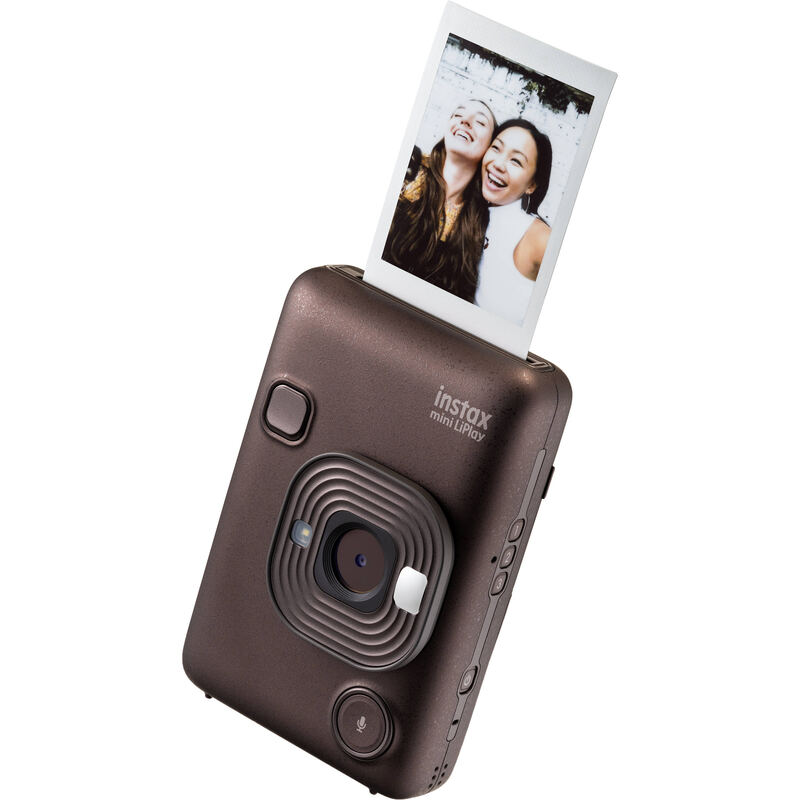
The Polaroid Now+ Generation 2 offers a retro aesthetic and double exposure mode that the Mini 12 lacks, but it's more expensive and less reliable than the SQ6. Compared to the Evo, it's more analog and lacks digital connectivity, though it's more affordable than the LiPlay Hybrid. Unlike the SQ1, it's less compact and more expensive for similar functionality.
Rating sources
“This camera is so darn cute. I've always been obsessed with Polaroid cameras, and honestly, they just keep getting better.”
Our 4.8 score is the average of these published ratings. Ratings marked * were derived from the reviewer’s written analysis or video transcript — the publisher didn’t print an explicit numeric score, so we inferred one from their own words. Click through to verify. More about methodology.