The Fujifilm Instax Square SQ40 is a compact instant camera shooting the newer Instax Square format, which yields wider square prints with a vintage Polaroid look. PCMag's Jim Fisher described the analog process, where the image surfaces gradually 90 seconds after the shutter fires. Camera Labs' Gordon found it close to the SQ1 model but dressed up more seriously. A built-in flash and viewfinder are included, and it runs Instax Square film at 10 prints per cartridge. Reviewers pointed to the two limits: Square film only, and a price above the alternatives.
Full review
Battery door described as brittle and prone to popping off
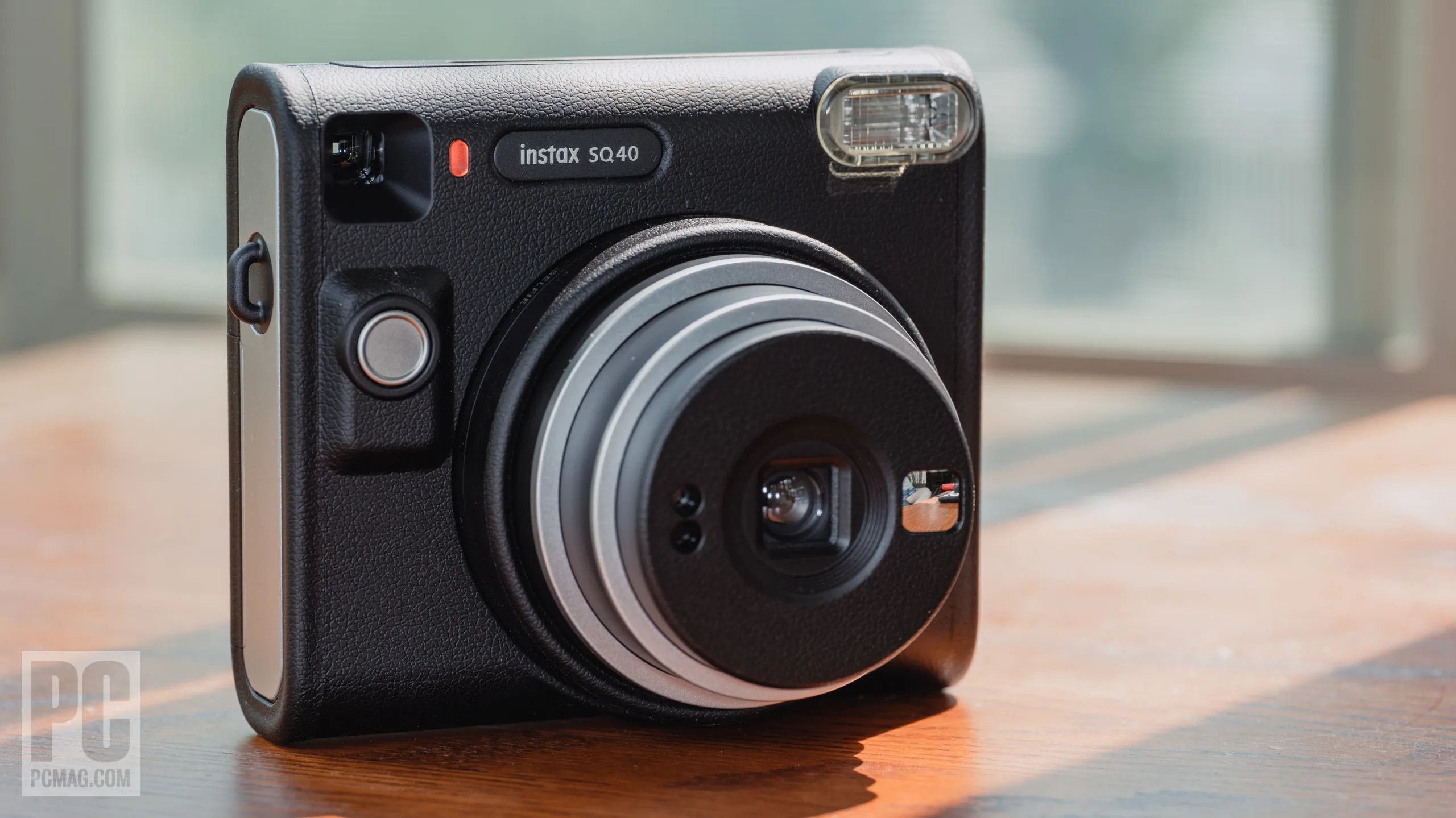
The Fujifilm Instax Square SQ40 presents a stark contrast to its predecessor, the SQ1, in terms of aesthetic approach. While the SQ1 features bright, candy-colored plastic that evokes youthful exuberance, the SQ40 adopts a more mature, understated black and silver color scheme. PCMag's Jim Fisher read the finish the other way: the SQ40 'justifies its higher price with a plush exterior, complete with a leatherette wrap,' and 'feels nicer and looks more stylish than the SQ1' - though he still gave the cheaper SQ1 PCMag's Editors' Choice, because 'you are effectively paying a premium for the aesthetics of the SQ40.' Digital Camera World's Gareth Bevan notes that the SQ40's design is 'retro' and 'suave' but also 'stylish' in a way that 'rights all my design wrongs.' However, the coating's texture and durability remain a point of contention among reviewers. Amateur Photographer's Isabella Ruffatti describes the camera's leather-like texture as 'classy' and 'professional-looking,' yet also points out that the 'fake leather and/or rubber' feels 'terrible' and 'chalky.' The SQ40's build quality is criticized for its use of cheap plastics, particularly in the lanyard attachment points and battery door, which is described as 'brittle' and prone to 'popping entirely off.' These design choices, while aiming for a premium feel, have left many reviewers questioning the camera's long-term durability and tactile satisfaction.
Camera Functionality and Controls
Functionality-wise, the SQ40 is a minimalist device, offering only three modes: off, on, and selfie, which are selected by turning the lens ring. As noted by Dan Finnen, this simplicity is both a strength and a weakness. The selfie mode is essential for close-up shots, but the lack of distance indicators or focus confirmation leaves users to guess whether their shots will be in focus. The camera's auto exposure system, which calculates exposure based on ambient light and subject distance, performs well in most lighting conditions, according to Digital Camera World's review. However, Isabella Ruffatti's testing revealed issues with underexposure, particularly in indoor and shaded environments. The SQ40 lacks manual controls, including the ability to disable the flash, which some users may find limiting. The viewfinder is described as a simple window with no indicators, and there's no tripod mount, which limits its use in more advanced photography scenarios. Despite these limitations, the camera's ease of use is praised by Amateur Photographer, who calls it 'fun and easy' and 'simplified.' The SQ40's operation mirrors that of the Instax Mini 12, with the same lens twist to turn on and switch between modes, and a built-in selfie mirror for framing shots.
Image Quality and Performance
Image quality from the SQ40 is consistent with other Instax Square cameras, delivering solid results in well-lit conditions. PCMag's Jim Fisher found the SQ40 "delivers generally good results despite its lens' dim effective aperture," but cautioned that its pictures "look good, but they aren't as sharp as those you get from a glass lens." Digital Camera World's Gareth Bevan emphasizes that the SQ40 'takes great looking Instax Square prints' and that the auto exposure system 'has been spot on.' However, Amateur Photographer's Isabella Ruffatti found that the camera struggled with underexposure, particularly in indoor and shaded settings. The SQ40's flash has an effective range of up to 2.2 meters, which is suitable for group shots, but performance in low-light conditions remains a concern. The camera uses a 2-element, 2-component lens with an f/12.6 aperture, and the exposure system is automatic, calculating the correct exposure based on ambient light and distance. The SQ40 is capable of producing prints with a 62 mm x 62 mm format, which is larger than the Instax Mini format, providing more compositional space. The film development time is approximately 90 seconds, and the flash has a recycle time of 7.5 seconds. Despite these technical specifications, the SQ40's image quality is praised for its consistency and ability to produce bright, evenly lit photos even in dark environments.
User Experience and Ease of Use
The user experience of the SQ40 is designed for simplicity and accessibility, making it ideal for beginners or those seeking a no-frills photography experience. According to PCMag's Jim Fisher, the SQ40 is "simple to use" - load the film, twist the lens, frame, and press the shutter - and those "simple operations are great for beginners, but they won't appeal as much to pros." The built-in selfie mirror is helpful for framing shots, particularly for selfies and group photos, as noted by Amateur Photographer's Isabella Ruffatti. The camera's lack of complex features, such as manual controls or a digital screen, means that users are not overwhelmed by options, but also limits creative control. The SQ40's automatic exposure system and flash are designed to produce good results with minimal input from the user. However, the lack of distance indicators or focus confirmation can be frustrating for users who want more control. The camera's design, while more mature than the SQ1, still retains the fun and nostalgic appeal of the Instax line, with the added benefit of a larger print size. The SQ40's ease of use is a significant selling point, particularly for those who want to capture moments quickly without the complexity of traditional cameras.
Underexposes shots in indoor or shaded light
Despite its strengths, the SQ40 has several notable shortcomings that detract from its overall appeal. The most significant criticism comes from its build quality, particularly the 'fake leather' or rubber coating that many reviewers find unappealing and potentially short-lived. Dan Finnen describes the coating as 'terrible' and 'chalky,' and expresses concern about its durability over time. The camera's lack of manual controls, including the inability to disable the flash or adjust exposure settings, limits creative flexibility. According to Isabella Ruffatti, the camera suffers from underexposure issues, especially in indoor or shaded environments, which can be a significant drawback for users seeking consistent results. The SQ40's battery door is described as 'brittle' and prone to 'popping entirely off,' a design flaw that many reviewers find frustrating. Additionally, the camera lacks a tripod mount, which restricts its use in more advanced photography scenarios. The SQ40's price point, which is higher than the SQ1, is also criticized as being overpriced for the minimal additional features. The camera's simplistic design, while appealing to some, may not satisfy users who want more advanced controls or customization options. These limitations make the SQ40 less appealing to experienced photographers or those seeking a more versatile camera.
Built for well-lit, casual snapshots, not low light
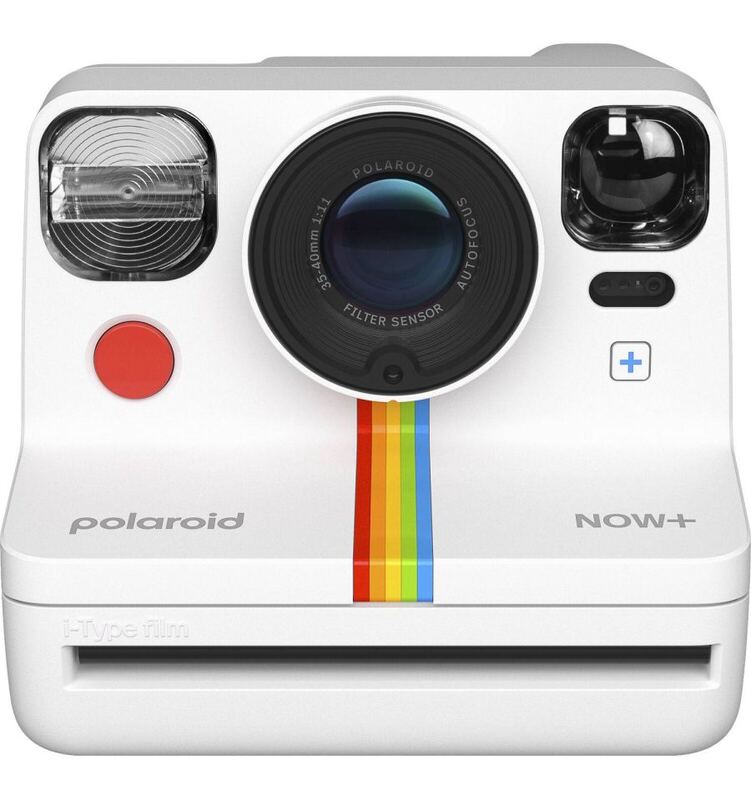
The Fujifilm Instax Square SQ40 is best suited for users who value simplicity, nostalgia, and instant gratification over advanced features or customization. It is ideal for beginners or casual users who want an easy-to-use camera for capturing spontaneous moments, particularly in well-lit environments. According to PCMag's Jim Fisher, the SQ40 and the cheaper SQ1 "both excel for one-button instant snapshots and are therefore excellent for beginners," while "more advanced shutterbugs should look to alternatives, such as Polaroid Now+ ($149.99), for more creative flexibility." The camera's larger print size and retro design appeal to users who appreciate the classic instant photography aesthetic. Amateur Photographer's Isabella Ruffatti recommends the SQ40 for those seeking a 'professional step up' from the Instax Minis, particularly in terms of quality and design. The SQ40 is also a good choice for users who enjoy the social aspect of instant photography, such as giving cameras to friends or family for casual use. However, it is not recommended for advanced photographers or those who require manual controls, a tripod mount, or the ability to adjust exposure settings. The camera's underexposure issues in low-light conditions make it less suitable for indoor photography or challenging lighting scenarios. Users who prioritize portability and ease of use over creative control will find the SQ40 to be a strong fit, but those seeking a more versatile or customizable camera may want to consider alternatives.
Nearly identical to the SQ1 apart from the coating
When compared to its direct predecessor, the SQ1, the SQ40 offers a more mature design but no significant functional improvements. Dan Finnen notes that the two cameras are 'essentially the same,' with the only difference being the 'fake leather' coating on the SQ40. The SQ40 is also positioned against other instant cameras such as the Polaroid Now+ Generation 2, which offers more creative features like double exposures and aperture priority, and the Polaroid I-2, which is a high-end camera with a glass lens and manual controls. Digital Camera World's review highlights that the SQ40 'rights all my design wrongs' and gives users 'the suave stylish Instax Square camera' they've been wanting. However, the SQ40's price point and lack of advanced features make it less competitive against these alternatives. The SQ40's performance is similar to the SQ1 in terms of image quality, but the SQ40's design and build quality are more refined. In comparison to the Instax Mini 99, the SQ40 offers a larger print size but lacks the premium feel and advanced features of the Mini 99. The SQ40's focus on simplicity and retro aesthetics makes it a strong contender for users who want a no-frills camera, but it falls short of the more advanced options available in the instant photography market.
Same functionality as the SQ1 at a higher price
At its price point, the Fujifilm Instax Square SQ40 offers limited value when compared to its alternatives or even its predecessor, the SQ1. Dan Finnen argues that the SQ40 is 'overpriced' and 'overly simplistic' for what it offers, especially when the SQ1 provides the same functionality at a lower cost. The SQ40's 'fake leather' coating, which is the only distinguishing feature from the SQ1, is criticized as being 'terrible' and not worth the additional cost. Digital Camera World's review notes that while the SQ40 is 'basically the same camera as its sibling, the Instax Square SQ1,' the 'more grown-up chassis' justifies the higher price tag. However, this justification is not universally accepted, as many reviewers find the SQ40's design and build quality lacking. The SQ40's value is further diminished by its lack of manual controls and its underexposure issues in low-light conditions. For users who prioritize simplicity and nostalgia, the SQ40 may be worth the investment, but for those seeking more advanced features or better value, alternatives such as the SQ1 or other instant cameras with more functionality may be more suitable. The camera's price point, while not excessively high, does not reflect the premium feel or functionality that many reviewers expect from a camera at this level.
Strengths
- +Uses fully analog process with prints emerging 90 seconds after shooting
- +Produces wider square prints reminiscent of vintage Polaroids
- +Includes built-in flash and viewfinder for easy framing
- +Compatible with Instax Square film cartridges with 10 prints per pack
Watch-outs
- −Limited to single print shape (cannot use Mini film)
- −Relatively expensive compared to other instant cameras
How it compares
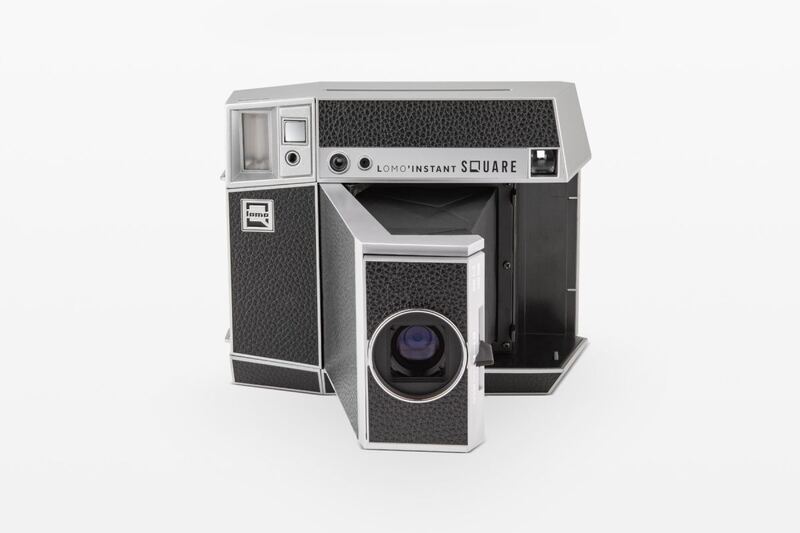
While the Fujifilm Instax Mini Film Twin Pack offers broader compatibility, the SQ40 camera uniquely produces wider square prints with a vintage aesthetic. Compared to the Polaroid I-2, it lacks advanced manual controls but provides a simpler, more analog experience. Unlike the Lomo Instant Square, it doesn't support dual formats or creative exposure modes, making it more straightforward for casual users.
Rating sources
Our 4.0 score is the average of the 5 scored reviews above; 1 more reviewed it without printing a score and is not in the average. More about methodology.