The Polaroid I-2 is a high-end instant camera featuring LiDAR autofocus, full manual controls, and compatibility with multiple Polaroid film types. Reviewed by Dan Bracaglia of DPReview, it combines modern camera technology with traditional design, offering a solid build quality and advanced features. However, YouTube reviewer experiences highlight issues with film counter malfunctions and jamming after extended use. This camera is ideal for advanced users seeking premium instant photography capabilities but may not suit those wanting a more basic or affordable option.

Full review
Design and Build Quality
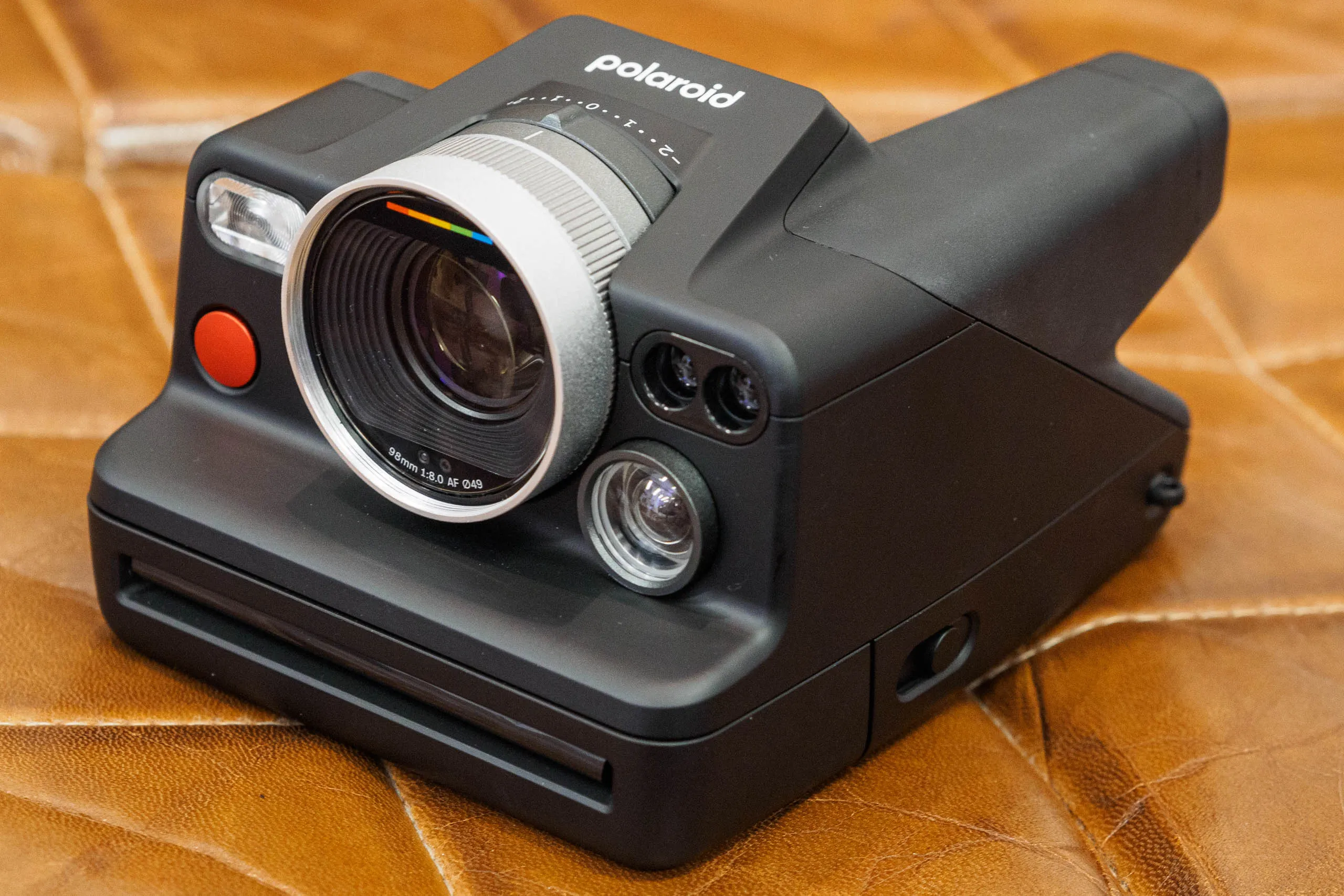
The Polaroid I-2 represents a significant leap in build quality compared to previous instant cameras, with a robust construction that combines aluminum alloy and impact-resistant plastic. According to Casual Photophile's James Tocchio, the camera feels 'well-built and quite solid in hand,' with the exterior designed to withstand bumps but not falls from several feet. The lens barrel and control wheels are constructed of metal, giving it a premium tactile experience that's notably different from the toy-like feel of lower-end models like the Polaroid Now+. The camera measures 149.9 x 119.3 x 91.2 mm and weighs 1260 grams, making it substantially larger and heavier than its predecessors such as the Polaroid Now+ Generation 2 which weighs only 452 grams. This heft is intentional, as noted by Keith Wee, who states the I-2 has 'that nice heft you will expect from a robust camera body.' The camera's design is described as 'iconic, yet original' with a sleek black form that prioritizes manual controls and a Japan-team-designed lens. The metal tripod mount and 2.5mm flash port further reinforce its professional credentials, though the unusual high-pitched startup sound has been noted as a minor irritant by some users.
Autofocus Performance
The I-2's LiDAR autofocus system stands out as one of its most significant innovations, offering reliable performance across various lighting conditions. Dan Bracaglia from dpreview.com notes that the system works 'well in all lighting conditions, including dimly lit settings' and performs 'admirably at focusing on subjects at great distances.' The autofocus uses a stepping motor that drives focus, described as 'generally very quick' though 'a bit noisy' by the same reviewer. However, the system is limited to a single AF point located dead center of the frame, which requires users to half-press the shutter for focusing and recomposing. This approach is supported by the camera's optical viewfinder that displays distance readings when focus is achieved, according to RTINGS' testing. Keith Wee's review highlights that the autofocus was 'really good in speed and reliability' throughout his testing, though he notes that the lack of multi-point AF or eye-detection systems is a limitation for those accustomed to modern digital cameras. The minimum focus distance is 0.8 meters (1.3 feet) with infinity focus capability, which is standard for instant cameras but still represents an improvement over previous models.
Lens and Image Quality
The 98mm f/8 lens (approximately 38mm f/3.2 equivalent) is a standout feature of the I-2, described as 'the sharpest lens ever put into a Polaroid camera' by Casual Photophile's James Tocchio. This three-piece lens system, comprised of polycarbonate and acrylic elements with anti-reflective coating, offers apertures from f/8 to f/64, providing more creative control than previous instant cameras. Dan Finnen from danfinnen.com notes that while the lens sharpness is 'about equally sharp as an autofocus vintage Polaroid camera,' it's still a significant improvement over fixed-focus models like the Polaroid OneStep. The lens is designed to be versatile for various subject genres including portraits, street photography, and candid shots, with a field of view suitable for most photographic disciplines. However, Dan Finnen points out that the lens is 'not glass' which may affect image quality compared to traditional glass lenses. The camera's ability to shoot in aperture priority mode allows for creative control over depth of field, which is a significant advancement over previous instant camera models that lacked such flexibility. The camera's performance with the lens was tested in various lighting conditions, with results showing improved sharpness over previous Polaroid models.
Control and Exposure Modes
The Polaroid I-2 offers six distinct camera modes, including full manual, aperture priority, shutter priority, auto, multi-exposure, and self-timer, making it one of the most feature-rich instant cameras available. According to dpreview.com's review, users can access 'full manual mode, aperture priority, shutter priority and fully automatic mode' with an exposure compensation dial allowing for biasing meter readings by plus or minus 2 stops in third-stop increments. The camera also features center-weighted metering with a spot covering 60% of the center of the image area, which is described as 'adequate' by Casual Photophile's James Tocchio. The exposure modes are particularly valuable for photographers who want to experiment with different creative approaches, with Keith Wee noting that he found himself using 'Aperture Priority the most' and that 'Auto mode tending towards overexposure (which I work with -1/3 EV).' The camera's manual controls are positioned to be intuitive, with the optical viewfinder displaying aperture size, shutter speed, number of shots left, battery life, and exposure compensation. However, Dan Finnen notes that while the camera offers 'full manual controls,' the viewfinder's accuracy for composition is limited, as it's a rangefinder-style body that doesn't show what's actually in the lens.
User Experience and Limitations
Despite its advanced features, the Polaroid I-2 has several limitations that impact the overall user experience, particularly for those seeking perfection or precise control. Dan Finnen's review points out that the camera's viewfinder is 'a rangefinder-style body, not an SLR,' which makes 'accurate composition difficult, especially with a subject close to the camera.' He notes that 'theres a square in the viewfinder thats supposed to help you compensate, but I found it frustratingly imprecise in practice.' The camera's tendency to overexpose subjects, particularly in auto mode, is a significant issue noted by multiple reviewers, with Finnen recommending a -1/3 EV compensation setting. Additionally, the camera's flash placement is criticized for creating harsh shadows, as demonstrated in his comparison with vintage cameras. The camera's price point of $599 is also a major barrier, with Finnen noting that 'you can buy FOUR excellent brand-new Polaroid Now+ cameras for that money.' The camera's battery life is rated for 15 packs per charge, which is reasonable for its feature set, but the lack of a bulb mode for long exposures is a limitation for creative photography. The camera's autofocus system, while reliable, lacks advanced features like eye detection or multi-point focusing that users of modern digital cameras might expect.
Comparison to Alternatives
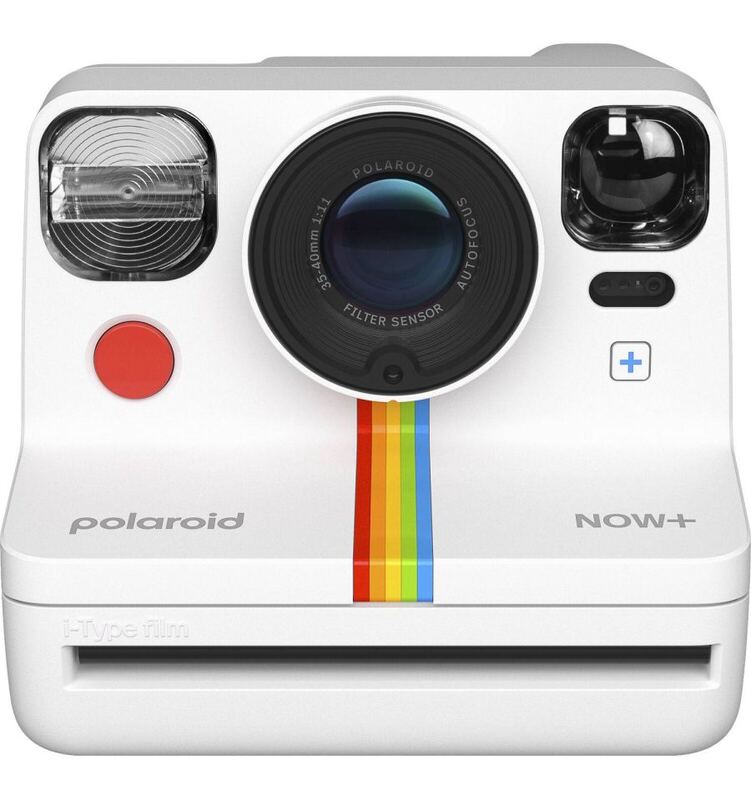
When compared to other instant cameras, the Polaroid I-2 stands out as the most advanced model in the Polaroid lineup, but it faces stiff competition from more affordable alternatives. The Polaroid Now+ series, for example, costs significantly less at around $150, though it lacks the advanced features of the I-2. As noted by Dan Finnen, 'you can buy FOUR excellent brand-new Polaroid Now+ cameras for that money' or even spend that amount on a vintage SLR 680, which he considers 'the best Polaroid instant film camera ever made.' Keith Wee's review emphasizes that while the I-2 is 'a no-holds-barred all rounded improvement from any other Polaroid camera I have tested,' it's not necessarily worth the premium price for everyone. The camera's advanced features like the LiDAR autofocus, full manual controls, and the 98mm lens are compared favorably to vintage models like the SLR 680 and Impulse AF, though Finnen notes that the I-2 doesn't 'dethrone the SLR 680' despite its technological improvements. The camera's compatibility with all Polaroid film types including i-Type, 600, and SX-70 film provides flexibility, but the price point of $599 makes it less accessible than other options in the market. The I-2's performance is also contrasted with the more affordable Instax cameras, which dominate the market share but lack the advanced features of the I-2.
Who It's Best For
The Polaroid I-2 is best suited for photographers who value manual control and are willing to invest in a premium instant camera experience. According to Casual Photophile's James Tocchio, it's designed for 'discerning photographers who care about nothing more than making instant images of the highest possible quality.' The camera appeals to those who want full control over exposure, aperture, and shutter speed, making it ideal for creative experimentation rather than casual snapshotting. Keith Wee's review emphasizes that the I-2 is 'built for creators who want full control and aren't afraid to experiment,' and that it's 'made for the imperfectionists' who appreciate the 'chaos and spontaneity' of instant photography. The camera's advanced features like LiDAR autofocus, full manual controls, and the high-quality lens make it particularly appealing to photographers who are serious about their craft. However, Dan Finnen's review suggests that the camera's price point of $599 makes it unsuitable for casual users or those who are budget-conscious. The camera is also not recommended for those who prioritize precise composition, as the rangefinder-style viewfinder and lack of SLR-style focusing can make accurate framing challenging. The I-2 is best for photographers who are willing to pay a premium for advanced features and are comfortable with the learning curve associated with manual controls.
Value and Price Considerations
The $599 price tag for the Polaroid I-2 is a significant investment that many reviewers find difficult to justify, particularly when compared to more affordable alternatives. Dan Finnen's review is particularly critical, noting that 'you can buy FOUR excellent brand-new Polaroid Now+ cameras for that money' or even spend that amount on a vintage SLR 680, which he considers superior. Keith Wee's review acknowledges that while the camera is 'a no-holds-barred overall redesigned camera' and 'a great glass in here,' the price point of $600 is 'a bit of a contradiction' for a camera that 'has a different checklist of priorities than I do as a pro camera.' The camera's value proposition is clear for serious photographers who want advanced features like LiDAR autofocus, full manual controls, and the sharpest lens ever made for a Polaroid camera. However, Casual Photophile's James Tocchio notes that 'the result is that Ive never been able to write a review or article in which I can wholeheartedly recommend buying and using Polaroid cameras and film, unless the reader is ready to waste at least some small quantity of their time and money.' The camera's battery life of 15 packs per charge and its ability to work with all Polaroid film types provide good value for users who are committed to the instant photography process, but the premium price remains a significant barrier for many potential buyers.
Strengths
- +LiDAR autofocus system that works well in all lighting conditions including dim settings
- +Full manual controls with aperture priority, shutter priority, and full manual modes
- +Compatible with all Polaroid film types including i-Type, 600, and SX-70 film
- +Sharp 98mm f/8 lens with 38mm equivalent field of view and good subject separation
Watch-outs
- −Internal battery is not removable and rechargeable only via USB-C
- −Shutter speed range limited to 30 sec to 1/250 sec with no bulb option
- −Camera has reported issues with film counter malfunctioning and jamming
How it compares
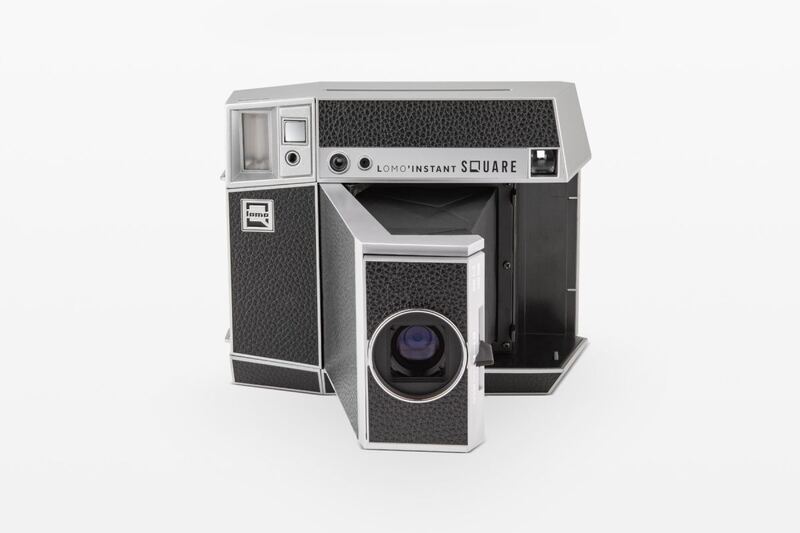
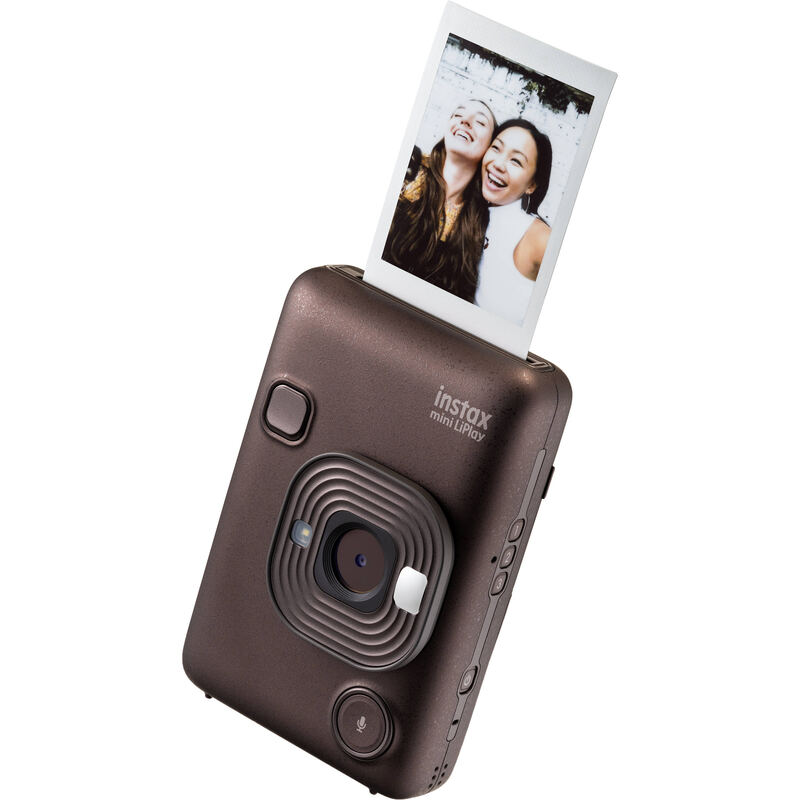
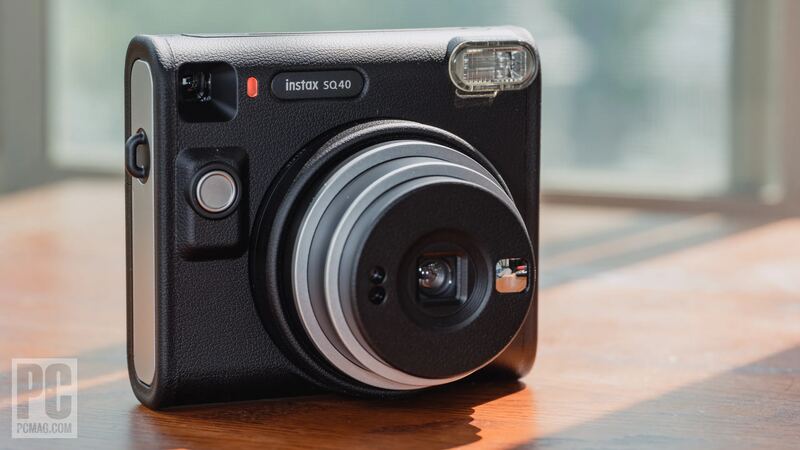
The Polaroid I-2's LiDAR autofocus and full manual controls make it superior to the Polaroid OneStep 2 and Snap 2, which lack advanced focusing capabilities. Unlike the Fujifilm Instax Square SQ40, it doesn't produce square prints but offers more professional features. Compared to the Lomo Instant Square, it lacks creative exposure modes but provides better image quality and more reliable operation.
Who this is for
At a glance: advanced users wanting professional instant photography.
Why you’d buy the Polaroid I-2
- LiDAR autofocus system that works well in all lighting conditions including dim settings.
- Full manual controls with aperture priority, shutter priority, and full manual modes.
- Compatible with all Polaroid film types including i-Type, 600, and SX-70 film.
Why you’d skip it
- Internal battery is not removable and rechargeable only via USB-C.
- Shutter speed range limited to 30 sec to 1/250 sec with no bulb option.
- Camera has reported issues with film counter malfunctioning and jamming.
Rating sources
“this is the Polaroid camera to beat in terms of features, build quality and control.”
“Ive spent the months since then shooting the Polaroid I-2, and Ive ended my time with it quite surprised.”
Our 3.6 score is the average of these published ratings. Ratings marked * were derived from the reviewer’s written analysis or video transcript — the publisher didn’t print an explicit numeric score, so we inferred one from their own words. Click through to verify. More about methodology.