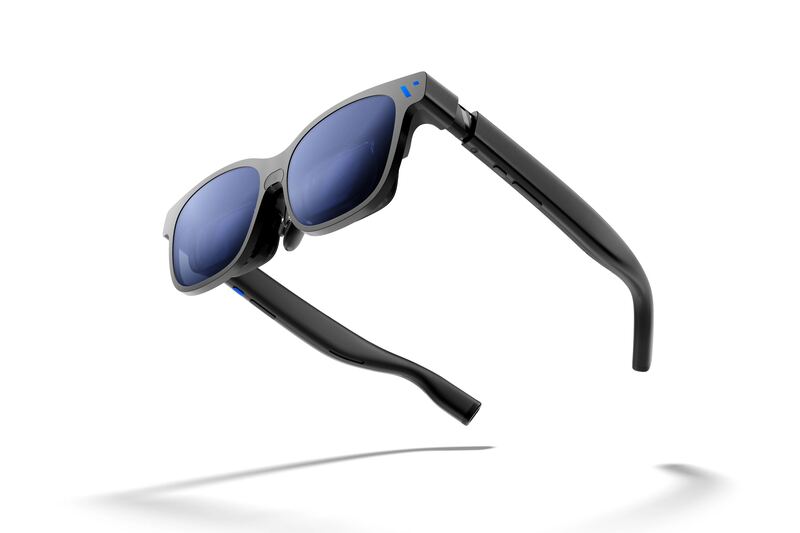
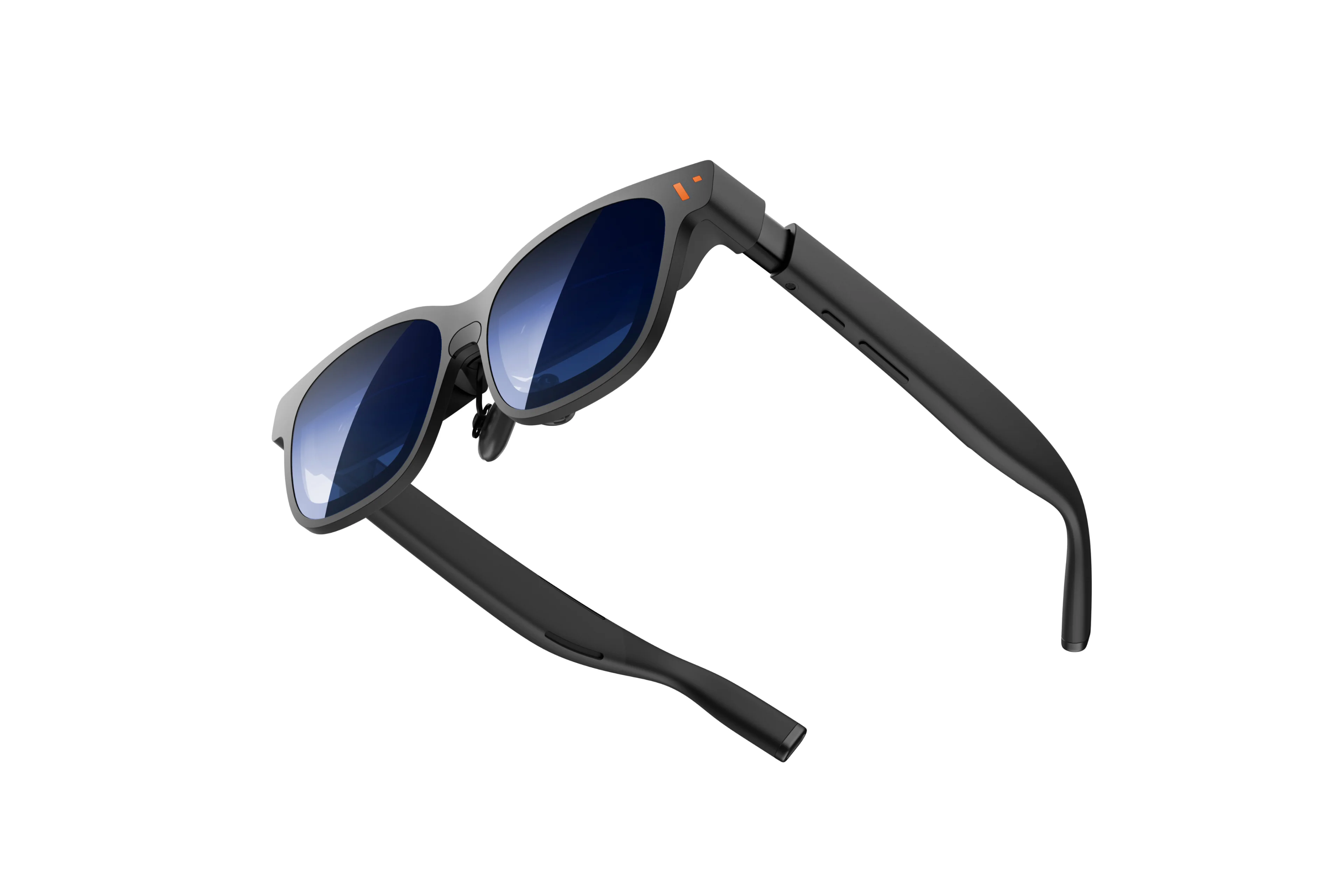
The Even Realities G2 features a lightweight titanium and magnesium frame that closely resembles standard prescription eyewear, offering sharp monochrome waveguide display visuals adjustable up to 1,200 nits. PCMag found the touch-strip controls on the temple tips awkward to reach and prone to accidental activation, making interaction cumbersome without additional hardware. WIRED noted that while the optional R1 smart ring provides discreet gesture-based control, its $249 cost is nearly essential for comfortable daily use due to these interface limitations. This product fits privacy-conscious users who prioritize discretion over raw features, but those seeking seamless navigation or reliable AI performance should look elsewhere.
Full review
Design mimics standard eyewear
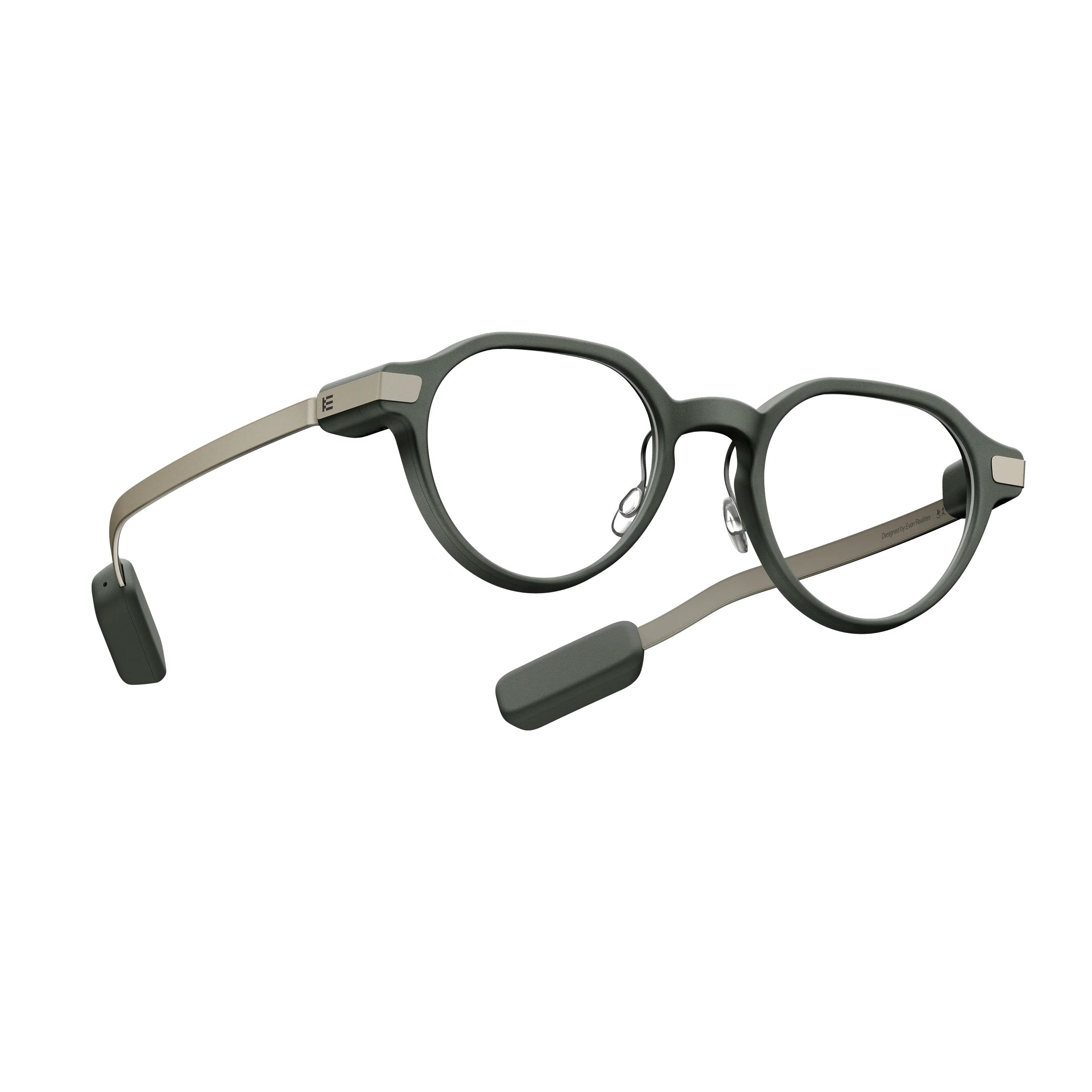
The Even Realities G2 achieves a level of discretion that distinguishes it from most competitors in the smart glasses category. PCMag observed that the frames are incredibly narrow with skinny metal arms, making them indistinguishable from stylish non-smart glasses except for two subtle indicators. The first is the waveguide on the lenses, which reflects light with a slight blue-purple sheen and occasionally reveals a bright green display at certain angles. The second indicator consists of rectangular capsules at the ends of the temples that house the electronics and controls. These chunky ends are unique in the space because they sit opposite to most smart glasses where the temples thicken near the hinges. PCMag noted that while the build is comfortable, the capsule placement squeezed their head rather than resting behind the ears.
Wareable emphasized that this design choice allows the G2 to pass as everyday optical eyewear without alienating bystanders who might be wary of camera-equipped devices like those from Meta. The result is a profile that feels even more like normal glasses, with no cameras or audio playback to draw attention. WIRED noted that notifications and navigation cues appear briefly in the field of view before disappearing, maintaining a discreet interaction style.
The G2 offers aesthetic flexibility through multiple frame shapes and colors. PCMag confirmed availability in rectangular or round lenses across gray, brown, or dark green frames. Wareable added black to this list as an understated colorway option. Despite the minimalist exterior, the internal engineering supports prescription lenses directly within the glasses rather than using clip-in inserts. WIRED stated that prescription support covers a range from negative 12.00 to positive 12.00 diopters, which is an impressive feat of engineering given how thin the lenses are. This integration allows buyers to use the G2 as their primary pair of glasses without compromising on style or comfort.
Display brightness and resolution
The visual output represents a significant generational leap over its predecessor. WIRED reported that the Even HAO 2.0 system, which pairs micro-LED projectors with gradient waveguide optics, produces a display roughly 75 percent larger than the original G1 model while delivering significantly sharper text. The resolution sits at 640 by 350 pixels on a monochrome green waveguide screen. WIRED noted that brightness can be adjusted up to 1,200 nits, making the display easier to read in variable lighting conditions. Looking closely at the lenses reveals a faint rectangle in each eye where the projector displays crisp digital text.
Despite the high peak brightness specification, real-world readability presents challenges for some users. WIRED explicitly listed that the display is tricky to read in bright light as one of its primary drawbacks. This suggests that while 1,200 nits provides a strong baseline, direct sunlight or intense ambient illumination can still wash out the monochrome green text against outdoor backgrounds. The field of view measures 27.5 degrees, which confines the information display to a specific area rather than wrapping around the peripheral vision.
Wareable described the monochrome waveguide display as sharp and capable of delivering serious software functionality despite its limited color palette. PCMag found the display easy-to-read for standard tasks like captioning and transcribing. The system also includes a second menu screen that floats in front of the main notifications page, allowing users to navigate complex interfaces without losing context of their primary alerts. This layered approach helps manage the limited real estate available on the 640 by 350 resolution grid.
Touch strip controls are awkward
Navigating the G2 interface without an external controller is a frustrating experience due to the placement of its touch-sensitive strips. PCMag detailed that each capsule contains a touch strip used for tapping, swiping forward or backward to scroll, and double-tapping to bring up menus. However, reaching behind their ears to access these controls felt much more odd than tapping right behind the front-right hinge found on competing devices like the Rokid Glasses. PCMag also noted difficulty keeping their fairly short hair away from the G2's touch strips, which likely leads to accidental activations.
Wareable echoed this sentiment, describing the native touch-strip controls as fiddly without the companion ring. The requirement to contort fingers behind the ears creates an unnatural physical interaction that breaks the illusion of wearing standard glasses. This awkward geometry makes quick glances at notifications or casual menu browsing a cumbersome process rather than a seamless extension of daily life.
The friction caused by these controls directly impacts the product's value proposition, as the base price excludes the solution to this problem. Wareable stated that they would consider the R1 smart ring close to essential rather than optional for comfortable daily use. Without it, users must constantly engage in awkward physical maneuvers just to interact with their own eyewear, undermining the convenience that defines the category.
R1 ring solves control issues
The optional R1 smart ring transforms the interaction model by moving navigation away from the glasses entirely. WIRED described the R1 as a zirconia ceramic and medical-grade stainless steel ring that serves as both a thumb controller for the G2 interface and a wellness tracker. It captures metrics like heart rate, steps, and sleep while allowing users to scroll, tap, and interact with the glasses without touching them. This setup keeps interaction subtle by mapping controls to a surface manipulated naturally by the thumb.
Wareable highlighted that shifting menu navigation to a ring on the finger delivers an invisible heads-up interface without drawing unwanted glances from bystanders. The R1 connects through the Even app and pairs seamlessly with the glasses, providing a much more intuitive control scheme than reaching behind the ears. PCMag confirmed that the experience improves drastically when paired with the $249 smart ring.
However, adding the R1 significantly increases the total cost of ownership. Wareable noted that all-in, a fully kitted-out G2 setup runs close to 850 dollars, which puts it uncomfortably near Meta's flagship display glasses despite doing noticeably less on paper in terms of raw feature count like cameras and speakers. The high premium for the ring makes the base 599-dollar price tag feel even steeper when evaluating the complete experience.
AI navigation is inconsistent
The onboard virtual assistant, Even AI, pulls information from a mix of Gemini, ChatGPT Perplexity, and an Even LLM to answer questions without requiring a phone. WIRED found that when the system works well, it delivers brilliant concise answers swiftly for users to read on the display. Using the R1 ring makes scrolling through longer answers intuitive. The Teleprompt feature is particularly strong for public speaking, allowing text input via the app while the microphone follows along and bolds words in real time.
Despite these strengths, the reliability of the AI remains a major point of contention among reviewers. PCMag criticized the inconsistent AI performance as a primary con that keeps the glasses from appealing to most people. WIRED agreed, noting that while results are accurate, the system often takes far too long to process and display answers. They emphasized that it needs to be a fluid interaction but is just not quite there yet.
Wareable added that some native features remain inconsistent even after months of relentless updates and firmware patches. The gap between accurate information retrieval and the frustrating latency required to get that information creates a disjointed user experience. Shoppers who need instant, reliable answers will find this inconsistency jarring, while those willing to tolerate delays may appreciate the breadth of integrated models.
Navigate widget improves cycling
The Navigate widget has received significant updates that make it more useful for specific use cases. WIRED reported that both the map view and the speed of directions are much clearer than before in the second generation. As a cyclist, they used this feature more than any other and found it reliable enough to depend on during rides. The always-on map display provides continuous guidance without requiring constant manual interaction.
PCMag noted that navigation is improved but still not entirely reliable across all environments. While the cycling use case seems well-supported by the updated widget, broader street-level navigation may still suffer from the latency issues affecting the general AI assistant. The clarity of the monochrome text helps maintain focus on the road without obscuring peripheral vision.
This feature highlights a niche where the G2 excels: providing critical directional data to active users who cannot safely interact with smartphones or smartwatches. The combination of the larger 75 percent display and the updated map rendering makes it a compelling tool for commuters, though its reliability outside of structured routes remains uncertain based on available feedback.
Privacy focus lacks cameras
By deliberately omitting cameras and speakers, Even Realities positions the G2 as a privacy-conscious alternative to camera-heavy competitors. Wareable emphasized that this design choice eliminates bystander-recording anxiety and prevents audio leakage in quiet rooms. The glasses rely entirely on the waveguide display for information delivery, keeping interaction discreet and non-intrusive.
PCMag found the noticeably absent cameras and speakers to be an intentional design decision rather than a missed opportunity. This approach appeals to users who want smart functionality without the social friction associated with recording devices. WIRED noted that the system is designed to keep interaction subtle through the R1 ring, further reinforcing the discreet nature of the hardware.
However, this privacy-first stance comes at the cost of feature parity with market leaders. Wareable pointed out that you are paying a premium for waveguide display and design restraint rather than raw feature count. The absence of visual recording capabilities means the G2 cannot serve as a hands-free camera or audio playback device, limiting its utility to information consumption and generation only.
Battery life meets daily needs
Power management has seen steady improvements over the product's lifecycle. WIRED reported that battery life is up from 1.5 days in the original model to two full days of use on the G2. This duration provides a reliable baseline for daily commuters and professionals who need their glasses to last through standard workdays without requiring nightly charging.
Wareable confirmed that the included case offers roughly seven additional full charges, making it suitable for extended travel or multi-day trips away from power outlets. The slim, nicely finished unit with a top-folding lid adds to the premium feel of the package. PCMag described the battery performance as reliable enough for daily use.
While two days is an improvement over the first generation, it still requires more frequent charging than many traditional smartwatches or fitness trackers. Users who prioritize multi-day autonomy without cables may find this duration adequate but not exceptional compared to other wearable categories.
Even Hub expands app ecosystem
The software foundation has evolved significantly since launch through the introduction of the Even Hub app platform. Wareable stated that months of relentless updates and the arrival of this open third-party ecosystem have transformed what the G2 can do beyond its initial barebones state. PCMag praised the third-party app store as a positive feature, noting it is early but full of potential.
This expansion allows developers to create specialized tools for the waveguide display, moving the product away from relying solely on Even Realities' native features. Wareable highlighted that this blossoming platform makes the G2 one of the most convincing pairs of smart glasses on the market for privacy-minded early adopters who want extensibility.
Despite these improvements, some native inconsistencies remain a hurdle. Wareable noted that even after extensive updates, certain core functions still suffer from reliability issues. The app ecosystem adds value but cannot fully patch over the fundamental latency and navigation problems inherent in the current software build.
Strengths
- +Lightweight titanium and magnesium alloy frame that closely resembles standard prescription eyewear
- +Sharp monochrome waveguide display with adjustable brightness up to 1,200 nits
- +IP65 water and dust resistance rating for durability in varied conditions
- +Optional R1 smart ring provides discreet gesture-based control without touching the glasses
Watch-outs
- −Touch-strip controls on the temple tips are awkward to reach and prone to accidental activation
- −$249 cost for the R1 smart ring, which is nearly essential for comfortable daily use
How it compares
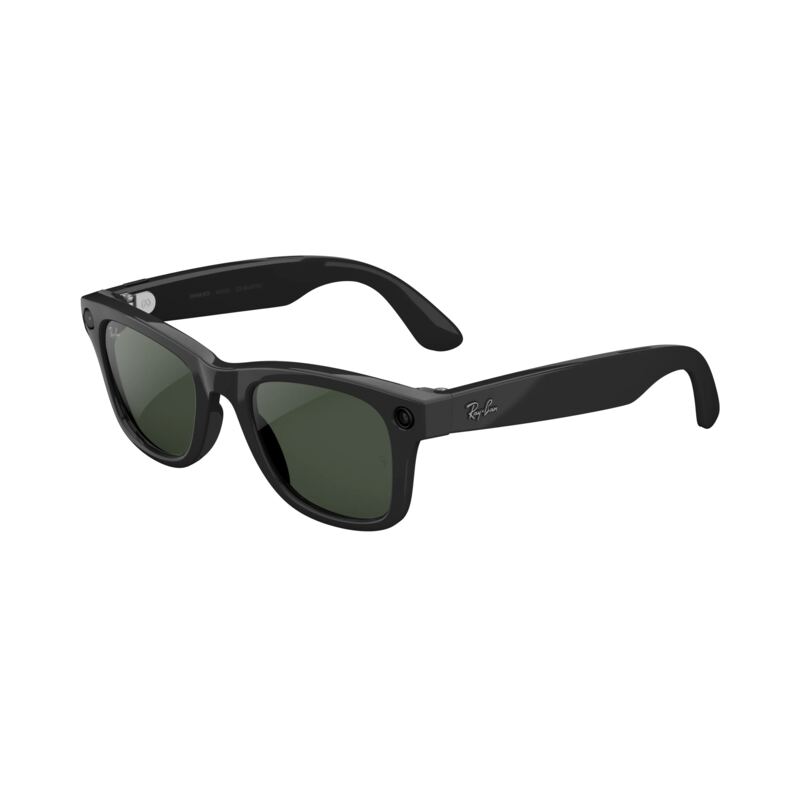
However, it lacks the full-color display and precise electromyography gesture control found on the Meta model, relying instead on a monochrome waveguide and awkward touch strips.
Rating sources
Counts as 3.24/5 in our score — this publisher's 19 scores on the site average 3.87, so its scores are adjusted up to compare fairly with other publishers.
Counts as 3.34/5 in our score — this publisher's 31 scores on the site average 3.77, so its scores are adjusted up to compare fairly with other publishers.
Counts as 4.02/5 in our score — this publisher's 156 scores on the site average 4.15, so its scores are adjusted up to compare fairly with other publishers.
Our 3.5 score is the average of the 3 scored reviews above, each adjusted for how strictly its publisher scores; 2 more reviewed it without printing a score and are not in the average. More about methodology.