Verdict
Ranked #8 of 10Reviewed by Mike Hunter·May 29, 2026

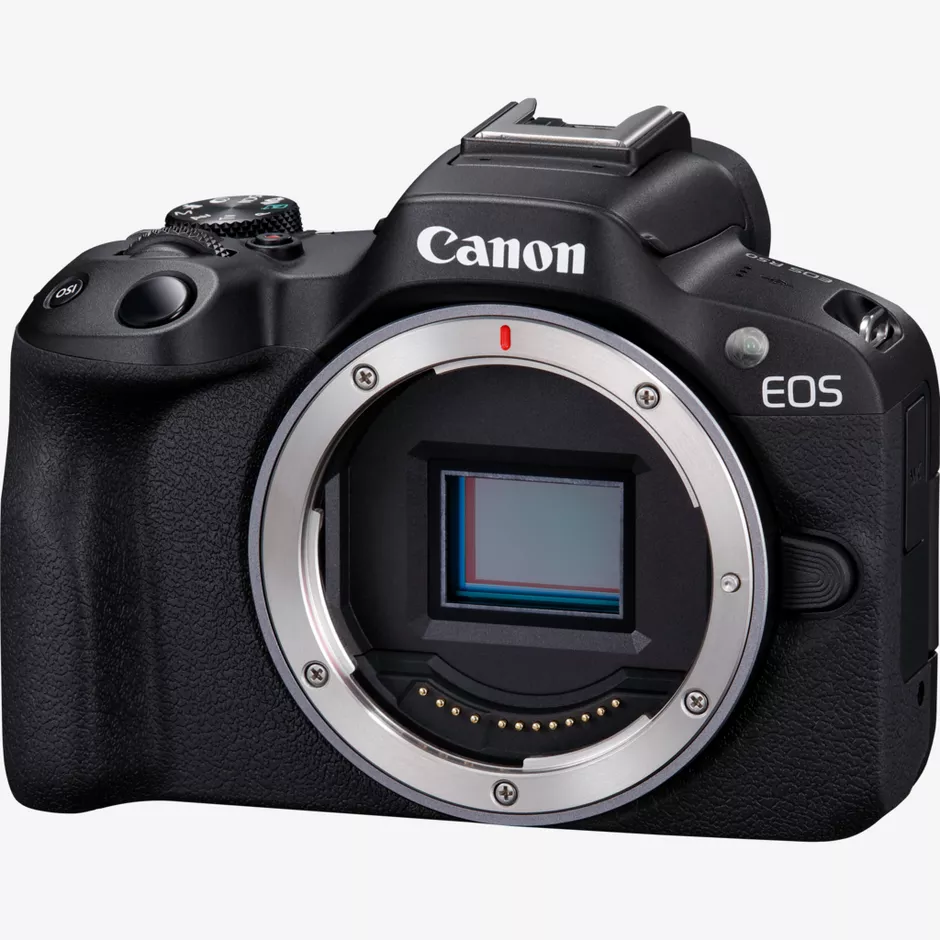
Canon EOS R50

Averaged from 3 published ratings + 1 derived from review text
The verdict

The Canon EOS R50 is a compact APS-C mirrorless camera priced at $680 body-only, offering strong value with its 24.2MP sensor and advanced autofocus system. Reviewers praised its burst shooting capabilities and subject tracking, calling its AF system the best at this price point. However, the camera suffers from limited third-party lens support and lacks an AV mode in video. While some reviewers noted higher ISO penalties than expected, the R50 remains a solid entry-level option for those seeking a capable RF-mount camera without the premium price tag.

Canon EOS R50

Full review

Compact Design and Portability

The Canon EOS R50 is a remarkably compact mirrorless camera that sits at the entry level of Canon's RF-mount lineup. At just 6.4 x 4.5 x 3.1 inches and weighing only 12.7 ounces, it's designed to be practical for travel and everyday carry. Reviewers like those from PhotoBohemian noted its portability as a key strength, with Jan Rybar describing it as 'an extremely compact mirrorless camera, which could easily be mistaken for a compact camera.' The camera's lightweight build makes it ideal for users who want to avoid the bulk of larger DSLRs or mirrorless models while still getting advanced features. Its small form factor also makes it suitable for underwater use, as demonstrated by The Digital Shootout's review where they tested it with a Nauticam housing and reported that 'the entire rig is compact enough and straightforward to handle single-handedly.' The R50's design allows it to blend seamlessly into a user's lifestyle without being overly cumbersome.

Autofocus Performance and Subject Detection

One of the standout features of the Canon EOS R50 is its advanced autofocus system, which draws heavily from the technology found in Canon's higher-end models like the EOS R3. According to dpreview.com, the R50's autofocus system combines subject recognition modes with tenacious tracking, effectively recognizing people, animals (dogs, cats, birds, horses), and vehicles (motorsport cars, bikes, trains, aircraft). The camera's ability to automatically detect eyes for sharp portraits was particularly praised by reviewers. TechRadar's review noted that 'the R50's most compelling feature is probably its autofocus system,' which is 'a relatively simple but very powerful system.' The autofocus system also includes an AF mode designed for vlogging, which prioritizes subjects close to the camera while using face detection mode for broader tracking. This feature works as advertised, though users are advised to use a gimbal or tripod since image stabilization is turned off. The system's tracking capabilities were described as 'impressively good for a budget camera' by Canon Rumors.

Burst Shooting and Video Capabilities

The Canon EOS R50 delivers impressive burst shooting performance, capturing up to 15 frames per second in fully electronic mode and 12 frames per second with electronic first curtain shutter. This capability was highlighted by multiple reviewers, including those from dpreview.com, who noted that 'the R50 is surprisingly adept at burst shooting.' However, the burst capacity is limited, with only about 7 Raw or 42 JPEG images per burst. In terms of video, the camera supports 4K recording at up to 30p without crop, with oversampled 6K for 4K30 footage that 'looks great.' The camera also features 10-bit HDR video and HEIF image support. The R50 includes close-up and vertical video modes, along with live streaming and webcam capability. According to the review by PhotoBohemian, the camera's video performance was 'really good for what it is,' and the oversampled 6K footage was particularly praised for its quality. The camera's video capabilities make it suitable for both casual users and content creators looking for a versatile tool.

Image Quality and Sensor Performance

The Canon EOS R50 is equipped with a 24.2MP APS-C CMOS sensor, which delivers solid image quality suitable for most casual and intermediate users. The sensor, while not utilizing the latest stacked or backside illuminated (BSI) technology, still produces images with good dynamic range and color science. Reviewers from PopPhoto noted that 'despite the low price and entry-level status, Canon fitted the R50 with some surprisingly advanced autofocus features,' suggesting that the sensor's performance is adequate for the camera's intended audience. The camera's ISO range extends up to 51200, though users are advised to enable this maximum speed in the menu for optimal performance. The sensor's performance was also evaluated during underwater testing by The Digital Shootout, where they reported that 'image quality looks pretty darn good for what it is.' The camera's ability to handle high ISO settings without excessive noise was noted as a positive attribute, although some reviewers have expressed concerns about the penalty at high ISO levels, as mentioned by Canon Rumors.

User Interface and Ease of Use

The Canon EOS R50 is designed with beginners in mind, offering a user-friendly interface that simplifies photography tasks. The camera includes an A+ auto mode with Creative Assist, which uses a touchscreen interface to adjust key parameters expressed in terms such as 'Brightness' and 'Color' rather than technical terminology. This makes it easier for novices to navigate the camera's settings without needing to understand complex technical jargon. The mode guide, shown when rotating the mode dial, provides a visual representation of how changing settings affects the real-world outcome, although it doesn't allow direct adjustment without entering Advanced Auto mode. According to the review by PhotoBohemian, the camera's interface is 'really good for what it is,' and the touchscreen is described as 'responsive with good resolution.' However, some users may find the lack of a dedicated AV mode in video settings limiting, as noted by Canon Rumors. The camera's interface also includes a 2.36M dot OLED viewfinder and a 3.0-inch 1.62M dot vari-angle touchscreen, providing flexibility in how users compose their shots.

Lens Ecosystem and Third-Party Support

The Canon EOS R50's lens ecosystem is a mixed bag, with the camera being positioned as an entry-level RF-mount model. While it offers access to Canon's growing RF lens lineup, the selection of RF-S lenses available for the camera is still limited. As noted by Canon Rumors, 'Very few RF-S lenses available' and 'Canon's third party lens policy' is a concern for many users. The lack of third-party lens support has been a significant point of criticism, with users like DhlcadR6 on the Canon Rumors forum expressing frustration over the limited lens options. However, the camera does support the RF-S 18-45mm F4.5-6.3 IS STM and RF-S 18-150mm F3.5-6.3 IS STM lenses, which are considered reasonable choices for the camera. The camera's compatibility with the RF mount also means that users can easily upgrade to higher-end Canon mirrorless bodies in the future, as the RF mount system is designed to be universal across Canon's mirrorless lineup. Despite these limitations, the camera's value proposition remains strong for users who prioritize affordability and portability over extensive lens options.

Value and Market Positioning

The Canon EOS R50 is priced at $679.99 for the body-only version, making it one of the most affordable APS-C mirrorless cameras on the market. This pricing strategy positions it as a strong contender in the entry-level mirrorless segment, particularly when compared to the Canon R100, which lacks an articulating LCD screen and has an older focus system. According to the review by Canon Rumors, 'At $680 USD (currently $580 USD) the Canon EOS R50 will almost certainly sell well for Canon because it offers a reasonable amount of quality features for the very low price point.' The camera's value proposition is further enhanced by its inclusion of features typically found in higher-end models, such as advanced autofocus capabilities and 4K video recording. However, some reviewers have noted that the camera's performance in high ISO conditions may not meet the expectations of more advanced users, as mentioned by the review from PhotoBohemian. Despite these minor drawbacks, the R50's combination of portability, advanced features, and affordable price makes it an attractive option for casual users and beginners looking for a capable camera without breaking the bank.

Who It's Best For and Not For

The Canon EOS R50 is best suited for casual photographers, beginners, and content creators who value portability and ease of use. It's particularly appealing to users who want a camera that can handle family events, travel photography, and vlogging without the bulk of larger models. According to the review by PhotoBohemian, 'the Canon R50 really makes sense as a portable family and travel camera,' and it's ideal for users who want 'a multi-purpose family and travel camera.' The camera's advanced autofocus system and 4K video capabilities make it suitable for users who want more than just basic smartphone photography but aren't ready to invest in a higher-end model. However, the R50 may not be the best choice for professional photographers or those who require extensive lens options and advanced features like those found in Canon's higher-end models. Users looking for a camera with extensive third-party lens support or those who frequently shoot in challenging lighting conditions may find the camera's limitations outweigh its benefits. Additionally, the camera's lack of an AV mode in video settings and limited burst capacity may disappoint more advanced users who require greater control and performance.

Strengths

  • +Responsive touchscreen with good resolution
  • +Very useful burst rate with either EFC or Electronic shutters
  • +Autofocus system is the best out there at this price point
  • +Tracking is impressively good for a budget camera

Watch-outs

  • Very few RF-S lenses available
  • No AV mode in video

How it compares

The Canon EOS R50 delivers better autofocus performance than the Sony α6400, but lacks the 4K/60p recording and 10-bit color depth of the Sony α6700. Compared to the Fujifilm X-S20, it offers a more affordable price point and better lens support, though the X-S20 provides superior video capabilities and dedicated vlog mode.

Who this is for

At a glance: Budget-conscious photographers.

Why you’d buy the Canon EOS R50

  • Responsive touchscreen with good resolution.
  • Very useful burst rate with either EFC or Electronic shutters.
  • Autofocus system is the best out there at this price point.

Why you’d skip it

  • Very few RF-S lenses available.
  • No AV mode in video.

Rating sources

Our 3.7 score is the average of these published ratings. Ratings marked * were derived from the reviewer’s written analysis or video transcript — the publisher didn’t print an explicit numeric score, so we inferred one from their own words. Click through to verify. More about methodology.

Frequently asked questions

Is the Canon EOS R50 worth buying?
The Canon EOS R50 is a compact APS-C mirrorless camera priced at $680 body-only, offering strong value with its 24.2MP sensor and advanced autofocus system. Reviewers praised its burst shooting capabilities and subject tracking, calling its AF system the best at this price point. However, the camera suffers from limited third-party lens support and lacks an AV mode in video. While some reviewers noted higher ISO penalties than expected, the R50 remains a solid entry-level option for those seeking a capable RF-mount camera without the premium price tag.
What is the Canon EOS R50's biggest strength?
Responsive touchscreen with good resolution
What is the main drawback of the Canon EOS R50?
Very few RF-S lenses available
What sources back the 3.7/5 rating?
Our 3.7/5 rating is the average of scores from 4 independent mirrorless cameras for travel reviews — photobohemian, me.pcmag, thephoblographer, and dpreview. Click any source on the product page to read the original review.

How it compares

See all 10
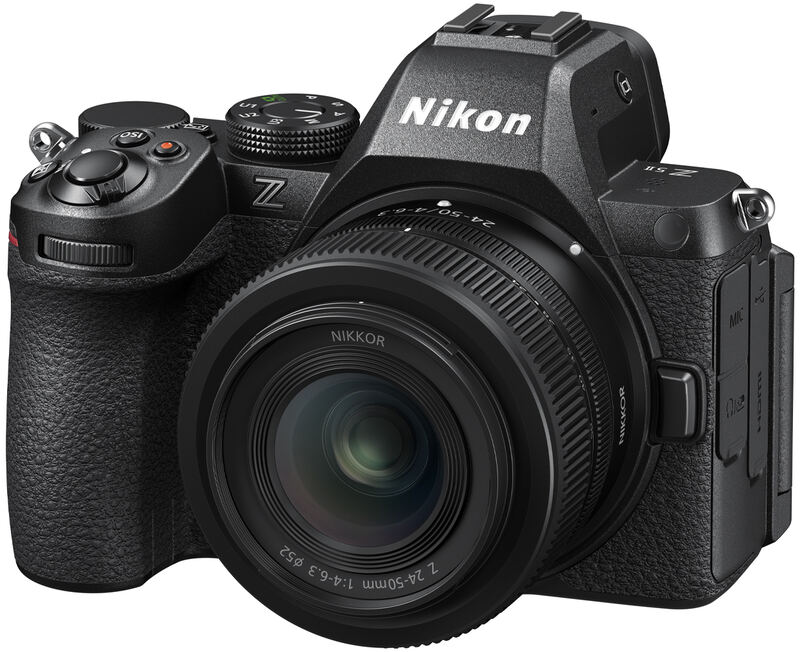
Nikon Z5II
#1 · Top Score

Nikon Z5II

The Nikon Z5II provides better burst rates and dual card slots compared to the Canon EOS R6 Mark II, but lacks the in-body stabilization and 4K/60p recording of the R6. Unlike the Sony α7 IV, it has a more compact design and better low-light performance, though the α7 IV offers a higher resolution EVF and better video specs.

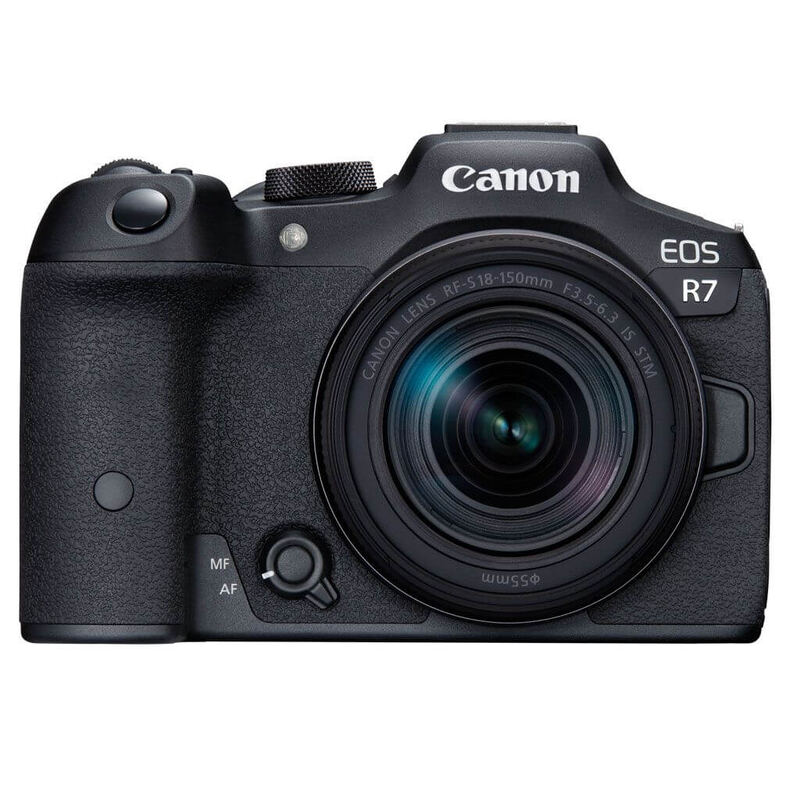
Canon EOS R7
#2

Canon EOS R7

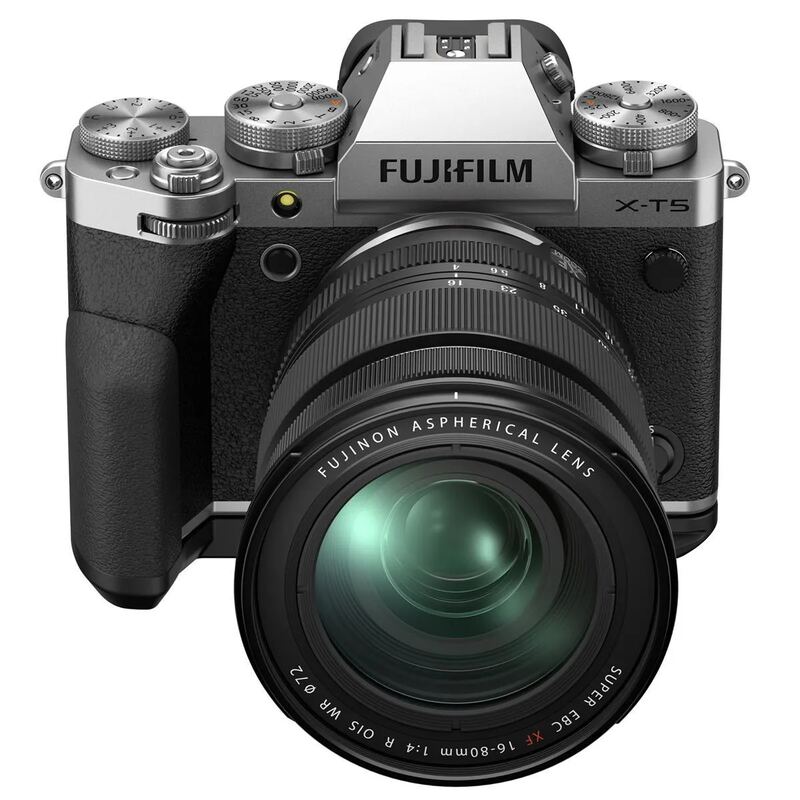
The Canon EOS R7 surpasses the Sony α6400 in burst rate and video capabilities, but unlike the Fujifilm X-T5, it lacks the higher frame rate and in-body stabilization. Compared to the Sony ZV-E10 II, it offers better video specs and dual card slots, though the ZV-E10 II provides better portability and vlog mode.

Canon EOS R6 Mark II
#3

Canon EOS R6 Mark II

The Canon EOS R6 Mark II offers better image quality and in-body stabilization than the Sony α7 IV, but unlike the Nikon Z5II, it lacks dual card slots and has a shorter battery life. Compared to the Fujifilm X-S20, it provides more advanced video features and higher frame rates, though the X-S20 has better vlog mode and 4K/60 4:2:2 recording.

Sony α6400
#4

Sony α6400

The Sony α6400 excels in autofocus performance compared to the Canon EOS R50, but lacks the 4K/60p recording and 10-bit color depth of the Sony α6700. Unlike the Fujifilm X-T5, it has a more compact design and better low-light performance, though the X-T5 provides higher frame rates and better in-body stabilization.

Canon EOS R50
3.7/5· $799
Check Price on Amazon