The Behringer UMC22 costs little and still covers home recording duty, producing good-quality audio from a variety of sources. MusicRadar called it a great audio interface for first-timers or those on a tight budget, while noting it has no dedicated Windows driver and runs noisier than competitors. Audio Science Review confirmed the USB-powered design with 48V phantom power, two line outputs, and a headphone out, and found it supports only 48kHz at 16 bits. Beginners and tight budgets are its market; anyone after premium performance should spend more.
Full review
Budget Performance
The Behringer UMC22 delivers surprisingly capable performance for its $30 price point, as noted by MusicRadar's Matt McCracken who described it as 'capable of handling home recording duties and producing good-quality audio from a variety of sources.' The interface manages to provide two inputs with a combi jack supporting both XLR and 1/4-inch instruments, along with dedicated gain controls and a direct monitor button. Audio Science Review's pkane measured the DAC portion at 16-bit/48kHz, noting -3.2dBFS produced 400mV output with THD+N of -83.5dB and an elevated noise floor below 100Hz. The interface's USB-powered design and lack of dedicated Windows driver means users must install third-party software like ASIO4ALL for full DAW compatibility, but this doesn't detract from its core functionality.
Despite its low cost, the UMC22 offers a surprisingly clean audio path for basic home recording needs. The Midas preamp design provides a solid foundation for microphone input, and the interface's compact form factor makes it ideal for small spaces. However, the lack of driver support on Windows requires users to take additional steps for proper operation, which may pose challenges for beginners. Sweetwater's reviews confirm that while the interface works well with Windows and Mac systems, the absence of official drivers means users must rely on community-supported solutions for optimal performance. The device's ability to handle 48V phantom power for condenser microphones adds to its versatility in home studio setups.
163mm metal housing needs no external power supply
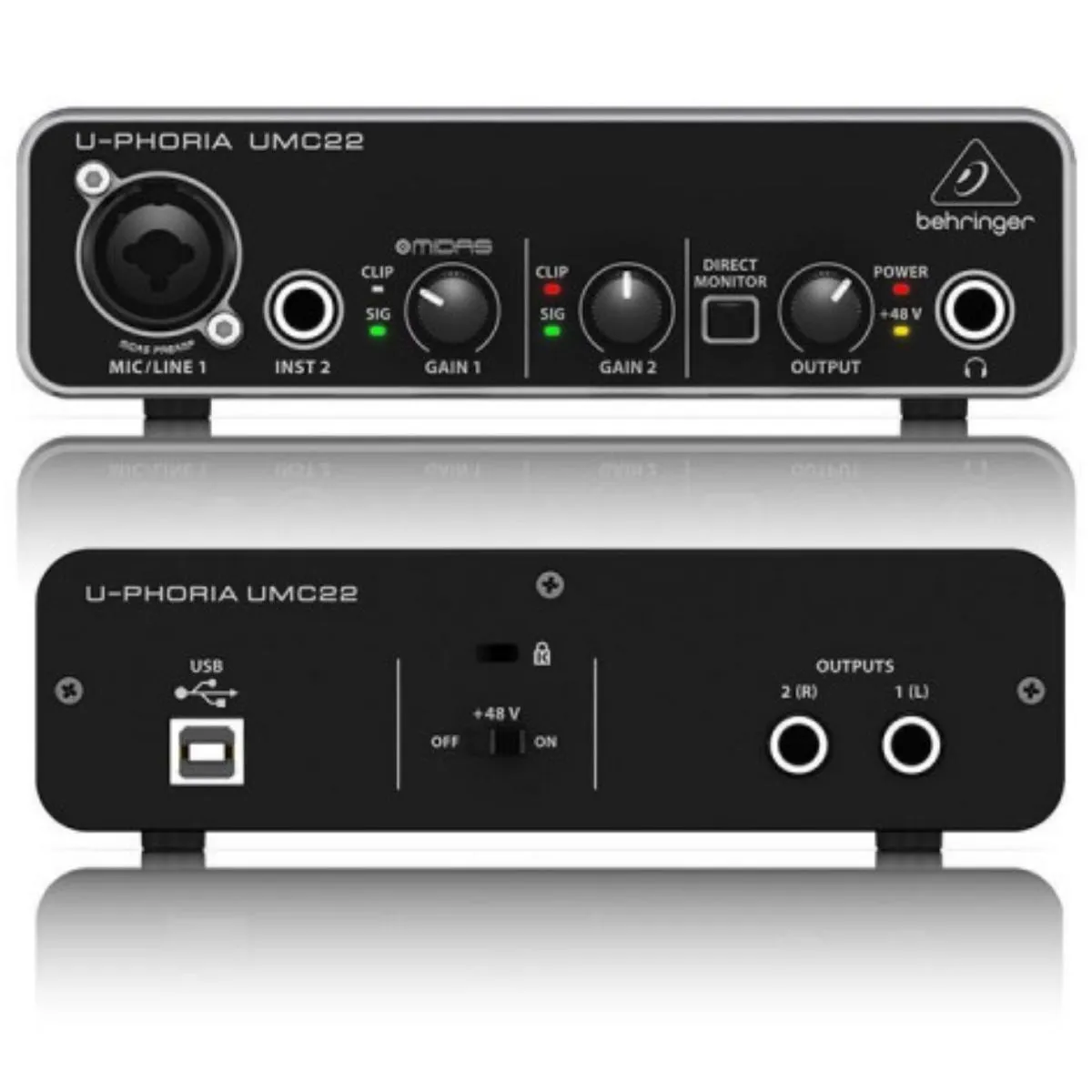
The UMC22's minimalist design stands out in a market flooded with feature-heavy interfaces, as noted by MusicRadar's McCracken who found it 'absolutely tiny' and 'very minimalist in design compared to other interfaces.' The compact metal housing measures just 163mm wide, 125mm deep, and 46mm high, making it suitable for small desks or travel use. The front panel features a clean layout with two input channels, each with dedicated gain knobs, a direct monitor button, and master volume control. The absence of unnecessary features contributes to its affordable price point while maintaining essential functionality for home recording applications.
Audio Science Review's pkane confirmed the interface's robust construction through years of use, noting it has been a 'champ' for room response measurements and other tasks involving microphones. The device's USB-powered design eliminates the need for an external power supply, though this also limits its maximum power output. The interface includes two 1/4-inch outputs, a headphone output, and a USB-B connection for computer connectivity. The lack of additional connectors like S/PDIF or ADAT ports keeps the design simple and focused on core recording functions, which aligns with its budget positioning.
Midas preamp holds up after years of use
MusicRadar's McCracken praised the UMC22's 'insane value for money' and described it as 'a great audio interface for first-timers or those on a tight budget,' highlighting its compact size and suitability for home studio work. The interface's Midas preamp design received particular attention, with Audio Science Review's pkane noting its reliability over years of use. The device's ability to handle 48V phantom power for condenser microphones and its straightforward operation make it appealing to beginners and budget-conscious users. Sweetwater's reviews emphasize the interface's compatibility with both Windows and Mac systems, with the company noting that users can easily integrate it into their existing workflows without major complications.
Podcastage's Bandrew Scott recommended the UMC22 for users on tight budgets who only need a single XLR input, calling it 'the best budget interface I have tested up through today.' The interface's zero latency monitoring and direct monitoring with level control were highlighted as key features for home recording applications. The device's ability to work with both guitar and microphone inputs, along with its headphone output, makes it versatile for various recording scenarios. Users appreciate the clean, uncluttered front panel design that allows for easy access to essential controls without overwhelming beginners with complex features.
No Windows driver, needs third-party ASIO4ALL
The primary limitation of the UMC22 lies in its lack of dedicated Windows driver support, as noted by MusicRadar's McCracken who pointed out that 'there's no dedicated driver on Windows' and users must install third-party software like ASIO4ALL for full DAW compatibility. This can create compatibility issues for users unfamiliar with audio interface configuration, potentially leading to latency problems or audio dropouts. Audio Science Review's pkane reported that the device only supports 48kHz at 16 bits, limiting its capabilities for high-end audio production. The elevated noise floor below 100Hz, measured at -83.5dB THD+N, indicates that the interface may not be suitable for professional applications requiring extremely low noise performance.
The lack of official driver support on Windows creates a barrier for users who expect plug-and-play functionality, as highlighted by Sweetwater's reviews. Additionally, the interface's 16-bit/48kHz limitation means it cannot compete with higher-end models that offer 24-bit/96kHz or higher sample rates. The absence of additional outputs like S/PDIF or ADAT ports restricts its expansion capabilities, making it unsuitable for users who need to connect multiple devices simultaneously.
Good enough for room response measurements, ASR says
The Behringer UMC22 is ideal for beginners and budget-conscious content creators who need basic recording capabilities without the complexity of high-end interfaces. MusicRadar's McCracken specifically recommended it for 'first-timers or those on a tight budget,' while Podcastage's Bandrew Scott emphasized its value for users who only need a single XLR input. The interface works well for podcasters, streamers, and home musicians who primarily record vocals and acoustic instruments using a single microphone or guitar. Sweetwater's reviews indicate that the device is particularly suitable for users who want a simple, reliable interface that integrates easily with existing setups.
The interface is best suited for users who don't require advanced features like multiple inputs, high sample rates, or professional-level audio quality. Audio Science Review's pkane noted that the device has been reliable for 'room response measurements and other tasks involving a microphone,' suggesting it's appropriate for measurement applications. However, users seeking professional recording environments or those requiring 24-bit/96kHz audio quality should look elsewhere. The interface's USB-powered design and compact size make it ideal for small home studios or mobile recording setups where space and power consumption are considerations.
Performs like the pricier UMC204 and UMC202HD
When compared to other budget interfaces, the UMC22 offers competitive performance despite its low price point. MusicRadar's McCracken noted that it's 'not perfect but at this price, it's hard to knock the Behringer UMC22,' suggesting it provides better value than many alternatives in its price range. The interface's Midas preamp design sets it apart from competitors like the Pyle-Pro PAD10MXU, which was deemed discontinued and less suitable for serious recording applications. Audio Science Review's pkane compared it favorably to the UMC204 and UMC202HD models, indicating that it performs similarly to higher-end versions in terms of basic functionality.
Compared to the UMC404HD, which costs significantly more, the UMC22 offers fewer inputs and outputs but maintains comparable audio quality for basic applications. Sweetwater's reviews highlight that while the UMC404HD provides more advanced features and better build quality, the UMC22 offers sufficient performance for users who don't require extensive connectivity options. The UMC22's lack of dedicated Windows driver support puts it at a disadvantage compared to interfaces with official driver support, but its low cost and basic functionality make it an attractive option for users who prioritize affordability over advanced features.
$30 gets two inputs and phantom power
The UMC22's value proposition becomes clear when considering its $30 price point, as MusicRadar's McCracken noted it represents 'incredible value for money.' The interface provides essential features like two inputs, phantom power, headphone output, and direct monitoring at a fraction of the cost of comparable interfaces. Audio Science Review's pkane's years of use demonstrate the interface's reliability and performance consistency, supporting the argument that it offers good long-term value. The device's ability to handle 48V phantom power and work with both microphones and instruments makes it versatile for various home recording applications.
Sweetwater's reviews emphasize that the UMC22's value extends beyond its basic functionality, noting that users can easily integrate it into existing workflows without major complications. The interface's USB-powered design eliminates the need for external power supplies, reducing overall costs for users. While it lacks some advanced features found in higher-end interfaces, the UMC22 provides sufficient audio quality and reliability for beginners and budget-conscious users. The device's ability to work with both Windows and Mac systems, along with its straightforward operation, makes it an excellent entry point for users new to audio recording.
Years of reliable use, but driver support lags
Audio Science Review's pkane has been using the UMC22 for many years and describes it as a 'champ' for various measurement tasks, indicating its long-term reliability. The interface's metal housing and robust construction suggest it can withstand regular use in home studio environments. However, the lack of official driver support and firmware issues reported by some users raise questions about long-term software compatibility. The device's USB-powered design and simple circuitry contribute to its durability, though the absence of additional features like S/PDIF or ADAT ports may limit its usefulness as users' needs expand.
The UMC22's performance metrics show consistent results over time, with measured THD+N of -83.5dB and frequency response that remains flat in the audible range. While these measurements don't indicate exceptional performance, they demonstrate that the interface maintains its basic capabilities over extended use. The device's ability to handle 48V phantom power and work with both microphones and instruments suggests it can adapt to various recording scenarios. However, users should be aware that the interface's 16-bit/48kHz limitation and lack of advanced features may restrict its usefulness as recording needs become more sophisticated.
Strengths
- +Insane value for money
- +Nice and compact size
- +Great for home studio work
- +Capable of handling home recording duties and producing good-quality audio from a variety of sources
Watch-outs
- −No dedicated driver on Windows
- −Noisy compared to others
How it compares
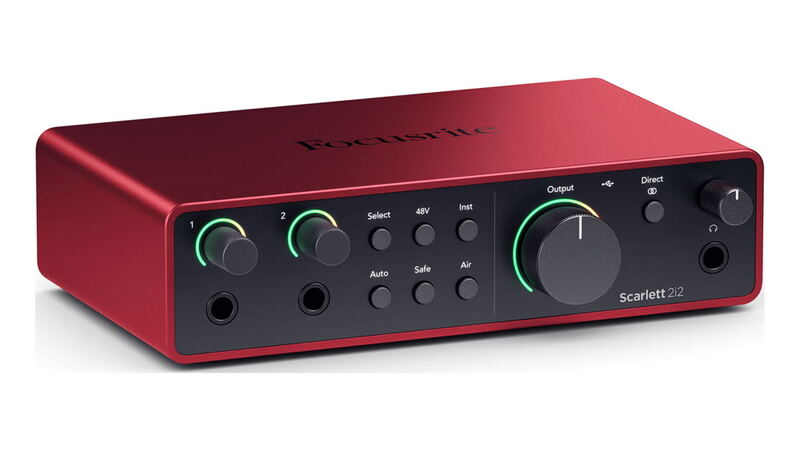
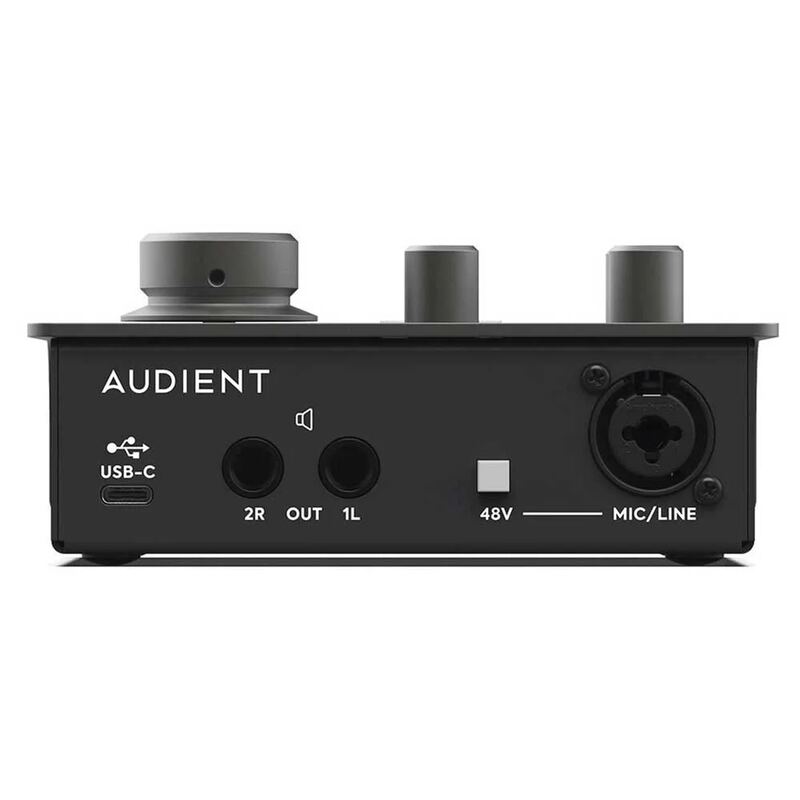
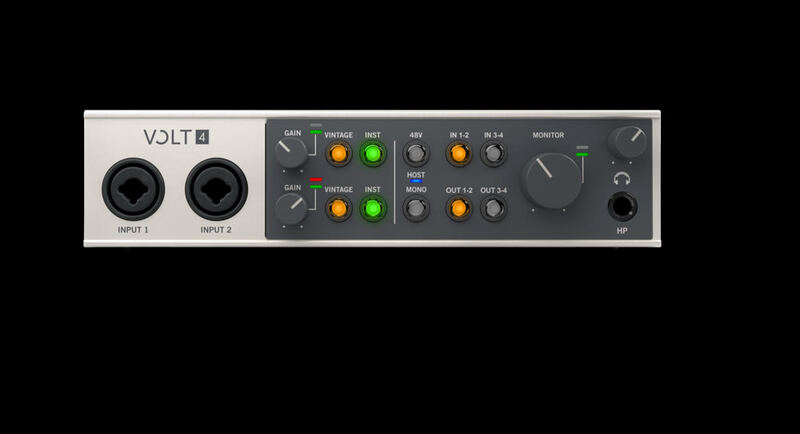
The Behringer UMC22 offers unmatched value for money compared to the Focusrite Scarlett 2i2 4th Gen and Universal Audio Volt Series, but it lacks the build quality and technical performance of the Audient iD4 MkII and the advanced features of the Focusrite Vocaster Two. While it's a solid budget option, it's outperformed by the Focusrite Scarlett 2i2 4th Gen in terms of noise floor and dynamic range.
Rating sources
“If you're on a tight budget and only need a single XLR input, I absolutely recommend this thing.”
Our 4.2 score is the average of the 2 scored reviews above; 1 more reviewed it without printing a score and is not in the average. Ratings marked * were derived from the reviewer’s written analysis or video transcript — the publisher didn’t print an explicit numeric score, so we inferred one from their own words. Click through to verify. More about methodology.