The Focusrite Scarlett 2i2 4th Gen refreshes the design with better build quality and adds Auto Gain plus updated gain halos. Audio Science Review dug into the DAC and found real problems, including distortion that decreases as internal volume rises in a way it shouldn't. ADC input saturation at 1.7 volts and a subpar headphone output narrow its appeal further. Beginners who want an entry-level interface with friendly features will get along with it, but professionals can do better elsewhere.
Full review
Matte black finish replaces the fingerprint-prone gloss
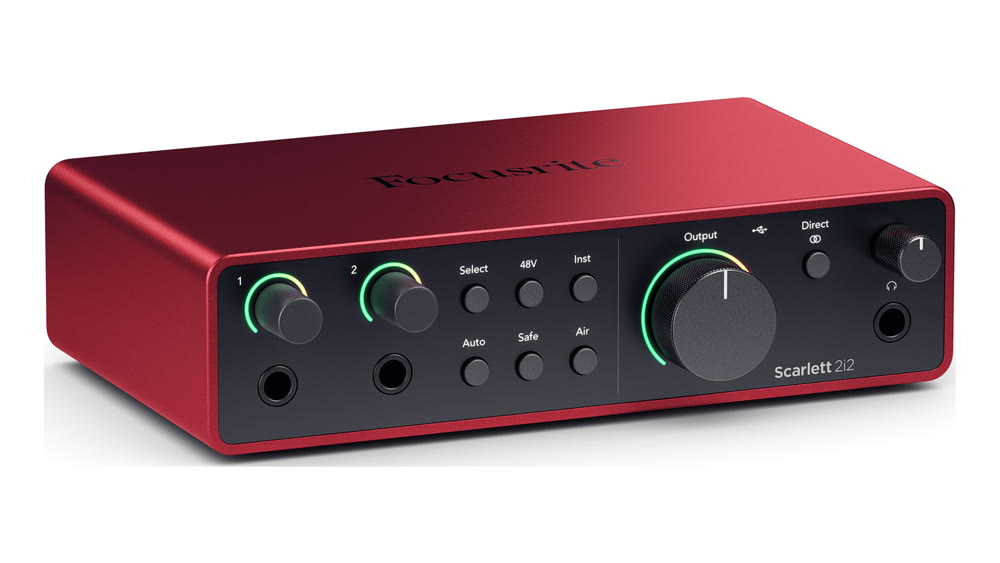
Focusrite's fourth-generation Scarlett 2i2 maintains the iconic red brushed aluminum casing that has defined the brand since 2011, but introduces subtle yet meaningful design refinements. According to The GarageBand Guide's review, the front and back panels now have a matte black finish that is 'infinitely better than the glossy, fingerprint magnet finishes found on the 3rd generation models'. The device measures 180 x 45.5 x 99mm and weighs 0.57kg, with rubber feet serving dual purposes of desk grip and hiding internal screws. Digital DJ Tips' Phil Morse praised the familiar red and black livery as attractive and well-made, while also noting the device's compact size suitable for laptop-based production. The matte finish on the 4th gen represents a clear evolution from the previous glossy black, offering both aesthetic improvement and practical benefits in terms of fingerprint resistance.
Input and Output Configuration
The Scarlett 2i2 4th Gen introduces a significant change in input configuration compared to previous generations, moving from combo XLR/1/4 inch inputs to dedicated input types. As Sound on Sound's Sam Inglis explains, the front panel features two 1/4 inch instrument inputs, while the rear panel houses two dedicated XLR inputs. This separation allows users to leave microphones plugged in at the back while switching between instruments and microphones at the front without cable reconfiguration. The interface includes two input knobs above the line inputs with updated Dynamic Gain Halos that fill up to show input levels, turning green or orange for varying levels and red when clipping occurs. The halos also indicate preamp settings when gain knobs are turned, according to The GarageBand Guide's review. Audio Science Review's measurements showed that while the interface provides standard line inputs, it saturates at 1.7 volts, which is a notable limitation compared to professional-grade interfaces. The rear panel also features balanced TRS outputs, a 1/4 inch headphone jack with dedicated volume control, and a Kensington lock for security.
New Feature Integration
The 4th generation Scarlett 2i2 introduces several new features that differentiate it from previous models, particularly in user-friendliness. Sound on Sound's review highlights the shift from individual input buttons to a shared system with new buttons labeled Select, Auto, and Safe. The Auto Gain feature, as described by The GarageBand Guide, allows users to simply select an input, hit the Auto button, and play or sing for 10 seconds to automatically set optimum gain levels. This feature, according to Digital DJ Tips' Phil Morse, is especially useful for beginners struggling with gain staging. The Clip Safe function, mentioned in multiple reviews, checks levels to prevent clipping, while the Air mode adds transformer-style coloration to input signals. The interface also includes a direct monitoring button for zero-latency monitoring and a 50Ω headphone jack with dedicated volume control. However, the 2i2 has no 5-pin MIDI socket; across Focusrite's own 4th-gen range, MIDI in and out appear only on the larger 4i4. The 4th generation also supports bus-powered operation through USB-C, with an additional USB-C power input for optional external power supply, though no external PSU is provided.
Headphone output 'beat by some low cost dongles'
Performance measurements from Audio Science Review reveal mixed results for the Scarlett 2i2 4th Gen. The DAC measurements landed far below Focusrite's own 109 dB SINAD specification, and Audio Science Review found the shortfall to be distortion-bound rather than noise-bound. When the volume was set to maximum (+6 dB) and the source level was attenuated to maintain 4 volts, performance improved dramatically, suggesting an internal processing pipeline that behaves counterintuitively. The ADC showed input saturation at 1.7 volts, which is notably early compared to professional standards, though Audio Science Review still called the ADC's dynamic range respectable, noting separately that Focusrite's 100 dB specification "barely clears the bar for 16 bit content." The headphone output power was found to be below industry standards, with Audio Science Review's measurements showing it was 'just a checklist item' and 'beat by some low cost dongles.' The GarageBand Guide was more enthusiastic, scoring it 4.5 and calling the 4th-generation 2i2 'very, very good,' with 'Superb build quality' and 'Top tier sound quality' — though the review's one listed negative cuts against the budget framing: 'Maybe a tad pricey for some.' Sound on Sound's review noted that while the interface maintains the familiar form factor and I/O complement, it improves upon previous generations in nearly every respect, particularly in software integration and ease of use.
Auto Gain praised as 'incredibly beginner friendly'
The GarageBand Guide's review highlighted the Auto Gain feature as 'incredibly beginner friendly' and 'really really useful' for those just starting out, while Digital DJ Tips' Phil Morse emphasized that the interface is 'simple but high quality' and 'indispensable' for podcasting, livestreaming, and content creation. Sound on Sound's Sam Inglis noted that the interface better improves upon previous generations in nearly every respect, particularly in software and ease of use, with the new digitally controlled preamps and shared control buttons representing significant advancements. The Dynamic Gain Halos were particularly appreciated across reviews for their visual feedback, with Digital DJ Tips describing them as 'captivating and undeniably cool-looking.' The interface's ability to work with Macs, iPads, and iPhones was also noted as a benefit, with The GarageBand Guide emphasizing its 'class compliant' nature. The build quality and familiar red aesthetic were consistently praised, with reviewers noting that the interface feels 'sturdy' and maintains the brand's recognizable identity.
Distortion drops as volume rises, and ASR called it a headscratcher
Despite its improvements, several reviewers identified significant shortcomings in the Scarlett 2i2 4th Gen. Audio Science Review's Amir was particularly critical, writing that the Scarlett 2i2 'does not deliver on that front' and that the pipeline 'seems backward in the way distortion decreases at higher internal volume levels' — a result he called a headscratcher. Audio Science Review measured SINAD far below Focusrite's own 109 dB specification, and recorded the ADC saturating at 1.7 volts. The headphone output was deemed 'below standard' and 'just a checklist item' according to Audio Science Review, with the output power being notably weak compared to competitors. The lack of a 5-pin MIDI socket was also mentioned as a drawback, particularly in comparison to other interfaces in the market. Additionally, while the interface is described as 'simple to use' and 'intuitive,' some reviewers noted that the new button system and shared controls might be confusing for users accustomed to previous generations. The 4th Gen's performance in professional applications was questioned, with Audio Science Review suggesting that the interface 'does not deliver on that front' and is more suitable for consumer-level use rather than professional applications.
Aimed at DJs moving into podcasting and content
The Scarlett 2i2 4th Gen is best suited for users seeking an affordable, beginner-friendly audio interface with solid build quality and intuitive features. According to The GarageBand Guide, it's ideal for 'musicians, producers and beatmakers looking for great quality recordings at an affordable price,' particularly those interested in podcasting, livestreaming, or content creation. Digital DJ Tips' Phil Morse recommends it for DJs or DJ/producer content creators who want to move beyond pure DJing into podcasting, testimonial videos, or music production, noting that it's 'the kind of thing you'll want to have knocking around once you start producing content beyond pure DJing.' Sound on Sound's Sam Inglis found Focusrite's Auto Gain, the feature that most spares a beginner the job of setting levels by ear, 'worked flawlessly in my tests.' However, the interface may not be suitable for professional audio applications requiring high input headroom or advanced features like MIDI connectivity. Users seeking a simple, reliable interface for home recording, podcasting, or basic music production will find the Scarlett 2i2 4th Gen a strong choice, while those requiring more advanced capabilities or professional-grade performance should consider alternatives.
Digitally controlled preamps, but no MIDI port
When compared to competing audio interfaces, the Scarlett 2i2 4th Gen holds its own in terms of value and user-friendliness but falls short in several technical specifications. Audio Science Review's measurements showed that while the interface's DAC performance was poor compared to competitors, its ADC dynamic range was respectable, though not professional level. The headphone output power was notably weak compared to other interfaces in its price range, with reviewers noting it was 'just a checklist item' and 'beat by some low cost dongles.' In contrast, Sound on Sound's review noted that the 4th generation improves upon previous generations in nearly every respect, particularly in software integration and ease of use, with digitally controlled preamps representing a significant advancement. The interface's ability to work with Macs, iPads, and iPhones was highlighted as a benefit, though it lacks some features found in higher-end competitors like MIDI connectivity. The Scarlett 2i2 4th Gen is positioned as a budget-friendly option with accessible features, making it competitive for beginners and casual users, though it may not satisfy professionals requiring advanced capabilities or superior technical specifications compared to more expensive alternatives.
Strengths
- +Includes Auto Gain feature for beginner-friendly automatic gain adjustment
- +Features updated Dynamic Gain Halos that visually indicate input levels
- +Provides dedicated XLR inputs on the back panel for condenser microphones
- +Built with sturdy brushed metal body and matte black finish
Watch-outs
- −DAC distortion performance is below expected standards according to Audio Science Review
- −ADC input saturation occurs at 1.7 volts, limiting dynamic range
How it compares
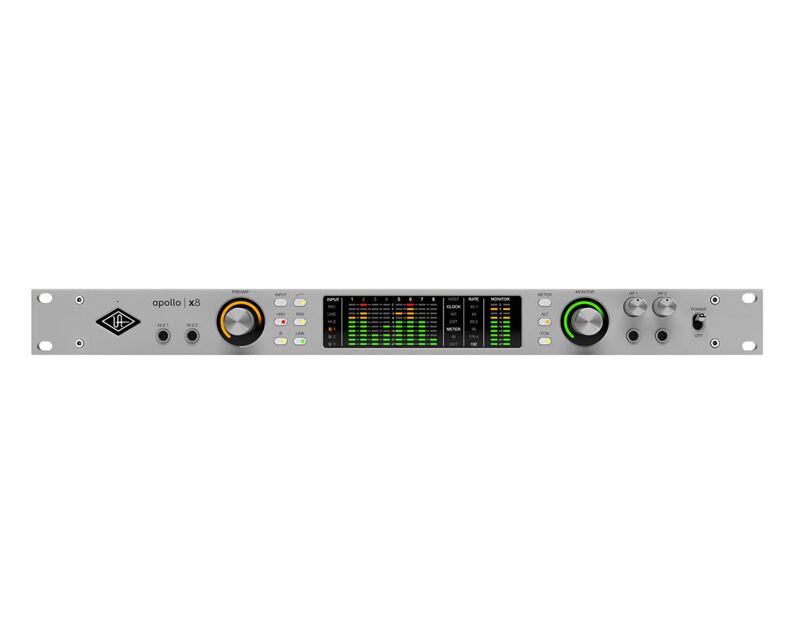
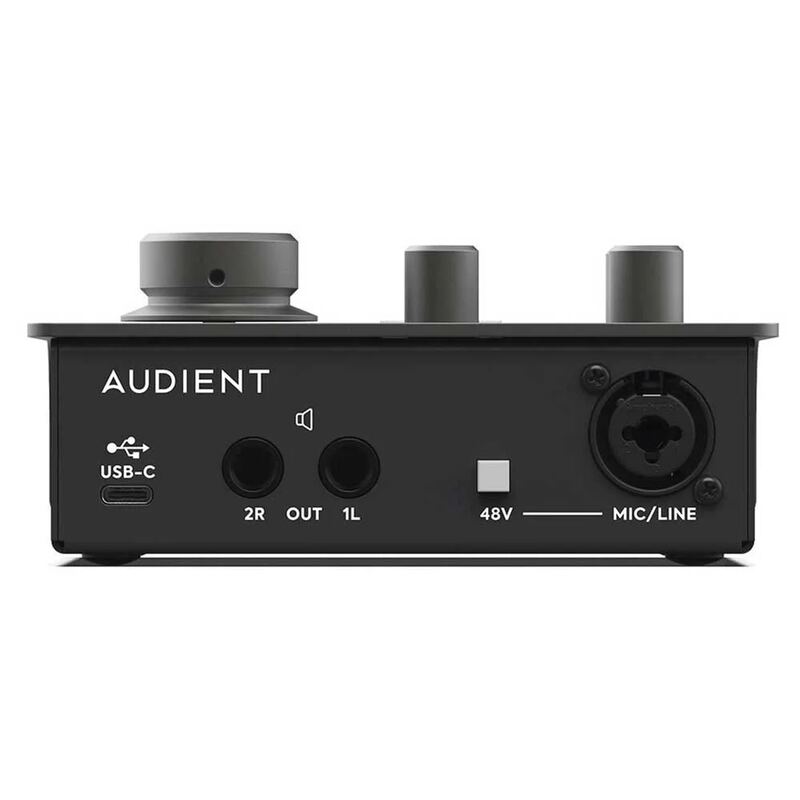
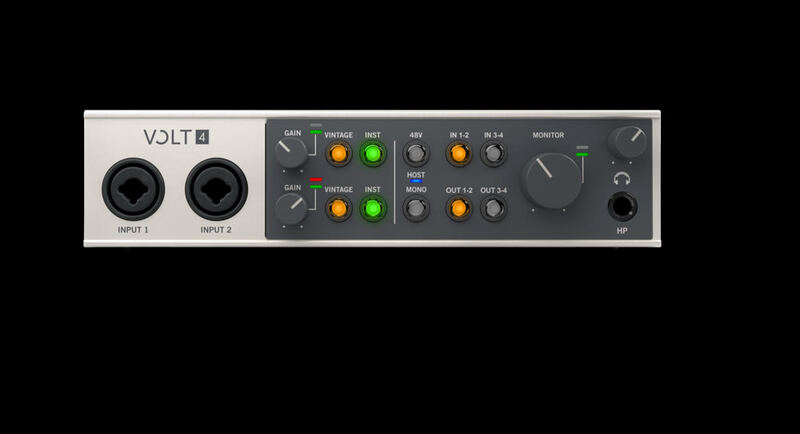
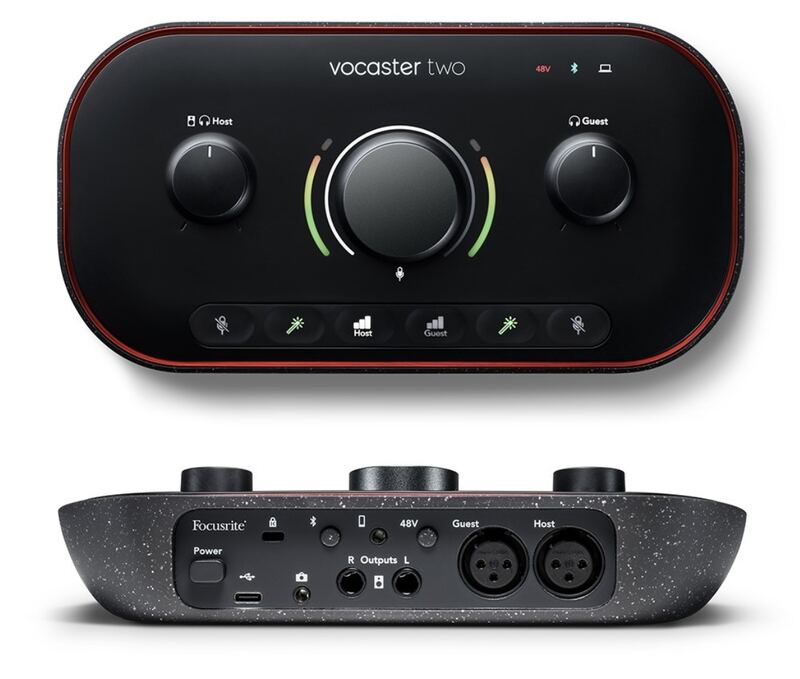
Unlike the Focusrite Vocaster Two, which is tailored for podcasters, the Scarlett 2i2 4th Gen focuses on beginner-friendly features like Auto Gain and visual gain halos, making it more approachable for newcomers. However, it falls short compared to the Universal Audio Volt Series in terms of analog preamp quality and UREI 1176 compression models, and it's also outperformed by the Audient iD4 MkII in technical specs like noise floor and dynamic range.
Rating sources
Our 4.6 score is the average of the 4 scored reviews above; 2 more reviewed it without printing a score and are not in the average. More about methodology.