The Universal Audio Apollo X Gen 2 is a substantial refresh of the Apollo line, keeping Thunderbolt connectivity while improving dynamic range and lowering THD. Reviewers pointed to the industry-leading Unison preamps, the pristine conversion quality, and real-time UAD processing, with Sonarworks SoundID correction now integrated for monitoring accuracy. The premium price and the missing Thunderbolt cable were both noted as drawbacks. Professional musicians and producers who want studio-grade performance on a desk are who it's for.
Full review
Design Evolution and Build Quality
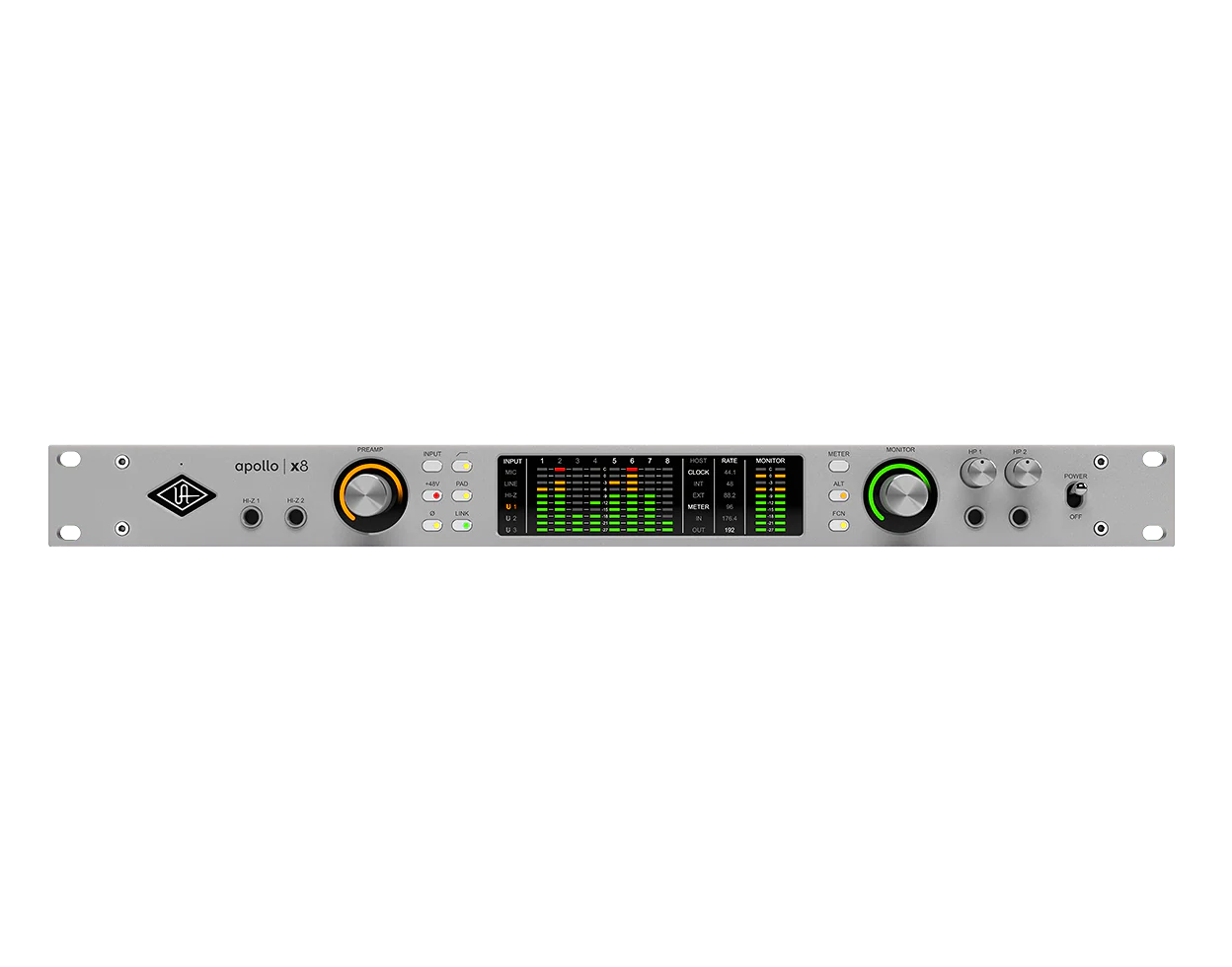
Universal Audio's Apollo X Gen 2 represents a significant visual overhaul for the company's flagship Thunderbolt audio interface line. The rackmount models now feature a distinctive pale grey finish that recalls the brushed metal aesthetic of the original Apollo range from over a decade ago, according to Sound On Sound's Sam Inglis. This departure from the previous black panels creates a more contemporary and professional appearance that fits well in modern studio environments. The desktop units maintain their compact form factor while incorporating the same premium build quality that has made the Apollo line a staple in professional recording facilities. The external power supplies remain a consistent feature across all Gen 2 models, with the exception of the Solo model which continues to support bus powering. However, the lack of included Thunderbolt cables remains a persistent gripe among reviewers, as noted by Twister6's analysis, with users having to purchase these cables separately, adding to the overall cost of ownership.
Audio Performance Metrics
Audio Science Review's measurements of the Apollo Twin X Quad revealed impressive dynamic range performance, with measurements showing excellent performance at full output levels and very good performance at 4 volts output. The DAC demonstrated strong performance with good attenuation but rather slow roll-off characteristics typical of the ESS chipsets used. The headphone output measurements were particularly noteworthy, showing adequate power delivery with distortion and noise levels that would be considered acceptable for professional use. However, the presence of the ESS IMD hump was noted as a significant concern, with ASR's Amir reporting that this issue persisted in the Twin X models, while the X16 Gen 1 models reportedly did not exhibit this same problem. This discrepancy suggests that while Universal Audio has upgraded their chipsets, the fundamental design limitations of the ESS components remain unresolved, potentially affecting the overall audio fidelity that audiophiles and critical listeners might expect.
UAD Plugin Processing Capabilities
The core strength of the Apollo X Gen 2 line lies in its integration of Universal Audio's UAD-2 Powered Plug-in platform, which allows for real-time processing with zero latency. Audio University's Kyle Mathias emphasized that this feature eliminates the delay issues common with traditional interfaces, where the signal must travel through the computer's processor before returning to headphones. The Apollo interfaces utilize built-in DSP cores to process plugins directly on the hardware, making input monitoring feel natural and responsive. The number of processing cores varies by model, with the Twin X available in Duo and Quad configurations, while rackmount models feature six processing cores in the Hexa configuration. This onboard processing capability enables users to run multiple UAD plugins simultaneously without impacting system performance, a feature that sets these interfaces apart from competitors like the Focusrite Clarett or PreSonus Quantum ranges that have largely moved to USB connectivity and lack this level of real-time processing power.
Sonarworks Integration and Monitoring Features
One of the most significant additions to the Apollo X Gen 2 line is the integration of Sonarworks SoundID correction technology, which provides both speaker and headphone calibration capabilities. According to Sound On Sound's review, this collaboration allows users to correct room acoustics and headphone response through the interface's built-in DSP, making it particularly valuable for critical listening environments where accurate monitoring is essential. The implementation of auto-gain functionality, which automatically adjusts input levels, and the improved bass management system further enhance the interface's usability. The Apollo X Gen 2 also introduces Plug-in Scenes, which simplifies live plugin management in Console mode, making it easier for users to switch between different processing configurations during recording sessions. These features combine to create a more streamlined workflow for professional users who require precise control over their monitoring environment and processing parameters.
Input/Output Flexibility and Expansion Options
The Apollo X Gen 2 offers extensive input/output flexibility with multiple connection options designed to accommodate various studio setups. The desktop X4 Gen 2 model features four Unison-enabled preamps with XLR/1/4" combo jacks, providing both microphone and line-level input capabilities. The interface includes two 1/4" Hi-Z instrument inputs on the front panel, allowing for direct guitar and bass recording with lower latency compared to DI boxes. The optical input supports ADAT expansion up to 8 channels or S/PDIF stereo transmission, enabling users to connect external preamps or expand their input capabilities. The outputs include two balanced 1/4" TRS monitor outputs with improved dynamic range, two balanced 1/4" TRS line outputs, and two 1/4" TRS headphone outputs with independent volume control. Additionally, the optical output supports ADAT or S/PDIF transmission, allowing for integration with other digital equipment in complex studio setups. The Thunderbolt 3 connectivity supports daisy-chaining, which is particularly valuable for users who need to connect multiple devices or expand their audio setup without requiring additional power sources.
Performance and Value Assessment
While the Apollo X Gen 2 offers exceptional audio quality and advanced processing capabilities, the premium pricing remains a significant consideration for potential buyers. The X4 Gen 2 model retails for approximately $1,999, with the X8 and X16 models commanding even higher prices, according to Twister6's analysis. The cost is justified by the integration of high-end components, including the UAD-2 platform and the Sonarworks correction system, but reviewers like Audio Science Review's Amir have noted that the interface's performance in certain areas, particularly the ESS IMD hump issue, may not fully justify the premium price for audiophiles seeking maximum transparency. However, for professional recording environments where the real-time processing capabilities, Unison preamps, and integrated UAD plugin hosting provide measurable workflow improvements, the investment may be worthwhile. The ability to bypass microphone preamps for line-level signals, a feature that was not available in previous generations, represents a notable improvement for users who prefer to use external preamps while still benefiting from the interface's onboard processing capabilities.
ESS chip's IMD hump returns as a regression
Despite its impressive feature set, the Apollo X Gen 2 line has several notable shortcomings that potential buyers should consider. The most persistent criticism involves the ESS chip implementation, which continues to exhibit the problematic IMD hump that affects audio quality, particularly in the DAC performance. Audio Science Review's measurements revealed that this issue persists across multiple models, with the X16 Gen 1 models reportedly not suffering from the same problem, suggesting a regression in design quality. Additionally, the lack of included Thunderbolt cables remains a significant oversight, as users must purchase these cables separately, adding to the overall cost. The premium pricing also represents a barrier for budget-conscious users, with the X4 Gen 2 costing nearly $2,000, while the X8 and X16 models exceed $3,000. The interface's reliance on Thunderbolt connectivity also limits its compatibility with older systems, and the absence of USB connectivity options means users cannot utilize these interfaces in environments where USB is the primary connection method.
Thunderbolt-only, so USB-based studios should look elsewhere
The Apollo X Gen 2 line is ideally suited for professional recording studios, home studios with serious recording requirements, and audio engineers who demand the highest level of audio quality and real-time processing capabilities. The integration of UAD plugins, Unison preamps, and Sonarworks correction makes it particularly valuable for users who work extensively with vintage analog equipment emulations and require precise monitoring in challenging acoustic environments. According to Sound On Sound's review, the interface's Thunderbolt connectivity and high bandwidth capabilities make it suitable for demanding applications where USB limitations would be problematic. The real-time processing capabilities and zero-latency monitoring make it ideal for vocal recording, guitar tracking, and situations where performers need immediate feedback. However, the interface may not be the best choice for beginners or casual users who do not require the advanced features, as the learning curve and premium cost may not be justified for simple recording tasks. Users who primarily work with USB-based systems or require extensive USB connectivity options should consider alternative interfaces, as the Apollo X Gen 2's exclusive Thunderbolt focus limits its versatility in certain environments.
Strengths
- +Industry-leading Unison preamps with analog emulation
- +Pristine AD/DA conversion with wide dynamic range
- +Real-time UAD plugin processing for zero-latency tracking
- +Sonarworks Apollo Monitor Correction integration
Watch-outs
- −Premium price point
- −No Thunderbolt cable included in the box
How it compares
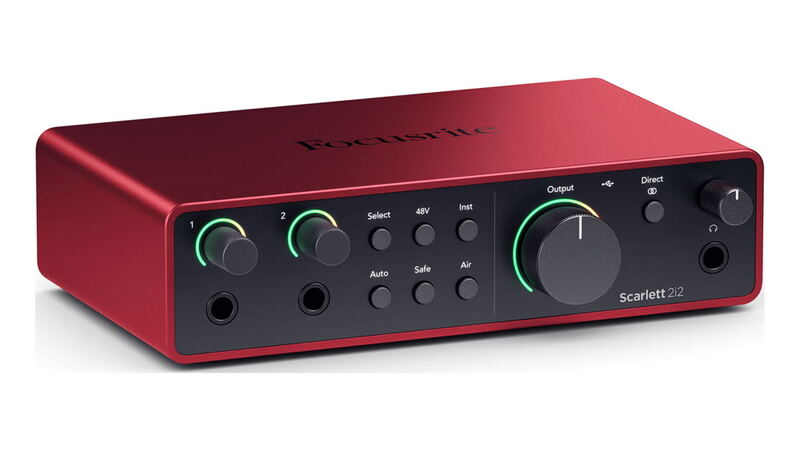
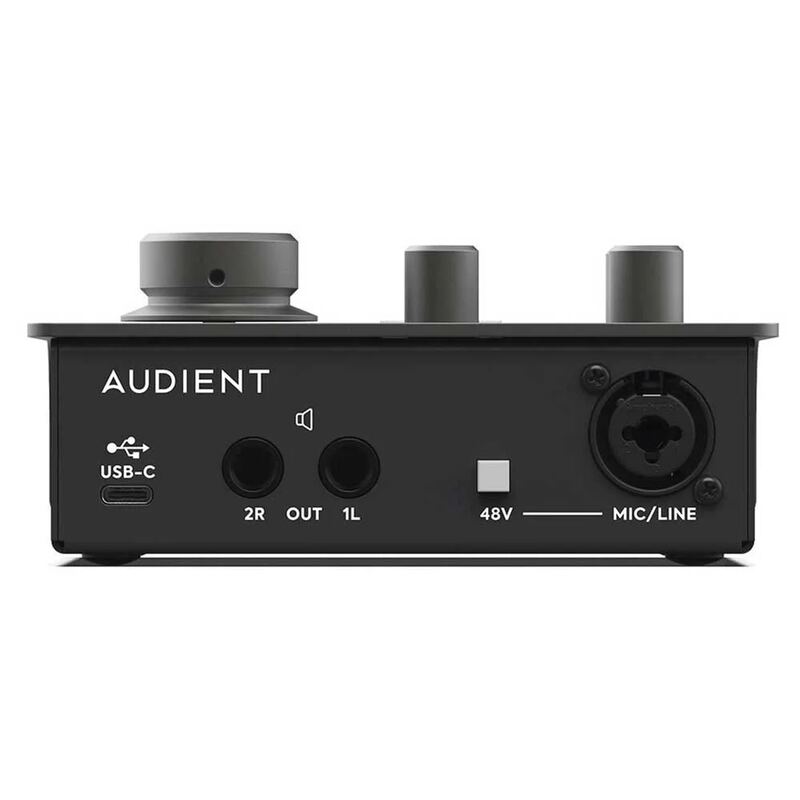
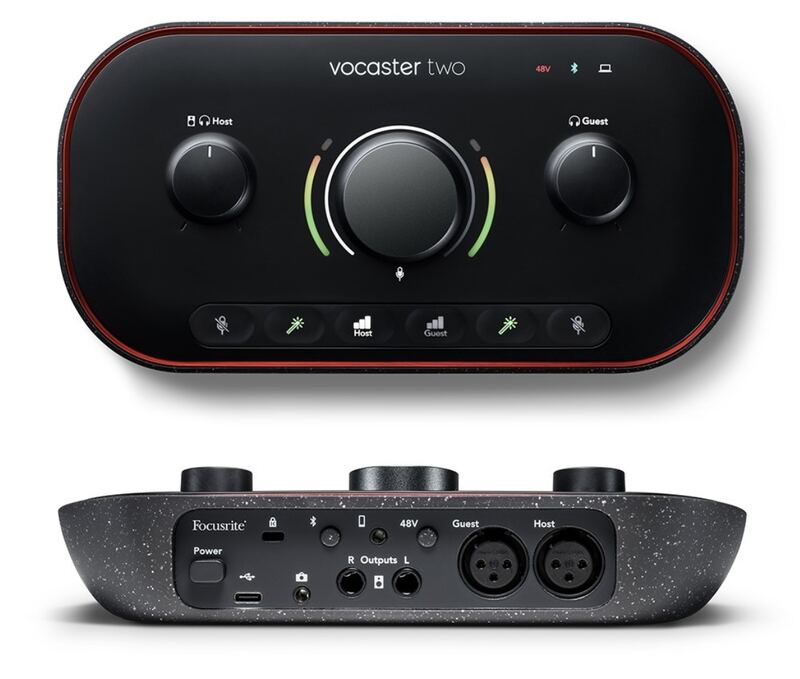
The Universal Audio Apollo X Gen 2 excels in industry-leading Unison preamps and real-time UAD processing, features not available in the Focusrite Scarlett 2i2 4th Gen or Audient iD4 MkII. While it's more expensive than the Behringer UMC22, it provides pristine AD/DA conversion and professional-grade performance that the budget option cannot match, and unlike the Focusrite Vocaster Two, it's built for professional studios rather than podcasting.
Rating sources
“In the latest generation of the Apollo X range, UA have added a host of new features including Sonarworks SoundID integration for both speakers and headphones.”
“Combining exceptional audio quality, real-time UAD plugin processing, and Unison-enabled preamps, the Apollo X4 Gen 2 is positioned as a versatile powerhouse for musicians, producers, and audio engineers alike.”
“I can safely say that it was well worth the investment for me. But is this interface right for everyone? If you're trying to decide if you should buy an Apollo Twin interface, you're going to find this post very helpful.”
Our 4.5 score is the average of these published ratings. Ratings marked * were derived from the reviewer’s written analysis or video transcript — the publisher didn’t print an explicit numeric score, so we inferred one from their own words. Click through to verify. More about methodology.