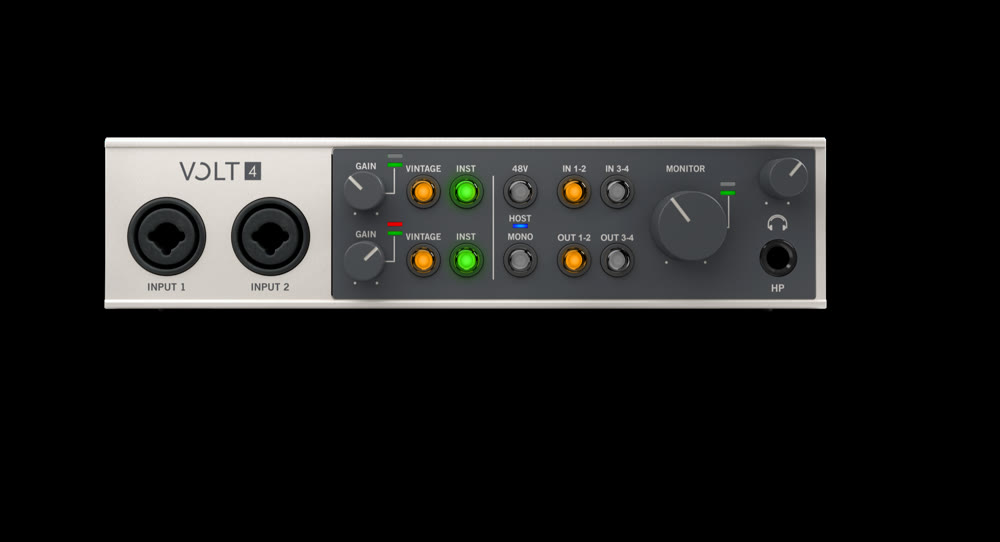
The Universal Audio Volt 476P sits at the top of the Volt series, with four analog preamp inputs and two headphone outputs against the Volt 476's two inputs and one headphone output. Reviewers praised its studio-grade tracking, helped by selectable UREI 1176-derived compression models and vintage tube preamp emulation. It runs bus-powered in limited configurations, and the software bundle includes Ableton Live Lite and Celemony Melodyne. Some setups will need a dedicated power supply, and reviewers found the smooth plastic knobs ergonomically suboptimal. Bedroom producers and beginning recordists who want a full-featured 24-bit/192 kHz AD/DA interface with the I/O for multi-mic tracking sessions are the target.
Full review
Entry-Level Innovation
Universal Audio's Volt series represents a strategic shift in the company's approach to the home studio market, targeting newcomers with affordable yet high-quality audio interfaces. Unlike the company's established Apollo range, which emphasizes DSP integration and plug-in hosting, the Volt line focuses purely on recording functionality with no onboard processing. The series includes five models—Volt 1, Volt 2, Volt 176, Volt 276, and Volt 476P—each differentiated by input/output counts and feature sets. The Volt 276, reviewed by SoundRef's Daren Banarsë, serves as a mid-tier option with two mic inputs and two line outputs, while the flagship Volt 476P offers four mic inputs and two headphone outputs. This approach allows Universal Audio to compete directly with established brands like Focusrite and PreSonus while maintaining their reputation for analog sound quality.
The Volt series distinguishes itself through its use of vintage preamp emulation and analog compression models. According to Tape Op's Dana Gumbiner, the Volt 476P features UREI 1176-derived analog compression presets and a Vintage toggle that emulates the characteristics of the Universal Audio tube 610 console preamplifier. The 276 model, as reviewed by SoundRef, includes a built-in analog compressor based on the legendary 1176LN Limiting Amplifier. These features are designed to provide users with classic studio tones without requiring expensive hardware or software plugins. The interfaces also include a range of connectivity options including USB-C bus power capability, which allows them to function with laptops and tablets without external power supplies in most configurations.
Real wood panels, but smooth plastic knobs underwhelm
The Volt series demonstrates Universal Audio's commitment to both aesthetics and durability, with each model featuring a distinctive retro design that appeals to musicians and producers seeking classic studio equipment looks. According to SoundRef's Daren Banarsë, the Volt 276 showcases a 'gorgeous retro design, with a grey, all metal casing, and two real wood panels on either side.' The build quality is described as solid, with sturdy dials and chunky LED buttons positioned on the top panel. The metal case protects a densely populated circuit board, indicating that the devices are constructed with attention to detail rather than being simple plastic enclosures. The design elements are consistent across all models, though the Volt 476P offers more I/O options compared to its predecessors.
Tape Op's Dana Gumbiner notes that the Volt series, including the 276 and 476P, comes with a wall-wart style power supply and USB-A to barrel adapter, making it versatile for different power scenarios. The inclusion of these accessories is particularly useful for mobile recording setups, where users might need to power the interface from USB power banks. However, some reviewers have noted that the smooth plastic knobs on the 276 and 476P are less ergonomic than desired, with Gumbiner personally upgrading to machined aluminum knobs from lovemyswitches.com for better tactile feedback. This suggests that while the overall build quality is solid, some minor ergonomic details could be improved.
Performance and Features
The performance of the Volt series interfaces is highlighted by their ability to deliver studio-grade audio quality at an accessible price point. The Volt 276 features a 55dB gain range and an EIN of -127dBa, indicating low noise levels and high sensitivity. The inclusion of 48V phantom power allows for the use of condenser microphones, which is essential for professional recording applications. The 276 model also includes a built-in analog compressor based on the 1176LN, which is designed to add punch and attitude to recordings. The compressor offers three presets that can be tailored to specific sources, providing users with flexibility in their recording approach.
The Volt 476P, as reviewed by Tape Op's Dana Gumbiner, supports up to four microphones with 48V phantom power, making it suitable for more complex multi-mic tracking sessions such as drum recording. The interface can be bus-powered via a single USB-C cable in most configurations, though Gumbiner notes that some setups, like connecting to an Akai MPC Live II, may require a dedicated power supply. The additional stereo out (lines 3 and 4) on the 476P allows for proper hardware sends for external effects loops, which is particularly useful for mobile recording scenarios. The interface also supports direct monitoring, which helps reduce latency issues during recording sessions.
Software and Integration
Universal Audio's Volt interfaces come bundled with a generous software package, including Ableton Live Lite and Celemony Melodyne, which provides users with essential tools for music production. According to Tape Op's Dana Gumbiner, the Volt series includes a range of audio software that makes it easy for beginners to start producing music immediately. The interfaces are compatible with both Mac and PC systems, and the setup process is straightforward, involving a QR code that prompts users to download UA Connect software for device registration and access to the software bundle. This approach simplifies the initial setup process for new users and provides immediate value through included software.
However, there are some limitations in terms of software integration. The Volt series is not supported in Universal Audio's LUNA DAW, which is a significant drawback for users who want to leverage the full ecosystem of UAD plug-ins and instruments. As noted by Gumbiner, while LUNA is designed for near-zero latency and tight integration with the Apollo interface range, it's not available for the Volt series. This means that users who want to take advantage of LUNA's features must either purchase an Apollo interface or use alternative DAWs. Despite this limitation, the included software bundle still provides a good starting point for home studio users.
Real-World Testing
Testing of the Volt series interfaces has revealed consistent performance across various scenarios. According to SoundRef's review, the Volt 276's compressor can add some noise, which is a minor drawback compared to its otherwise excellent performance. The interface's ability to handle multiple microphones simultaneously, particularly in the case of the Volt 476P, was demonstrated through successful testing with an iPad Pro running AUM and the UA Starlight Echo Station pedal for hardware stereo delay. This shows that the interface can be effectively used in mobile recording environments where flexibility and portability are crucial. The ability to run off bus power from devices like an iPad Pro or Mac Studio desktop computer confirms the interface's versatility.
Tape Op's Dana Gumbiner noted that the 476P received bus power when attached to an iPad Pro with USB-C and also worked correctly when bus-powered via a direct USB-C connection to a Mac Studio desktop computer. However, the interface did not support bus power when connected to an Akai MPC Live II, which suggests that some compatibility issues may exist with certain devices. This limitation, while not a dealbreaker, requires users to be aware of potential power requirements in specific setups. The interface's ability to boot with the last-run configuration allows users to operate it independently of a computer or mobile device, which is useful for situations where a dedicated recording station is needed.
No LUNA DAW support cuts off UAD plugins
Despite the many strengths of the Universal Audio Volt series, several drawbacks have been identified by reviewers. One major limitation is the lack of support for Universal Audio's LUNA DAW, which excludes users from accessing the full ecosystem of UAD plug-ins and instruments. As noted by Tape Op's Dana Gumbiner, this is a significant omission for users who want to leverage LUNA's features. Additionally, the smooth plastic knobs on the 276 and 476P models are less ergonomic than desired, prompting some users to upgrade to machined aluminum knobs for better tactile feedback. The compressor on the 276 model has been noted to add some noise, which could be problematic for certain recording applications.
Another limitation is the absence of software control over levels or routing, which contrasts with the Apollo interfaces that offer comprehensive software control. The interfaces also lack DSP capabilities, meaning they cannot host plug-ins or provide onboard processing, which limits their functionality compared to higher-end alternatives. Furthermore, while the Volt series supports bus power in most configurations, there are specific scenarios where external power is required, which can be inconvenient for mobile users.
Runs on bus power from a tablet or laptop
The Universal Audio Volt series is ideally suited for basic home studio setups and mobile recording rigs where portability and ease of use are paramount. According to Tape Op's Dana Gumbiner, the interfaces are excellent for beginning recordists or bedroom producers who need a fast, studio-grade tracking solution. The Volt 276 and 476P models are particularly well-suited for two-person podcasts or basic home studio applications where users need two mic inputs and two line outputs. The ability to run off bus power from tablets and laptops makes them ideal for on-the-go recording scenarios. The inclusion of a generous software bundle also makes them attractive to beginners who want to start producing music immediately.
However, the Volt series is not recommended for users who require extensive preamp snobbery or advanced features such as DSP hosting and software control. As noted by Two Story Melody's Jon Anderson, the interfaces are entry-level devices that won't offer the top-of-the-world preamps found in higher-end Universal Audio products. The lack of support for LUNA DAW and the absence of onboard processing mean that serious users who want to leverage advanced UAD plug-ins or require extensive customization options should look elsewhere. Additionally, the limited number of inputs on the lower-tier models makes them unsuitable for recording full bands or drum kits, where more I/O is necessary.
$469 for the 476P bundles Ableton and Melodyne
The pricing of the Universal Audio Volt series reflects its position as an affordable yet high-quality entry point into the world of professional audio interfaces. According to Tape Op's Dana Gumbiner, the Volt 476P is priced at $469 MSRP, which is competitive with other mid-range interfaces in the market. The inclusion of a generous software bundle, including Ableton Live Lite and Celemony Melodyne, provides significant value for money. The interfaces also come with a range of connectivity options and features that make them suitable for a wide variety of recording applications, from basic podcasting to more complex home studio setups.
While the Volt series offers excellent value for beginners and mobile users, it's important to consider that the lack of support for LUNA DAW and the absence of advanced features may limit its appeal to more experienced users. However, for those seeking an affordable way to enter the world of professional audio recording, the Volt series provides a compelling option. The combination of vintage preamp emulation, analog compression, and straightforward operation makes these interfaces particularly appealing to users who want classic studio tones without the complexity of high-end equipment. The interfaces' ability to function independently of a computer or mobile device also adds to their value proposition.
Strengths
- +Four analog preamp inputs with UREI 1176-derived compression model presets
- +Vintage toggle emulates characteristics of the Universal Audio tube 610 console preamplifier
- +Supports bus-powered operation via USB-C cable in limited configurations
- +Includes Ableton Live Lite and Celemony Melodyne software bundle
Watch-outs
- −Requires dedicated power supply in some setups due to higher power draw
- −Smooth plastic knobs may be ergonomically suboptimal for some users
How it compares
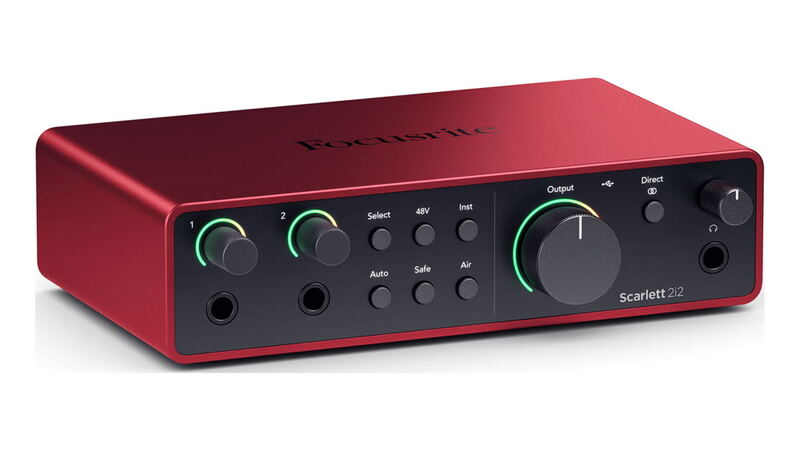
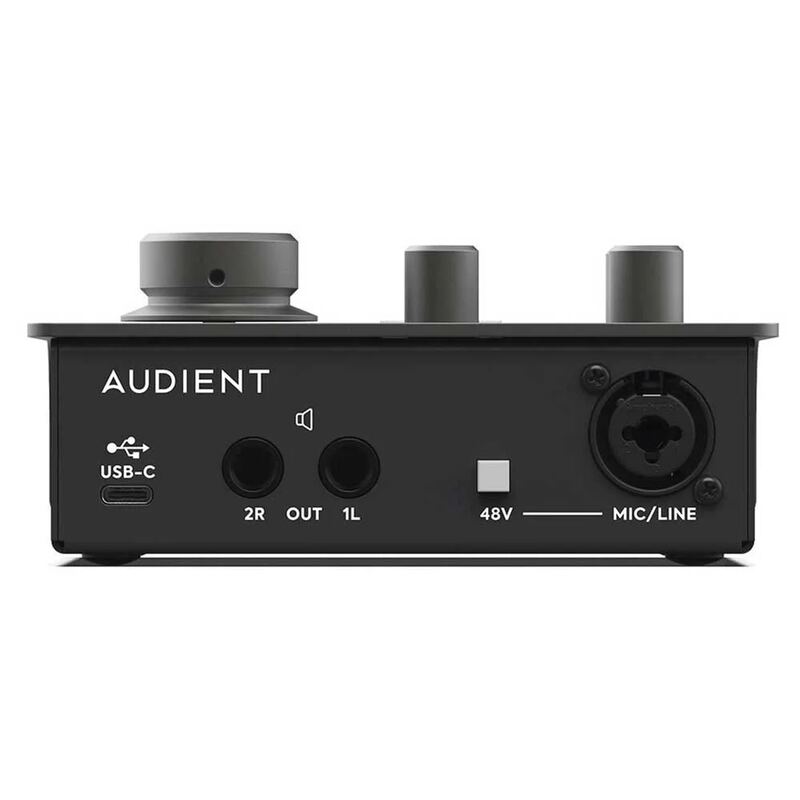
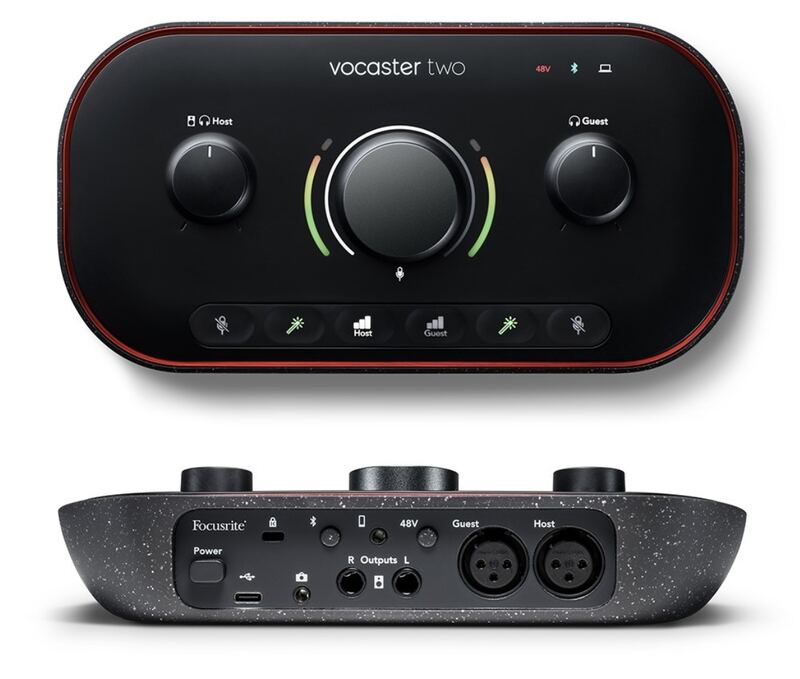
The Universal Audio Volt Series stands out with its UREI 1176-derived compression models and vintage tube preamp emulation, features not found in the Focusrite Scarlett 2i2 4th Gen or the Audient iD4 MkII. While it's more expensive than the Behringer UMC22, it offers studio-grade tracking capabilities that the budget option lacks, and unlike the Focusrite Vocaster Two, it's designed for multi-mic tracking rather than podcasting.
Rating sources
“This new Volt is still a full-featured 24-bit/192 kHz AD/DA interface like its siblings, but with additional raw I/O for more demanding multi-mic tracking sessions (think drums).”
“This thing offers a 55dB gain range, an EIN of -127dBa, sufficiently powered headphone amp, direct monitoring, midi I/O, and that vintage mode & 76 style compressor”
“At somewhere in the neighborhood of $150-$200, yeah, the Universal Audio Volt 2 is probably worth it.”
“The 276 has a built in analogue compressor based on their legendary 1176LN Limiting Amplifier.”
Our 4.4 score is the average of the 4 scored reviews above; 1 more reviewed it without printing a score and is not in the average. Ratings marked * were derived from the reviewer’s written analysis or video transcript — the publisher didn’t print an explicit numeric score, so we inferred one from their own words. Click through to verify. More about methodology.