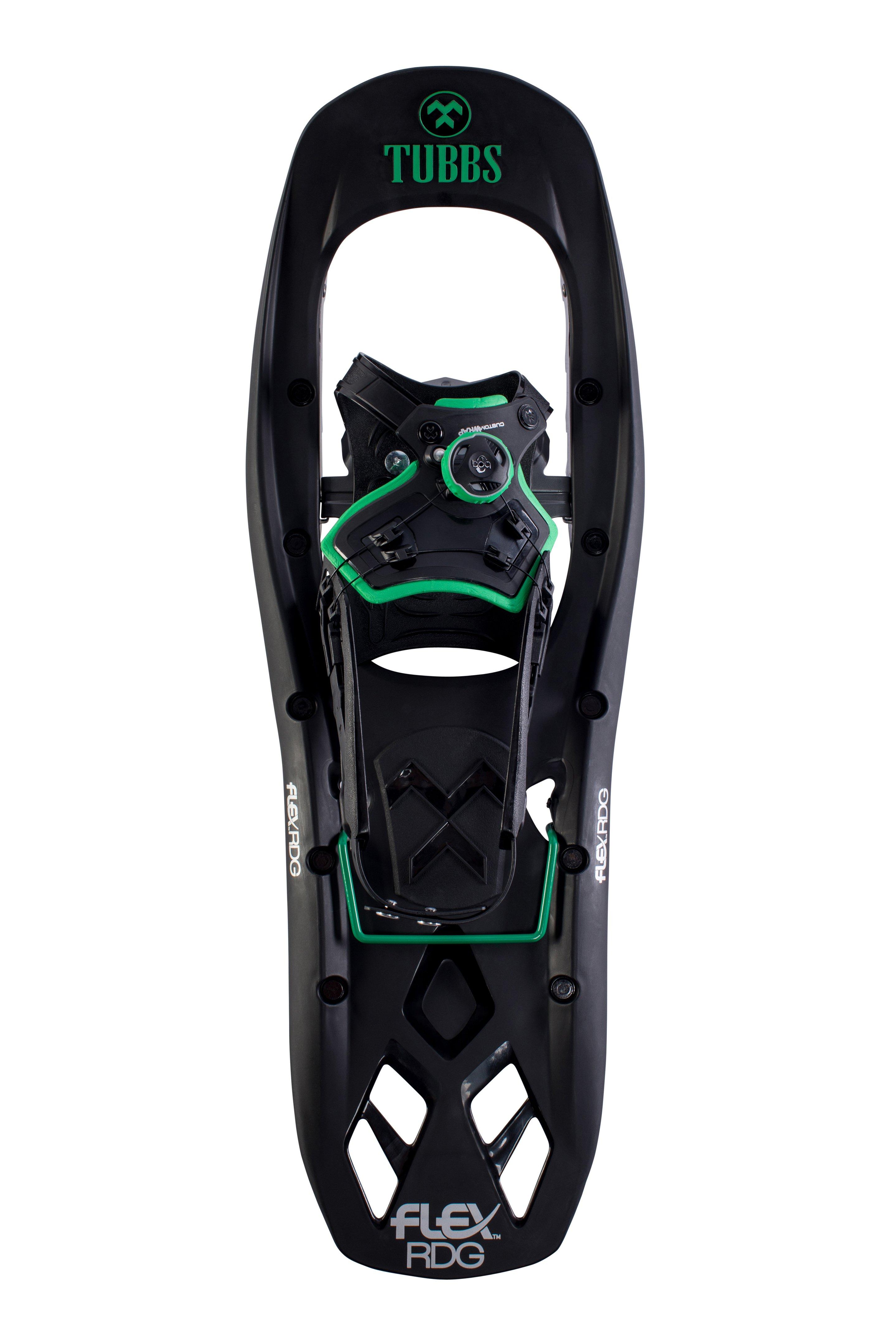
The Tubbs Flex RDG snowshoe features a Boa binding system that allows for quick micro-adjustments and uniform cinching, though OutdoorGearLab found pulling the dial difficult with bulky gloves. Its composite Torsion Deck provides excellent walkability on uneven terrain by articulating to preserve a natural gait, while aggressive carbon steel crampons and curved rails handle steep icy slopes effectively. However, OutdoorGearLab noted that exposed Boa cables are a potential weak point in remote backcountry conditions, limiting durability against abrasion. Limited flotation due to the small surface area makes it unsuitable for users over 150 lbs fully dressed and loaded or deep snow, so this model fits smaller-framed hikers on packed trails rather than those seeking heavy-duty backcountry performance.
Full review
Boa binding micro-adjustments and dial operation
The Tubbs Flex RDG utilizes a Boa wire lace closure system that cinches around the entire foot uniformly, providing a secure fit with minimal effort. OutdoorGearLab found that this mechanism allows for quick micro-adjustments on the fly by simply turning a dial, which testers appreciated for its comfort and ease of use compared to traditional strap systems. The design opens wide enough to accommodate larger boots when the dial is pulled up in the open position, stretching the binding system significantly before tightening down securely.
Despite the convenience, OutdoorGearLab noted that pulling the Boa dial open with bulky gloves or cold fingers can be moderately difficult due to the tight click-in security of the mechanism. It added that while the system is bulkier than simple compressible straps, making it slightly harder to pack flat, the trade-off for a secure and comfortable fit was widely accepted by testers who found the binding incredibly fast to use once initial setup nuances were understood.
Torsion Deck flexibility enhances natural stride
The composite Torsion Deck technology allows the snowshoe body to articulate throughout its length, significantly enhancing traction and preserving a natural gait. Cleverhiker reported that this flexible decking provides some of the best walkability among all tested snowshoes by bending with each step, which eliminates the cumulative stress on calves and legs often felt in rigid models. This articulation allows users to navigate rolling hills and uneven terrain with greater comfort and less fatigue.
Cleverhiker lists the 24-inch pair at 3 lb. 14 oz. and counts low weight among its pros.
Aggressive crampon setup for steep icy terrain
Traction on the Flex RDG is driven by carbon steel toe crampons, curved side rails, and molded brake bars that combine to handle steep and icy conditions effectively. OutdoorGearLab rated traction highly, noting that these components make the snowshoe particularly impressive for navigating packed trails and sheer ice. The curved design of the side rails provides a better grip on vertical ice surfaces compared to straight rail configurations found on some competing models.
The inclusion of a 16-degree heel lift bar further enhances uphill performance by reducing stress on the Achilles tendon and calves during steep ascents. Cleverhiker highlighted that this feature, combined with the flexible deck, allows for confident climbing on high-angle hills. The aggressive crampon setup ensures that users maintain stability and forward momentum even when traversing slippery or uneven icy surfaces.
Limited flotation restricts deep snow performance
The small surface area of the Flex RDG results in limited flotation, making it unsuitable for users weighing over 150 pounds fully dressed and loaded. OutdoorGearLab found that while smaller testers experienced good performance in shallow powder, larger individuals would sink significantly in deep snow conditions. OutdoorGearLab noted there are no options for add-on flotation tails, which caps its utility for heavier hikers or those carrying substantial backpacking gear.
Snowshoemag confirmed that if a user and their gear weigh more than 200 pounds, the Flex RDG lacks the necessary length to provide adequate support. This limitation makes the shoe best suited for packed trails and light powder rather than backcountry exploration in deep accumulations.
Narrow gait accommodation suits smaller frames
The design of the Flex RDG specifically accommodates a narrower gait, making it an excellent choice for users with smaller feet or those who prefer a less wide stance while walking. OutdoorGearLab stated that every tester in their crew appreciated this ergonomic feature, which allowed them to walk almost completely normally without the awkward lateral stepping often required by wider snowshoes. This natural stride is particularly beneficial on packed trails where agility and speed are desired.
The compact frame size contributes to the overall ease of use and maneuverability, allowing for quick turns and efficient movement through wooded or trail-heavy environments. By reducing the width of the step, the shoe minimizes the energy expenditure associated with wide-stance walking, making it a comfortable option for extended day hikes where stride efficiency is prioritized over maximum flotation.
Exposed Boa cables pose backcountry risks
The thin exposed cables of the Boa binding system are considered a potential weak point that may rule out taking these snowshoes into remote backcountry terrain. OutdoorGearLab expressed reservations about the long-term durability of the bindings, noting that the exposed wires could be susceptible to damage from rocks, branches, or abrasion in rugged environments. This vulnerability suggests that while the shoe is excellent for conservative trips and maintained trails, it may not withstand the rigors of off-trail exploration.
OutdoorGearLab added that the entire binding system depends on those thin wire cables, and that if one were to snap there is no way to repair the shoe on the fly.
Strengths
- +Boa binding system allows for quick micro-adjustments and cinches around the foot uniformly.
- +Flexible decking with Torsion Deck technology provides excellent walkability on uneven terrain.
- +Accommodates a narrower gait comfortably, making it ideal for smaller-framed users.
Watch-outs
- −Boa dial is difficult to operate with bulky gloves, and the system adds bulk when packing.
How it compares
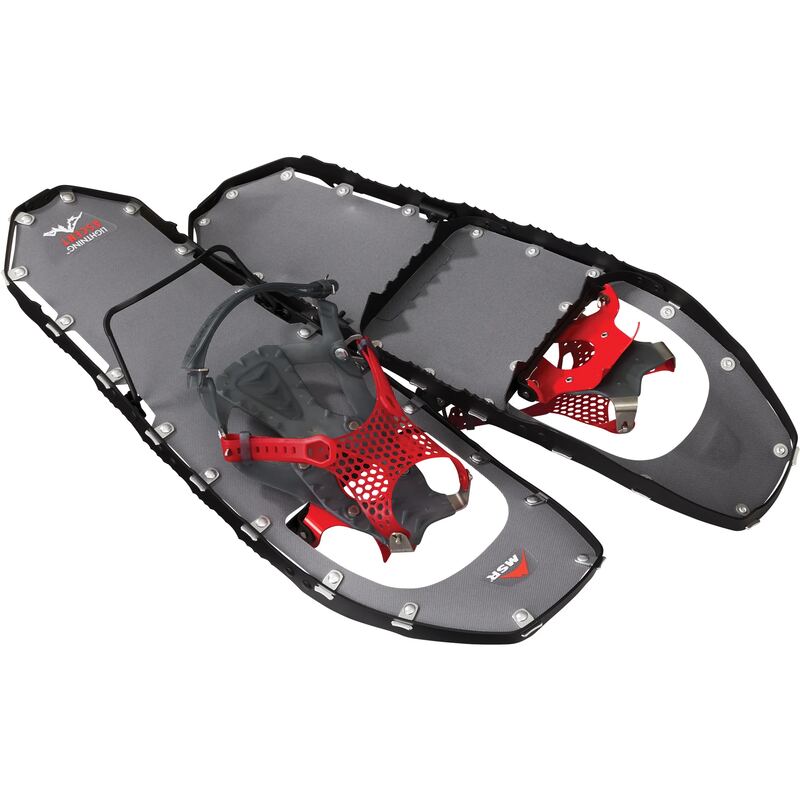
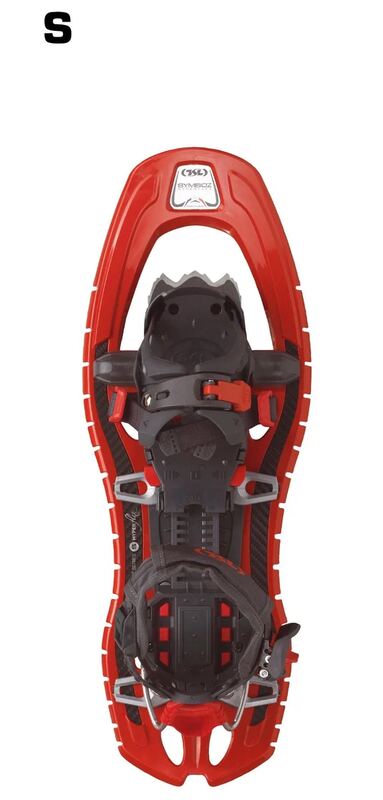
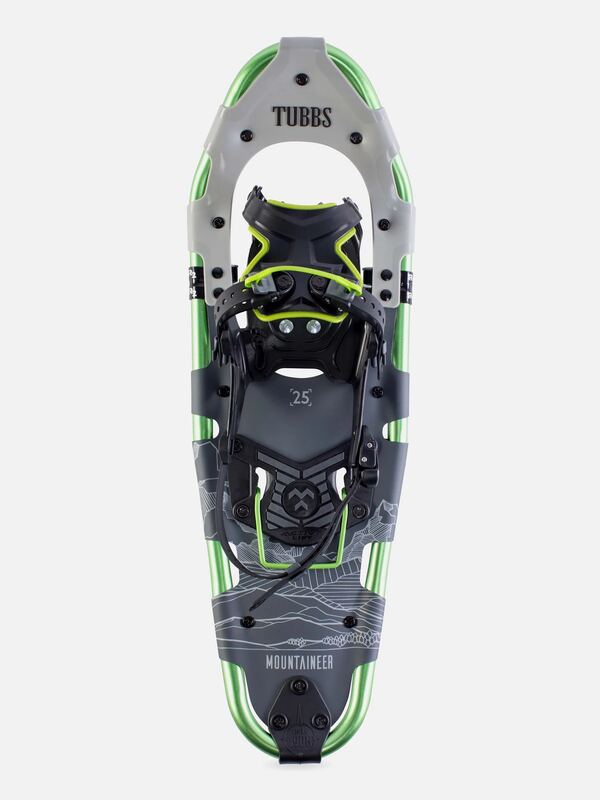
The Tubbs Flex RDG tightens with a single Boa dial, where the MSR Lightning Ascent uses the Paragon mesh binding and the TSL Symbioz Hyperflex Elite uses memory ratchet straps. Like the TSL, it has a flexible deck and limited flotation, so the wide-framed Tubbs Mountaineer is the better fit for deep powder.
Rating sources
Counts as 4.40/5 in our score — this publisher's 60 scores on the site average 4.49, so its scores are adjusted down to compare fairly with other publishers.
“And stellar they are, indeed.”
Our 4.4 score is the average of the 1 scored review above, each adjusted for how strictly its publisher scores; 2 more reviewed it without printing a score and are not in the average. More about methodology.