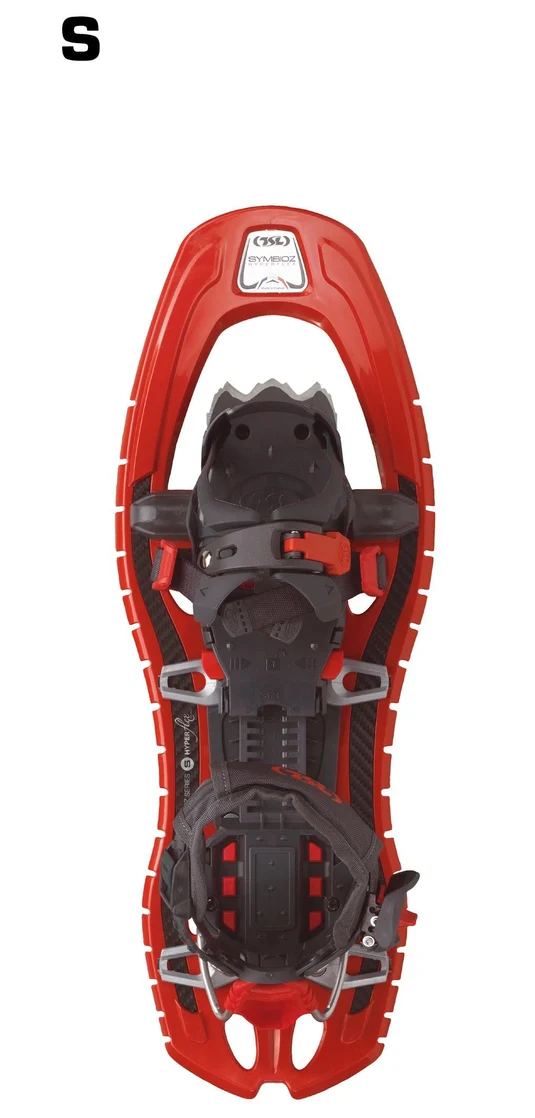
The TSL Symbioz Hyperflex Elite features a carbon-reinforced composite deck that delivers a spring-loaded stride, reducing fatigue on packed trails as OutdoorGearLab found. Its aggressive traction system includes razor-sharp toe crampons and eight bi-directional stainless steel spikes for secure grip on ice, while zoned memory bindings allow quick, tool-free transitions. However, the compact deck limits flotation in deep powder compared to larger traditional snowshoes. The bulky binding mechanism also prevents stacking the pair for easy lash-down to a backpack. This model fits hikers prioritizing nimble movement on firm trails and steep ascents, but those breaking trail in unconsolidated snow should look elsewhere.
Full review
Hyperflex deck creates spring-loaded stride
The TSL Symbioz Hyperflex Elite utilizes a composite TPU frame reinforced with carbon fiber strips to create a uniquely responsive walking experience. Thewiseadventurer found that this construction provides a progressive degree of bounce, making the snowshoe feel spring-loaded and encouraging users to push forward with every step. The deformation of the chassis is described as progressive, responsive, precise, and uniform in both flexion and torsion, which helps reduce vibrations and improve muscle relaxation during long hikes.
OutdoorGearLab noted that this flexibility creates shock absorption through the bending of the entire snowshoe deck rather than relying on traditional cushioning. This design choice results in excellent stride ergonomics for hikers who spend most of their time on packed or groomed trails. The carbon reinforcements store energy during flexion and release it at the end of the stride, effectively increasing walking power while reducing overall effort compared to rigid snowshoes.
Sectionhiker highlighted that this hyper-flexible design allows the snowshoe to adapt to ground features, keeping crampons in the snow while reducing slippage. The natural foot roll provided by the frame means users do not feel bowlegged or duck-footed, which is a common complaint with other snowshoes. This ergonomic advantage results in significantly less fatigue and greater comfort over extended periods of use on firm surfaces.
Aggressive crampons dominate icy terrain
Traction is a primary strength of the Symbioz Hyperflex Elite, anchored by a razor-sharp toe crampon and eight stainless steel bi-directional spikes. Thewiseadventurer described these spikes as massive and medieval-looking, noting that they dig in securely to provide rock-solid footing on slick surfaces. The flexibility of the deck allows the individual spikes to conform to uneven terrain, ensuring each one finds its mark even on sketchy ice or hard-packed snow.
OutdoorGearLab awarded a traction score of 9.0 out of 10, placing it among the best performers in their test group. They emphasized that the steel crampons and teeth provide exceptional grip when flotation is not the main concern. The vertical blades underfoot ensure perfect retention whether ascending a slope or traversing sideways, preventing unexpected sliding on steep inclines.
Outdoorjournal added that the interchangeable mountaineering-style stainless steel crampons down the tail further enhance stability on steep terrain. When faced with icy conditions in the Colorado Rockies, the reviewer found that the aggressive underfoot crampon made traction virtually non-issue. The combination of lateral hold and forward grip allows hikers to maintain confidence and speed even when trail surfaces are frozen.
Compact footprint limits deep snow flotation
The compact design that enables such nimble movement comes with a significant trade-off in flotation. OutdoorGearLab measured the surface area at 162 square inches for the medium size, making it the smallest snowshoe tested in their review. This small footprint means weight is not spread evenly over a large area, causing the shoe to sink deeper into soft powder compared to larger models designed specifically for backcountry exploration.
Thewiseadventurer confirmed that long flat sections of soft powder are the least favorite terrain for these snowshoes. Soft and deep snow required more effort in the Symbioz than in most other snowshoes in its test. The hourglass shape and short length help maintain a natural stride but do little to prevent sinking in unconsolidated snow.
Sectionhiker warned that the shorter length results in less flotation than much larger snowshoes, advising users to consider this limitation if they plan to break trail in deep powder. While the holes in the frame help prevent snow from piling up on top and slowing progress, the fundamental lack of surface area means these shoes are optimized for trails rather than wild, deep environments.
Memory bindings enable rapid transitions
The binding system is a standout feature that prioritizes speed and precision. Outdoorjournal described the bindings as intuitive once mastered, featuring an adjustable footbed, memory lock system at the front, lateral adjust system, and ankle pre-adjustment. These features allow users to set their boot size and width permanently, enabling them to slip into the snowshoes quickly without re-adjusting every time they go out.
Sectionhiker noted that the binding remembers settings for easy on-and-off transitions, which is critical in winter conditions to stay warm. The ratchet mechanism closes over the front of the ankle, while the toe box locks securely with a plastic hinge. This design eliminates the need to strap bindings super tight, reducing rubbing and hotspots inside boots while maintaining good blood flow to keep feet warmer.
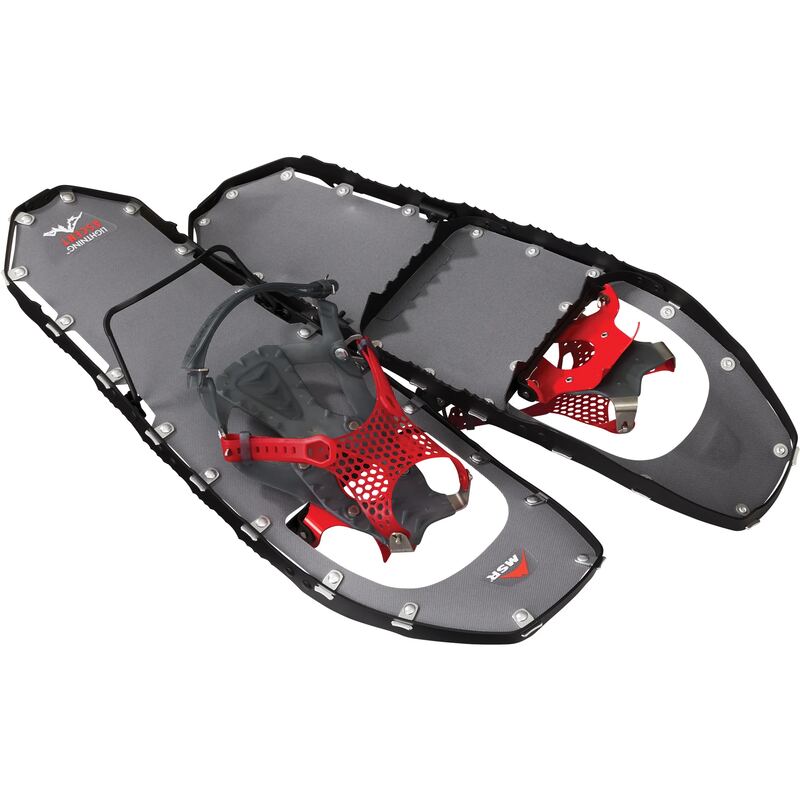
OutdoorGearLab gave the binding system a score of 7.0 out of 10, praising its comfort and precision against the 9.0 it gives the MSR Lightning Ascent. The combination of rigid plastic, nylon straps, cam locks, and ratchet style straps provides a secure connection to the deck. However, the bulk of this complex binding mechanism prevents stacking the snowshoes for easy lash-down to the back of a backpack.
Easy Ascent wedge simplifies steep climbs
Climbing steep and icy slopes is facilitated by an integrated heel lift known as the Easy Ascent wedge. Tsloutdoor explains that this wedge is positioned under the heel to raise it, making inclined hiking feel like walking on level ground. This reduces calf fatigue significantly, allowing hikers to maintain their pace for longer durations without excessive strain.
Sectionhiker highlighted that engaging and disengaging the lift is trivial using the handle or basket of a trekking pole. Unlike other systems that require flipping a lever manually, this push-down mechanism is equally easy to operate with gloved hands. The weight is distributed across the entire heel of the binding during ascent, preventing any pinching sensation under the foot.
Outdoorjournal found that the pole-activated lift made ascents stable and relaxed even in hard-packed, icy conditions on steep terrain. This feature transforms the snowshoe from a simple trail walker into a capable mountaineering tool for technical mountain environments. The seamless integration of the lift with the binding system ensures that users can transition smoothly between flat walking and steep climbing.
Bulky bindings complicate pack transport
The complex memory binding system, while excellent for on-foot performance, creates a logistical issue when carrying the snowshoes. Sectionhiker identified this as the primary drawback of the Symbioz Elite: the bulk of the binding prevents stacking the pair together and lashing them to the back of a backpack using standard ski-strap methods.
This design constraint means hikers must utilize backpacks with sufficiently long side compression straps to lash the snowshoes to the sides. For those accustomed to carrying gear on their backs, this can be an annoying adjustment, especially if the pack lacks external attachment points or robust side strapping options. The inability to stack them also makes them slightly more cumbersome in tight storage spaces.
Despite this inconvenience, reviewers noted that the included sleek carrying bag helps mitigate some of the handling challenges when not wearing the snowshoes. Outdoorjournal praised the nice touch of the carrying bag, which solves the problem of wrangling winter gear. However, for multi-day trips where pack space is at a premium, the side-lashing requirement remains a notable compromise.
Strengths
- +Hyperflex carbon-reinforced deck provides a spring-loaded, natural stride that reduces fatigue on packed trails.
- +Zoned memory bindings allow users to preset boot size and width settings for quick, tool-free transitions.
- +Integrated Easy Ascent heel lift can be engaged or disengaged instantly using a trekking pole.
Watch-outs
- −Compact surface area limits flotation in deep powder compared to larger traditional snowshoes.
- −Bulky binding mechanism prevents stacking the pair for easy lash-down to the back of a backpack.
How it compares
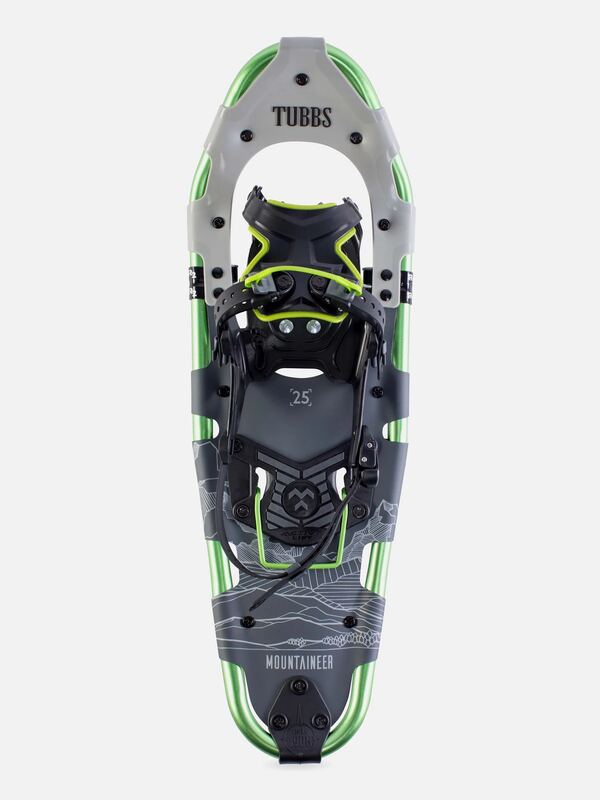
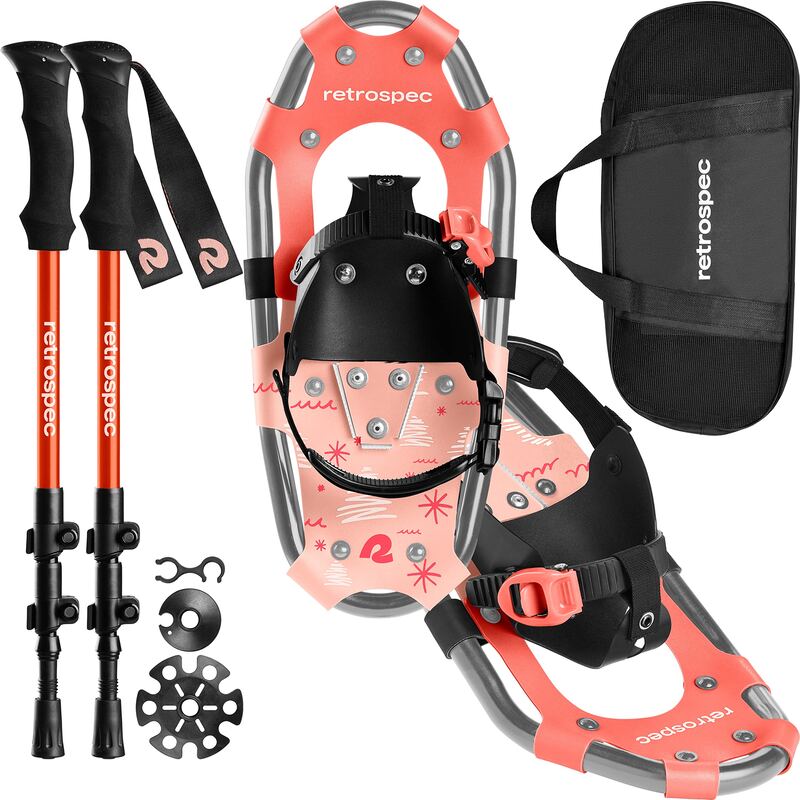
The TSL Symbioz Hyperflex Elite delivers a spring-loaded stride on packed trails, where the Tubbs Mountaineer prioritizes deep powder flotation with its wide rigid frame. Its memory bindings keep boot settings between outings, while the Retrospec Drifter Snowshoes use double ratchet bindings that are stiff when new.
Rating sources
Counts as 3.46/5 in our score — this publisher's 149 scores on the site average 3.69, so its scores are adjusted up to compare fairly with other publishers.
Counts as 4.64/5 in our score — this publisher's 3 scores on the site average 4.60, so its scores are adjusted down to compare fairly with other publishers.
“It doesn’t matter if you’re snowshoeing along a packed trail or breaking trail in deep powder, it feels like you’re walking in a normal pair of shoes when you wear them”
“Pound for pound, the TSL Symbioz Elite is arguably the most interesting snowshoeing experience we’ve had.”
Our 4.1 score is the average of the 2 scored reviews above, each adjusted for how strictly its publisher scores; 5 more reviewed it without printing a score and are not in the average. More about methodology.