Verdict
The Best 5Aggregated review·30 sources·updated October 11, 2026

Best Snowshoes

Top 5 snowshoes reviewed and ranked.

This guide aggregates 30 published reviews across 5 products; the thinnest-sourced pick rests on 3. How we rank.

Verdict is reader-supported. As an Amazon Associate we earn from qualifying purchases. Some links on this page are affiliate links — if you click through and buy, we may earn a small commission at no extra cost to you. Our ratings are sourced from independent publications, not sponsors.
Quick answer

MSR Lightning Ascent is our top pick for snowshoes — an averaged 4.4/5 across 2 published reviews at about $391.73. Runner-up: TSL Symbioz Hyperflex Elite (~$300).

At a glance5 products ▾
2 sources
$391.73Best for: technical backcountry hikers who need reliable ice traction and comfort on steep ascents
$391.73 · Check Price on Amazon
2 sources
$300Best for: hikers prioritizing nimble movement on firm trails and steep ascents over deep-snow flotation
$300 · Buy at tsloutdoor.com
1 source
$199.95Best for: smaller-framed hikers who need excellent walkability on packed or uneven trails
$199.95 · Buy at tubbssnowshoes.com
3 sources
$279.95Best for: off-trail hikers prioritizing deep-snow flotation over speed or nimble trail performance
$279.95 · Buy at tubbssnowshoes.com
1 source
$49.99Best for: beginners who need simple, intuitive features for casual winter hiking on established trails
$49.99 · Check Price on Amazon

The full ranking

How we rank →
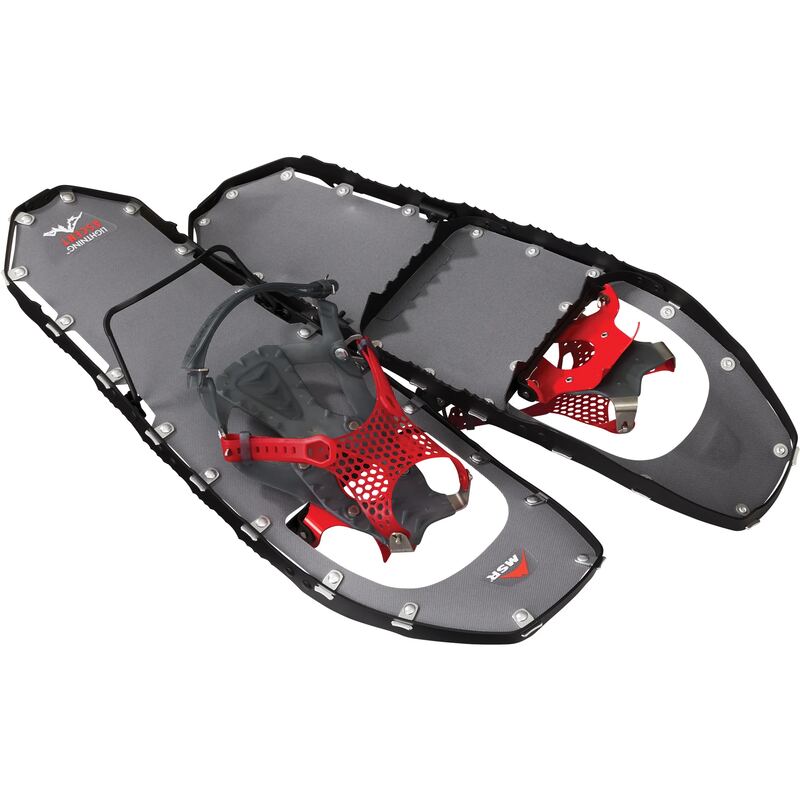
MSR Lightning Ascent
#1 · Top Pick
Best for: technical backcountry hikers who need reliable ice traction and comfort on steep ascents
MSR Lightning Ascent
2 sources$391.73as of Oct 11
▾Why it's ranked here

The MSR Lightning Ascent delivers class-leading traction on icy slopes through its serrated aluminum frame and aggressive steel crampons that prevent snowballing, a finding credited to Switchbacktravel. The Paragon binding system distributes pressure evenly across the foot via an elastic mesh net, ensuring comfort during long hikes even in freezing conditions. Ergo Televator heel lift bars reduce calf fatigue by keeping the foot horizontal on steep ascents, though Alpinist notes some users may find the elevation uncomfortable. At $390 and with optional flotation tails adding cost, this 4 lb 5 oz pair is overkill for casual flat-trail outings and better suited for technical backcountry travel.

Strengths
  • — Class-leading traction from a full perimeter serrated aluminum frame and aggressive steel crampons that prevent snowballing on icy terrain (Switchbacktravel)
  • — Paragon binding system features an elastic mesh net that distributes pressure evenly across the foot for high comfort and quick adjustment with gloves (Thetrek)
Watch-outs
  • — High price point of $390 and optional flotation tails make it overkill for casual flat-trail outings (Switchbacktravel)
  • — Feels clunky on packed trails (Cleverhiker)
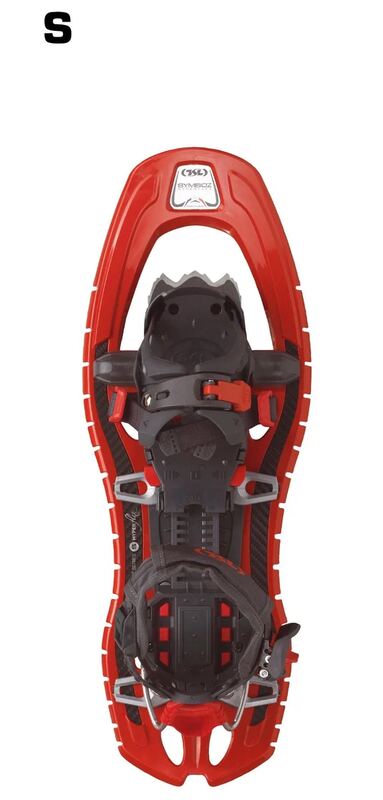
TSL Symbioz Hyperflex Elite
#2
Best for: hikers prioritizing nimble movement on firm trails and steep ascents over deep-snow flotation
TSL Symbioz Hyperflex Elite
2 sources$300as of Oct 11
▾Why it's ranked here

The TSL Symbioz Hyperflex Elite features a carbon-reinforced composite deck that delivers a spring-loaded stride, reducing fatigue on packed trails as OutdoorGearLab found. Its aggressive traction system includes razor-sharp toe crampons and eight bi-directional stainless steel spikes for secure grip on ice, while zoned memory bindings allow quick, tool-free transitions. However, the compact deck limits flotation in deep powder compared to larger traditional snowshoes. The bulky binding mechanism also prevents stacking the pair for easy lash-down to a backpack. This model fits hikers prioritizing nimble movement on firm trails and steep ascents, but those breaking trail in unconsolidated snow should look elsewhere.

Strengths
  • — Hyperflex carbon-reinforced deck provides a spring-loaded, natural stride that reduces fatigue on packed trails.
  • — Zoned memory bindings allow users to preset boot size and width settings for quick, tool-free transitions.
Watch-outs
  • — Compact surface area limits flotation in deep powder compared to larger traditional snowshoes.
  • — Bulky binding mechanism prevents stacking the pair for easy lash-down to the back of a backpack.
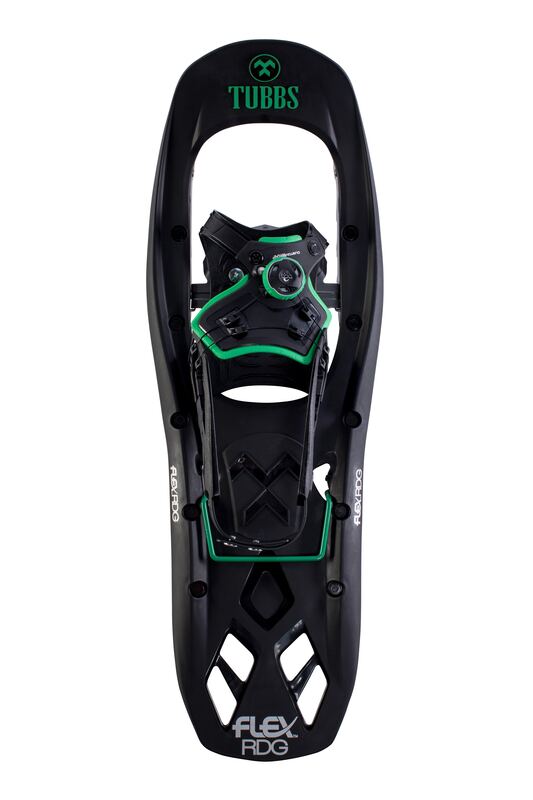
Tubbs Flex RDG
#3
Best for: smaller-framed hikers who need excellent walkability on packed or uneven trails
Tubbs Flex RDG
1 sourceOne review so far, so ranked one place lower$199.95as of Oct 11
▾Why it's ranked here

The Tubbs Flex RDG snowshoe features a Boa binding system that allows for quick micro-adjustments and uniform cinching, though OutdoorGearLab found pulling the dial difficult with bulky gloves. Its composite Torsion Deck provides excellent walkability on uneven terrain by articulating to preserve a natural gait, while aggressive carbon steel crampons and curved rails handle steep icy slopes effectively. However, OutdoorGearLab noted that exposed Boa cables are a potential weak point in remote backcountry conditions, limiting durability against abrasion. Limited flotation due to the small surface area makes it unsuitable for users over 150 lbs fully dressed and loaded or deep snow, so this model fits smaller-framed hikers on packed trails rather than those seeking heavy-duty backcountry performance.

Strengths
  • — Boa binding system allows for quick micro-adjustments and cinches around the foot uniformly.
  • — Flexible decking with Torsion Deck technology provides excellent walkability on uneven terrain.
Watch-outs
  • — Boa dial is difficult to operate with bulky gloves, and the system adds bulk when packing.
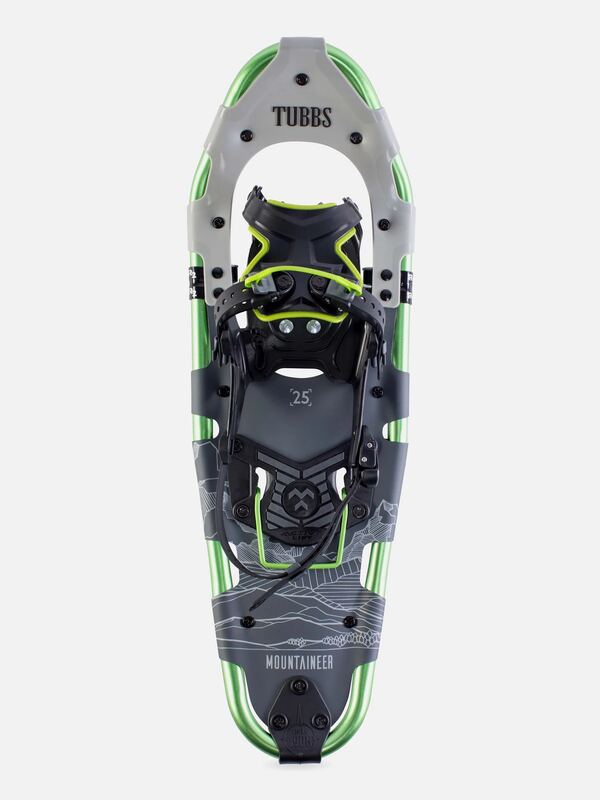
Tubbs Mountaineer
#4
Best for: off-trail hikers prioritizing deep-snow flotation over speed or nimble trail performance
Tubbs Mountaineer
3 sources$279.95as of Oct 11
▾Why it's ranked here

The Tubbs Mountaineer delivers excellent flotation in deep powder and unconsolidated snow thanks to its wide rigid aluminum frame, though it is heavier than minimalist trail-focused options. Gearjunkie found that this buoyancy allows hikers to traverse soft terrain without sinking deeply, while OutdoorGearLab measured the 25-inch size as providing sufficient surface area for good performance in spring conditions. Aggressive Anaconda toe crampons and Python heel crampons provide strong uphill traction on steep slopes, yet Catskillmountaineer found significant frustration with the rear strap adjustment mechanism during setup. The product fits off-trail hikers prioritizing flotation over speed.

Strengths
  • — Excellent flotation in deep powder and unconsolidated snow due to wide rigid frame
  • — Aggressive Anaconda toe crampons and Python heel crampons provide strong uphill traction
Watch-outs
  • — Bindings can be difficult to adjust the rear strap properly for some users
  • — Binding does not tighten at the toe of the boot, leaving the pressure across the bridge of the foot (Cleverhiker)
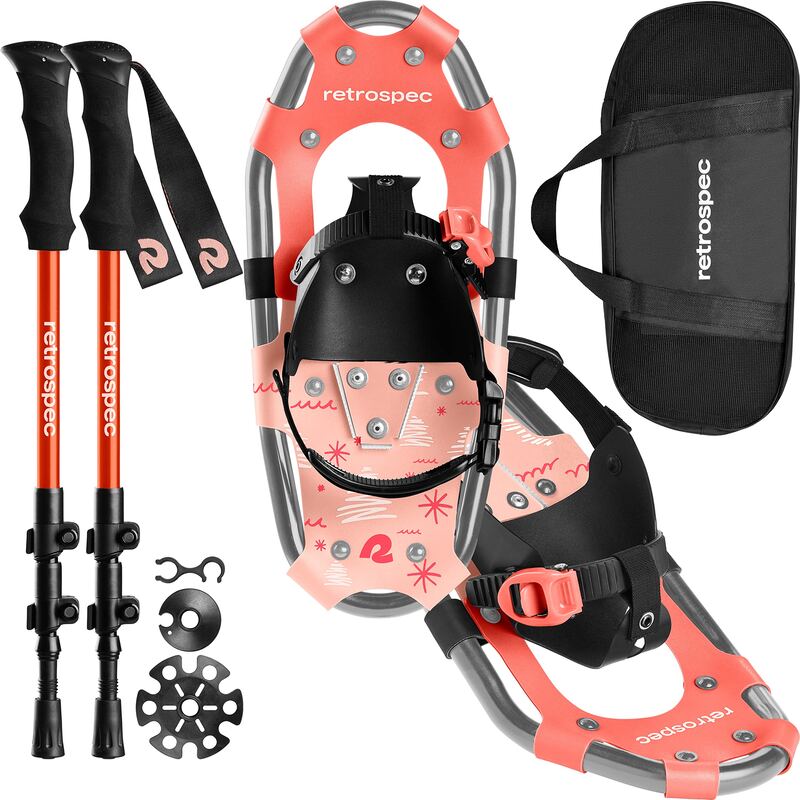
Retrospec Drifter Snowshoes
#5
Best for: beginners who need simple, intuitive features for casual winter hiking on established trails
Retrospec Drifter Snowshoes
1 source$49.99as of Oct 11
▾Why it's ranked here

Cleverhiker and Novicesurvivalist identify the Retrospec Drifter as an entry-level snowshoe tailored for beginners seeking simple, intuitive features for casual winter hiking on established trails. The 6061-T6 aluminum frame supports a polyurethane deck that distributes weight effectively, while double ratchet bindings keep feet secure across the midfoot and heel. However, 2nd Chance George found the bindings are stiff when new and require time to break in before becoming flexible enough for optimal comfort. Smaller 21-inch sizes lack sufficient surface area for deep powder conditions, making them better suited for technical terrain where agility matters more than flotation.

Strengths
  • — Double ratchet binding system keeps feet secure and snug across the midfoot and heel.
  • — Aluminum frame constructed from 6061-T6 alloy for sturdy support.
Watch-outs
  • — Smaller sizes (21-inch) lack the surface area needed for deep powder conditions.
Reviews aggregated from
CleverhikerOutdoorgearlabSectionhikerThegreatoutdoorsmagHikingladySwitchbacktravelThegoodrideThetrek

Spec comparison

5 products
vs
SpecMSR Lightning AscentTSL Symbioz Hyperflex Elite
Weight4 lbs 5 oz2.19 lbs x 2 (S), 2.30 lbs x 2 (M), 2.52 lbs x 2 (L)
Deck MaterialTPU-coated nylonComposite TPU with carbon fiber
Binding TypeParagonZoned memory ratchet straps
Frame MaterialAluminumCarbon reinforcements
Heel LiftErgo TelevatorIntegrated Easy Ascent wedge
Dimensions25"L x 7.25"W20.5 x 7.5" (S), 23.5 x 8" (M), 27 x 8.5" (L)
Traction—8 stainless steel bi-directional spikes
Length——

Frequently asked questions

Which snowshoe should I buy?
MSR Lightning Ascent is the top pick for snowshoes — 4.4/5 averaged from 2 published reviews. The MSR Lightning Ascent delivers class-leading traction on icy slopes through its serrated aluminum frame and aggressive steel crampons that prevent snowballing, a finding credited to Switchbacktravel. The Paragon binding system distributes pressure evenly across the foot via an elastic mesh net, ensuring comfort during long hikes even in freezing conditions. Ergo Televator heel lift bars reduce calf fatigue by keeping the foot horizontal on steep ascents, though Alpinist notes some users may find the elevation uncomfortable. At $390 and with optional flotation tails adding cost, this 4 lb 5 oz pair is overkill for casual flat-trail outings and better suited for technical backcountry travel.
When was this guide last updated?
This guide was last re-checked in October 2026. Prices, links, and source ratings are re-verified on a rolling basis, and the ranking updates when the underlying scores change.