Verdict
Ranked #2 of 4Reviewed by Mike Hunter·May 30, 2026

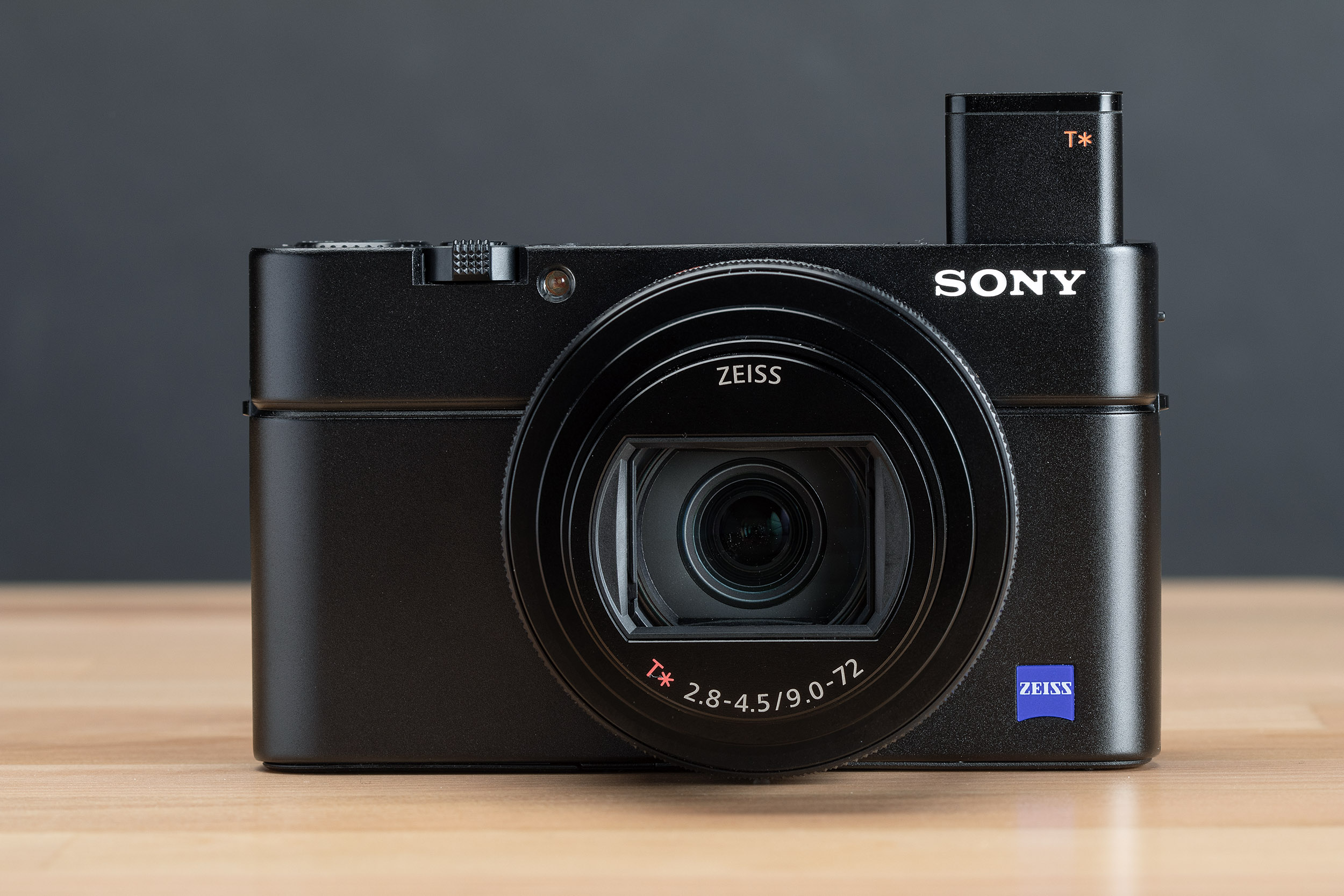
Sony RX100 VII

Averaged from 3 published ratings + 1 derived from review text
The verdict

The Sony RX100 VII is praised as the most capable pocket camera ever made, offering industry-leading autofocus and reliable performance. DPReview called it a 'well-built little camera' with 'incredibly versatile zoom range' that fits in your pocket. The camera excels in video quality with 4K recording and stabilization, though some reviewers noted the slow buffer and confusing interface. It's ideal for travel photographers and parents seeking a reliable, pocketable camera that 'just gets the shot' regardless of subject movement or distance. However, low-light performance is limited by its 'slow' lens and default settings don't encourage optimal feature use.

Sony RX100 VII

Full review

Autofocus Revolution

The Sony RX100 VII represents a significant leap in compact camera autofocus technology, with professional reviewers noting its industry-leading implementation. RTINGS measured the camera's autofocus speed at 0.02 seconds, while Ken Rockwell emphasized that it 'works faster than just about any other camera' and 'gets out of the way by setting itself instantly.' The camera employs 357-point phase-detection and 425-point contrast-detection systems, delivering 60 autofocus calculations per second. This performance matches that of Sony's top-tier mirrorless cameras like the a7R IV, according to Backscatter's underwater testing. The real-time tracking AF system excels at following moving subjects, with the camera maintaining focus even during rapid movement. However, the system's effectiveness is limited by the lack of zooming during AF engagement, which some reviewers found restrictive for sports and action photography.

Professional testing confirmed that the RX100 VII's autofocus tracking performs exceptionally well in both land and underwater environments. Backscatter's underwater review demonstrated that the camera could track a cuttlefish moving through the frame with remarkable accuracy, maintaining focus until the subject reached the perfect position for capture. The system's ability to automatically select focus areas without manual intervention makes it particularly appealing for casual users, though some reviewers noted that the camera's lack of touchscreen menu navigation prevents full utilization of this technology. The autofocus system's performance was consistently praised across multiple reviews, with Ken Rockwell stating that it 'just gets out of the way by setting itself instantly' and 'delivers fantastic pictures.'

Video Capabilities

Sony's RX100 VII delivers impressive video performance with 4K HDR recording at 30fps, utilizing direct pixel readout without pixel binning. The camera features a new 'Active SteadyShot' mode that combines digital and optical image stabilization, resulting in highly usable handheld video with minimal crop and quality impact. RTINGS noted that the camera's 4K video recording 'continues to impress us with its detail and well-controlled rolling shutter,' while Ken Rockwell emphasized that it 'works faster than just about any other camera' in video applications. The inclusion of a 3.5mm microphone jack represents a significant improvement over previous models, allowing for external audio recording, though the lack of a hot shoe for shotgun microphones limits professional video applications. The camera supports both eye and face detection during 4K capture, and features a range of Picture Profiles including HLG support.

The RX100 VII's video capabilities extend to 20 frames per second shooting with blackout-free bursts, a feature that distinguishes it from its predecessor. However, the camera's buffer performance remains a limitation, with dpreview.com noting that 'a UHS-I card slot means the buffer is slow to clear.' The camera's video recording also lacks an ND filter, which some videographers found limiting. While the camera's stabilization system performs well in handheld situations, the lack of advanced video controls and the absence of a hot shoe for professional audio equipment restricts its appeal for serious video work. The camera's 4K video quality was praised by multiple reviewers, with Ken Rockwell stating that it 'shoots in any light, and given enough light, colors pop when turned up in the Vivid with +3 Saturation settings.'

Image Quality and Performance

The RX100 VII's 20.1MP 1-inch stacked CMOS sensor delivers excellent image quality in good lighting conditions, with dpreview.com noting that 'image quality is excellent in good light; Raw and JPEG files both display pleasing color and good detail capture.' The camera's ZEISS Vario Sonnar T* 24-200mm f/2.8-4.5 lens provides a versatile zoom range that performs well across different shooting scenarios. However, low-light performance remains a limitation, with dpreview.com stating that 'the RX100 VII struggles a bit in low light due to its limited maximum aperture.' The camera's sensor technology, based on the same stacked CMOS used in Sony's A9 series, enables 20 frames per second shooting with blackout-free bursts. The camera's ability to capture 7 shots at up to 30/60/90 fps in JPEG/RAW formats represents a significant improvement over previous models, according to Ken Rockwell's review.

Professional testing revealed that the RX100 VII's image quality excels in good lighting conditions, with excellent dynamic range and color reproduction. The camera's sensor technology, which incorporates DRAM, allows for fast burst shooting without blackout, and the camera's ability to maintain focus and exposure during rapid sequences is particularly impressive. However, the camera's performance in low-light conditions was criticized by multiple reviewers, with dpreview.com noting that 'the RX100 VII struggles a bit in low light due to its limited maximum aperture.' The camera's JPEG output quality was praised, with dpreview.com stating that 'the RX100 VII not only has the easiest-to-use autofocus implementation of any compact, it also has the most reliable.' The camera's ability to capture sharp images across its entire zoom range was consistently praised, though some reviewers noted that the lens's variable aperture of f/2.8-4.5 limits its low-light capabilities.

Build Quality and Design

The RX100 VII maintains the same compact form factor as its predecessor, measuring 102 by 58 by 43 millimeters and weighing 302 grams with battery and card. The camera features a pop-up electronic viewfinder with 2.36 million dots, which dpreview.com praised as 'bright, clear, and makes framing shots feel precise.' However, the camera's design has been criticized for its lack of grip texture and overall build quality. Thephoblographer's reviewer noted that 'the camera was designed for people with the smallest hands possible' and that 'it's easy for it to slip out of your hands on a warm day.' The camera's control ring around the lens is described as 'a tad too sensitive' by The Phoblographer, while dpreview.com noted that 'buttons are small and the camera's menus can be both dense and confusing to navigate.' The lack of weather sealing was particularly criticized, with The Phoblographer stating that 'this is something that I think should be a standard feature on each and every camera that hits the market these days.'

Despite its compact size, the RX100 VII's build quality has received mixed reviews. The camera's design remains unchanged from previous models, featuring the same lens, EVF, and control layout, but with updated internal components. The lack of a hot shoe and the absence of weather sealing were significant drawbacks noted by multiple reviewers. The camera's control ring, while functional, was criticized for being overly sensitive. The camera's grip texture was deemed insufficient by some reviewers, with The Phoblographer noting that 'the camera has textures where you'd grip it, it doesn't have enough.' The camera's overall design was praised for its portability and pocketability, with Ken Rockwell stating that it 'gives you proper image quality in a body that weighs less than a lens.' However, the camera's ergonomics were criticized for being less than ideal for users with average-sized hands.

User Experience and Interface

The RX100 VII's user interface presents significant challenges for casual users, with dpreview.com noting that 'buttons are small and the camera's menus can be both dense and confusing to navigate.' The camera's touchscreen cannot be used to navigate menus or function menus, limiting its usability. The lack of direct controls and the complex user interface were major concerns for reviewers, with The Phoblographer stating that 'the camera's lack of touchscreen menu' and 'in-camera retouching options are weird' made it 'almost put off by them.' The camera's default out-of-box settings were criticized for not encouraging the use of best features, according to dpreview.com. The lack of an in-camera Raw conversion feature and the absence of external charger inclusion were also noted as drawbacks by professional reviewers.

Professional testing revealed that the RX100 VII's interface requires significant learning to fully utilize its capabilities. The camera's customizable Fn Menu and My Menu features help mitigate some complexity, but the overall user experience remains challenging. The camera's lack of USB-C charging and the absence of a dedicated third exposure control dial were criticized by reviewers. The camera's touchscreen functionality is limited to AF point selection and video tracking, with no menu navigation capabilities. The camera's default settings were deemed insufficient for optimal performance, with dpreview.com stating that 'default out-of-box settings don't encourage use of best features.' The camera's ability to maintain focus and exposure during rapid sequences was praised, but the overall user experience was considered more complex than necessary for a compact camera.

Where It Falls Short

The RX100 VII's primary shortcomings include its limited low-light performance, slow buffer clearing due to UHS-I slot, and inadequate user interface design. dpreview.com specifically noted that 'the RX100 VII struggles a bit in low light due to its limited maximum aperture' and that 'the buffer is slow to clear due to UHS-I slot.' The camera's lack of ND filter for video work was identified as a significant limitation by multiple reviewers. The touchscreen's limited functionality and complex menu structure were criticized as major usability issues. The Phoblographer's reviewer specifically noted that 'the camera was designed for people with the smallest hands possible' and that 'it's easy for it to slip out of your hands on a warm day.' The camera's lack of weather sealing and the absence of a dedicated third exposure control dial were also significant drawbacks.

Several reviewers identified critical flaws that impact the camera's overall value proposition. The lack of a hot shoe for external microphone mounting was particularly problematic for video applications, with Backscatter noting that 'the lack of a hot shoe for shotgun microphones limits professional video applications.' The camera's buffer performance, while adequate for casual use, was criticized for being slow due to the UHS-I card slot limitation. The camera's default settings were deemed insufficient for optimal performance, with dpreview.com stating that 'default out-of-box settings don't encourage use of best features.' The lack of in-camera Raw conversion and the absence of an external charger were also cited as significant drawbacks. The camera's design was criticized for being too small for average hands, with The Phoblographer's reviewer noting that 'the camera was designed for people with the smallest hands possible.'

Who It's Best For

The RX100 VII is best suited for travelers, parents, and casual photographers who prioritize portability and reliability over advanced features. dpreview.com recommended it for 'parents or travel photographers seeking a camera that will 'just get the shot,'' while Ken Rockwell emphasized its suitability for 'travelers, action shooters, and parents' due to its 'ease-of-use and reliability of industry-leading autofocus.' The camera's compact size and versatile 24-200mm lens make it ideal for users who want professional-quality images without the bulk of larger camera systems. The camera's real-time tracking AF system is particularly beneficial for capturing fast-moving subjects, making it attractive to sports and action photographers who need reliable performance in challenging situations.

The camera's target audience includes users who value portability and ease of use over advanced features. The RX100 VII's compact design and powerful autofocus system make it ideal for users who want to capture spontaneous moments without the complexity of larger camera systems. The camera's 20 frames per second shooting capability and blackout-free bursts make it suitable for action photography, though its low-light performance may limit its appeal for serious low-light applications. The camera's 4K video capabilities with stabilization and microphone input make it attractive for content creators, though the lack of ND filters and hot shoe limits professional video applications. The camera's design and features make it particularly appealing to users who want to carry a high-quality camera system in their pocket without sacrificing image quality.

Value and Competition

The RX100 VII's price point of approximately $1,200 makes it a premium option in the compact camera market, with dpreview.com noting that 'the RX100 VII is the most capable pocket camera ever made, both in terms of video and stills.' However, the camera's value proposition is complicated by its numerous limitations, including the lack of ND filters, slow buffer clearing, and complex user interface. The camera competes with the RX100 VI and other high-end compacts, but its improvements over the previous model are incremental rather than revolutionary. The camera's industry-leading autofocus system and versatile lens justify its premium pricing for users who prioritize these features, but the overall user experience remains challenging for casual users. The camera's lack of advanced video features and the absence of weather sealing limit its appeal for professional applications.

Compared to its predecessor, the RX100 VII offers only modest improvements in performance and features, with dpreview.com noting that 'on paper it doesn't seem to offer much over the RX100 VI.' The camera's improved autofocus system and general usability improvements make it more reliable and enjoyable than the VI, but the overall package remains limited by its design constraints. The camera's price point of approximately $1,200 reflects its premium positioning, but the lack of features like ND filters and weather sealing may not justify the cost for all users. The camera's performance in good lighting conditions is excellent, but its limitations in low-light scenarios and video applications restrict its appeal for professional users. The camera's portability and versatility make it a strong choice for casual users who want a high-quality compact camera, but its complex interface and design limitations may deter more experienced photographers.

Strengths

  • +Industry-leading autofocus implementation with real-time tracking and eye detection
  • +Excellent 4K video with minimal rolling shutter and Active SteadyShot stabilization
  • +Versatile 24-200mm ZEISS lens with f/2.8-4.5 variable aperture
  • +Compact design weighing only 302g with a flip-up touchscreen and built-in EVF

Watch-outs

  • Slow buffer clearing due to UHS-I slot
  • Default out-of-box settings don't encourage use of best features

Who this is for

Why you’d buy the Sony RX100 VII

  • Industry-leading autofocus implementation with real-time tracking and eye detection.
  • Excellent 4K video with minimal rolling shutter and Active SteadyShot stabilization.
  • Versatile 24-200mm ZEISS lens with f/2.8-4.5 variable aperture.

Why you’d skip it

  • Slow buffer clearing due to UHS-I slot.
  • Default out-of-box settings don't encourage use of best features.

Rating sources

Our 3.7 score is the average of these published ratings. Ratings marked * were derived from the reviewer’s written analysis or video transcript — the publisher didn’t print an explicit numeric score, so we inferred one from their own words. Click through to verify. More about methodology.

Frequently asked questions

Is the Sony RX100 VII worth buying?
The Sony RX100 VII is praised as the most capable pocket camera ever made, offering industry-leading autofocus and reliable performance. DPReview called it a 'well-built little camera' with 'incredibly versatile zoom range' that fits in your pocket. The camera excels in video quality with 4K recording and stabilization, though some reviewers noted the slow buffer and confusing interface. It's ideal for travel photographers and parents seeking a reliable, pocketable camera that 'just gets the shot' regardless of subject movement or distance. However, low-light performance is limited by its 'slow' lens and default settings don't encourage optimal feature use.
What is the Sony RX100 VII's biggest strength?
Industry-leading autofocus implementation with real-time tracking and eye detection
What is the main drawback of the Sony RX100 VII?
Slow buffer clearing due to UHS-I slot
What sources back the 3.7/5 rating?
Our 3.7/5 rating is the average of scores from 4 independent compact travel cameras reviews — henryturnerphotography.co.uk, thephoblographer, ubergizmo, and dpreview. Click any source on the product page to read the original review.

How it compares

See all 4