The Canon PowerShot G7 X Mark III pairs a 20.1MP 1-inch stacked sensor with a bright 24-100mm equivalent f/1.8-2.8 zoom in a pocket-sized metal body, and it ranks among the better enthusiast and vlogging compacts of its generation. Reviewers consistently praise its image quality, handling and creator features such as uncropped 4K, a mic input and YouTube live-streaming, while noting the lack of a viewfinder, no hot shoe and only digital video stabilization. It is a 2019 design, so its autofocus and video IS trail the newest competition, and street prices have climbed above MSRP due to sustained social-media popularity. Travelers who want noticeably better stills and video than a phone in something that still fits a jacket pocket still have a strong choice here, if no longer a cutting-edge one. Buy at or near the $849 authorized price; well above that, the value argument weakens.
Full review
Overview: a pocket vlogging camera with serious imaging
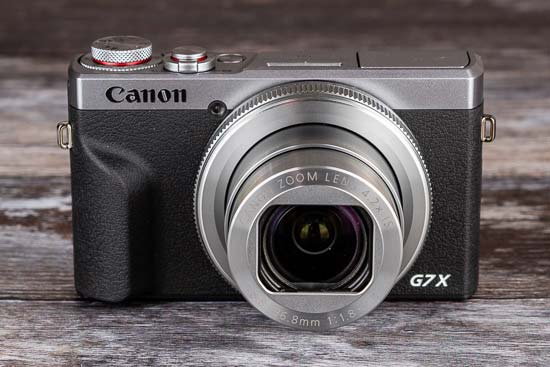
The Canon PowerShot G7 X Mark III is a premium 1-inch-sensor compact built around a 20.1-megapixel stacked CMOS sensor, a Digic 8 processor and a bright 24-100mm equivalent f/1.8-2.8 zoom lens. It is the camera that, as Digital Camera World notes, topped bestseller charts years after launch thanks to relentless popularity with content creators. The appeal is simple: it slips into a jacket pocket, yet delivers image quality and creative control that no phone matches.
Photography Blog summed up the design philosophy well, writing that it 'combines a new 1.0-type 20.1 megapixel stacked CMOS sensor with a 4.2x (24-100mm) f/1.8-2.8 zoom lens with 9-blade aperture and Optical Image Stabilizer.' For a travel camera, that combination of a useful zoom range and a fast aperture in a metal body weighing just 304g is the core of its enduring case.
Measuring roughly 105 x 61 x 41mm, it 'will just about fit into a trouser or shirt pocket, but is more at home in a deep coat pocket or small camera bag,' per Photography Blog. That is the central trade-off of the 1-inch compact class: it is bigger and heavier than a phone, but small enough to carry every day, unlike a mirrorless camera with a kit zoom. For travelers weighing a single grab-and-go body, that pocketability is precisely the point.
Why it stays popular
Part of the G7 X Mark III's story is its longevity. Digital Camera World has repeatedly documented how the camera kept selling out and topping charts years after its 2019 release, driven by social-media creators and a TikTok-fueled aesthetic for its look and footage. That demand is a double-edged sword: it validates the camera's real-world usefulness, but it also keeps street prices elevated and stock thin, a dynamic that did not exist when most professional reviews were first published.
Canon has acknowledged the appetite by keeping the line alive, even releasing limited-edition variants. For a buyer today, the takeaway is to treat the roughly $849 MSRP as the benchmark and to be wary of marked-up third-party listings, since the camera's value proposition is strongest at or below that authorized price.
Image quality and the 1-inch sensor
The stacked 1-inch sensor is the heart of the camera. Digital Camera World explains that this format 'gives a big step up in image quality from most point and shoot cameras, action cams and camera phones, and is half way towards the sensor size of DSLR and mirrorless cameras.' That extra surface area translates into cleaner shadows, more pleasing background blur at f/1.8 and better dynamic range than a smartphone can manage.
In practice, Photography Blog found the camera 'recorded noise-free images at ISO 125-1600, with some noise at ISO 3200,' adding that ISO 6400 'shows more obvious noise but still remain perfectly usable, although the fastest native setting of ISO 12800 is best avoided.' For travel, that means confident shooting indoors and at dusk without resorting to flash, provided you keep the very top of the ISO 125-12800 range in reserve.
Lens and handling
The 24-100mm equivalent range is more versatile than the fixed primes on many rivals, covering wide cityscapes through to short-telephoto portraits. Digital Camera World highlights the 'retracting 24-100mm equivalent retracting zoom lens with an impressive f/1.8-2.8 maximum aperture.' That bright aperture holds up reasonably well as you zoom, keeping shutter speeds usable in dim conditions.
Handling is generally praised. Photography Blog describes an 'all-metal body that feels solid in use, with all of the various external controls offer just the right amount of stiffness and resistance,' though it cautions that the camera 'doesn't have a front control dial... which makes changing the aperture and shutter speed a little more difficult.' There is a small but useful handgrip and a thumb pad that help steady one-handed shooting.
Video and vlogging features
Video is where the Mark III earned its reputation. Canon added uncropped 4K30p capture, 120fps Full HD for slow-motion B-roll, a 3.5mm microphone input, vertical 9:16 video support, clean HDMI output and, in a first for any camera at the time, the ability to live-stream directly to YouTube. The 3.0-inch touchscreen flips up 180 degrees for framing yourself.
Photography Blog notes the 'in-camera digital Dynamic Image Stabilisation system offers three settings - low, standard and high - to compensate for shake during movie recording, which helps a lot when hand-holding the camera, say, for vlogging,' while warning that the 120fps Full HD mode means 'the camera can't autofocus, stabilise the footage or record sound during recording.' TechRadar concluded that 'Its spec sheet is sound and it handles well, and it's capable of speedy operation and fast focus.'
Speed and autofocus
The stacked sensor and Digic 8 processor unlock fast burst shooting. Digital Camera World reports continuous rates 'of up to 30fps' in the RAW burst mode, with up to 20fps for standard JPEG/RAW capture, and ePHOTOzine echoes that the camera can 'shoot at 30fps (raw burst), or up to 20fps (with JPEG, raw, or both).' That speed is genuinely useful for catching fleeting moments while traveling.
Autofocus is competent but dated. Digital Camera World found that for selfies and vlogging 'the camera's face detection AF usually gets your face sharp, although you may need to tap on your face on the screen occasionally to get it going,' and that focusing on distant subjects during general photography is 'also good.' It is reliable rather than class-leading, reflecting the camera's 2019 vintage.
No hot shoe, despite adding a mic port
No camera is perfect, and the G7 X Mark III's omissions are well documented. The most-cited gap is the lack of an electronic viewfinder, which makes composing in bright sunlight harder, and the absence of a hot shoe. TechRadar called this out directly: 'the fact that we now have a port for external microphones makes the lack of a hotshoe more disappointing here, as this would have provided a perfect home for mounting these.'
Video stabilization is digital only, with no in-body or dedicated optical IS for movies; engaging the 'high' Dynamic IS setting introduces a crop and softens the image, so reviewers advise staying off the most aggressive mode. The autofocus system is contrast-detect rather than Canon's newer Dual Pixel AF, so it can hunt more than current rivals. Finally, value has eroded: although the official price is around $849, sustained creator demand has repeatedly pushed street prices higher and left stock scarce, which weakens the camera's appeal at inflated retail.
Built for vloggers mixing walk-and-talk clips with stills
The G7 X Mark III is the right pick for travel vloggers and hybrid shooters who prioritize video and pocketability. If your days mix walk-and-talk clips, selfie framing, slow-motion B-roll and the occasional sharp stills photo, the flip-up screen, mic input, uncropped 4K and bright zoom cover that brief better than most fixed-lens compacts. Amateur Photographer summed up the everyday case: for anyone wanting 'something they can easily carry in their pocket that will give them more advanced controls and better results than a smartphone, the G7 X Mark III is a serious contender.'
It is less ideal if you are a stills-first photographer chasing the ultimate image quality, where a larger APS-C sensor makes more sense, or if you need a viewfinder and the most dependable subject tracking. But as a do-everything travel companion that disappears in a pocket, it remains one of the most recommended enthusiast compacts of its generation.
Verdict
Years after launch, the Canon PowerShot G7 X Mark III holds up as a highly capable, creator-focused travel compact. Its 1-inch sensor, bright 24-100mm zoom and deep video feature set earn it consistently strong scores, and its handling and pocketability keep it relevant. The caveats - no viewfinder, no hot shoe, digital-only video IS, dated autofocus and pricing that often exceeds MSRP - are real but largely predictable for a 2019 design. Bought at or near its authorized price, it is an easy recommendation for vlogging and travel; well above that, weigh it carefully against newer 1-inch and APS-C alternatives.
Strengths
- +Large 1-inch 20.1MP stacked CMOS sensor delivers far better low-light image quality and shallower depth-of-field than phones or smaller-sensor compacts
- +Bright, versatile 24-100mm equivalent f/1.8-2.8 zoom covers wide travel scenes through short-telephoto portraits in a genuinely pocketable body
- +Strong vlogging toolkit: uncropped 4K30p, 120fps Full HD slow-motion, a 3.5mm external mic input, vertical-video support and a 180-degree flip-up touchscreen
- +Built-in live-streaming to YouTube plus clean HDMI out and USB power/charging make it unusually creator-friendly for a point-and-shoot
- +Fast Digic 8 processing enables up to 20fps JPEG/RAW bursts (30fps RAW burst mode), helpful for candid travel moments
Watch-outs
- −No electronic viewfinder and no hot shoe, so bright-sun composing and mounting accessories like a mic are awkward
- −No in-body or dedicated 5-axis optical stabilization for video; the digital IS introduces a crop and softens detail at its 'high' setting
- −Real-world pricing has drifted well above the $849 MSRP because of viral creator demand and limited stock, hurting its value case
- −Aging 2019-era autofocus uses contrast-detect rather than Canon's Dual Pixel AF, so subject tracking lags newer rivals
How it compares
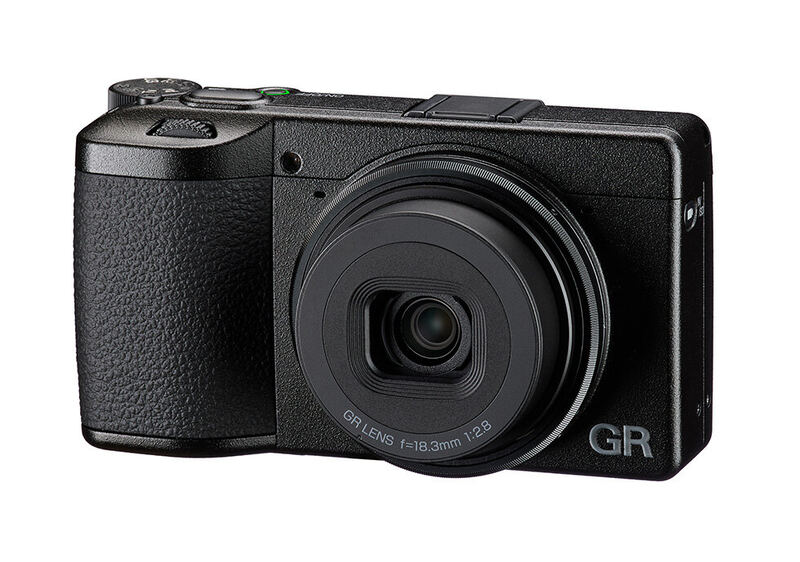
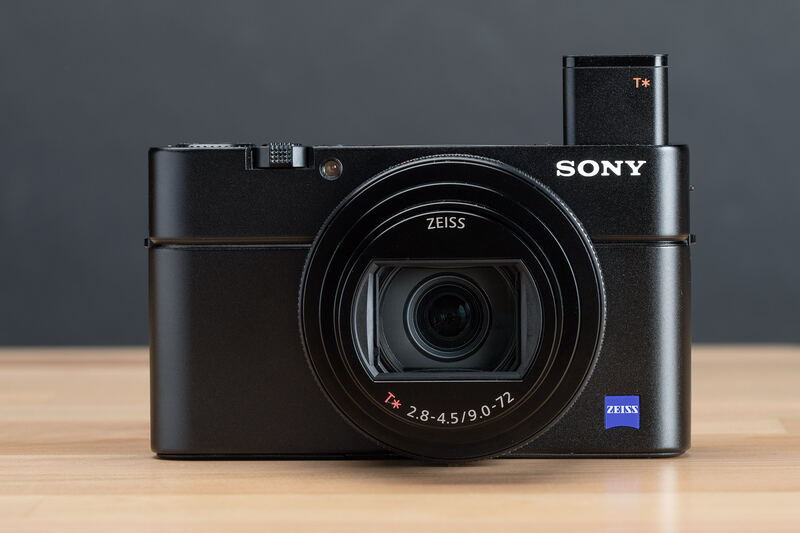
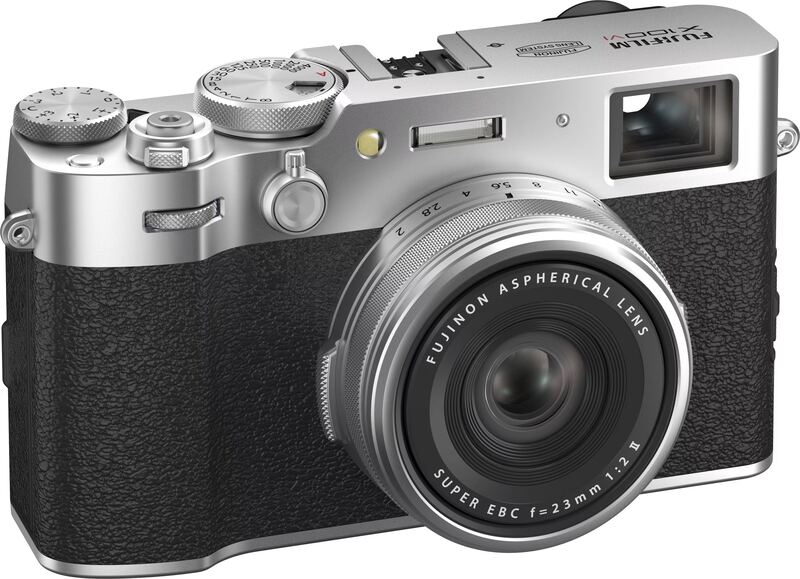
Against the others in this guide, the G7 X Mark III is the dedicated vlogging specialist. Its zoom (24-100mm equivalent) is far more flexible for travel framing than the fixed 28mm prime of the Ricoh GR IV or the fixed 35mm of the Fujifilm X100VI, and unlike either it offers a flip-up selfie screen, a mic input and YouTube live-streaming. The Sony RX100 VII is its closest direct rival: it shares the 1-inch class and a similar pocket size but reaches a much longer 24-200mm and has faster, more reliable autofocus plus a pop-up viewfinder, whereas the Canon counters with a brighter lens and friendlier creator features. The Ricoh GR IV and Fujifilm X100VI both use larger APS-C sensors for superior still-image quality and shallower depth of field, but neither zooms and both are more photographer-focused than the video-first Canon. Choose the G7 X Mark III when pocketable vlogging plus a flexible zoom matters more than the outright image quality of the X100VI or the street-shooting purism of the GR IV.
Rating sources
“The PowerShot G7 X Mark III faces some strong competition from the likes of Sony and Panasonic, but with a longer-than-usual lens, great handling and a whole suite of niceties for videographers, it succeeds in offering enough to warrant its place in a populated section of the market.”
“The Canon PowerShot G7 X Mark III might look familiar on the outside, but rest assured that this is no minor refresh, with a wealth of internal improvements that make it one of Canon's best compact cameras for both stills photographers and keen vloggers alike.”
“For those seeking something they can easily carry in their pocket that will give them more advanced controls and better results than a smartphone, the G7 X Mark III is a serious contender. I have no hesitation in recommending it purely on its own merits.”
“The Canon Powershot G7 X Mark III is a welcome update to the G7 X Mark II, and offers several updates that should impress both photographers and videographers.”
“Canon has stuck to a winning formula with the G7 X Mark III, keeping the neat, rectangular, pocket-friendly design of its predecessor but adding much more powerful video capabilities for a new generation of blogging/vlogging enthusiasts.”
Our 4.2 score is the average of these published ratings. More about methodology.