Verdict
Head-to-head · Best Compact Travel Cameras

Ricoh GR IV vs Sony RX100 VII

Which is the better buy? Side-by-side on rating, price, strengths, and watch-outs — with the published ratings we averaged to get there.

Verdict is reader-supported. As an Amazon Associate we earn from qualifying purchases. Some links on this page are affiliate links — if you click through and buy, we may earn a small commission at no extra cost to you. Our ratings are sourced from independent publications, not sponsors.
The short answer

Ricoh GR IV comes out ahead by a narrow margin (4.0 vs 3.8). Ricoh GR IV is best for: Photographers who want a compact APS-C camera with a fixed 28mm-equivalent lens and 5-axis stabilization. Read the strengths below before deciding.

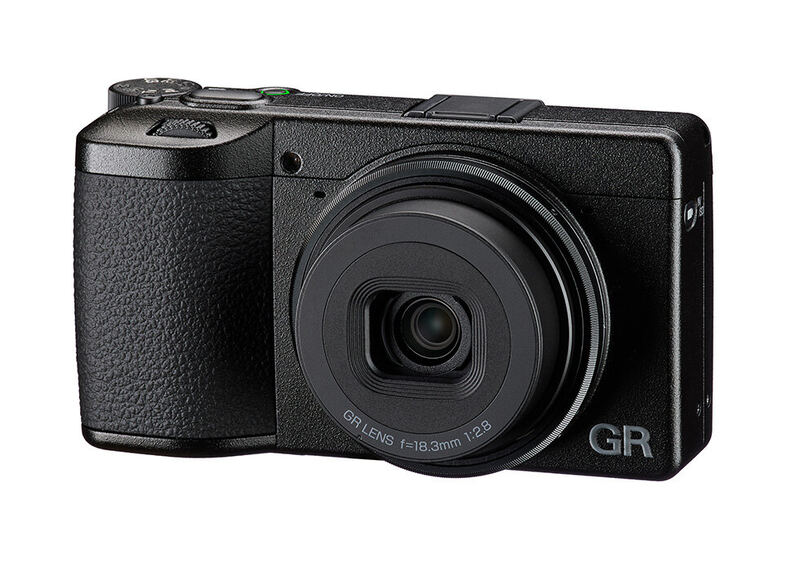
Ricoh GR IV
Higher ratedRanked #2 in Best Compact Travel Cameras
Ricoh GR IV
2 sources$1,599.95as of Oct 11

The Ricoh GR IV refines the compact camera series with a 25.74MP backside-illuminated APS-C sensor and an upgraded 18.3mm F2.8 lens that resolves more detail. DPReview praised its 5-axis stabilization system and faster lens startup time. The $1499 MSRP is a significant jump from previous models. The control layout returns to GR II design elements while keeping GR III firmware features like Snap Distance Priority mode. Image quality and portability are the strengths; the increased price and limited internal storage may deter some users.

Strengths
  • — 25.74MP backside-illuminated APS-C sensor delivers improved image quality
  • — 5-axis image stabilization with 6EV rating provides better shake reduction
  • — Redesigned 18.3mm F2.8 lens with aspherical element improves sharpness and corner detail
Watch-outs
  • — MSRP of $1499 is a substantial increase from previous GR models
  • — Internal storage of 53GB may not be sufficient for all users despite being larger than GR III's 2GB
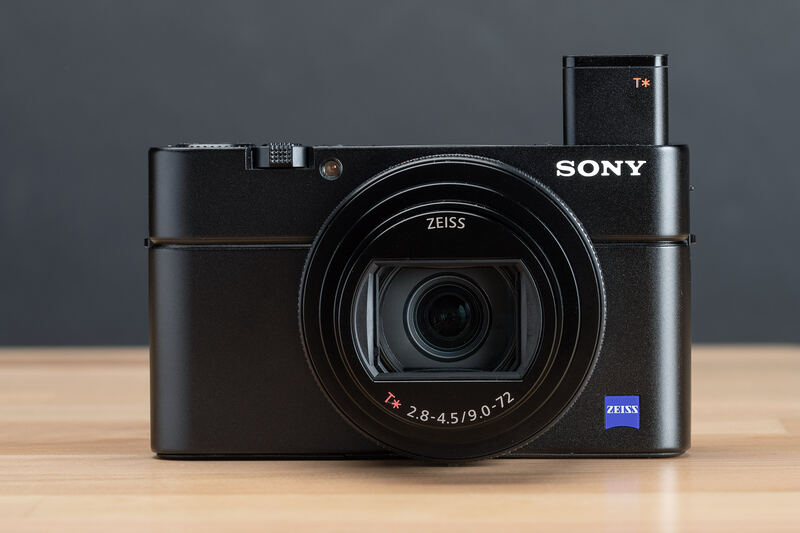
Sony RX100 VII
Ranked #4 in Best Compact Travel Cameras
Sony RX100 VII
4 sources$1,498as of Oct 11

The Sony RX100 VII gets called the most capable pocket camera ever made, on the strength of industry-leading autofocus and reliable performance. DPReview called it a 'well-built little camera' with 'incredibly versatile zoom range' that fits in your pocket. Video holds up too, with 4K recording and stabilization, though some reviewers noted the slow buffer and confusing interface. Travel photographers and parents who want a reliable, pocketable camera that 'just gets the shot' regardless of subject movement or distance are the fit. Low-light performance is limited by its 'slow' lens, and the default settings do not encourage optimal feature use.

Strengths
  • — Excellent 4K video with minimal rolling shutter and Active SteadyShot stabilization
  • — Versatile 24-200mm ZEISS lens with f/2.8-4.5 variable aperture
  • — Compact design weighing only 302g with a flip-up touchscreen and built-in EVF
Watch-outs
  • — Slow buffer clearing due to UHS-I slot
  • — Default out-of-box settings don't encourage use of best features

How they stack up

Ricoh GR IV

The Ricoh GR IV pairs a 25.74MP APS-C sensor with a fixed 18.3mm F2.8 lens (28mm equivalent), where the Canon PowerShot G7 X Mark III and the Sony RX100 VII put zoom lenses in front of 1-inch sensors. At 262g it is about half the weight of the 521 g Fujifilm X100VI, which has a 40MP APS-C sensor. Its video tops out at Full HD 60p against the X100VI's 6.2K at 30p.

Sony RX100 VII

The Sony RX100 VII's 24-200mm lens reaches twice as far as the 24-100mm zoom of the Canon PowerShot G7 X Mark III, though the Canon's f/1.8-2.8 aperture is brighter than the Sony's f/2.8-4.5. The Sony has a built-in EVF, while the Canon has no electronic viewfinder. Its 1-inch sensor is smaller than the APS-C sensors of the Ricoh GR IV and the Fujifilm X100VI, and at 302g it is lighter than the 521 g Fujifilm.

Specs side-by-side

SpecRicoh GR IVSony RX100 VII
Sensor25.74MP APS-C20.1MP 1-inch stacked CMOS
Resolution25.74MP20.1 MP
Lens18.3mm F2.8 (28mm equiv)24-200mm f/2.8-4.5 ZEISS
VideoFullHD (1080) up to 60p4K HDR with stabilisation
Display3.0" 1.04M dot LCD180-degree/90-degree tilting touchscreen
Stabilization5-axis 6EVOptical and Active SteadyShot
Weight262g302g
Burst Rate—Up to 20 fps
← See the full ranking of best compact travel cameras