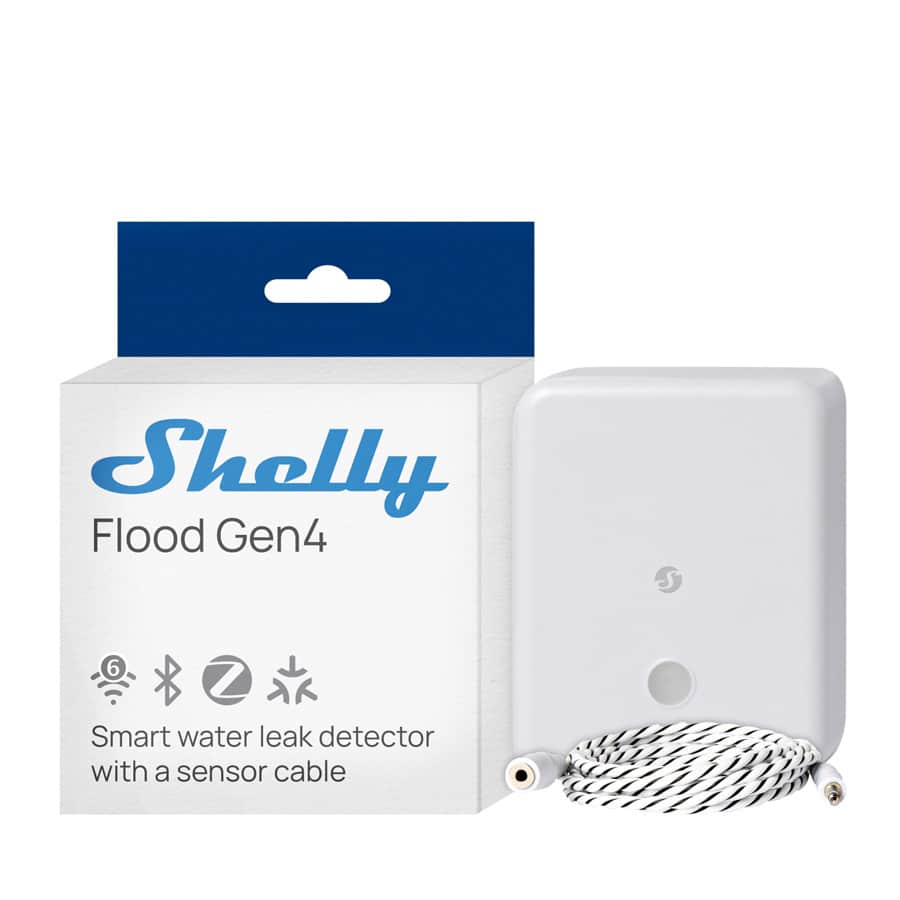
The Shelly Flood Gen4 is a smart water leak sensor designed for early detection of water leaks, sending real-time alerts to your phone and triggering a built-in alarm. It supports multiple protocols including Wi-Fi, Zigbee, Matter, and Bluetooth, and integrates with major smart home platforms like Alexa, Google Home, and Apple HomeKit. YouTube reviewer TecTimmy noted its effectiveness for early flood detection in coastal areas, while PCMag praised its expandable coverage capabilities. It's best suited for users seeking a budget-friendly, expandable leak detection solution, though it requires a smart home network for full functionality.
Full review
Cable design and installation challenges
The Shelly Flood Gen4's external probe cable presents significant physical design issues that impact real-world usability. According to rentalhomeautomator.com, the cable ships tightly coiled and resists laying flat, making it difficult to position neatly under sinks or appliances. The reviewer noted that the cable 'does not lay flat' and tends to curl back, which creates installation problems. This is particularly problematic for short-term rental applications where discreet, tamper-resistant placement is essential. The cable's springy nature requires additional cable clips or painter's tape to keep it flat during the initial weeks of use, according to 9to5mac.com's Bradley C. The device's large, wall-mounted form factor compounds these issues, as it requires more complex mounting than compact puck-style sensors typically offer.
Battery access and maintenance concerns
Battery replacement poses a significant challenge for the Shelly Flood Gen4, according to Rentalhomeautomator.com, whose reviewer found that removing the cover to change batteries is 'extremely difficult' and 'awkward and not intuitive.' The device's design makes it challenging to access the battery compartment, even when wall-mounted. This is particularly problematic for users managing multiple devices in remote properties where periodic maintenance is required. The same reviewer noted that the battery cover design 'is simply bad design' for a battery-powered device that will require regular upkeep. Additionally, while Shelly claims the batteries last two years according to 9to5mac.com, the physical design of the access point makes routine maintenance cumbersome.
Zigbee connectivity reliability issues
Zigbee connectivity represents a major reliability problem for the Shelly Flood Gen4, particularly in environments where consistent device reporting is critical. Rentalhomeautomator.com's testing revealed that despite being in the same room as the hub and within Zigbee range, the device repeatedly dropped offline. The reviewer reported that SmartThings would regularly show the device as 'Offline, then back online, then offline again,' a pattern that persisted through troubleshooting. This behavior was not observed with other leak sensors tested in the same environment. The reviewer emphasized that 'connectivity reliability is non-negotiable' for water leak sensors, especially in remote property management scenarios. The device's Zigbee performance issues were so severe that they 'became a major deal-breaker' for short-term rental applications, according to the publication. GitHub user izosa confirmed similar issues with Home Assistant integration, reporting that the flood binary_sensor fails to clear until the next periodic wakeup, indicating a systemic integration problem rather than isolated hardware failure.
HomeKit and Matter compatibility
The Shelly Flood Gen4's Matter and HomeKit compatibility represents a significant improvement over previous generations, according to 9to5mac.com's Bradley C. The reviewer noted that the device is now 'Matter native' and that onboarding took only 'a few seconds' with a QR code in the box. The sensor exposes leak detection to HomeKit, enabling critical alerts on iPhones or Apple Watches when water is detected. This integration allows users to receive immediate notifications through Apple's ecosystem. However, while the device works well with Apple HomeKit, the same cannot be said for all smart home platforms. The Home Assistant integration issue documented in GitHub shows that the flood status fails to clear properly, indicating that while Matter support works for basic detection, deeper integration remains problematic. The device supports both Wi-Fi and Zigbee protocols, but Rentalhomeautomator.com, which tested it exclusively over Zigbee, called its Zigbee connectivity problems a major deal-breaker.
Performance and detection capabilities
The Shelly Flood Gen4 delivers on its core function of water leak detection, with reviewers noting accurate water detection capabilities. 9to5mac.com's Bradley C highlighted that the cable approach creates a 'tripwire for water' that effectively covers larger areas, allowing users to wrap the cable around appliances like washing machines or water heaters. The device's 2-meter cable can be extended up to 150 meters, providing flexibility for larger monitoring areas. YouTube reviewer TecTimmy noted that the device 'sends realtime alerts to your phone' and includes a built-in alarm. The sensor cable's ability to detect water anywhere along its length makes it more versatile than traditional puck-style sensors that require direct contact with water. However, the accuracy of detection is only as good as the device's connectivity and installation, which Rentalhomeautomator.com's testing and the Home Assistant issue report cited here show can be problematic in real-world applications.
Comparison to alternative leak sensors
When compared to simpler, less expensive alternatives, the Shelly Flood Gen4 falls short in several key areas, particularly for short-term rental applications. Rentalhomeautomator.com's reviewer concluded that the device is 'one of the more disappointing leak sensors' they've evaluated, primarily due to its 'bulky and visually intrusive' design and 'awkward battery replacement.' The publication noted that there are 'many less expensive leak sensors available that offer smaller, puck-style designs' with easier battery access and more consistent Zigbee performance. The reviewer gave the device a 2/10 for suitability in short-term rentals, citing the external probe cable issues, poor battery access, and unreliable Zigbee connectivity as major drawbacks. In contrast, simpler puck-style sensors offer 'faster, cleaner installs under sinks and appliances' and are better suited for the low-maintenance requirements of remote property management. The Shelly Flood Gen4's higher price point of $33, according to the same reviewer, makes it 'one of the most expensive leak sensors' tested, while offering fewer benefits than cheaper alternatives.
Strengths
- +Detects water leaks in real-time and sends alerts to your phone
- +Built-in alarm for immediate local notification of leaks
- +Supports multiple smart home protocols including Wi-Fi, Zigbee, Matter, and Bluetooth
- +Works with major smart home platforms like Alexa, Google Home, and Apple HomeKit
- +Includes extendable sensor cable up to 150m for wider coverage
Watch-outs
- −Requires Wi-Fi or Zigbee network for full functionality
How it compares
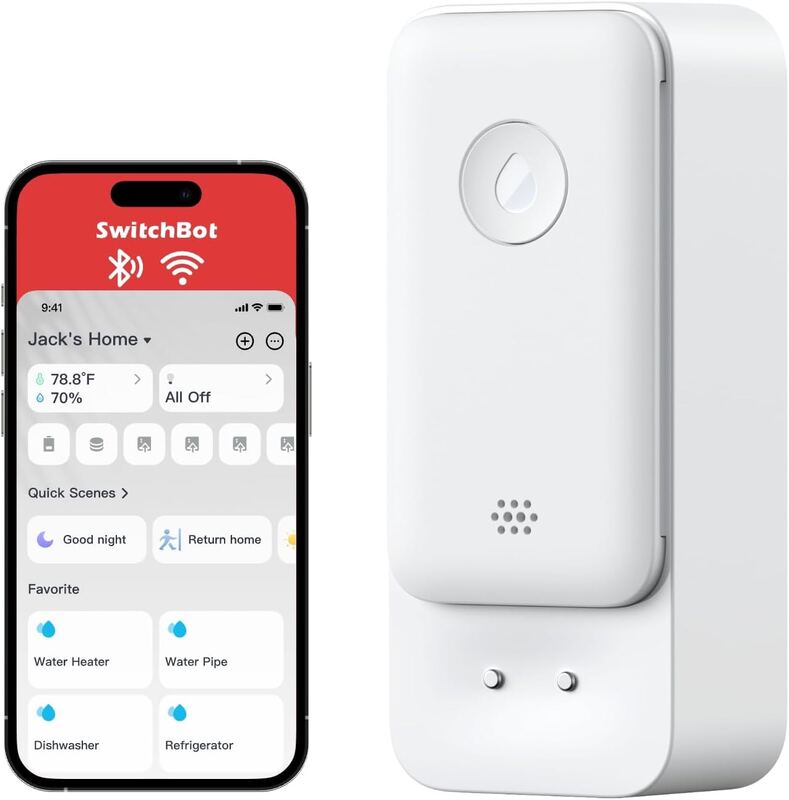
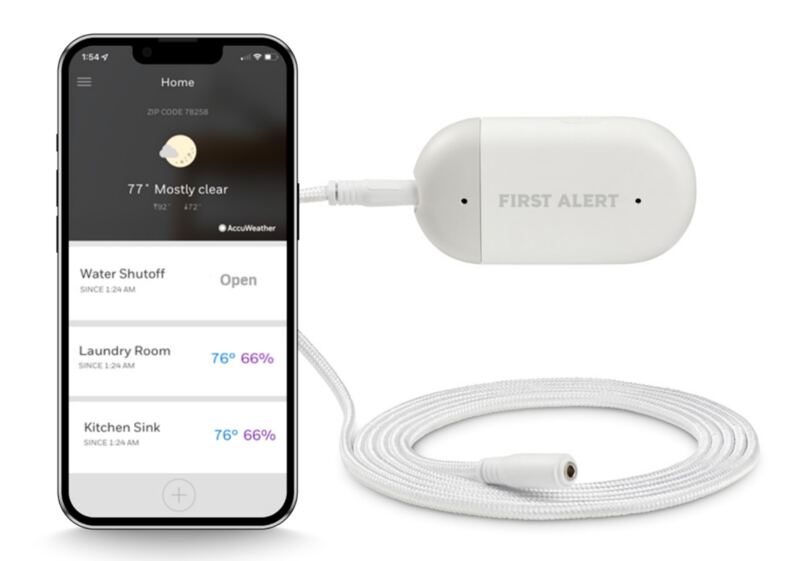
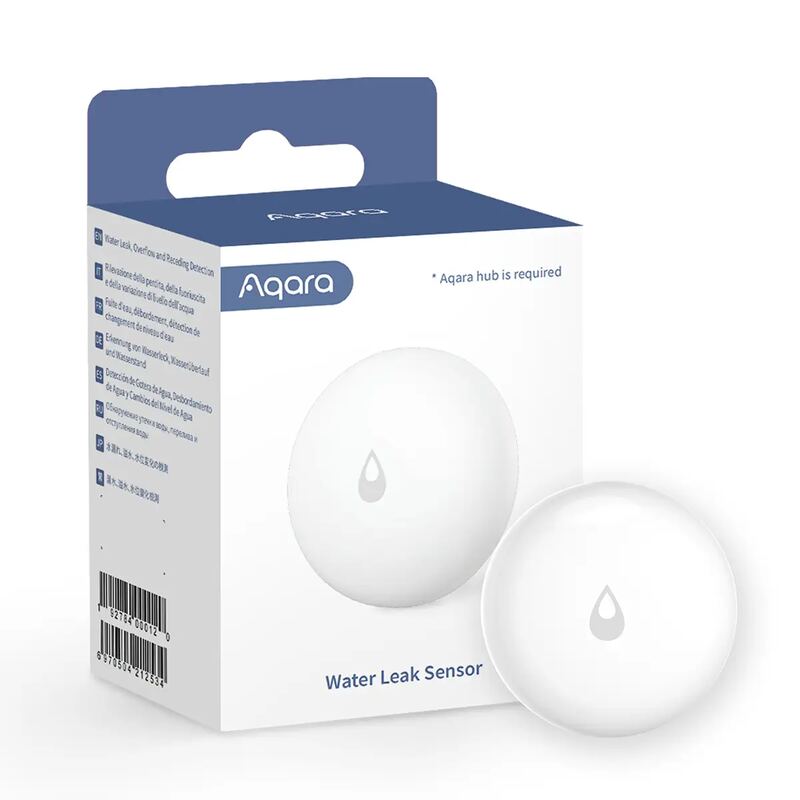
The Shelly Flood Gen4 supports Wi-Fi, Zigbee, Matter and Bluetooth, where the First Alert L1 Wi-Fi Water Leak and Freeze Detector lists Wi-Fi and the Aqara Water Leak Sensor lists Zigbee. It has a built-in alarm, which the First Alert L1's entry says that model lacks, and its sensor cable can be extended up to 150m from the 2m supplied. Its IP44 rating is lower than the IP67 of the Aqara and the SwitchBot Wi-Fi Leak Detector.
Rating sources
Counts as 4.16/5 in our score — this publisher's 181 scores on the site average 4.00, so its scores are adjusted up to compare fairly with other publishers.
“I really like this approach overall. If you have a large basement or a tricky utility closet, you can even daisy-chain cables to extend coverage.”
Not in the average — we derived this score from the review's words, and a publisher printed a score for this product, so the printed number counts instead.
“Shelly Flood Gen4 does not clear flood binary_sensor until next periodic wakeup”
“Unfortunately, after hands-on testing, this device turned out to be one of the more disappointing leak sensors I've evaluated—especially when compared to simpler, less expensive alternatives designed for reliability and low maintenance.”
Counts as 4.48/5 in our score — this publisher's 42 scores on the site average 4.53, so its scores are adjusted down to compare fairly with other publishers.
Our 3.4 score is the average of 3 of the scored reviews above, each adjusted for how strictly its publisher scores; 1 more reviewed it without printing a score and is not in the average. 1 derived score above is not in the average because a publisher printed a score for this product. Ratings marked * were derived from the reviewer’s written analysis or video transcript — the publisher didn’t print an explicit numeric score, so we inferred one from their own words. Click through to verify. More about methodology.