The Aqara Water leak sensor delivers excellent detection performance as demonstrated in testing with both slow trickles and fast flowing water, according to AppleHome Authority. The device features an IP67 rating for waterproofing and dustproofing, making it suitable for humid environments. It measures just 50 × 50 × 15 mm, allowing for tight placement, and uses a CR2032 battery that Aqara claims will last up to two years. However, it requires an Aqara hub for operation, which adds cost and complexity, and its HomeKit integration is limited to basic alert display without advanced automation capabilities.
Full review
Design and physical construction
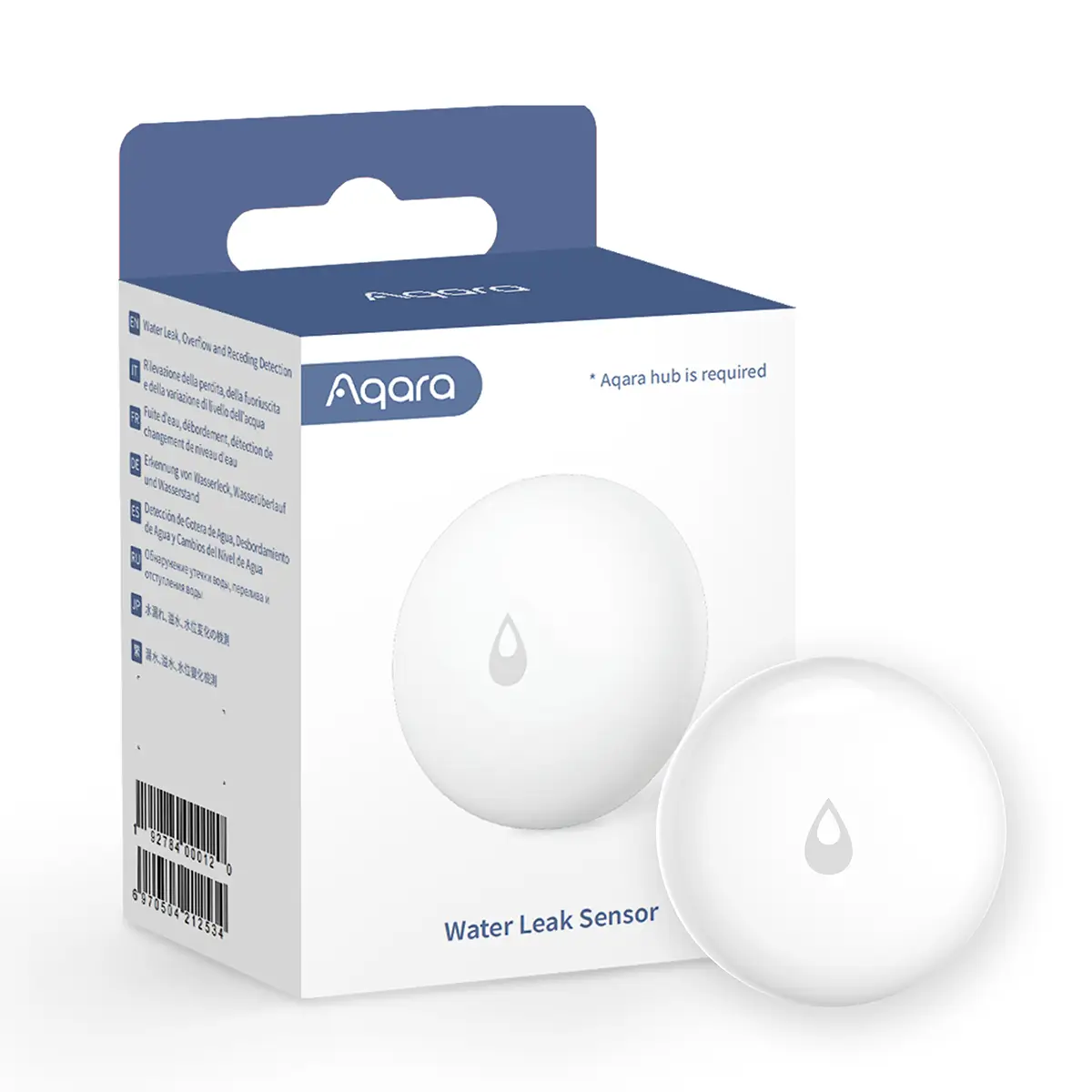
The Aqara Water Leak Sensor measures 50 × 50 × 15 mm, making it compact enough to fit in tight spaces while still being visible enough to locate easily. The device features a glossy white plastic body with a water droplet icon on top, which also serves as the pairing button. Reviewer from AppleHome Authority noted that the top of the sensor is softer than the rest of the body to allow pressing the pair button. The bottom of the device houses the battery compartment and two hex screws that function as water contact sensors. The sensor uses a CR2032 coin battery, which Aqara claims will last up to two years in normal circumstances. According to HomeKit News, the device has a watertight seal and is IP67 rated, meaning it's dustproof and fully submersible up to 1 meter of water. YuWeiss.dev reviewer added that the sensor comes without adhesive, requiring users to secure it themselves, which could be problematic in homes with pets or robot vacuums.
Setup and pairing process
Setup requires an Aqara hub for HomeKit compatibility, though the sensor can also function with the Mi Home app for additional features. AppleHome Authority reported that pairing is straightforward, involving pressing down on the plastic top of the sensor to activate pairing mode, which is indicated by a flashing LED. The process is described as simple and quick. HomeAssistantCoach noted that the sensor pairs instantly once the correct button is pressed, but the reviewer also mentioned the sensor's lack of visible button, which could confuse users unfamiliar with the design. YuWeiss.dev reviewer confirmed that the pairing process is immediate and seamless, but also highlighted the need for securing the sensor to prevent displacement in active environments.
Water detection performance
The sensor's detection performance has been tested in various scenarios, with reviewers reporting excellent results. AppleHome Authority conducted tests simulating both slow trickles and fast flowing water, both of which passed with flying colors. The alert via the Home App was almost instant, and the sensor correctly indicated when the leak was cleared. HomeAssistantCoach tested the sensor by placing it directly in a small puddle, confirming that detection was immediate. The sensor's sensitivity threshold is 0.5mm, as noted by Vesternet, which allows for early detection of even minor leaks. YuWeiss.dev reviewer confirmed that the detection was immediate, with the state in Home Assistant changing to wet instantly upon contact with water. However, the reviewer also noted that the sensor can take up to 10 seconds to reset once triggered, which could be a minor inconvenience.
Battery life and power consumption
Battery life is a significant strength of the Aqara Water Leak Sensor. AppleHome Authority reported that the device uses a standard CR2032 coin battery, and Aqara claims it will last up to two years in normal circumstances. YuWeiss.dev reviewer confirmed that the battery life is excellent, with one sensor running on the same battery for three years in their home. HomeAssistantCoach also noted that the sensor is known for sipping power, which is typical for Zigbee devices. The sensor operates as an EndDevice in ZHA, meaning it cannot act as a router for other Zigbee devices, which is expected due to battery limitations. This design choice, however, means that users need to consider placement to ensure proper network connectivity, especially in larger homes.
Integration with smart home ecosystems
The sensor integrates well with HomeKit when used with an Aqara hub, but it can also be used with the Mi Home app for additional functionality. HomeAssistantCoach reviewed the sensor's integration via ZHA (Zigbee Home Automation) through a Conbee II stick, which worked flawlessly. The sensor reports its own device temperature, which is a useful feature for deployment in outbuildings or roof spaces. However, HomeAssistantCoach noted that the temperature reporting speed is not instant, requiring the device to either detect a leak or check in to report the temperature, which can take up to 50-60 minutes. The temperature reading was accurate within 3 degrees. YuWeiss.dev reviewer confirmed that the sensor integrates easily with Home Assistant and ZHA, and noted that it works flawlessly without the need for the proprietary Aqara hub, provided users already have a Zigbee network in place.
Reliability and network connectivity
HomeAssistantCoach reported significant issues with the sensor's reliability, noting that two out of three sensors would frequently disconnect for days at a time, which is problematic for a device meant to detect urgent issues like water leaks. The reviewer traced this behavior to a quirk of the Aqara sensors, which are not reliable at re-routing through the Zigbee network in the event of a disconnection. This issue was documented on Reddit and other forums, and the reviewer resolved it by using ZHA's Add Devices feature to force a routing, which required multiple tries and a timeout of around 30 minutes for successful re-connection. Despite these issues, once properly configured, the sensors were solid and had no further disconnections. The sensor's ability to function as an EndDevice means it cannot act as a router, which affects its network stability in larger homes.
Comparison with alternative leak sensors
When compared to alternatives like the Fibaro flood sensor, the Aqara Water Leak Sensor offers a compelling value proposition. AppleHome Authority noted that the cost of the Aqara sensor is more compelling when compared to the Fibaro flood sensor, making it a great buy for those on a budget. Vesternet compared the Aqara sensor to the Zigbee Frient Water Leak Detector Probe, highlighting that the Aqara approach is a complete, self-contained detection solution, while the Frient system uses a modular philosophy with probes extending detection capabilities. The Aqara sensor's wireless design eliminates the need for any wiring or screws, allowing immediate deployment wherever water detection is needed. In contrast, the Frient system requires connecting a probe via cable to a base detector unit, which is particularly effective for monitoring washing machine connections and basement areas prone to flooding. The Aqara sensor's IP67 rating ensures reliable operation in humid bathroom environments or dusty basement conditions, while the Frient system excels in scenarios where multiple monitoring points can be managed through a single detector unit.
Strengths
- +Excellent leak detection performance tested with both slow trickles and fast flowing water
- +IP67 waterproof and dustproof rating suitable for humid and dusty environments
- +Compact design measuring 50 × 50 × 15 mm allowing placement in tight locations
- +Battery life estimated up to 2 years in normal circumstances with CR2032 battery
Watch-outs
- −Requires Aqara hub for operation, which is additional cost and setup requirement
- −Limited functionality when used with HomeKit - only displays alerts without additional automation
How it compares
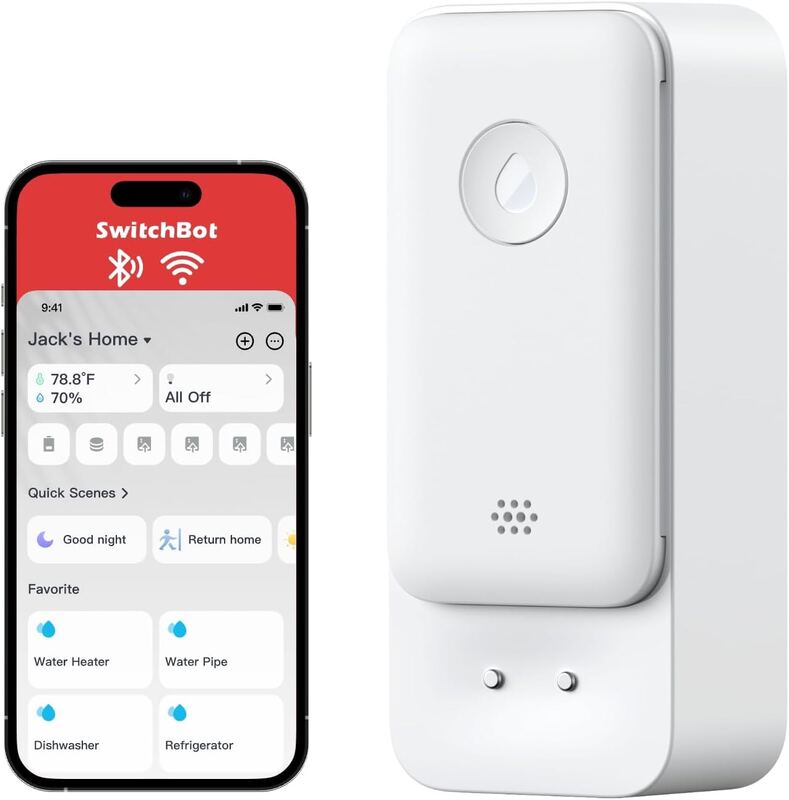
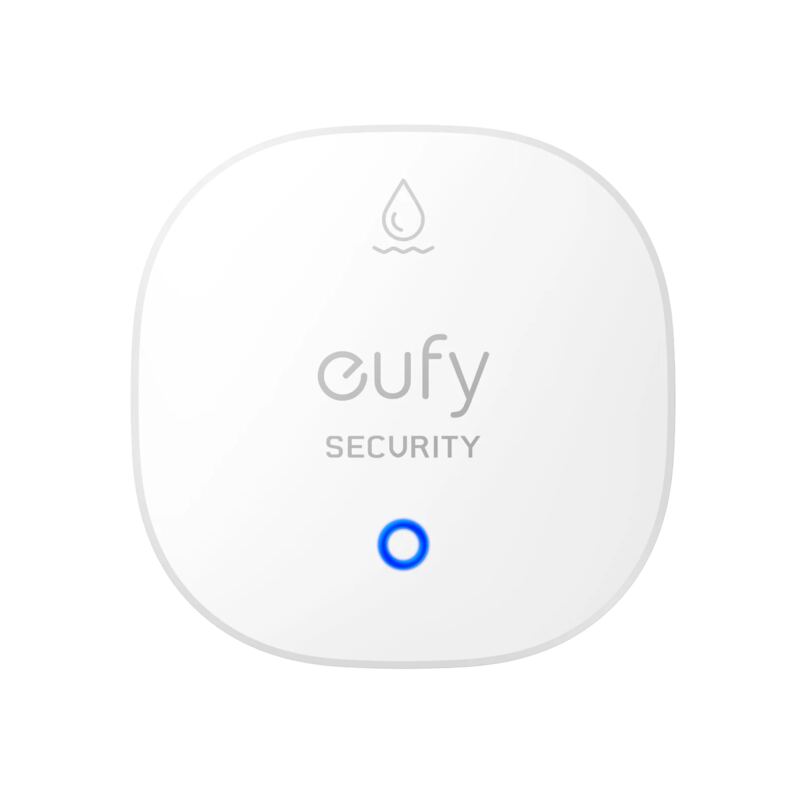
The Aqara Water Leak Sensor shares an IP67 rating with the SwitchBot Wi-Fi Leak Detector, above the IP65 of the Eufy Water and Freeze Sensor and the IP44 of the Shelly Flood Gen4. Like the Eufy it needs its maker's hub, where the SwitchBot connects over 2.4GHz Wi-Fi. Its CR2032 battery is estimated to last up to two years, the same figure the SwitchBot gives for two AAA batteries.
Rating sources
“Aqara is a smart home accessory manufacturer that focuses on reasonably priced HomeKit devices. In this Aqara Water Leak sensor review, we will look at the design, setup and performance.”
“Water detection is performed by contact with water across the bottom two hex bolts. As mentioned above, these can be extended using wires to reach additional places or keep the sensor out of harms way. This relatively primitive method appears to work well with alerting being near instant”
“The sensor communicates via standard Zigbee. This means it connects seamlessly to any ZHA or Zigbee2MQTT dongle.”
“The Aqara Water Leak Sensor is one of the strongest options in its category for 2025.”
Our 4.0 score is the average of the 3 scored reviews above; 3 more reviewed it without printing a score and are not in the average. Ratings marked * were derived from the reviewer’s written analysis or video transcript — the publisher didn’t print an explicit numeric score, so we inferred one from their own words. Click through to verify. More about methodology.