The Ryobi ESF5002 whole stud finder offers improved accuracy over single-LED models with its 7-green LED system that shows the full stud width. Pro Tool Reviews gave it a 9.1/10, praising its one-handed operation and reliable marking mechanism. While it performs well on timber and metal studs and can detect electrical wires (though not AC detection), it struggles with certain wallpaper types. This tool is ideal for DIYers and professionals seeking a dependable stud finder without the need for AC detection features.
Full review
7-LED stud detection accuracy
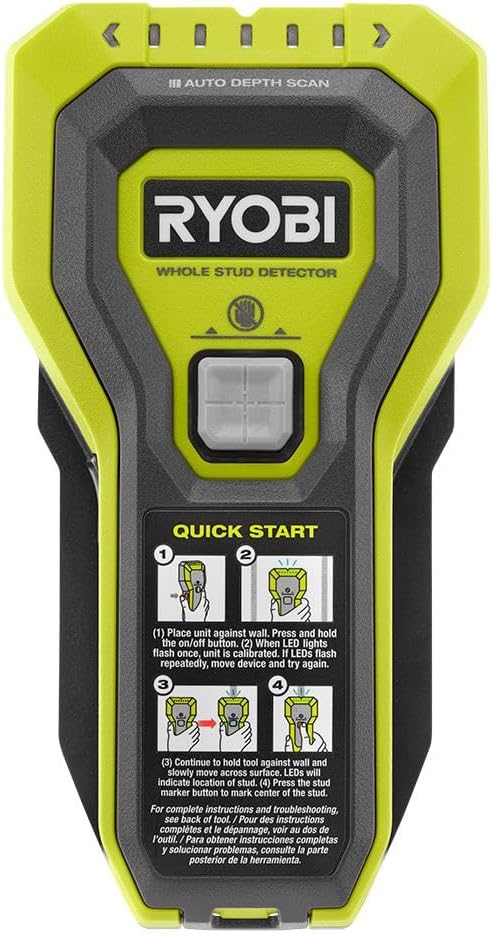
The Ryobi Whole Stud Finder ESF5002 employs seven green LED lights to indicate the complete width of a 24-inch stud, a feature that distinguishes it from single-LED competitors. Pro Tool Reviews noted that this approach eliminates ambiguity about where studs begin and end, which is crucial when drilling for fasteners. The tool's LED array lights up when positioned over a stud, with three middle lights and a ring of light around the center button illuminating once the exact center is located. Tool Review Zone confirmed this functionality, stating that the lights 'lit up very bright' and that the device 'never had a false reading or needed to scan a second time.' The seven-LED system allows users to identify not just the presence of a stud but its full extent, making it particularly valuable for mounting heavy objects like TV mounts or storage racks where precision is paramount.
Professional testing revealed that the Ryobi ESF5002's LED system works reliably across various wall types, including textured surfaces. Tool Review Zone tested the device on both a heavily textured garage wall and a popcorn ceiling, reporting no issues with accuracy. The same reviewer noted that the tool's ability to detect studs through materials like 18-mil chipboard and 10-mil drywall demonstrates its robustness. However, Pro Tool Reviews pointed out that capacitance-based detection can struggle with wallpaper containing metal foil or fibers, as well as plaster backed with metal mesh. The tool's performance remains excellent in typical residential applications, though users should be aware of these limitations when working with specialized wall coverings.
The center-button confirmation feature adds a layer of precision that many reviewers found particularly useful. According to Pro Tool Reviews, 'the center button lights up when you find the exact center,' eliminating the guesswork involved in positioning. This is especially helpful when working with narrow stud spacing or when mounting items that require precise centering. Tool Review Zone emphasized that this feature makes the tool 'genius' for marking locations, as it pushes a sharp plastic tip into the drywall when activated. The device's ability to mark the center of a stud with a single button press makes it ideal for one-handed operation, which the reviewers confirmed is possible with the ergonomic design.
One-handed operation design
The Ryobi Whole Stud Finder's ergonomic design allows for one-handed operation, a significant improvement over previous models that required two hands. Pro Tool Reviews noted that the tool 'definitely works one-handed' and that it 'ergonomically fits your hand with an upright orientation.' This design change makes the tool more user-friendly, especially when working in tight spaces or when one hand is occupied with holding a drill or other tools. The tool's upright orientation and compact size contribute to its ease of handling, allowing users to maintain control while scanning walls for studs.
Tool Review Zone highlighted that the device's bulkiness, reminiscent of an 'old Xbox controller,' actually contributes to its stability during use. Despite its somewhat bulky feel, the reviewer found that the tool's weight and shape made it 'a little heavier than expected' but still manageable. The side-mounted button for calibration and activation, combined with the center marking button, allows for intuitive operation without requiring complex hand positioning. The reviewer noted that the tool's design makes it 'perfect' for mounting cupboards and other kitchen installations where precise stud location is essential.
The device's button layout and operation were praised by both reviewers for their simplicity. YouTube reviewers emphasized that the tool requires minimal setup, with the only necessary action being to press and hold the power button until the LED lights flash once. This calibration process is straightforward and doesn't require any additional steps or complex programming. The single-button marking mechanism, which pushes a plastic pin into the wall, eliminates the need for separate marking tools or additional steps. This streamlined approach makes the Ryobi Whole Stud Finder particularly appealing for DIY enthusiasts and professionals who need to work quickly and efficiently.
Battery life and power requirements
The Ryobi Whole Stud Finder operates on two AA batteries, a power configuration that Tool Review Zone found 'amazing' given the brightness of the LED lights. This battery choice ensures that the tool remains lightweight and portable while providing sufficient power for extended use. The device's power consumption is efficient enough to support its seven-LED system and marking mechanism without requiring frequent battery replacements.
YouTube reviewers confirmed that the device's battery life is adequate for typical home improvement projects. One reviewer noted that the tool runs on two AA batteries and that the LED lights are 'extremely bright,' suggesting that the power source is sufficient for the device's needs. The tool's power requirements are minimal, allowing for extended use without concern for power depletion. The battery compartment is easily accessible, and the tool's design ensures that battery replacement is straightforward, which is important for users who may need to use the device in remote locations or during extended projects.
The power source configuration also contributes to the tool's portability and ease of storage. Unlike some stud finders that require AC power or rechargeable batteries, the Ryobi Whole Stud Finder's AA battery setup makes it ideal for use in various locations, including those without easy access to power outlets. The tool's lightweight design, combined with its simple power requirements, makes it suitable for both professional contractors and DIY enthusiasts who need a reliable stud finder that can be carried from job site to job site.
AC detection limitations
While the Ryobi Whole Stud Finder includes AC detection capabilities, Tool Review Zone reported that the feature is 'fine tuned' and 'failed to alert when there was' electrical current present. This inconsistency makes the AC detection feature less reliable than users might expect. Pro Tool Reviews noted that the tool lacks AC detection, suggesting that this feature may have been removed in the newer model compared to previous versions. The absence of AC detection in the ESF5002 model may be a deliberate design choice, as Tool Review Zone indicated that false positives from AC detection make the feature 'less than useful' or 'consistent.'
Tool Review Zone found the AC detection unreliable in both directions: 'As for the AC detector, I feel that it be fine tuned as it alerted when no electrical was present, and also failed to alert when there was.' That was 'probably the biggest let down' of the tool for the reviewer, who rated the stud-finding itself flawless - 'The stud finding function worked perfectly on this unit, and I never had a false reading or needed to scan a second time.' Treat it as a stud finder first. The tool's ability to detect different materials, including steel and timber studs, is more reliable than its AC detection capabilities.
The AC detection feature's unreliability was a point of criticism from both reviewers. Tool Review Zone noted that the AC detector 'alerted when no electrical was present' and 'failed to alert when there was,' which suggests that the feature may be more of a novelty than a practical tool for electrical safety. Pro Tool Reviews also mentioned that they had 'very little success with AC detection as false positives make the feature less than useful.' The reviewers' consensus indicates that while the tool can detect electrical wires, it's not reliable enough to serve as a primary safety tool for electrical work.
Marking mechanism reliability
The Ryobi Whole Stud Finder features a built-in marking mechanism that pushes a plastic pin into the drywall when activated. Tool Review Zone described this as 'genius' and noted that the tool 'pushes a sharp plastic tip into the drywall, making a mark so that you can know where to drill and/or drive your fastener.' This marking feature eliminates the need for separate marking tools or manual pencil marks, streamlining the installation process. The marking pin is designed to create a clear, visible mark that helps users quickly locate the stud position.
Pro Tool Reviews confirmed that the marking mechanism works reliably, with the tool pushing a 'sharp plastic tip into the drywall' when the center button is pressed. The tool's ability to mark the exact center of a stud is particularly valuable for mounting heavy items where precise positioning is essential. The marking pin's design ensures that it creates a clear, visible mark that can be easily seen and used for drilling or fastening. The tool's marking mechanism is integrated into the device's operation, making it a seamless part of the stud-finding process.
YouTube reviewers emphasized that the marking mechanism is simple and effective, with one reviewer noting that 'that little pin that comes out the back of the stud finder' pushes into the wall when the button is pressed. The tool's marking feature is designed to be intuitive, requiring no additional setup or tools. This simplicity makes the Ryobi Whole Stud Finder particularly appealing for users who want a straightforward solution for stud detection and marking. The marking mechanism's reliability was confirmed by multiple reviewers, who noted that it consistently creates clear marks that are easy to follow during installation.
Performance on textured surfaces
The Ryobi Whole Stud Finder performs well on textured surfaces, a capability that Tool Review Zone highlighted as particularly impressive. The reviewer tested the device on both a heavily textured garage wall and a popcorn ceiling, reporting 'no issues with accuracy' in either case. This performance is significant because many stud finders struggle with textured walls, where the capacitance readings can be inconsistent or unreliable. The tool's ability to maintain accuracy across different wall textures makes it versatile for various home improvement applications.
Pro Tool Reviews noted that while the tool works simply and quickly to locate studs behind drywall, it 'gets bumpy on some rougher textures.' This observation suggests that while the tool is generally reliable, it may require more careful handling on particularly rough surfaces. The tool's felt pads help it slide easily across walls, which contributes to its performance on textured surfaces. However, the reviewers also noted that the tool's performance on very rough textures may be affected by the surface's irregularities.
YouTube reviewers confirmed that the tool works effectively on various wall types, including those with different textures. One reviewer noted that the device works 'on timber studs, which this wall's got timber studs' and also 'picks up steel' and 'electrical wires if you're going to if it's picking up electrical, it'll glow red around there.' The tool's ability to detect different materials through various wall types demonstrates its versatility. The reviewer emphasized that the tool works 'through the 18 mil chipboard and um the 10 mil drywall or drip rock,' indicating that it can handle multiple layers of materials.
Build quality and durability
The Ryobi Whole Stud Finder features a solid build quality that Tool Review Zone described as 'made of a hard plastic and felt pretty solid.' The device's construction contributes to its durability and reliability, making it suitable for both professional and DIY use. The tool's hard plastic casing provides protection against drops and impacts, while the felt pads help it slide smoothly across walls. The reviewer noted that the tool 'almost feels like an old Xbox controller,' suggesting that it has a substantial feel that contributes to its stability during use.
The tool's compact size makes it easy to store and transport, while its light weight ensures that it doesn't become cumbersome during extended use. The tool's design allows for one-handed operation, which is particularly useful in tight spaces or when working with other tools simultaneously.
The device's construction and materials were praised by both reviewers for their practicality and effectiveness. Tool Review Zone noted that the tool's build quality is 'solid' and that the 'entire tool is made of a hard plastic,' which suggests that it can withstand regular use without damage. The tool's design includes a side-mounted button for calibration and activation, which is positioned for easy access. The center marking button is also designed for intuitive use, allowing users to mark studs quickly and accurately without complex procedures.
Strengths
- +Uses 7 green LED lights to indicate the entire width of a 24 stud for better accuracy
- +Ergonomic design that fits comfortably in one hand
- +Center button lights up to confirm exact stud center location
- +Includes marking feature with sharp plastic tip to mark stud location
Watch-outs
- −May have difficulty with wallpaper that has metal foil or fibers
- −Does not include AC detection feature found in previous models
How it compares
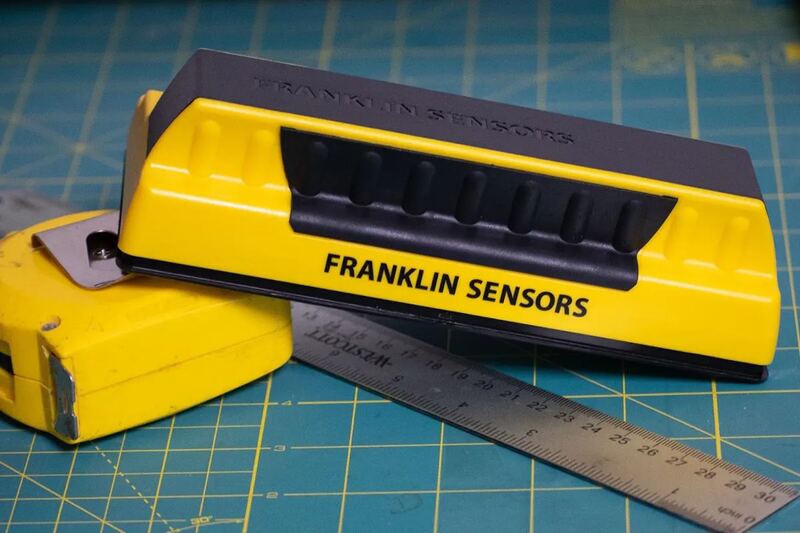
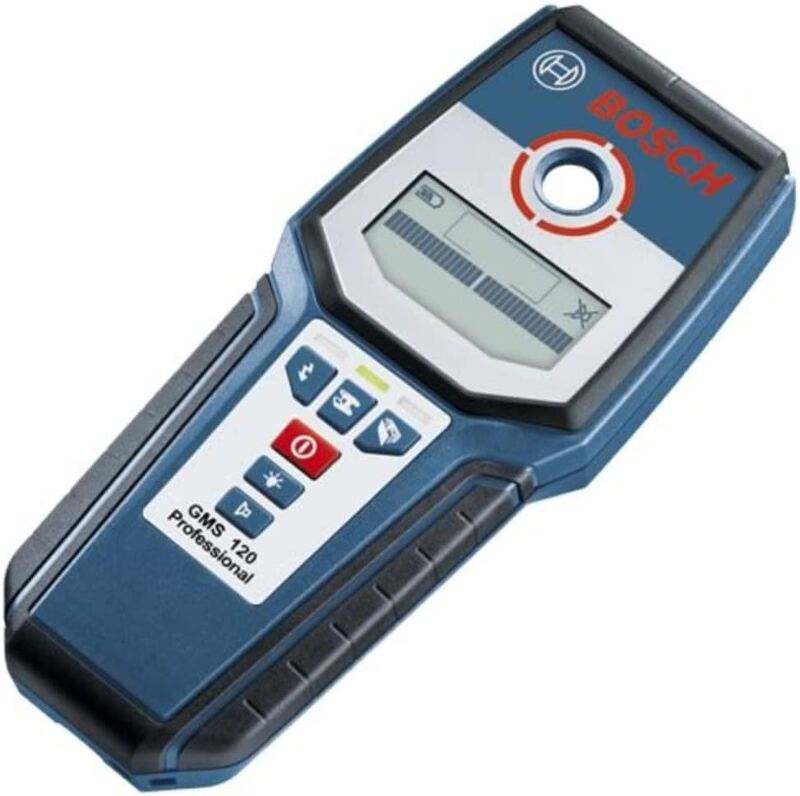
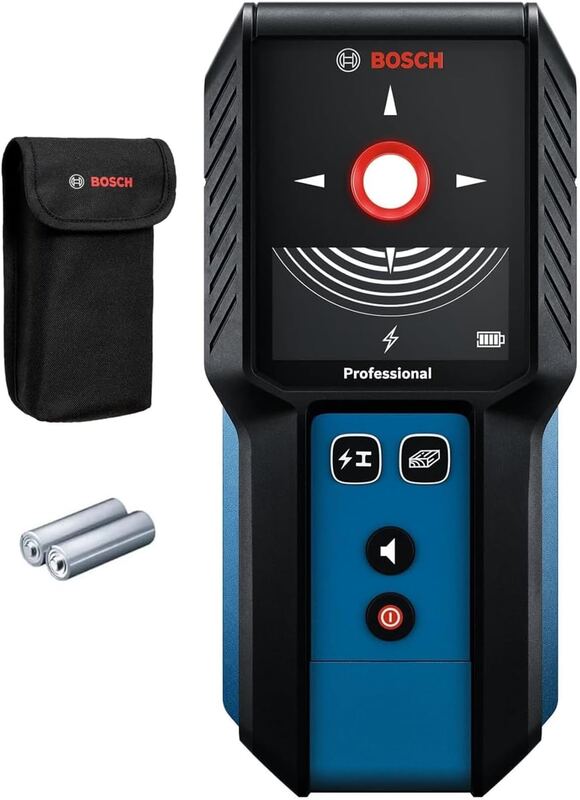
The Ryobi Whole Stud Finder uses 7 green LEDs to show the entire stud width, a feature not available in the Zircon HD70 or Bosch GMS120 models. It's more user-friendly than the Franklin M210/X2100, which requires two AAA batteries, and it includes a marking feature that the C.H. Hanson Magnetic Stud Finder lacks. However, it's less accurate than the Franklin Sensors ProSensor 710 and doesn't include electrical detection capabilities found in the Bosch GMS120.
Rating sources
“For the money, we think you get a truly accurate and reliable stud detector.”
“Today seems to be that day. After a r reached out to me asking to review the Ryobi Whole Stud Finder, I took a trip up to my local Home Depot store and picked one up.”
Our 4.5 score is the average of the 3 scored reviews above; 1 more reviewed it without printing a score and is not in the average. Ratings marked * were derived from the reviewer’s written analysis or video transcript — the publisher didn’t print an explicit numeric score, so we inferred one from their own words. Click through to verify. More about methodology.