Franklin Sensors ProSensor 710 stud finder uses 13 LED sensors to deliver accurate, fast stud detection across a 7-inch scanning area. Reviewers praised its ability to detect multiple objects simultaneously and its quick, definitive results. The device features a sliding deck with an integrated bubble level and is designed for horizontal wall scanning. While reviewers noted the shallow handle makes it slightly difficult to grip, the tool's accuracy and speed make it a standout choice for professionals and DIY users. It's particularly well-suited for those needing precise detection around irregular wall layouts where traditional stud finders might struggle.
Full review
13-LED array detects studs quickly
The Franklin Sensors ProSensor 710 employs a 13-LED array to detect studs and other objects behind drywall, offering a significant improvement over traditional single-sensor models. According to protoolreviews.com, the device 'uses readings from several points on the wall at the same time' and provides 'instantly compare data across a full 7 measurement scanning area.' This approach allows the tool to detect both wood and metal studs with greater accuracy than conventional stud finders that often struggle with irregular wall textures or areas near windows and doors. The device's ability to detect up to two different objects simultaneously is particularly useful when working around light switches or other fixtures where stud proximity may vary from standard 16-inch-on-center layouts. The LED array provides clear visual feedback, with each LED representing a specific measurement point across the 7-inch scanning width, making it easy to identify the exact location and width of detected objects.
Compact design with ergonomic grip
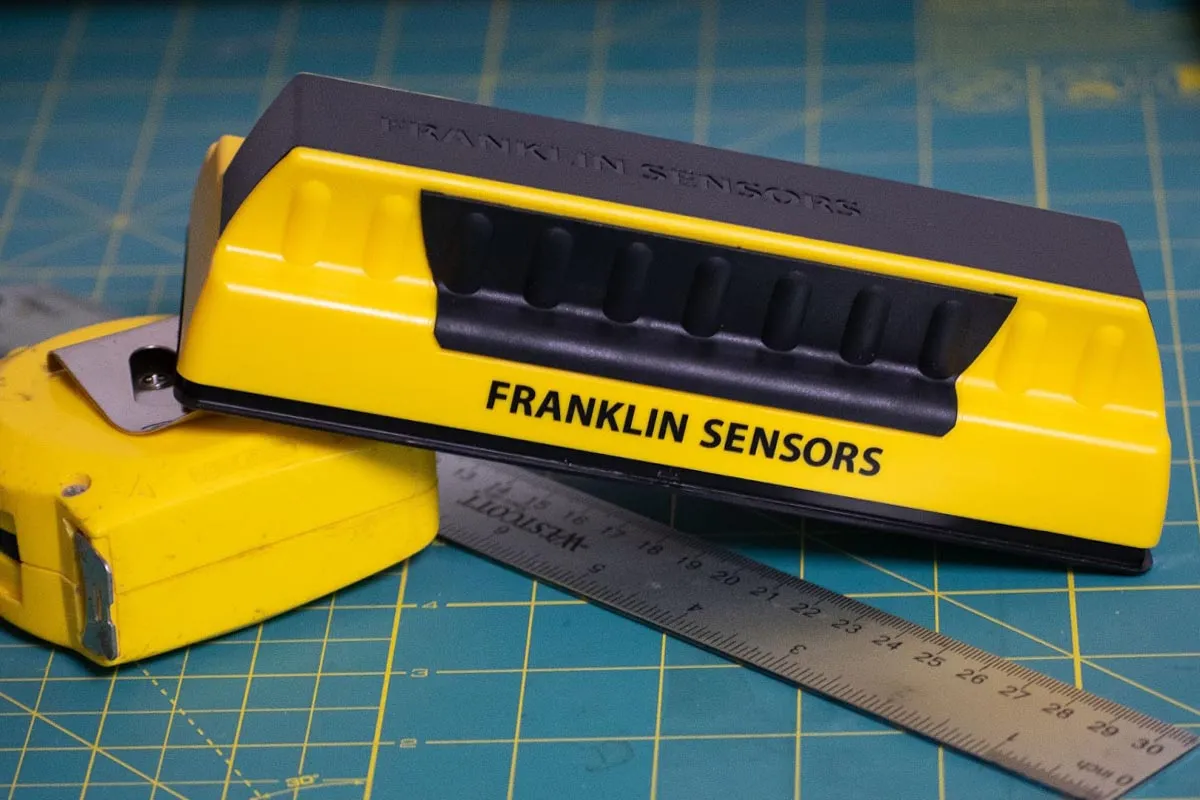
The ProSensor 710 features a compact design measuring just under 7-1/8 inches wide and less than 3 inches tall, making it easy to handle and store. Protoolreviews.com notes that the device 'stands out from the wall about 1-7/8 inches,' with the protruding handle extending across the entire width of the unit. The handle includes an indented plastic button that activates the unit and begins taking readings from the embedded sensors. The tool's design includes a rubber grip for traction, which YouTube reviewer noted as 'nice easy to hold' and 'smooth surface with these plastic Glides so that it slides nice and smoothly across the wall.' The device is designed to be positioned horizontally on the wall while scanning, unlike traditional stud finders that operate in a different orientation. The tool's assembly in the USA is highlighted as a positive feature by the same reviewer, who emphasized that 'what I really like about it is how accurate and userfriendly it is.' The compact size and ergonomic grip make it suitable for users who need precision in tight spaces or who prefer a tool that doesn't require extensive handling.
Battery-powered operation with simple maintenance
The Franklin ProSensor 710 operates on two AA batteries, which fit neatly underneath the black cover on the top of the handle. Protoolreviews.com indicates that the battery compartment is accessible by 'pushing this with my thumb the Black cover pushes over and you just lift it off and there's your two ablea batteries.' The reviewer also notes that 'when you're done just line it back up push you want to push down here and it pops it back into place,' indicating a straightforward process for battery replacement. The device's battery life and ease of maintenance are important factors for professionals who rely on consistent performance in the field. According to the YouTube reviewer, the tool's operation is 'pretty basic' and 'just a handle where you hold on to with a nice easy to hold rubber grip for traction,' suggesting that the tool is designed for simplicity and reliability. The straightforward battery system eliminates the need for complex charging mechanisms or specialized maintenance, making it suitable for users who prefer low-maintenance tools that function consistently.
Superior accuracy in challenging conditions
The ProSensor 710 demonstrates superior accuracy in detecting studs, even in challenging conditions such as when installed behind OSB sheeting. YouTube reviewer demonstrated the device's capabilities by testing it on a wall covered in 7/16-inch OSB sheeting, where the tool successfully identified a stud behind the material. The reviewer noted that 'I thought that the uh sensor would get confused by the OSB it' but found that 'it's finding the stud just fine that's pretty impressive.' This performance is particularly valuable for professionals working in construction or renovation projects where wall materials may vary significantly. Protoolreviews.com emphasizes that the ProSensor 710's 'aggregate sensor readings' provide more accurate feedback than conventional stud finders that can become confused by irregular wall textures. The device's ability to detect both wood and metal studs with minimal sliding across the wall results in 'fast stud finder scanning that seems more accurate.' The reviewer also noted that 'it doesn't have that annoying beeping noise just there's my stud got it,' indicating that the tool provides clear, non-disruptive feedback during operation.
Performance in real-world applications
In practical applications, the Franklin ProSensor 710 proves its value through consistent performance across different wall types and conditions. The YouTube reviewer conducted a demonstration using a scrap piece of drywall clamped to a workbench, comparing the ProSensor 710 against other stud finders including a magnetic model that failed to consistently detect nails or screws. The reviewer noted that 'this is way easier it doesn't have that annoying beeping noise just there's my stud got it,' highlighting the ProSensor 710's superior user experience compared to older models. The tool's performance was particularly evident when detecting studs behind OSB sheeting, where conventional tools might struggle. Protoolreviews.com's review emphasizes that the ProSensor 710 'delivers definitive results more quickly than any stud finder we've yet used,' making it ideal for professionals who need reliable, fast detection in various construction scenarios. The device's ability to identify the width of detected objects, with studs registering as 3 LEDs and facing studs as 6 LEDs, provides additional utility for users who need to understand the full dimensions of hidden wall structures.
Strengths
- +Uses 13 LED sensors to provide aggregate readings across a 7-inch scanning area for more accurate stud detection
- +Detects up to two different objects simultaneously, useful around light switches and irregular wall layouts
- +Provides definitive results more quickly than conventional stud finders
Watch-outs
- −Handle is shallow and slightly difficult to grasp comfortably
- −The handle is somewhat difficult to hold
How it compares
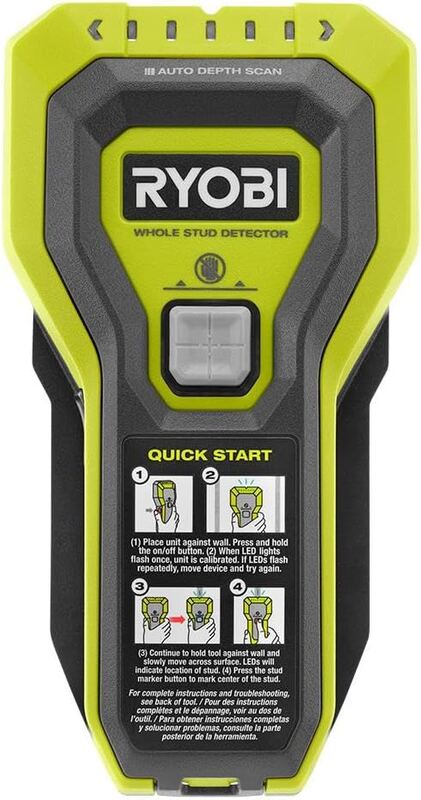
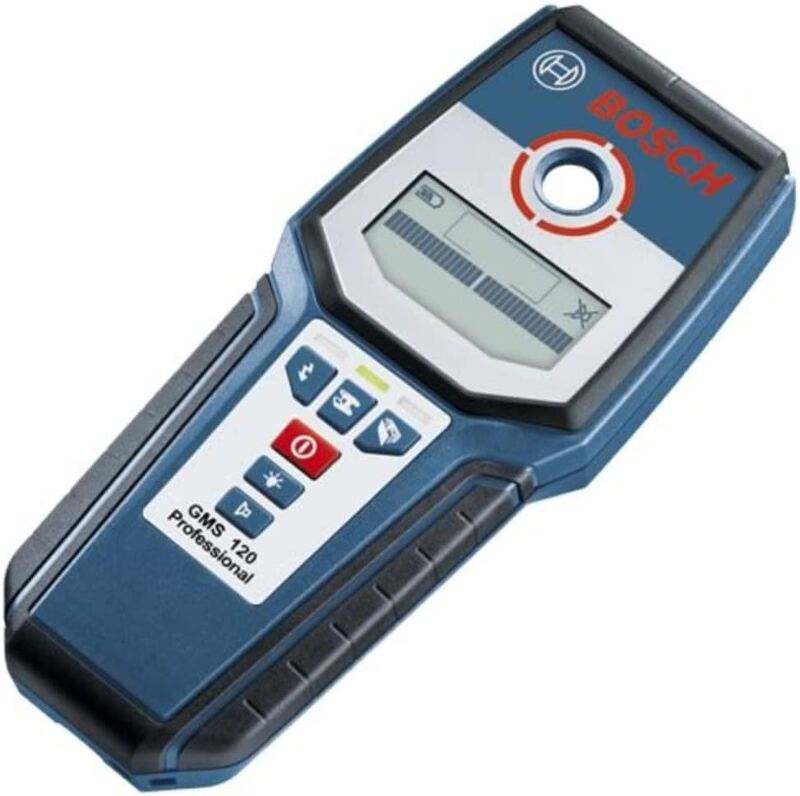
The Franklin Sensors ProSensor 710 stands out from the crowd with its 13 LED sensors scanning a 7-inch area, offering more accurate readings than the Zircon MultiScanner A200 or Bosch GMS120 models. Unlike the Ryobi Whole Stud Finder, it doesn't rely on a single LED indicator but instead provides aggregate readings across a wider scan zone. While it's more accurate than the Studpop Magnetic Stud Finder, it lacks the battery-free operation that makes the C.H. Hanson models so appealing.
Rating sources
“this is way easier it doesn't have that annoying beeping noise just there's my stud got it”
“this one here has 13 sensors in it and it senses by density so it's a pretty simple unit to use”
Our 4.6 score is the average of these published ratings. Ratings marked * were derived from the reviewer’s written analysis or video transcript — the publisher didn’t print an explicit numeric score, so we inferred one from their own words. Click through to verify. More about methodology.