Verdict
The Best 5Reviewed by Mike Hunter·July 7, 2026·checked July 6, 2026

Best Stud Finders

Top 5 stud finders reviewed and ranked.

At a glance5 products
(4 sources)
$59.97Best for: DIYers needing precise drywall stud detection
$59.97 · Check Price on Amazon
(4 sources)
$98Best for: Users needing multi-material detection
$98 · Check Price on Amazon
(4 sources)
$63.99Best for: Professionals needing laser alignment
$63.99 · Check Price on Amazon
(4 sources)
$34.6Best for: Beginners seeking edge detection with alerts
$34.6 · Check Price on Amazon
(4 sources)
$9.59Best for: Budget-conscious buyers tolerating reliability issues
$9.59 · Check Price on Amazon
Verdict is reader-supported. As an Amazon Associate we earn from qualifying purchases. Some links on this page are affiliate links — if you click through and buy, we may earn a small commission at no extra cost to you. Our ratings are sourced from independent publications, not sponsors.

The full ranking

How we rank →
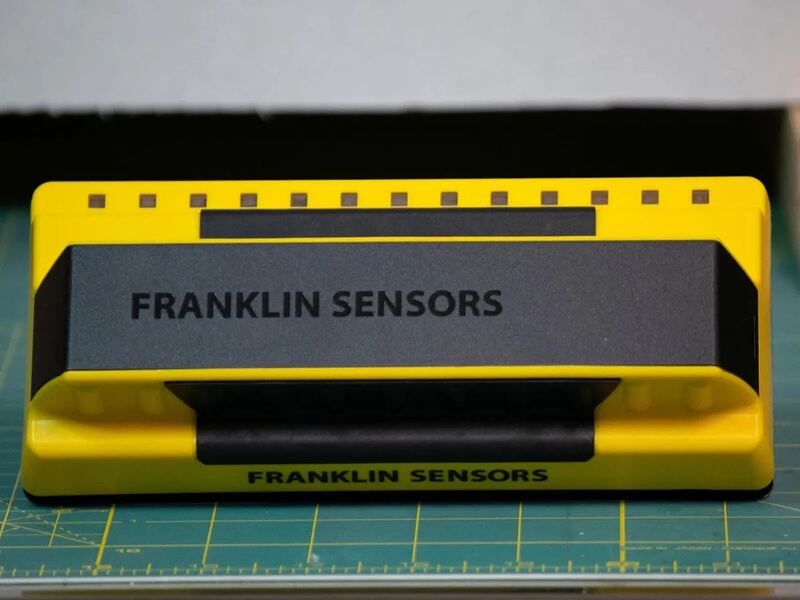
Franklin Sensors ProSensor M210
#1 · Top Score
Best for: DIYers needing precise drywall stud detection
Franklin Sensors ProSensor M210
from 4 sources$59.97as of Jul 6
Why it's ranked here

The Franklin Sensors ProSensor M210 is described as the top-of-the-line stud finder with 13 precision sensors and a 21-LED display that shows full stud width. Pro Tool Reviews called it a 'rock star' for detecting studs in drywall, noting it scans 1.7 inches deep and covers a 7-inch width. The device includes a built-in bubble level and live wire detection but performs poorly on plaster and lathe. It's priced at $59.97 with a 3-year warranty and is made in the USA.

Strengths
  • 13 precision sensors provide accurate and instant identification of entire stud width without calibration required
  • 21 LED display shows full width of studs, double studs, and irregular configurations other stud finders cannot detect
Watch-outs
  • Not optimal for detecting studs in plaster and lathe materials
  • Most effective on standard drywall only
Bosch GMS120-27
#2
★ Premium Pick
Best for: Users needing multi-material detection
Bosch GMS120-27
from 4 sources$98as of Jul 6
Why it's ranked here

The Bosch GMS120 Wall Scanner is a multi-detection device that finds wood studs, metal objects, rebar, copper, and live wiring. Reviewers noted its accuracy in detecting copper pipe and live wiring, with one reviewer calling it 'one of the most accurate scanners around, for its size and price.' The unit performs well in drywall and plaster environments but had difficulty detecting live wires in conduit. One reviewer found the display hard to read when the backlight was on, and another noted it was tough to pinpoint exact locations. It's recommended for users needing more than basic stud detection, though those focusing primarily on live wiring may want alternatives.

Strengths
  • Detects multiple material types including wood studs, metal objects, rebar, copper, and live wiring
  • Features large, easy-to-read display with visual, audible, and tactile alerts
Watch-outs
  • Display visibility issues with backlight enabled
  • Difficult to detect live electrical wires in conduit
Klein Tools ESF150LL
#3
Best for: Professionals needing laser alignment
Klein Tools ESF150LL
from 4 sources$63.99as of Jul 6
Why it's ranked here

The Klein Tools ESF150LL Electronic Stud Finder with Cross-Line Lasers offers reliable detection of wood and metal studs up to 1-1/2 inches deep. Reviewers praised its dual cross-line lasers that work independently or together, clear LED indicators, and ergonomic design with wall-protecting felt pads. The device features a hold mode for continuous scanning and includes a bubble level vial for quick alignment. While users appreciate its durability and accuracy, some noted the need for calibration before each use and its limited scan depth compared to higher-end models. This stud finder is ideal for contractors and DIY enthusiasts seeking a dependable tool for wall marking and installation tasks.

Strengths
  • Detects hidden wood and metal studs with auto deep scan up to 1-1/2-Inch
  • Features horizontal and vertical cross-line lasers usable together or independently
Watch-outs
  • Requires calibration prior to each use
  • Limited to 1-1/2-Inch scan depth
Zircon StudSensor A100
#4
Best for: Beginners seeking edge detection with alerts
Zircon StudSensor A100
from 4 sources$34.6as of Jul 6
Why it's ranked here

The Zircon StudSensor™ A100 is an edge-locating stud finder designed for ease of use with dual scanning modes. Reviewers noted its ability to detect both wood and metal studs up to 1½ inches deep, along with its WireWarning® feature that alerts users to live electrical wiring. The device includes a SpotLite® pointer and LCD display for clear indication of stud edges. While praised for its functionality, some users may find the need for separate 9V batteries and its limitation on lath and plaster walls as drawbacks.

Strengths
  • StudScan mode locates edges of wood and metal studs up to 3⁄4 in. (19 mm) deep
  • DeepScan® Mode doubles scanning depth to locate edges up to 11⁄2 in. (38 mm) deep
Watch-outs
  • Requires 9V alkaline batteries (not included)
  • Not recommended for use on lath and plaster
Craftsman CMHT77633
#5
Best for: Budget-conscious buyers tolerating reliability issues
Craftsman CMHT77633
from 4 sources$9.59as of Jul 6
Why it's ranked here

The CRAFTSMAN CMHT77633 3/4-in Depth Stud Finder is designed for detecting both wood and metal studs through drywall and surfaces covered in wallpaper or fabric. Reviewers noted its durability with a shock-resistant, water-resistant body and integrated AC detection. However, user feedback highlights significant reliability issues, with multiple reports of calibration failures and inconsistent performance after initial use. The product's limited lifetime warranty offers some protection, but many reviewers expressed disappointment with its functionality. This tool is best suited for users who need basic stud detection and can tolerate potential reliability concerns.

Strengths
  • Works on wallpaper and fabric with depth range of ¾-in through drywall
  • Locates stud edges of both wood and metal studs
Watch-outs
  • Frequent calibration issues reported by users
  • Inconsistent sensing performance after initial use
Reviews aggregated from
The New York TimesProtoolreviewsGlobaltestsupplyFranklinsensorsOutdoorlifeToolsinactionOneprojectcloserBoschprofessional

Spec comparison

5 products
vs
SpecFranklin Sensors ProSensor M210Bosch GMS120-27
Detection Depth1.7 inchesUp to 2
Battery Type2 AA9V
Sensors13pair of sensors
Weight11.5 oz0.6 lbs
Materialglobal materialsPlastic
Features21

Frequently asked questions

What is the best stud finder?
Franklin Sensors ProSensor M210 is our top pick for stud finders, with an averaged rating of 4.5/5 from 4 published reviews. The Franklin Sensors ProSensor M210 is described as the top-of-the-line stud finder with 13 precision sensors and a 21-LED display that shows full stud width. Pro Tool Reviews called it a 'rock star' for detecting studs in drywall, noting it scans 1.7 inches deep and covers a 7-inch width. The device includes a built-in bubble level and live wire detection but performs poorly on plaster and lathe. It's priced at $59.97 with a 3-year warranty and is made in the USA.
Is there a cheaper alternative worth considering?
Craftsman CMHT77633 (around $9.59) rates 3.4/5 in our analysis. The CRAFTSMAN CMHT77633 3/4-in Depth Stud Finder is designed for detecting both wood and metal studs through drywall and surfaces covered in wallpaper or fabric. Reviewers noted its durability with a shock-resistant, water-resistant body and integrated AC detection. However, user feedback highlights significant reliability issues, with multiple reports of calibration failures and inconsistent performance after initial use. The product's limited lifetime warranty offers some protection, but many reviewers expressed disappointment with its functionality. This tool is best suited for users who need basic stud detection and can tolerate potential reliability concerns.
How does Verdict rank these products?
Every rating on Verdict is the numerical average of scores published by independent review sites, YouTube reviewers, and Reddit buyer reports. No editor adjusts the order — the ranking is whatever the source data produces. See our methodology page for the full process.
When was this guide last updated?
This guide was last re-checked in July 2026. We re-run our research pipeline for each category on a rolling basis so prices and rankings reflect current market reality.

Related guides

Browse all →