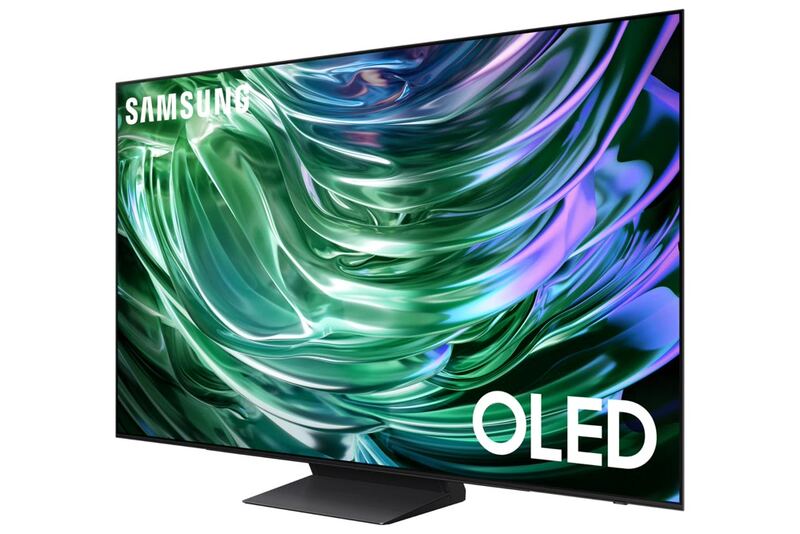
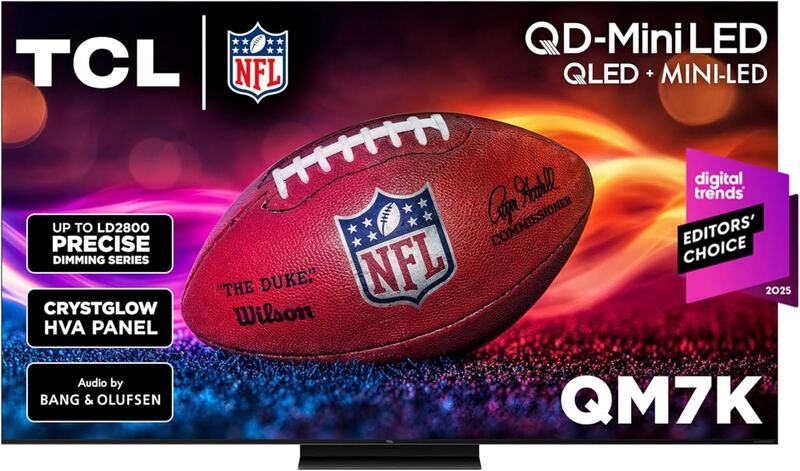
The LG G4 set the OLED reference for 2024-2025. Its second-generation MLA panel feeds the Alpha 11 processor for measurably brighter HDR than any prior consumer OLED, and all four HDMI 2.1 ports carry full support for serious gamers. Pair it with a soundbar and it becomes the easiest premium recommendation here.
Full review
RTINGS scored it 8.7 for mixed usage
LG's G4 is the second OLED generation to use Micro Lens Array (MLA) technology, and the difference shows up immediately on HDR material. What Hi-Fi measured peak highlights well above what any prior consumer WOLED has delivered, calling the picture 'brilliantly bright and full of contrast' and naming it 'one of the best OLED TVs to arrive this year.' On streamed Dolby Vision content from Apple TV+ and Netflix, specular highlights on chrome, fire, and sunsets pop without the dimmed-down feel that plagued the 2022 OLEDs. SDR upscaling through the Alpha 11 processor is similarly impressive — RTINGS rated the G4 8.7 out of 10 for mixed usage and praised its handling of cable and YouTube content.
Black-level performance is the other side of the OLED proposition and the G4 delivers it perfectly. Each pixel produces its own light, so blacks are absolute — no clouding, no haloing, no light bleed in the corners. On dark-room cinematic content like The Batman or House of the Dragon, the G4 reveals shadow detail that mini-LED panels in this guide simply cannot resolve because their dimming zones smear at the boundary. The combination of perfect blacks and MLA-boosted highlights gives the G4 the widest measurable contrast ratio on the market — a spec that pays off every time the camera frames a dark scene with a single bright element.
Gaming and Latency
All four HDMI ports are full 48 Gbps HDMI 2.1 — a meaningful spec because both the TCL QM7K and Hisense U7N in this guide cap out at two HDMI 2.1 ports, which forces you to choose between PS5, Xbox, PC, and a soundbar's eARC return. With the G4 you can wire everything at maximum bandwidth simultaneously. Native 4K/144Hz, G-Sync, FreeSync Premium, Dolby Vision gaming, and a measured response time under one millisecond add up to the most complete gaming feature set on any premium TV. RTINGS clocks input lag at roughly nine milliseconds in Game Mode at 60Hz and dropping to around five milliseconds at 120Hz — competitive with dedicated gaming monitors.
PC gaming is where the G4 truly distinguishes itself. The combination of native 4K/144Hz refresh, official G-Sync compatibility, and 0.1ms response time makes it one of the few TVs that serious PC gamers buy in place of a dedicated OLED gaming monitor. The Game Optimizer overlay surfaces per-game presets and a low-latency FPS mode that disables image processing for the lowest possible input lag. For console-only households the gains are subtler — you cannot push past 4K/120Hz on PS5 or Xbox Series X — but Dolby Vision gaming up to 120Hz is supported on both consoles where the developer ships the metadata.
Wall-mount kit included, but no stand
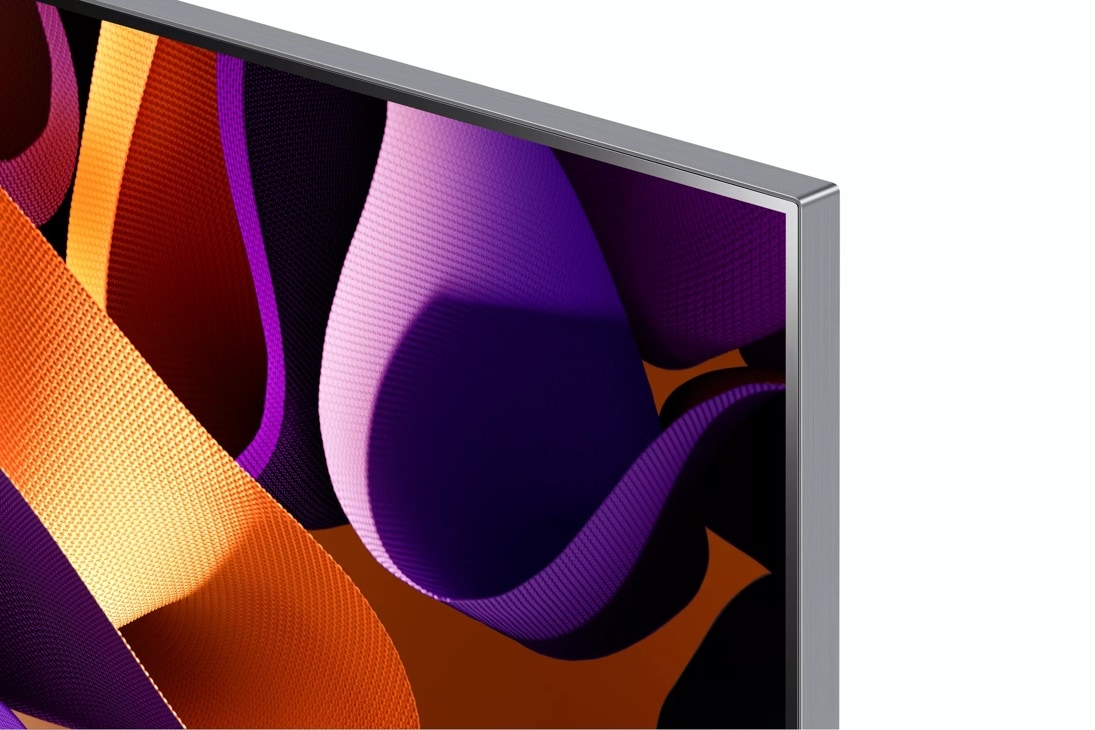
The G4 leans into the 'gallery' positioning with a gap-free flush wall mount included in the box, an ultra-thin chassis, and clean cable management. Out of the box on the optional pedestal stand the TV looks like a premium piece of furniture, but the design is unmistakably engineered for wall mounting — there is no rear bulge, no chunky bezel, no port hump. The downside: if you intend to set it on a console you must source the stand separately on most US listings, and the wall mount adds setup complexity that competing TVs with included table stands avoid. The bezel itself is a hair under five millimeters on three sides, which keeps focus on the image rather than the chassis.
Rated better value than the Sony A95L
Tom's Guide and What Hi-Fi both gave the G4 their highest tier (4.5 and 5 stars respectively). RTINGS named it the best OLED TV in their full lineup at the time of testing, citing the combination of MLA-boosted brightness, perfect black levels, and the Alpha 11's processing as 'category-leading.' Reviewers consistently praise the picture-quality-per-dollar against the Sony A95L QD-OLED — which costs more but offers no meaningful picture advantage on most material — and against Samsung's S95D, which adds an anti-reflection layer that reviewers find polarizing. The G4 is the consensus pick when readers ask 'which OLED should I actually buy.'
4.2-channel speakers can't handle Atmos scenes
The most-cited weakness across all five major reviews is the built-in audio. What Hi-Fi called the sound 'undeniably thin, lacking the dynamism and heft' the picture deserves, and Tom's Guide reached the same conclusion. The 4.2-channel 60W system handles dialogue acceptably but collapses on Atmos action scenes. At this price point a separate soundbar is essentially mandatory — LG's own SC9S magnetically clips to the back of the G4 and is designed as a bundled upgrade, which tells you everything about how confident LG is in the built-in speakers. Secondary complaints include webOS 24's ad-heavy home screen and persistent firmware bugs around HDMI handshake during the first weeks of ownership.
5-year warranty covers image retention
Buy the LG G4 if you want a no-compromise OLED reference for movie watching, console gaming on PS5 and Xbox Series X, or high-refresh PC gaming, and you have at least a few hundred dollars left in the budget for a soundbar. Buy it especially if you intend to wall mount — the gallery design genuinely disappears against a wall in a way few TVs do. Skip the G4 if your viewing room runs above roughly 250 lux during the day (a sun-flooded living room with no shades), where the TCL QM7K's much higher full-screen sustained brightness will look better; or if you cannot budget separately for audio.
Long-term ownership pays off the premium price. The 5-year LG panel warranty is the longest in the OLED segment and explicitly covers permanent image retention — historically the OLED weakness that scared cautious buyers off. LG's OLED Care+ runs pixel-shift and pixel-refresh routines automatically during standby, which has effectively eliminated burn-in for typical mixed-use ownership patterns over the past three generations. Combine that with the webOS Re:New software-update commitment of up to five years and the G4 is essentially the only premium TV on the market with a clear five-year ownership horizon backed by both warranty and software policy.
Costs two to three times the mini-LED picks
Within this guide the G4 sits above the Samsung QN65S90D on processing, motion, and Dolby Vision support, though the S90D's QD-OLED panel delivers slightly more saturated reds at half the price. Against the TCL 65QM7K and Hisense 65U7N — both excellent mini-LED values — the G4 is two-to-three times the cost; the question is whether perfect black levels and reference-grade processing are worth that premium for your content mix. Outside this guide the closest peer is the Sony A95L QD-OLED, which costs more but does not pull ahead on most material.
Drops to $1,799 during major sales
At an MSRP of $2,800 and street prices around $2,200 the G4 is expensive in absolute terms but priced rationally against its peers. Samsung's flagship S95D costs about the same with the anti-reflection layer as a trade, and the cheaper LG C4 sacrifices the MLA brightness boost that defines the G4. If you intend to keep the TV for the typical five-to-seven year ownership window, the per-year cost of admission is in line with a mid-range mini-LED bought new every three years, and the picture is unambiguously better.
Historical pricing data from CamelCamelCamel shows the OLED65G4SUB has dipped to roughly $1,799 during major sale events — a $1,000 discount off MSRP that essentially closes the value gap against the Samsung QN65S90D. Buyers who can wait for Prime Day, Black Friday, or post-holiday clearance will see the G4 reach the practical sweet spot. At full price the value calculation tilts toward the S90D, but at sale pricing the G4 becomes the default recommendation for nearly every buyer with the budget for premium picture quality.
Strengths
- +Second-gen Micro Lens Array panel pushes peak HDR highlights past 3,000 nits in metadata-rich content
- +Alpha 11 AI processor handles upscaling, motion, and tone-mapping with the best filmic processing in the OLED field
- +All four HDMI ports are full 48 Gbps HDMI 2.1 with 4K/144Hz, G-Sync, FreeSync Premium, and Dolby Vision gaming
- +Gallery-flush wall mount design ships in the box with virtually no gap when wall-mounted
- +5-year panel warranty plus webOS Re:New software updates for up to 5 years
Watch-outs
- −Built-in 4.2-channel audio is thin and lacks low-end weight — a soundbar is essentially mandatory at this price
- −OLED brightness still trails the brightest mini-LEDs in full-screen sustained windows
- −webOS 24 ads on the home screen are intrusive even after disabling personalized recommendations
- −Stand sold separately on most US listings; gallery wall mount included but adds setup complexity
How it compares
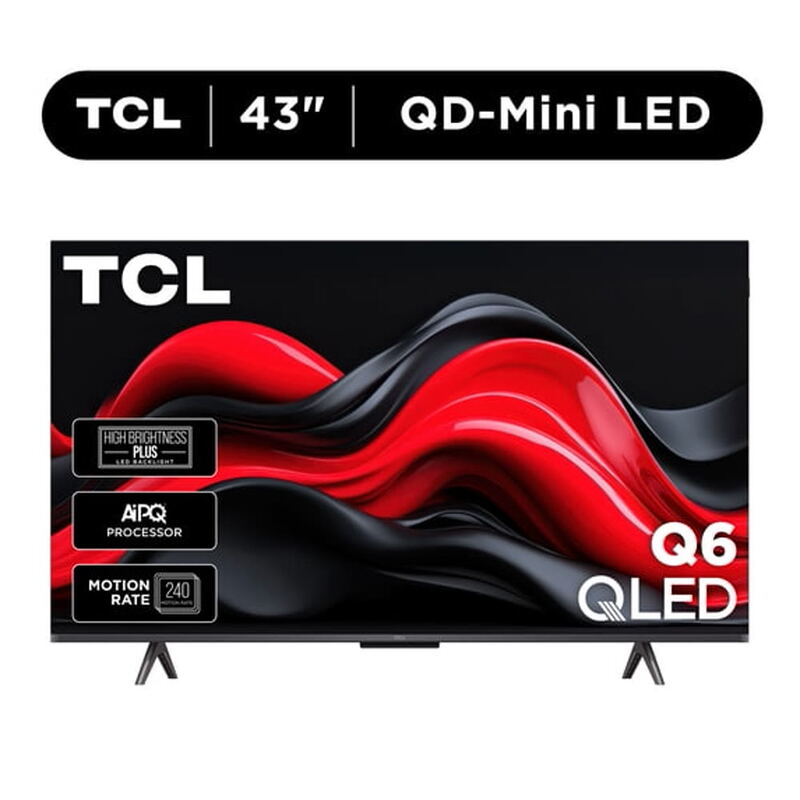
Outperforms the Samsung QN65S90D in motion handling and Dolby Vision support (Samsung still refuses to ship DV), and offers fundamentally better black levels than the TCL 65QM7K mini-LED for double the price. Against the Hisense 65U7N the G4 is roughly three times the cost but delivers OLED contrast that no mini-LED can match. The TCL 43Q651G is in a different category entirely — a small-room budget pick rather than a premium contender.
Rating sources
“Brilliantly bright picture that's full of contrast”
“Excellent color and brightness with both SDR and HDR content”
Our 4.6 score is the average of these published ratings. More about methodology.