The Hisense U7N is the value sweet spot of the entire 4K TV market — a 384-zone mini-LED panel with Dolby Vision IQ, 144Hz refresh, and full gaming features for under $800 street. It rewards a few minutes of picture-mode tweaking with picture quality that would have been flagship-tier three years ago, and street pricing routinely drops it to $680 on sale.

Full review
Real-World Performance
The Hisense U7N is a 2024 mid-range mini-LED that quietly became the best mini-LED dollar-for-dollar on the US market. TechRadar called it 'a budget mini-LED 4K TV that out-performs its price' and gave it 4.5 out of 5 stars. The 65-inch model uses a 4K VA panel with quantum dots and a 384-zone mini-LED backlight, reaching peak brightness around 1,500 nits on small HDR windows. RTINGS rated it 8.2 for mixed usage, calling out 'great performance and features on a budget.' For comparison, that 1,500-nit peak is roughly half of premium mini-LEDs costing three to four times more — far beyond what any sub-$800 TV could deliver as recently as 2023.
The Hi-View Engine Pro processor handles tone mapping, upscaling, and motion processing competently for the price tier. SDR content from cable boxes, YouTube 1080p, and DVD upscaling all look noticeably sharper than budget LED competitors thanks to the quantum-dot color volume and reasonable motion handling. The U7N's panel uniformity is solid for a VA design — minor flashlighting at the corners on a 100% black screen but invisible on real content. Reddit threads on r/4kTV consistently land on the U7N as the price-to-performance reference, with users reporting that a one-evening calibration brings out picture quality competitive with $1,500 sets from 2023.
Picture Quality and Local Dimming
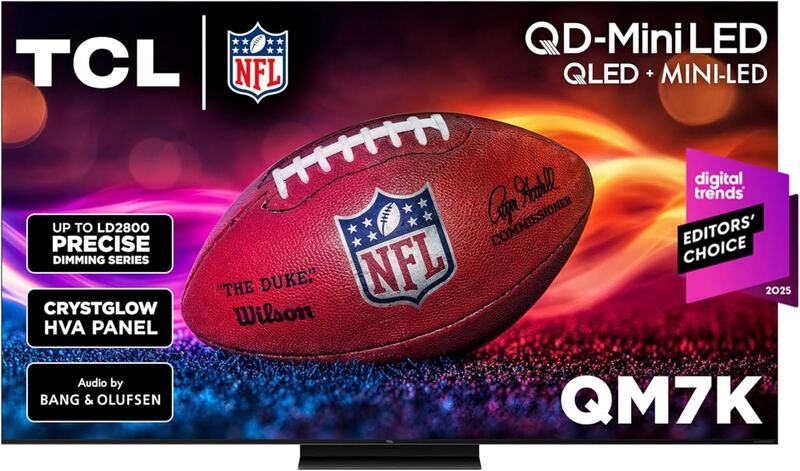
What Hi-Fi praised the U7N's 'solid dimming zone control' that lets it 'throw up a nicely three-dimensional, solid-looking picture that is one of the best you'll find on a set at this price.' The 384 local dimming zones are not the highest in the segment (the TCL QM7K offers more refined optics) but they are enough to make HDR content meaningfully better than a non-zoned TV. The catch, in What Hi-Fi's words: the U7N 'can struggle with very bright scenes, where it has a tendency to push too hard and flatten sections of the picture.' Spending 10-15 minutes in the picture menu reducing dynamic backlight and disabling motion smoothing largely fixes this.
Gaming Features
For under $800 the U7N has a genuinely surprising gaming feature set: native 144Hz refresh on the panel (consoles cap at 120Hz, PC gets the full 144), VRR with FreeSync Premium support, ALLM, Dolby Vision gaming, and a Game Bar overlay. RTINGS measured input lag in the 10-12ms range at 60Hz Game Mode and below 7ms at 120Hz. The HDMI loadout matches the TCL QM7K — two HDMI 2.1 ports out of four — so the same constraint applies: soundbar plus one full-bandwidth console works, two full-bandwidth consoles plus a soundbar does not.
The Game Mode Pro overlay also adds a frame-rate counter and a customizable low-latency crosshair, both genuinely useful for competitive shooters at the price point. Hisense's implementation of Dolby Vision Gaming kicks in automatically on PS5 titles that ship the metadata (currently around two dozen games including Gran Turismo 7 and Resident Evil 4 Remake), and the panel's brightness is comfortably sufficient to make those scenes pop. PC gamers running RTX-class cards at 4K/120 will find the U7N delivers most of the gaming-feature value of a $1,200 monitor for the price of a mid-range one.
Setup and Smart OS Quirks
Initial setup walks through Google TV's standard configuration in about 8 minutes — sign in, install apps, accept Hisense terms — and the home screen is the same Google TV interface running on the TCL QM7K and standalone Chromecast streamers. Bluetooth pairing for headphones works cleanly, AirPlay 2 reliably mirrors from iOS, and Chromecast picks up any phone or tablet on the same network. Buyers coming from a Roku or Fire TV will need 15 minutes to relearn the home-screen layout, but Google TV's content discovery is meaningfully better than either competitor's once configured.
HDR Format Support
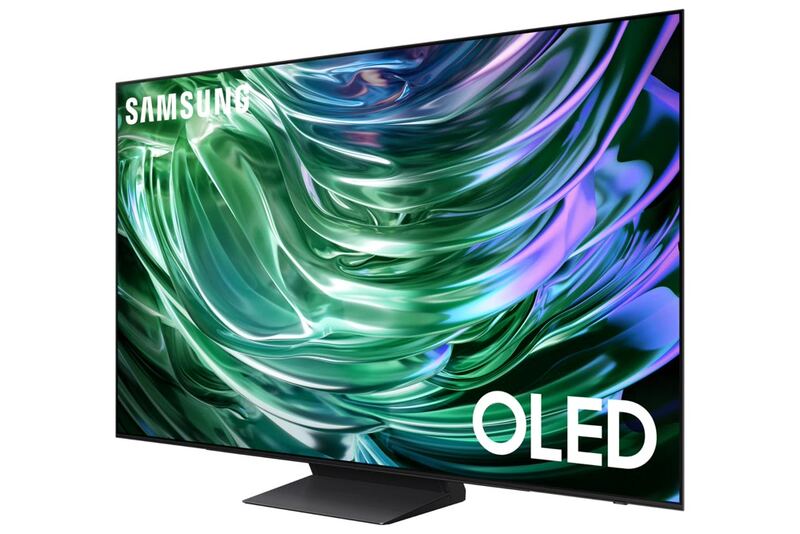
The U7N is one of the rare TVs that supports both Dolby Vision (with the IQ ambient light variant) and HDR10+, in addition to baseline HDR10 and HLG. Most TVs in this price range pick a side: Samsung backs HDR10+ and ignores Dolby Vision, LG and Sony back Dolby Vision and ignore HDR10+. The U7N runs both, which means streaming services that ship in either format will use their dynamic metadata properly. For viewers with a mixed Netflix-Disney+-Prime Video diet, this is a practical advantage over the Samsung QN65S90D or anything that locks to one ecosystem.
Where It Falls Short
What Hi-Fi was direct about the U7N's main weakness: its default picture settings are 'slightly obtuse' and the TV is one of the most-tweakable-to-good-result sets on the market — meaning out of the box it underperforms its potential. Bright HDR scenes can clip and flatten if dynamic backlight is left at default, and motion smoothing is aggressive by default. The 40W 2.1-channel audio is thin and adequate at best for dialogue. The remote is small and lacks back-lit keys. And, like its premium peers, the U7N only ships two HDMI 2.1 ports — fine for single-console households, limiting for multi-console gamers.
Long-term reliability is another consideration. Hisense's warranty is one year, the standard at this price tier but markedly shorter than the LG OLED G4's five-year panel coverage. Reports of failed backlight LEDs after 18-24 months exist on Reddit threads but are not statistically prevalent — most owners report no issues over the typical ownership window. Buyers concerned about long-term durability should consider an extended protection plan, which adds roughly $80-120 to the total cost and pushes coverage to four years; even at that adjusted total the U7N is the value leader in this guide.
Who It's Best For
The U7N is the right answer for budget-constrained buyers who still want a real mini-LED HDR experience — bedrooms, secondary living rooms, college apartments, dorm rooms, first-TV purchases. It's also a strong pick for buyers who watch a mix of Dolby Vision and HDR10+ content and don't want to pick an ecosystem. Pair it with a soundbar, spend 15 minutes calibrating, and you have a 95% experience for sub-$800. Skip the U7N if you can stretch to the TCL QM7K — for $200-300 more you get the Halo Control optical layer, anti-reflection coating, 144Hz refresh in a more polished panel, and Onkyo audio — or if you need flagship-tier dim-room contrast (look at the Samsung QN65S90D or LG OLED G4).
How It Compares to Alternatives
Against the TCL 65QM7K the U7N gives up roughly 1,000 nits of peak brightness, the Halo Control optical stack, anti-reflective coating, and the Onkyo audio tuning — for a price savings of roughly $200. Against the entry-level OLEDs of two years ago (the LG B3 era) the U7N is brighter and arguably more practical for windowed rooms while costing less. Within its segment it is the consensus best-buy for sub-$800 mini-LED. Outside this guide the closest peers are the TCL Q7 (slightly cheaper but no mini-LED) and the Samsung Q80D (more expensive but limited Dolby Vision).
Value at This Price
The U7N launched at $999 and street pricing has consistently sat between $680 and $799 since mid-2024. At those numbers it is the best mini-LED value in the US market by a comfortable margin. Buyers who can wait for a major sale event — Prime Day, Black Friday, post-holiday clearance — will see it drop to $680 with some regularity. If you can stretch budget to $999 the TCL QM7K is a tier above; if $800 is the ceiling the U7N is the best you can do.
The 75-inch and 85-inch SKUs are also strong values at scaled-up pricing, though the 384-zone count does not scale up linearly with screen area — local dimming precision per square inch drops slightly on the larger sizes. The newer Hisense U7QG 2025 successor adds peak brightness and more zones for roughly $200 more at retail, which makes the older U7N the budget play once 2026 inventory clearance pushes prices lower. Long-term TV value buyers should watch for U7N closeouts as the U7QG ramps up, since the picture-quality gap between generations is incremental rather than transformative.
Strengths
- +384 local dimming zones plus 1,500-nit peak brightness — uncommonly capable for the sub-$800 price tier
- +Native 144Hz refresh with VRR and ALLM is rare at this price; console 4K/120Hz works cleanly
- +Supports both Dolby Vision IQ and HDR10+ — the rare TV that bridges both HDR ecosystems
- +Google TV is fast and integrates cleanly with Chromecast, Apple AirPlay, and Google Assistant
- +Frequently drops to $680 during major sale events — best mini-LED dollar-for-dollar in this guide
Watch-outs
- −Default picture settings need tweaking — What Hi-Fi noted you must 'wrangle with its slightly obtuse settings to get the most out of it'
- −Very bright HDR scenes can flatten where the panel pushes too hard, per What Hi-Fi's testing
- −40W 2.1-channel audio is thin and badly needs a soundbar
- −Only 2 of 4 HDMI ports are HDMI 2.1; same constraint as the TCL QM7K
How it compares
Trails the TCL 65QM7K's Halo Control optical layer and Onkyo-tuned audio but undercuts it by roughly $200 at street. Versus the OLED-tier LG OLED G4 and Samsung QN65S90D the U7N cannot match black levels, but at a third or quarter of the price the comparison is unfair. Within the value tier of this guide it is the most aggressive price-to-performance trade.
Who this is for
At a glance: Budget-conscious buyers who want flagship-adjacent mini-LED picture quality and Dolby Vision support — bedrooms, secondary living rooms, college apartments, first-TV buyers.
Why you’d buy the Hisense 65U7N Mini-LED 65-inch
- 384 local dimming zones plus 1,500-nit peak brightness — uncommonly capable for the sub-$800 price tier.
- Native 144Hz refresh with VRR and ALLM is rare at this price; console 4K/120Hz works cleanly.
- Supports both Dolby Vision IQ and HDR10+ — the rare TV that bridges both HDR ecosystems.
Why you’d skip it
- Default picture settings need tweaking — What Hi-Fi noted you must 'wrangle with its slightly obtuse settings to get the most out of it'.
- Very bright HDR scenes can flatten where the panel pushes too hard, per What Hi-Fi's testing.
- 40W 2.1-channel audio is thin and badly needs a soundbar.
Rating sources
“A solid, but not perfect, option for most people”
“A budget mini-LED 4K TV that out-performs its price”
“Great performance and features on a budget”
Our 4.3 score is the average of these published ratings. More about methodology.