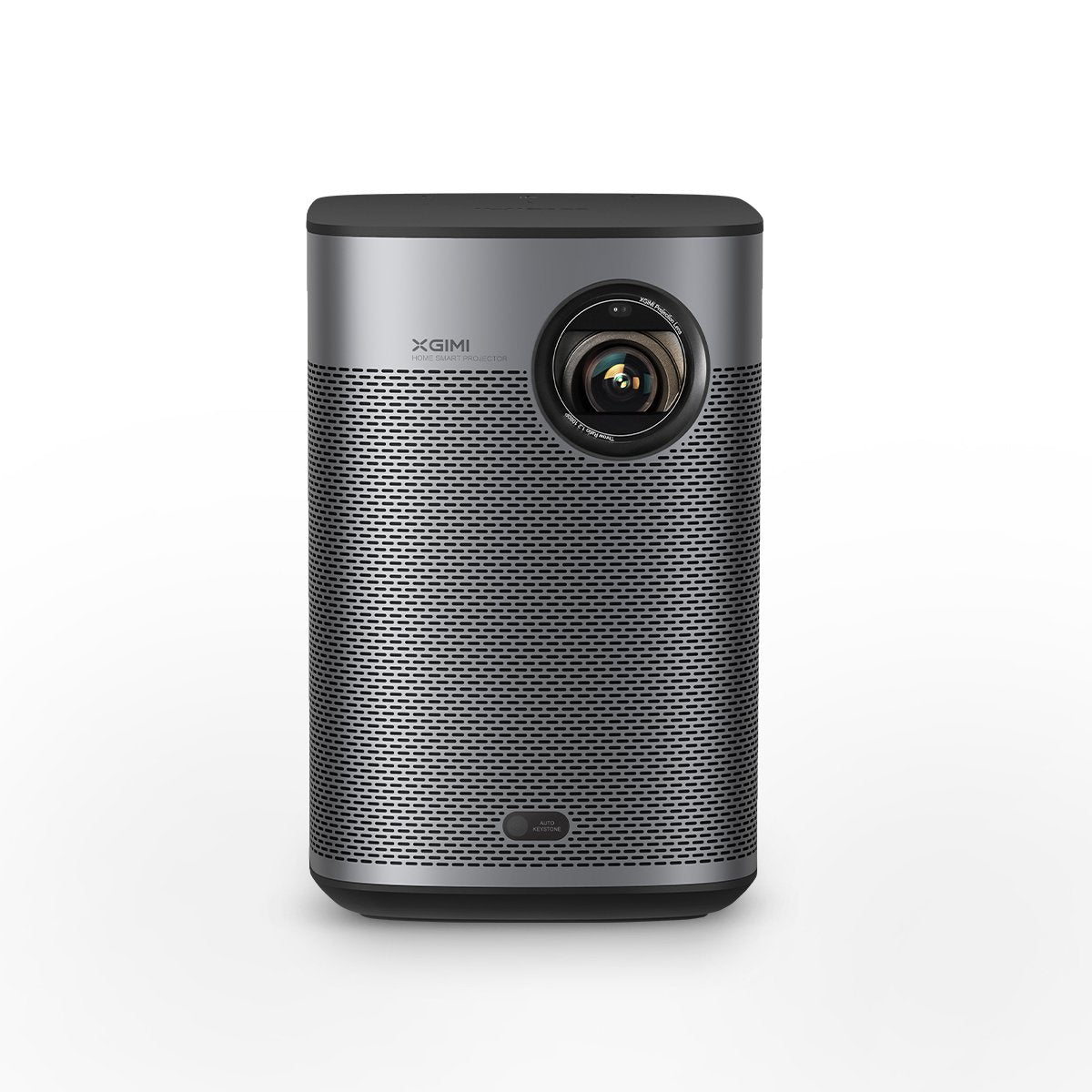
Of the compact portables here, XGIMI's Halo+ is the most polished. Projector Central measured 753 ANSI lumens, AndroidPolice scored it 8.5/10, and the Harman Kardon speakers genuinely sing for their size. Battery is the soft spot: real-world runtime sits closer to 90 minutes than the claimed 2 hours, which makes it a one-movie projector unless you tether it to wall power.
Full review
Vivid colors and impressive brightness after dusk
The Halo+ uses an LED light engine paired with a 0.33-inch DLP chip to deliver a 1080p image that Projector Central praised for 'vivid purple backgrounds, yellow and green coral as well as bright white beach sand' in mixed-color test footage. The reviewer specifically noted that 'color balance for the Halo+ was much improved over the Halo, even in this brightest of modes,' which addressed the main complaint about the original.
Outdoors it punches well above its 3.5-lb weight. With 753 measured ANSI lumens it will fill a 100-inch screen comfortably after dusk and look reasonable on a 120-inch wall in true darkness. AndroidPolice noted that the projector delivers 'stunning output in even a slightly dimmed room' but admitted it 'struggles with direct sunlight,' which mirrors every other LED portable in this guide.
Consistent brightness makes outdoor use easy
The XGIMI rating is 900 ANSI lumens on mains power and 700 on battery. Projector Central's lab number of 753 in Office mode sits comfortably between those two, and Movie mode at 724 lumens is one of the rare cases where the cinematic mode doesn't drop output by 40 percent. That makes the Halo+ usable as a single-mode projector outdoors; you don't have to keep flipping between Bright and Movie like you do on cheaper units.
Practical reach is a 100-inch image at full nightfall. Bigger than that and the contrast starts to flatten, especially on darker scenes. AndroidPolice's reviewer found the opposite of a compromise here, calling auto-keystone the feature that 'really steals the show' and reporting that 'Most of the time, though, the auto keystone is going to get you right where you need to be, and only perfectionists will feel the need to tweak things further.' The cost of correcting from an angle is resolution rather than brightness: shooting up to 40 degrees off-axis 'does mean you take advantage of less of the projector's available resolution'.
Setup and Portability
Setup is the Halo+'s standout feature. AndroidPolice called the auto-keystone and obstacle-avoidance system 'incredibly fast, automatic picture adjustment,' and Projector Central detailed three separate ISA (Intelligent Screen Adaption) modules that focus, keystone-correct and dodge wall obstructions like picture frames or light switches. In practice the projector finds an image within 5 to 10 seconds of being aimed.
AndroidPolice flagged the one ergonomic miss: there is no carry handle. At 3.5 lb the Halo+ is light enough to throw in a backpack, but you'll palm-grip it rather than handle-carry it. There's no IP rating, so unlike the Mars 3 the Halo+ should be packed up the moment the weather turns. A tripod thread on the bottom handles height adjustment.
Balanced audio with native Netflix support
The dual 5-watt Harman Kardon speakers are the best in this roundup at the Halo+'s weight class. Projector Reviews described them as producing 'clean, distortion-free Hi-Fi sound with ample bass response.' They don't out-volume the Mars 3's 40-watt rig outdoors, but they have a noticeably more balanced response and stronger midrange, which carries dialogue better than the boomier Anker speakers.
Smart-software wise, the new GTV variant ships with Google TV and Projector Central confirmed the Halo+ 'runs Android TV 10.0 which offers native support for Netflix' on the latest release. Both AndroidPolice and Projector Central flagged the older variant's drawback: no official Netflix support, which is fixed only on the GTV SKU sold under ASIN B0D8KQ5HP9.
Battery life falls short of the two hour claim
XGIMI's claim is 2 hours of battery on the 59 Wh internal cell. Reality is rougher. AndroidPolice measured 'between 60-90 minutes actual vs. claimed 2 hours' and Projector Central reported the projector ran Movie mode for '1 hour and 31 minutes' before shutdown. That means the Halo+ is realistically a one-movie projector before it either needs a power bank or has to be plugged in.
The aggressive low-battery mode is another gotcha AndroidPolice flagged: 'an aggressive power-saving mode activates at low battery, reducing brightness and adding yellow tint.' For a planned backyard movie night, the right move is to leave the Halo+ plugged in via the included AC adapter or hand it a 65W-plus PD USB-C power bank rated for laptop charging.
46.2 second cold start without hibernate mode
Battery life is the clearest weakness. The 90-minute real-world runtime is well below the Mars 3's 5-hour eco mode, and there's no swappable cell. The Halo+ is also unsealed (no IP rating), so it cannot take the drizzle or dust that the Mars 3 shrugs off. AndroidPolice and Projector Central both noted slow cold-start: AndroidPolice measured around 40 seconds to start up from a cold boot, plus another 10 or so to populate the home screen.
AndroidPolice also called out the menu structure, with two overlapping sets of settings between Android TV and XGIMI's overlay, and an odd remote design. These are quality-of-life rather than dealbreaker issues, but they are a consistent thread across reviews of every XGIMI projector to date and don't seem to be fixed in firmware.
Best when portability matters more than ruggedness
The Halo+ is the right pick if portability is the top priority and you're going to use the projector both indoors and out. It's small enough to vacation with, polished enough to use as a primary living-room display in apartments, and bright enough for a 100-inch backyard image after dusk. Travelers, students and renters with shifting setups are the target.
It is not the right pick for buyers who specifically want a battery projector for outdoor cinema multiple times a month. The Mars 3 simply outclasses it on every outdoor-specific axis (battery life, brightness, weather sealing, speaker volume) for the same money on sale. Pick the Halo+ when portability and finish matter more than backyard-specific ruggedness.
Triples the Freestyle's brightness at similar weight
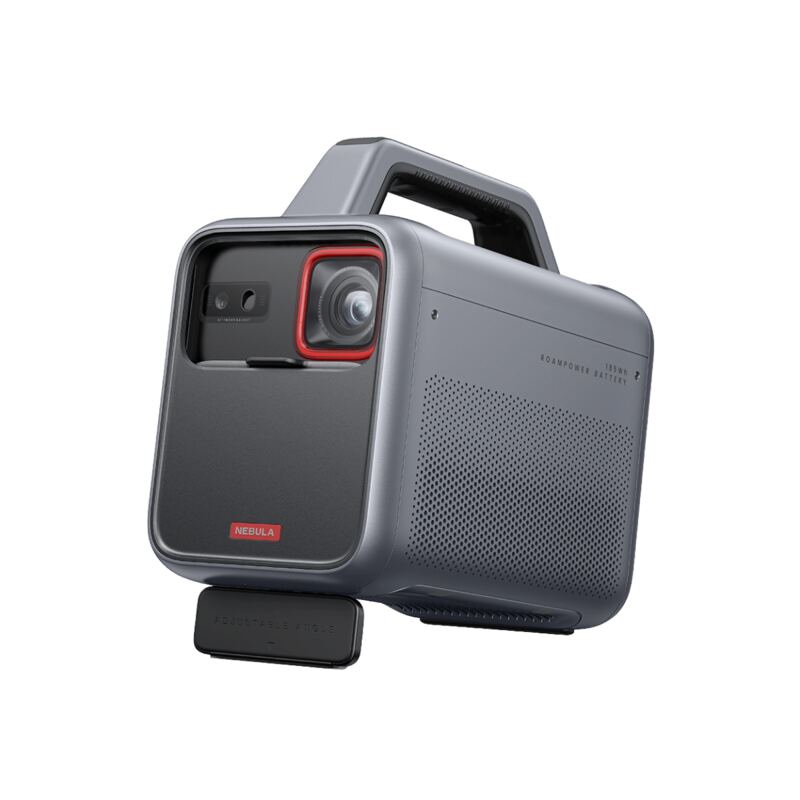
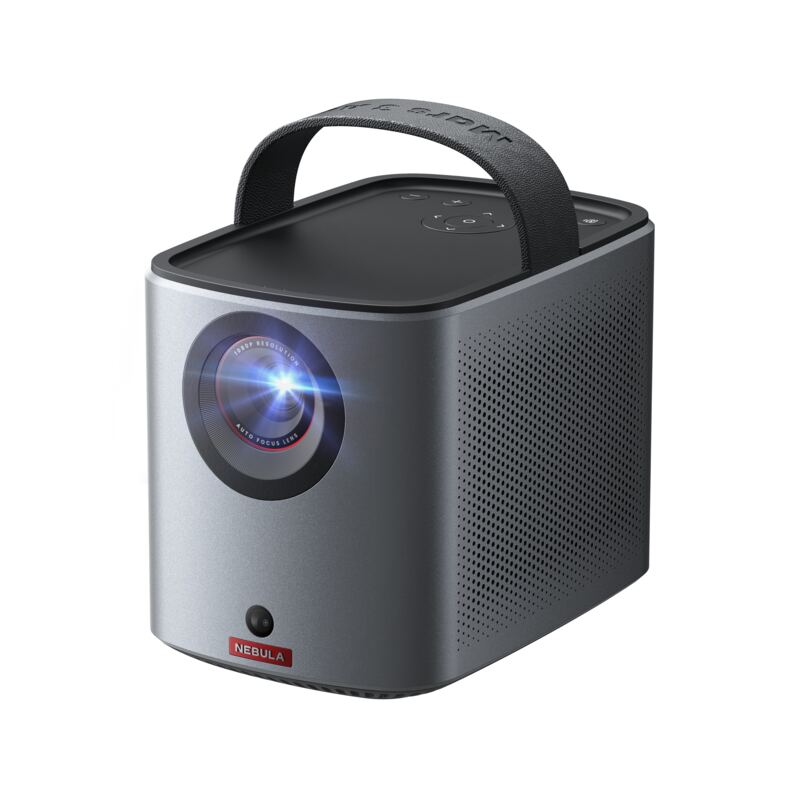
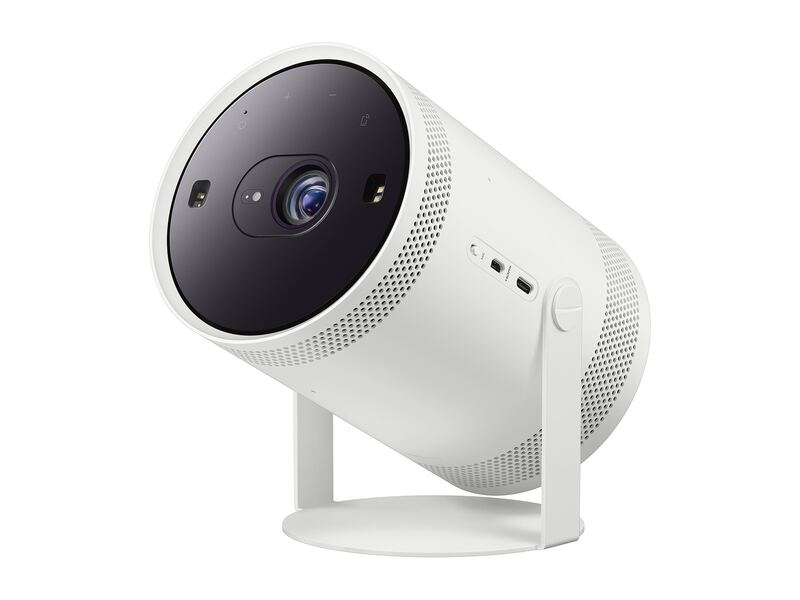
Versus the Anker Nebula Mars 3 you give up roughly 200 measured lumens, IPX3 ruggedization and three hours of battery in exchange for losing 6.4 lb of weight. Versus the Mars 3 Air you gain about 350 measured lumens, better Harman Kardon audio and a slightly larger image ceiling, but lose half the battery runtime. Versus the Samsung The Freestyle 2nd Gen you triple the brightness and roughly match the weight, but lose the 360-degree audio gimmick.
If you genuinely need 4K, the Halo+ isn't the right answer; XGIMI's own Horizon Ultra is the upgrade path and it's not a portable. For the strict portable-bright-1080p slot, the Halo+ remains the best-built option even three years after launch.
Harman Kardon speakers outclass typical portables
The Halo+ GTV variant currently retails between $730 and $849 depending on the seller, with frequent Amazon dips to the $700 mark. Projector Reviews specifically noted that the new Halo+ retails for $849 MSRP, putting it in the same price bracket as the Anker Nebula Mars 3's sale price and roughly $250 above the Mars 3 Air. At the $730 sale point the Halo+ becomes one of the better value plays in the portable bright-1080p category.
The Harman Kardon audio is a real differentiator that doesn't show up well on a spec sheet. Both Projector Reviews and AndroidPolice highlighted the speaker quality as genuinely above the portable-projector norm, with what Projector Reviews called 'clean, distortion-free Hi-Fi sound with ample bass response.' If audio matters to you and you'll mostly stay within mains-power range or one feature on battery, the Halo+ is a strong pick at its current pricing.
Resale value is also a quiet plus. XGIMI's portable line holds value better on the used market than most Amazon-only brands, and the Halo+ specifically has been the company's hero portable for two product cycles, which means parts, remotes and accessories remain easy to source. For a buyer who upgrades projectors every two to three years, that's a small but real factor versus committing to a less-supported brand. XGIMI's two-year US warranty also covers the integrated battery, which matters for a device whose primary selling point is mobility.
Strengths
- +Projector Central measured 753 ANSI lumens, 15 percent brighter than the original Halo and class-leading for its weight
- +Compact 3.5 lb body with auto focus, auto keystone and obstacle avoidance that nails setup in seconds
- +Dual 5 W Harman Kardon speakers deliver the cleanest portable-projector audio in the category
- +Throw ratio of 1.2:1 covers a 60 to 200-inch image without a long backyard footprint
- +Built-in battery designed for grab-and-go use with no mains tether for short features
Watch-outs
- −Battery runs closer to 60 to 90 minutes in practice, well under XGIMI's 2-hour claim
- −Older non-Google-TV units lack native Netflix authorization and need a sideload or casting
- −No handle on the chassis despite the carry-everywhere positioning
- −Wakes from cold in 46 seconds without hibernate mode enabled
How it compares
Pound for pound the most polished portable here, but loses to the Anker Nebula Mars 3 on every outdoor-specific axis: 1000 measured lumens vs 753, IPX3 vs no IP rating, and 5-hour battery vs 90-minute real-world runtime. Beats the Samsung Freestyle 2nd Gen on brightness by roughly three times and trades blows with the Mars 3 Air on sound and software while shipping a smarter auto-keystone system.
Rating sources
“753 ANSI lumens, a 15% improvement in brightness compared to the Halo's measured 642 lumens.”
“With the Halo+, Xgimi checks most of the boxes you'll be looking for when shopping for a portable projector.”
“Halo+ was designed with the intent to make a projector as capable in the house as it is on the go.”
Our 4.3 score is the average of these published ratings. Ratings marked * were derived from the reviewer’s written analysis or video transcript — the publisher didn’t print an explicit numeric score, so we inferred one from their own words. Click through to verify. More about methodology.