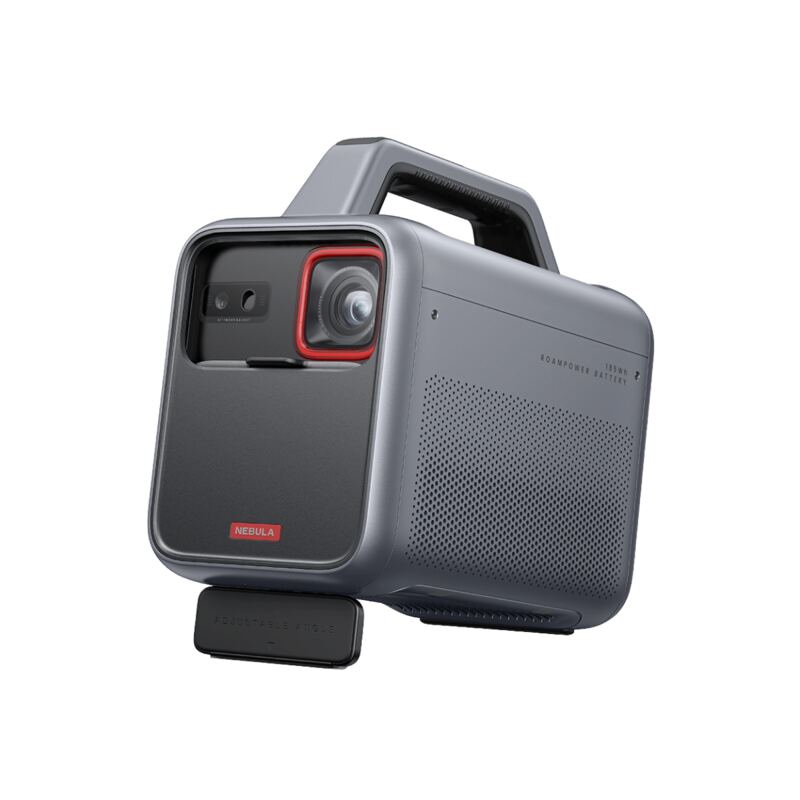
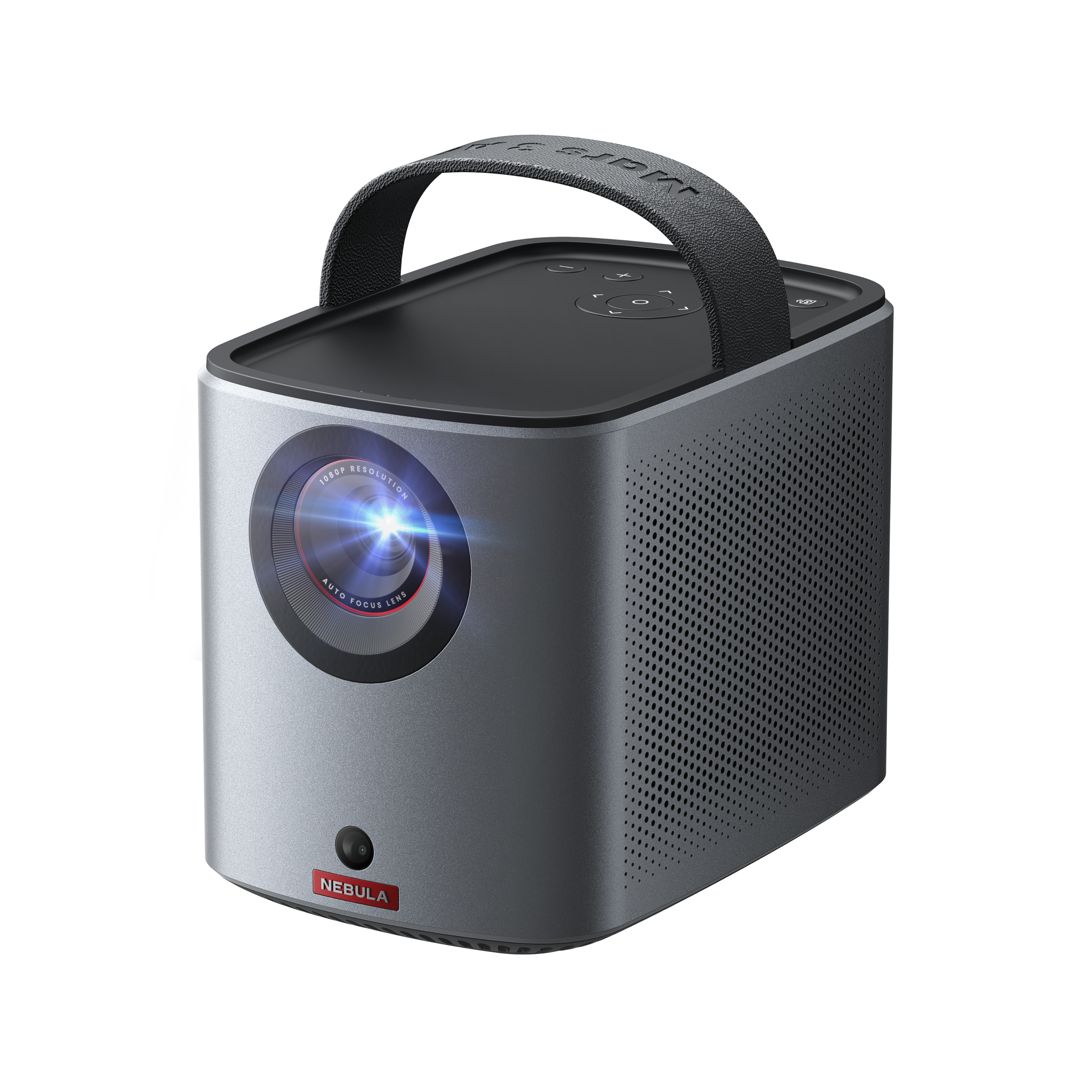
Half the brightness, a third the weight, half the price: the Mars 3 Air is the budget-balanced Mars sibling. Projector Central measured 399 ANSI lumens, exactly on spec, and What Hi-Fi gave it 4/5, calling it a 'mobile movie marvel.' Pick it when you want a portable Google TV projector at a backyard-friendly $469 and can live without the full Mars 3's ruggedized 1000-lumen output.
Full review
Vibrant colors best enjoyed in dark environments
The Mars 3 Air runs the same DLP-plus-LED engine as the bigger Mars 3 but with a smaller light engine. Projector Central's reviewer described the image as 'vibrant with well-saturated colors' with 'lifelike skin tones, neutral sand and stone as well as a bright blue sky.' That's a respectable showing from a $469 portable, and color accuracy is close enough out of the box that most users won't bother with calibration.
Outdoor specifically the Mars 3 Air works best at 60 to 100 inches after full nightfall. Projector Central noted that Conference mode 'was just okay when up against sunlight' and 'worked best in a darkened environment.' What Hi-Fi praised the picture's 'really dense, smooth, cinematic finish' but cautioned that 'HDR peaks lack impact' because the 400-lumen ceiling can't drive bright highlights the way a 1000-lumen unit can.
Honest brightness that outperforms portable rivals
The headline brightness number is one of the most honest in the portable category. Projector Central's lab measured 399 ANSI lumens in Conference mode, 383 in Standard, 372 in Movie and 382 in Game, within 1 percent of Anker's 400-lumen claim. That puts the Mars 3 Air well above the Samsung Freestyle 2nd Gen (230 ANSI) and at half the output of the Mars 3, exactly where the marketing implies.
Practical reach is a 100-inch image after dusk, give or take depending on screen material. What Hi-Fi summed it up well: the Mars 3 Air's 'pictures comfortably outgun those of most portable rivals in pretty much every department,' which is true for the sub-$500 segment. It is not bright enough for late-afternoon or pre-dusk use; that's a Mars 3 or a Cosmos Laser job.
Portable design with some setup limitations
At 3.7 lb the Mars 3 Air is genuinely portable. Projector Central described it as 'good for use as a TV replacement at home,' and the small form factor means it lives on a side table indoors and migrates to a tripod outdoors. The 1.2:1 throw ratio matches the Mars 3 and Halo+, so a 100-inch image needs roughly 10 to 11 feet of throw distance, manageable in most backyards and tight in studio apartments.
Auto-keystone and auto-focus handle setup quickly. Projector Central's main ergonomic gripe was that the Air 'Lacks a USB-C port for feeding video,' which is a real limit if you want to plug a Steam Deck or laptop into it directly without an HDMI dongle. There is no IP rating; treat it like a small TV rather than a rugged outdoor appliance.
Impressive audio paired with native Netflix support
The dual 8-watt Dolby Audio drivers earned What Hi-Fi's surprise: 'The sound escapes startlingly expansively from the projector's diminutive body' with 'solid bass presence to underpin things, something that's practically unheard of in the small projector world.' For a unit you can carry in one hand, the audio holds up across a 15-foot backyard viewing zone without immediately demanding an external speaker.
The Google TV software stack with licensed Netflix is the standout feature versus the older Mars 3 (which lacks native Netflix). Projector Central highlighted it as 'a smart projector with Android TV 11.0, Chromecast, and Google Assistant.' The Air ships with the certified Netflix app preinstalled, so first-night setup is essentially sign-in-and-watch.
Battery life lasts for a full feature film
Projector Central's measured battery runtime is the most useful number on this projector: '3 hours and 10 minutes' in Eco mode, and 2.5 hours in standard mode. That comfortably covers a feature film plus credits, and the projector can be charged from a USB-C PD power bank rated for 65W or higher if you need to extend a campsite session.
The Air is not designed for indefinite mains operation the way the Mars 3 is; the integrated battery is the headline feature and the AC adapter is more of a recharge tool than a serious tether. For backyard or campsite use this is fine; for indoor primary-display use, plug in and forget it.
Red tinge appears during very dark scenes
Brightness is the obvious ceiling. What Hi-Fi flagged that 'HDR peaks lack impact' because there simply aren't enough lumens to drive bright highlights against a dark scene. The lack of a USB-C video input is a real practical limit, and the missing IP rating means the Air is a fair-weather outdoor device only. Projector Central's main complaint was simply 'Could be a little brighter.'
What Hi-Fi also documented two cosmetic picture quirks: 'Main picture area appears within a narrow, slightly brighter outer border' and a 'marginal red tinge during very dark shots' on their test unit. These are not deal-breakers but they betray the entry-level price point compared to the Mars 3.
Cheapest serious portable in this lineup
The Mars 3 Air is the right pick for the buyer who wants a portable Google TV projector for occasional outdoor use, weighs portability and price more than peak brightness, and isn't going to project larger than 100 inches in the backyard. At $469 it's the cheapest serious portable on this list and the smartest streaming experience.
It is not the right pick if you specifically want a backyard cinema projector for biweekly or weekly use; the Mars 3 doubles the brightness and quadruples the battery for roughly twice the money on sale and is the better long-term investment. The Air is the casual answer; the Mars 3 is the enthusiast one.
Trades 350 lumens for an extra hour of battery
At $469 MSRP the Mars 3 Air is the budget-friendly entry into the Google-TV-portable category. Compared to a Yaber V12 or similar Amazon-only portable, it has dramatically more polished software, real Netflix and Anker's better warranty support. Compared to the Halo+ at $730, it gives up 350 measured lumens but adds an hour of real-world battery life.
For shoppers who would only set up an outdoor projector five to ten times a year, the cost gap to the full Mars 3 is not worth closing. For shoppers who use it weekly through summer, it is. The Mars 3 Air sits in the sweet spot of the occasional-use buyer.
100-lumen edge over the BenQ GV31
Versus its full-sized sibling the Anker Nebula Mars 3, the Air gives up roughly 560 measured ANSI lumens, two and a half hours of battery, the IPX3 weather sealing and the 40-watt three-way speaker, in exchange for shedding 6.2 lb and saving $530 at MSRP. That's an honest tradeoff that aligns with the price gap. The Air is the casual-use sibling, the Mars 3 is the enthusiast sibling, and Anker did a good job of making the choice meaningful in both directions.
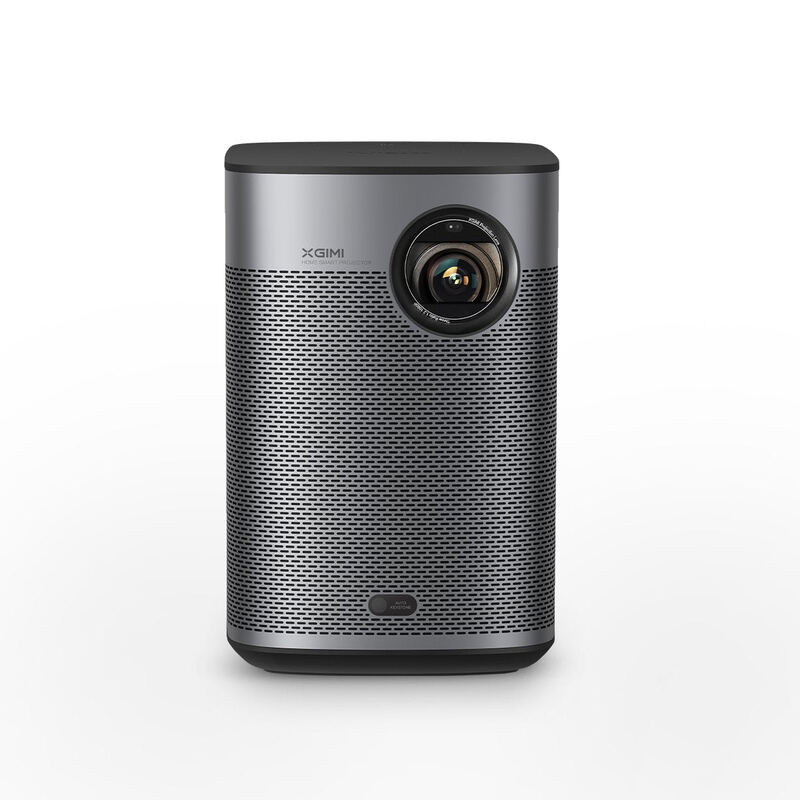
Versus the XGIMI Halo+ the Mars 3 Air loses 354 measured lumens but wins on real-world battery life (three hours versus 90 minutes), on streaming software (native Netflix versus sideload), and on price ($469 versus $730). The Halo+ wins on sound quality and on the finish of the auto-setup system. Most outdoor-first buyers will value the Mars 3 Air's price and battery more than the Halo+'s Harman Kardon speakers.
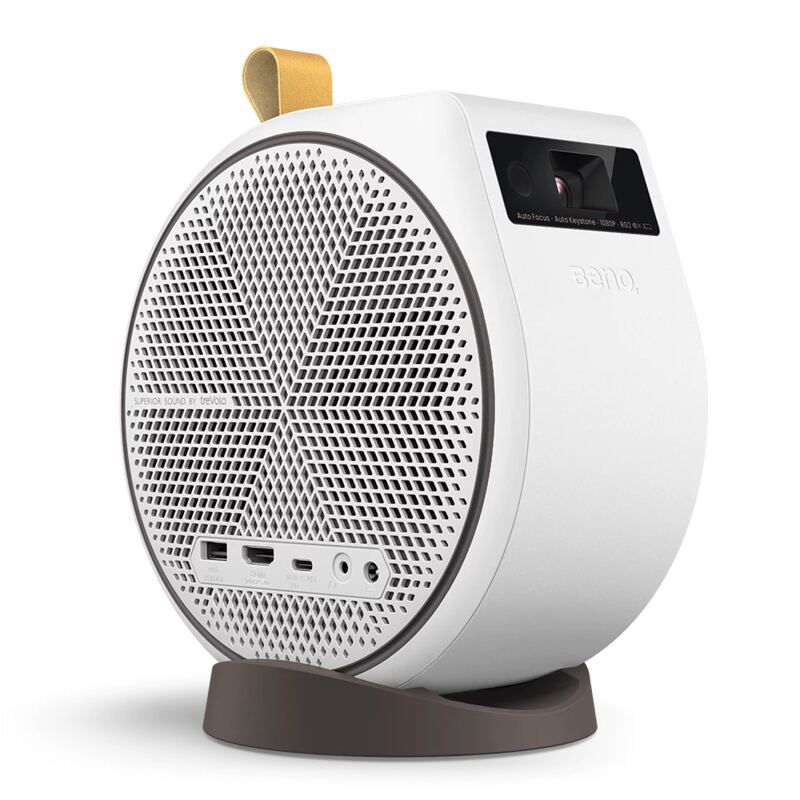
Versus the BenQ GV31 the Mars 3 Air leads on brightness by a roughly 100-lumen margin and benefits from a smoother Google TV interface than BenQ's older Android TV build. The GV31 counters with its rotating-cradle form factor, its slightly better 2.1 speaker system and its flexibility for ceiling projection. Buyers who lean indoor and want the cradle gimmick may prefer the GV31; buyers who lean outdoor will appreciate the Air's extra lumens. Both pair well with a $30 to $50 portable tripod, which makes outdoor placement and aiming dramatically easier than tabletop setups in most backyards.
Strengths
- +Projector Central measured 399 ANSI lumens against a 400-lumen rating, nearly perfect honesty on the spec sheet
- +Light 3.7-lb chassis you can backpack to a campsite or balcony without thinking about it
- +2.5-hour movie battery (3 hours 10 minutes in eco) covers a full feature on a single charge
- +Native Google TV with licensed Netflix app preinstalled, the cleanest streaming setup in this roundup
- +Dual 8W Dolby Audio speakers handle outdoor dialog without an external speaker on smaller setups
Watch-outs
- −400 lumens is the bare minimum for outdoor; image dims noticeably above a 100-inch diagonal
- −Conference-mode fan noise of 40.3 dBA per Projector Central is louder than the Mars 3
- −No USB-C video input limits laptop and console hookups
- −No IP rating, so any dew or drizzle means packing it up
How it compares
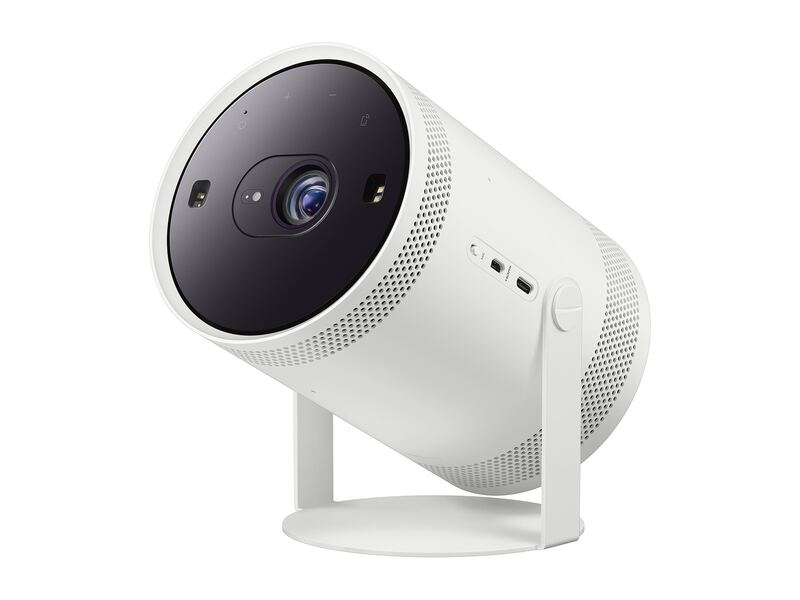
Delivers about two-fifths of the measured brightness of the Anker Nebula Mars 3 (399 versus 959 ANSI lumens) and half the battery runtime, but a third of the weight at 3.7 lb. Brighter and louder than the Samsung The Freestyle 2nd Gen by a wide margin, and slightly dimmer than the XGIMI Halo+ but with the better Google TV software stack and longer battery life. The BenQ GV31 is dimmer at 300 lumens and projects from a rolling-ball form factor.
Rating sources
“With its cool design and punchy picture and sound, the ultra-portable Nebula Mars 3 Air is a mobile movie marvel.”
“Battery good for up to 3 hours and 10 minutes of watching content in Eco mode.”
Our 4.0 score is the average of these published ratings. Ratings marked * were derived from the reviewer’s written analysis or video transcript — the publisher didn’t print an explicit numeric score, so we inferred one from their own words. Click through to verify. More about methodology.