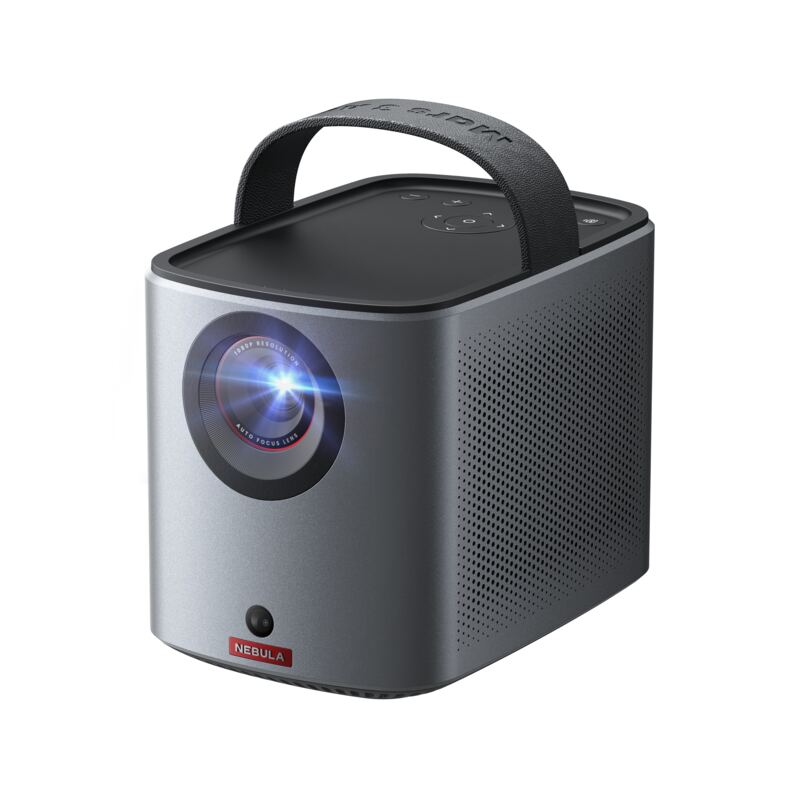
No projector on the market is closer to purpose-built for outdoors than the Mars 3. Anker engineered it for the backyard: a rated IPX3 spray seal, half-meter drop resistance, a 5-hour battery and a 40-watt speaker that actually fills a yard. Projector Central measured 959 ANSI lumens against the 1000-lumen claim and called it Highly Recommended. The 1080p ceiling and the missing Netflix app are the only meaningful gripes.
Full review
959 measured lumens against a 1000-lumen claim
Projector Central's lab measured 959 ANSI lumens in Bright mode, 785 in Standard and 686 in Movie, almost exactly matching Anker's 1000-lumen figure, and rated the projector Highly Recommended. That measured output is the highest of any battery-powered portable in the under-$1000 class, which is the whole reason to consider it for a backyard.
TechRadar supplies the honest caveat: '1,000 lumens brightness isn't enough to handle much ambient light.' A covered patio or a shaded garage is fine; a sunlit lawn in the afternoon is asking too much of any battery projector. Wait until half an hour after sunset and use a real screen or a matte sheet rather than textured stucco, and the picture holds up.
Sharp 1080p, ruined by aggressive keystone
The single-chip DLP engine and LED source produce a 1080p picture that Projector Reviews called sharp and 'quite the theatrical experience' at the 100-inch diagonal most backyard setups land on. Projector Central's reviewer described colour as awesome and pretty accurate on test clips, with skin tones holding together at full brightness rather than washing out the way cheaper LED units do. Projector Reviews' tester reported that he 'was pleased with the projector quality, whether I was watching live sports, newscasts, and movie content' — the typical backyard mix.
Projector Central did flag that 'image quality suffers when aggressive keystoning is used,' so the setup rule is to level the projector and let autofocus work rather than squaring up a badly aimed image in software. Resolution is 1080p rather than 4K, which starts to show above 150 inches of diagonal.
IPX3, a handle and a kickstand
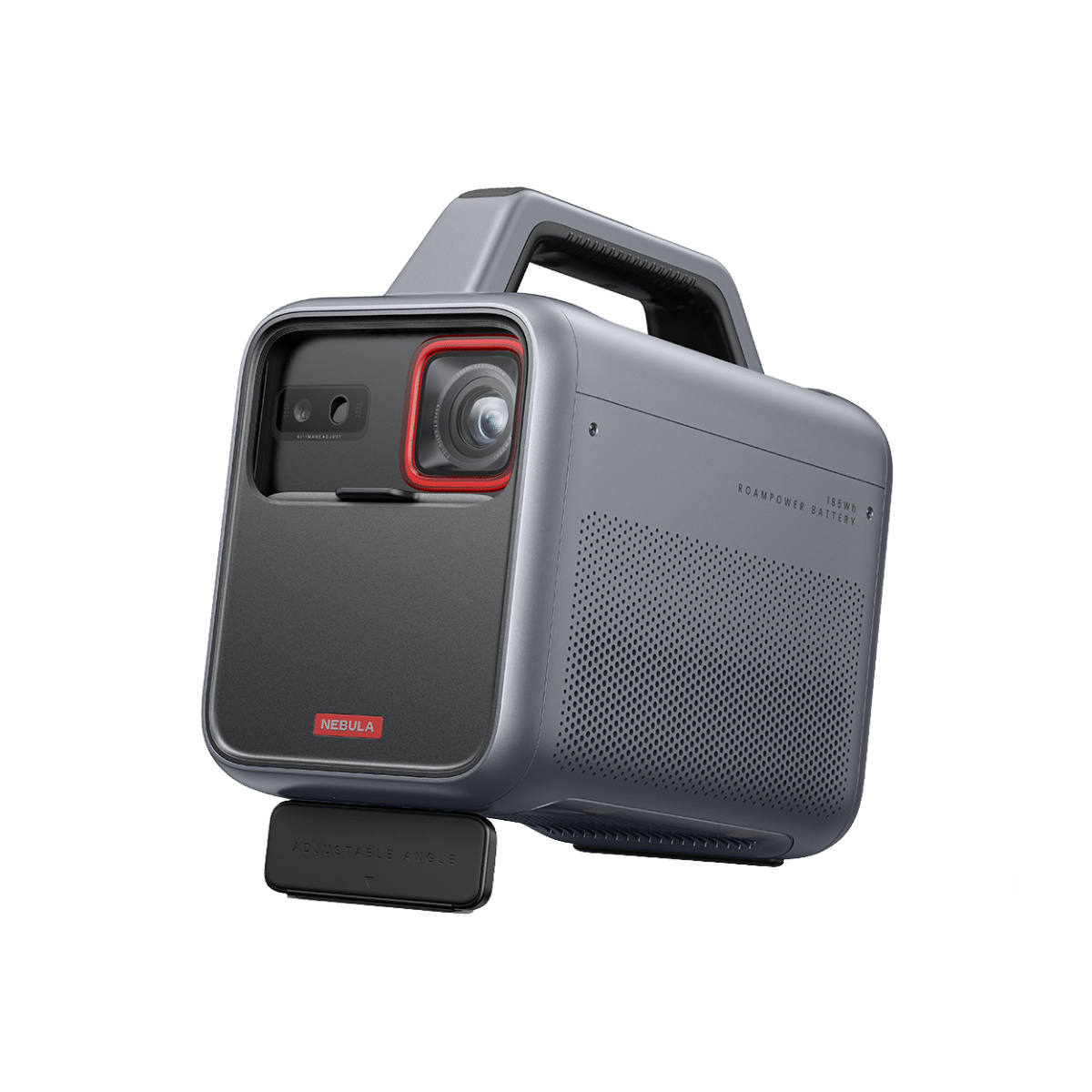
Projector Central weighed it at 9.9 lb, heavier than the Halo+ or the Mars 3 Air, but the integrated handle and flip-out kickstand mean you carry it like a small cooler and set it down in seconds, and there is a tripod thread underneath that Projector Reviews noted most cheaper portables omit. Anker adds IPX3 water resistance, 0.5 m drop resistance and a 0.7 mm dust seal; per Projector Central, IPX3 means the body 'can resist sprays of water coming in from 60 degrees from vertical.' Neither the XGIMI Halo+ nor the Samsung Freestyle carries an IP rating at all.
Forty watts of speaker, and a missing Netflix app
The three-way 40-watt speaker system is the loudest here and one of the few in a portable projector that does not immediately demand a Bluetooth handoff outdoors; Projector Central described it as a real home-entertainment rig rather than the usual tinny mini-speaker. Projector Reviews treated it as central to why the Mars 3 works as a self-contained outdoor cinema package.
Software is where it stumbles. Android TV 11 with Chromecast covers Disney+, YouTube and Prime, but Projector Central flagged 'No Netflix app' in the native store, so Netflix has to be sideloaded or cast from a phone. The same review noted 'Only 2GB of system RAM,' which can stutter the interface with sideloaded apps, and reported that 'Bluetooth speaker sound didn't sync up even with Bluetooth Speaker Delay function' — so plan on the built-in speakers rather than a party speaker.
Five hours in eco mode
Projector Reviews documented 'a 2-hour battery life in standard mode and up to 5 hours in eco mode' from the 185 Wh pack. Eco dims the image noticeably but gets you through a double feature or a full sports broadcast with no cable, and the battery doubles as a USB-A power bank for phones. Most rivals either have no battery at all or top out near 2 to 2.5 hours, so this is the Mars 3's quiet advantage; mains power removes the limit entirely.
A 25,000-hour LED and a one-year warranty
The LED engine is rated for 25,000 hours, which at two hours a day is roughly eleven years before half-brightness — effectively the life of the projector, and the end of the lamp-replacement worry that came with older bulb models. Anker's one-year warranty is shorter than XGIMI's two years, which is the main thing to weigh against that longevity claim. The IPX3 rating is the more practically important spec: a sudden shower or a stray sprinkler is a write-off for every other portable in this guide.
Twice the price of the Mars 3 Air, and twice the projector
Against the $469 Mars 3 Air, the Mars 3 costs roughly double and returns double the brightness, double the battery life and the IP rating. If the projector goes outside more than a few times a year that is a fair trade; if it does not, the Air is the sensible spend. Against the XGIMI Halo+ the Mars 3 wins on measured brightness, battery and ruggedisation and loses on audio refinement and on weight — at 9.9 lb this is a backyard and campsite tool, not something to carry across a park.
Strengths
- +Measured 959 ANSI lumens at Projector Central, the brightest in the under-$1000 portable class
- +Built-in 185 Wh battery delivers up to 5 hours in eco mode, enough for a double feature
- +IPX3 water resistance, 0.5 m drop resistance and a 0.7 mm dust seal verified by Projector Reviews
- +40 W three-way Dolby Audio speaker system plays loud enough to skip an external speaker
- +Built-in carry handle, kickstand and tripod mount make backyard setup a one-trip operation
Watch-outs
- −Heavy for a portable at 9.9 lb, more campsite-cooler than messenger-bag
- −No native Netflix app inside the Android TV 11 build
- −Bluetooth speaker pairing has noticeable sync lag even after the delay-adjust step
- −1080p resolution rather than 4K limits sharpness on screens larger than 150 inches
How it compares
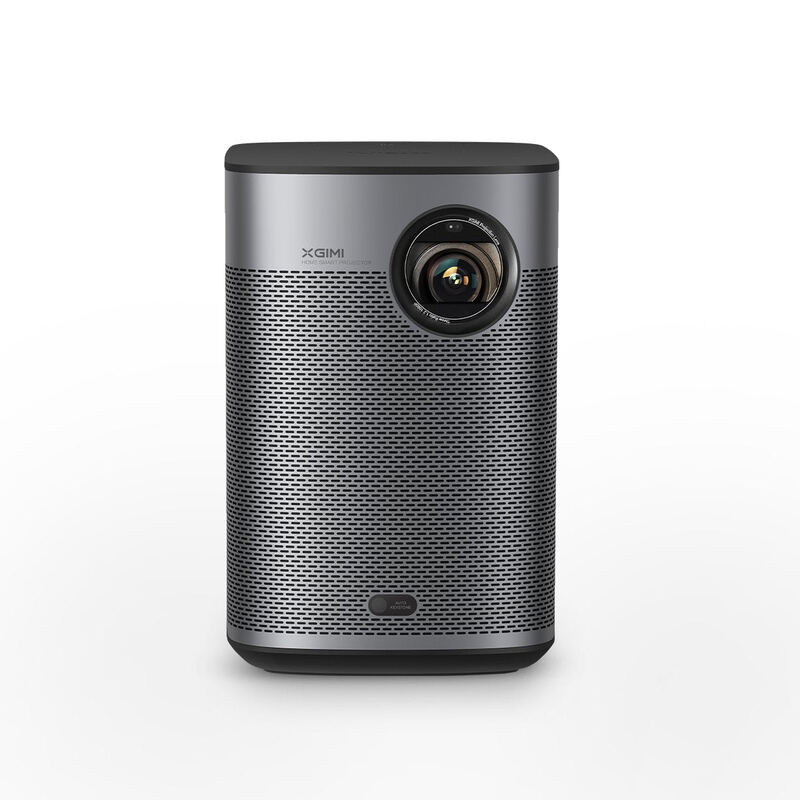
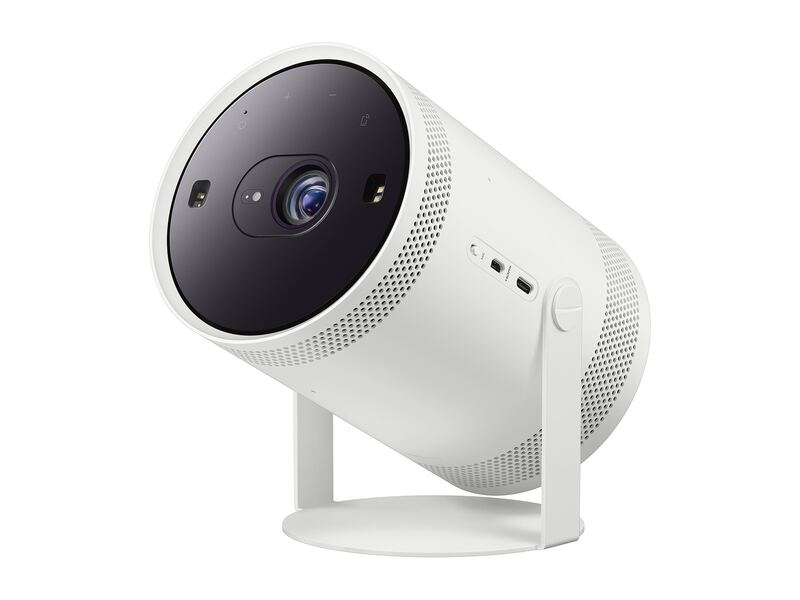
Pulls more measured lumens than the XGIMI Halo+ (959 vs 753 in identical Projector Central tests) and runs more than three times longer on battery than the Halo+. The Mars 3 Air is a third the weight at 3.7 lb but tops out around 399 ANSI lumens, less than half the Mars 3's output. Brighter and louder than the Samsung Freestyle 2nd Gen, but the Freestyle weighs an eighth as much.
Rating sources
“The brightness claim on the Mars 3 is 1,000 ANSI lumens, and it nearly met its claim at 959 lumens.”
“The projector is rated for water resistance with an IPX3 rating. It is drop resistant up to 0.5m.”
Our 4.2 score is the average of these published ratings. Ratings marked * were derived from the reviewer’s written analysis or video transcript — the publisher didn’t print an explicit numeric score, so we inferred one from their own words. Click through to verify. More about methodology.