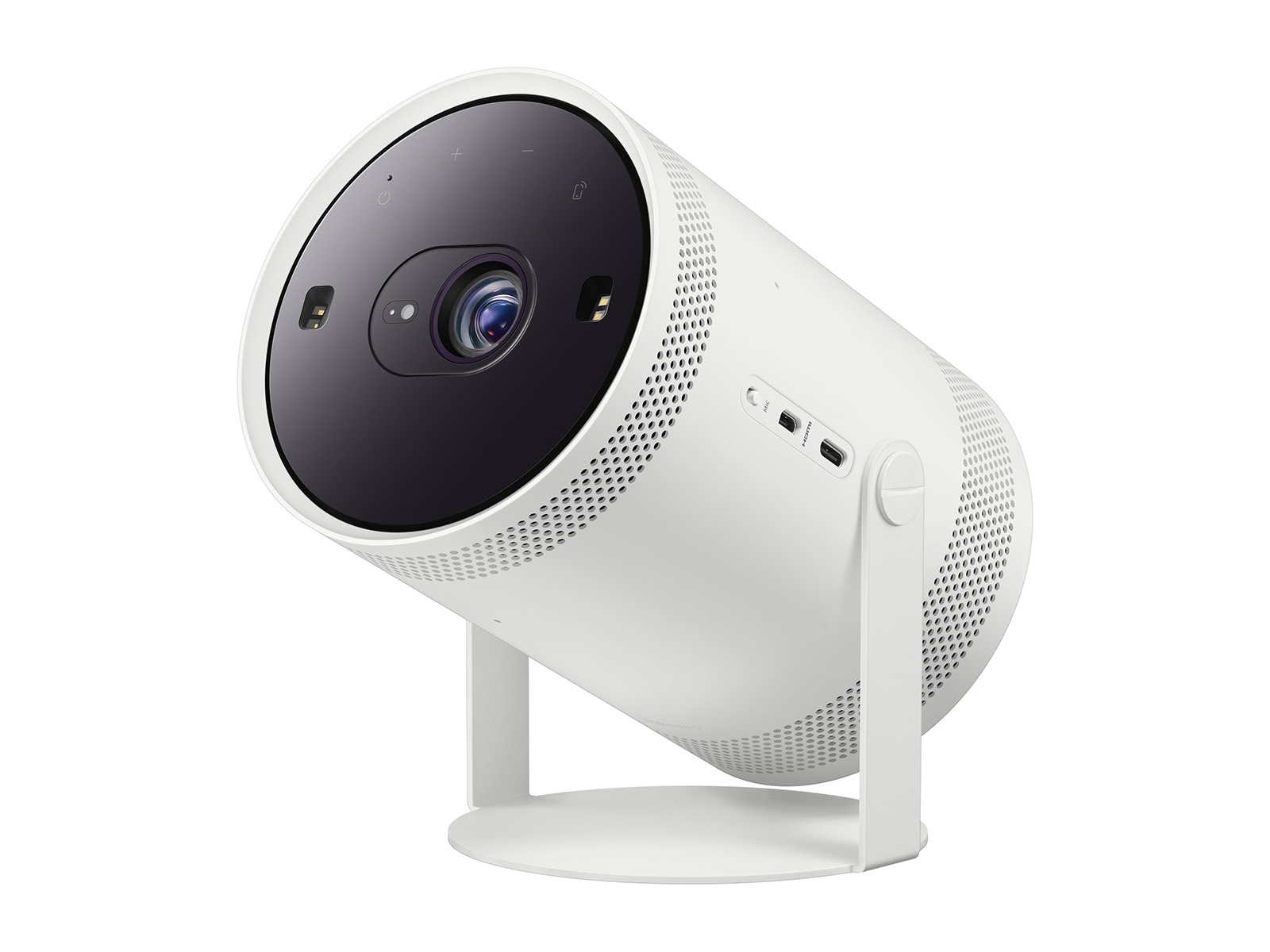
The Freestyle 2nd Gen is the lightest projector in this roundup, the dimmest, and the most fun. Samsung's 1.8-lb cylinder rotates 180 degrees to throw onto walls, ceilings and even angled fences, and it runs Tizen with native Netflix, Disney+ and the full Samsung Gaming Hub. Brightness is the catch: 230 ANSI lumens makes it a full-night-only projector. For the buyer who values portability and the smart-software stack, nothing else in this guide competes.
Full review
Best performance requires darkness and smaller screens
The Freestyle 2nd Gen uses a single-chip DLP engine with LED illumination at 1920 x 1080. Home Technology Review's verdict was that 'the projector produces vibrant and well-saturated colors, creating a visually appealing image,' with sharpness that 'ensures details are crisp and clear' and a contrast ratio Samsung specs as 100,000:1 dynamic. Color out of the box leans warm but accurate.
Outdoors the Freestyle is a true full-darkness projector. Home Technology Review confirmed the brightness ceiling: '230 ANSI peak lumens... was plenty in a dark room for the ceiling-projected 100-inch screen.' Translate that to backyard use and you're waiting until 45 minutes after sunset, dropping the screen size to 70 to 80 inches and avoiding any house lighting in line of sight.
Dim brightness limits use to dark environments
Samsung quotes 230 ANSI lumens, which Projector Central matches in its spec sheet. There's no engineered escape hatch; the Freestyle is dim by category standards and stays dim. That makes it the wrong choice for anyone who wants to watch sports outdoors during the late innings, or anyone who lives in a backyard with significant ambient spillover from streetlights or neighbors.
What it does well at that brightness is small dark-room cinema. Home Technology Review described the contrast ratio as 'impressive, showcasing deep blacks and bright whites,' and that's where the LED engine plus DLP combo pays off. For a tent ceiling at a campground or a basement ceiling at home, 230 lumens is enough.
Setup and Portability
This is the Freestyle's superpower. At 1.8 lb it weighs less than a paperback, and the integrated handle rotates 180 degrees to act as a kickstand on a desk, a hand grip for carrying, or a ceiling-projection mount. Auto-focus, auto-keystone and auto-leveling fire the moment you place the unit; Home Technology Review confirmed 'smooth automated setup' is the headline ease-of-use win.
The cylindrical body is roughly 5.5 inches tall and 4 inches wide, small enough to live permanently in a backpack pocket. Samsung also sells a ceiling-socket adapter that powers the projector directly from a standard light socket, which is a clever indoor solution that doesn't help outdoor use but illustrates how committed Samsung is to the 'put it anywhere' premise.
Average audio paired with standout smart features
The Freestyle's 5-watt 360-degree speaker is its weakest spec by audio standards. Home Technology Review's verdict was clear: 'The built-in speaker... offers clear dialogue and satisfactory, loud sound reproduction, but it lacks the depth and bass output that dedicated audio systems can provide.' For backyard use, most owners pair a Bluetooth speaker.
Smart software is the area where the Freestyle clearly leads this roundup. The Tizen OS ships with native Netflix, Disney+, Prime, YouTube and the Samsung Gaming Hub with Xbox Cloud, GeForce Now and Utomik cloud gaming. What Hi-Fi specifically called out 'Gaming Hub support (Xbox Game Pass)' as a meaningful differentiator, and the optional dual-unit edge blending is unique in the category.
Portable power requires extra investment
The Freestyle does not ship with a battery out of the box. Samsung sells a 32,000 mAh battery base for $189 (or it can be powered by any 50W/20V USB-C power bank), and Home Technology Review confirmed 'battery base offers up to 3 hours of runtime that simply clicks into place and connects with USB-C.' That gets the Freestyle into outdoor territory, but pushes the real all-in price toward $1,000.
An alternative many owners use is a high-output laptop USB-C power bank rated for 65W or higher; that approach avoids the proprietary battery base and works for indoor-to-outdoor swaps. Without the battery base or a USB-C source, the Freestyle needs a wall outlet, which limits backyard placement.
Battery base adds 189 dollars to the price
230 ANSI lumens is the binding constraint and there's no firmware update that can fix it. The Freestyle is also limited to a single micro-HDMI input, which means most wired sources require an adapter. Home theater purists called the 'black levels' the carry-over weakness from the original Freestyle.
The battery situation also catches buyers off guard. The advertised $799 price assumes mains power; outdoor-ready pricing with the $189 battery base lands closer to $988, which gets within $10 of the Anker Nebula Mars 3's frequent sale price and Mars 3 has four times the brightness. Budget honestly before deciding.
Only pick here with built-in cloud gaming
The Freestyle 2nd Gen is the right pick for buyers who care about portability and the smart-OS experience more than raw output, who'll mostly use it indoors with occasional backyard nights after full dark, and who want a single device that doubles as a ceiling projector, gaming streamer and travel companion. It's also the only pick here with credible cloud-gaming support out of the box.
It is the wrong pick for buyers whose primary use is the backyard, especially in summer when sunset is late. The Mars 3 or Halo+ will deliver a brighter, more reliable outdoor experience for similar money. The Freestyle is a lifestyle projector first, a backyard projector second.
Fair price only without the battery accessory
The $799 sticker is fair for the Tizen software and 1.8-lb chassis but only competitive if you don't need the $189 battery accessory. With the battery, real outdoor-ready cost approaches the full Anker Nebula Mars 3 sale price, which offers four times the brightness and a five-hour built-in battery. Without the battery, the Freestyle is a brilliant indoor projector that occasionally goes outside.
The clearest value case is the buyer who already wants a small, portable smart-OS projector for indoor use and treats outdoor as a bonus. Treated that way, the Freestyle is excellent. Treated as a primary outdoor unit, it's stretched.
Two units combine into a 160-inch image
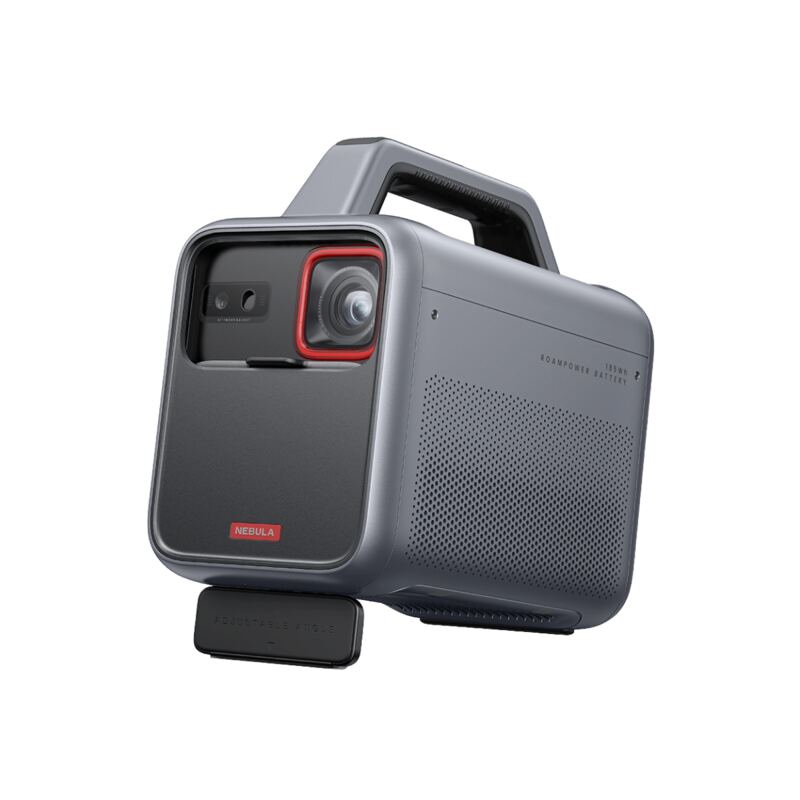
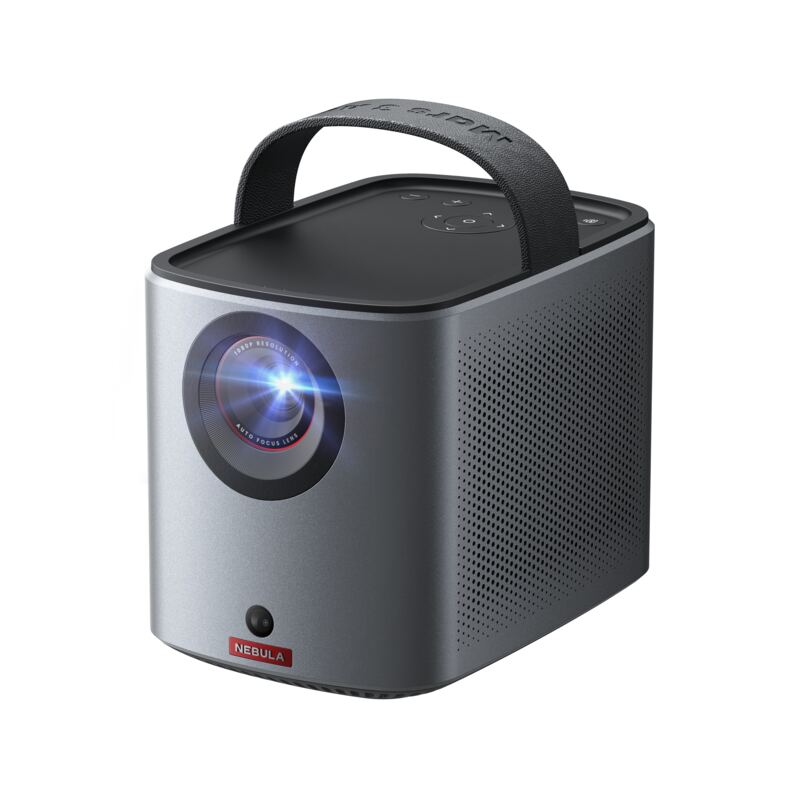
Versus the Anker Nebula Mars 3 the Freestyle gives up roughly 730 ANSI lumens of measured brightness, the IPX3 weather sealing and the 40-watt audio rig, in exchange for losing 8.1 lb of weight and gaining the Tizen Smart Hub with native Netflix and cloud gaming. That's a fair tradeoff if portability and smart software are your top priorities and the backyard is only an occasional use case.
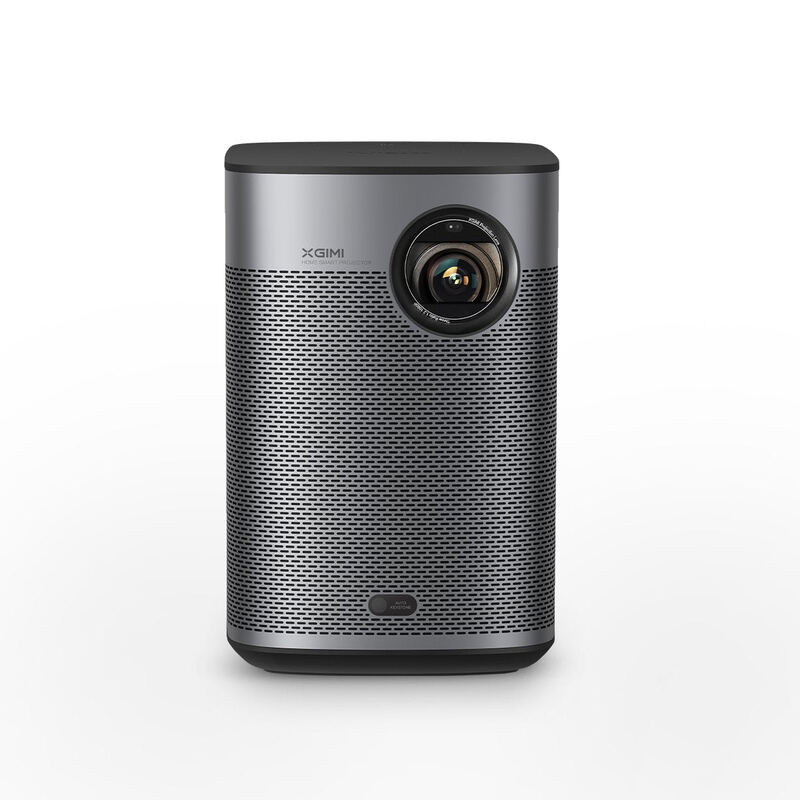
Versus the XGIMI Halo+ the Freestyle is roughly half the weight (1.8 lb versus 3.5 lb) but only a third of the measured brightness (230 versus 753 ANSI lumens). Both lack IP ratings. The Halo+ wins on outdoor capability handily; the Freestyle wins on portability and on smart-software integration. The Halo+ runs Android TV with sideloaded Netflix; the Freestyle runs Tizen with native Netflix and Samsung's full Gaming Hub stack.
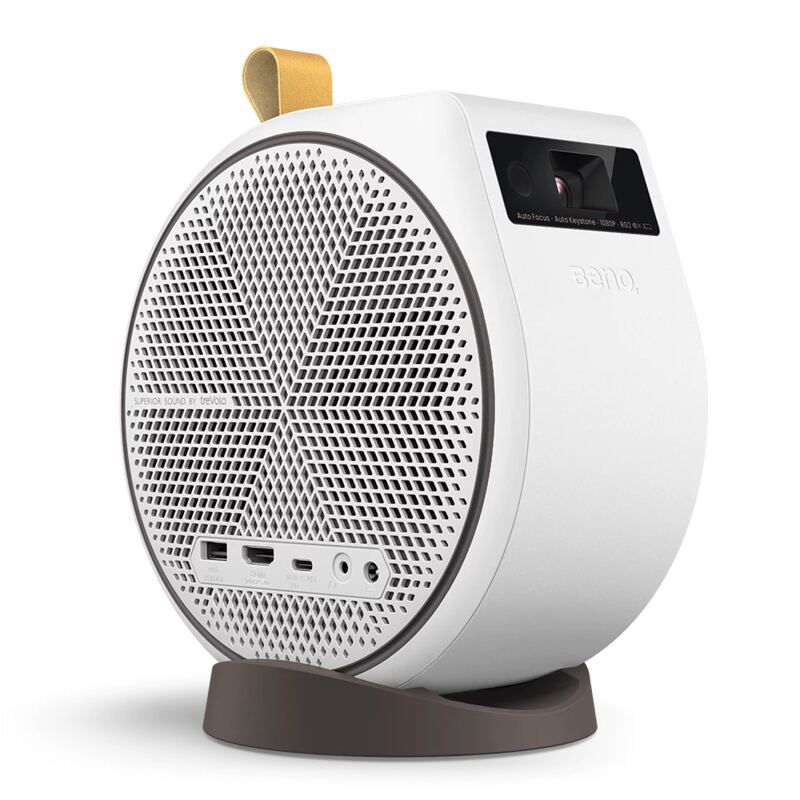
Versus the BenQ GV31 the Freestyle is roughly half the weight and offers a richer smart-OS experience with the Gaming Hub, but the GV31 ships a battery in the box, is brighter at 300 versus 230 lumens, and has a stronger 2.1 speaker rig. The choice between them really comes down to whether you value Samsung's interface and design polish more than BenQ's battery-included pricing and audio system. Both lose to the Mars 3 family for serious outdoor cinema. Buyers who already own a Samsung phone or Galaxy tablet will also get the smoother SmartThings handshake on the Freestyle, which is a small but real workflow benefit for casting and remote control. The dual-unit edge-blending mode to combine two Freestyles into a single 160-inch image is unique in the category and worth noting for buyers who could see themselves growing into a second unit later.
Strengths
- +1.8 lb chassis with a 180-degree rotating handle-stand makes ceiling and floor projection effortless
- +Samsung Gaming Hub streams Xbox Cloud, GeForce Now and Utomik with no console needed
- +Auto-focus, auto-leveling and auto-keystone get a square image in under 10 seconds anywhere
- +Optional 32,000 mAh battery base extends runtime to 3 hours of untethered playback
- +Tizen smart OS supports edge-blending two units for a single 160-inch image
Watch-outs
- −230 ANSI lumens is the dimmest in this roundup; outdoor use only works after full nightfall
- −Battery is sold separately at $189, pushing the real outdoor-ready price near $1,000
- −Single micro-HDMI input is the only wired connection, so adapters are mandatory
- −Black levels and HDR impact remain the weak points carried over from gen one
How it compares
The lightest projector in this roundup by a wide margin at 1.8 lb, less than half the XGIMI Halo+ and a fifth of the Anker Nebula Mars 3. Also the dimmest at 230 ANSI lumens, far below the Mars 3's measured 959 lumens or even the Mars 3 Air's 399. Smart-software stack is the strongest of any pick here thanks to Tizen, Netflix, Disney+ and the Samsung Gaming Hub built in.
Rating sources
“The projector produces vibrant and well-saturated colors, creating a visually appealing image.”
“Neat solution for casual movie watchers and gamers too.”
Our 4.0 score is the average of these published ratings. Ratings marked * were derived from the reviewer’s written analysis or video transcript — the publisher didn’t print an explicit numeric score, so we inferred one from their own words. Click through to verify. More about methodology.