Verdict
Ranked #2 of 6Reviewed by Mike Hun·May 10, 2026

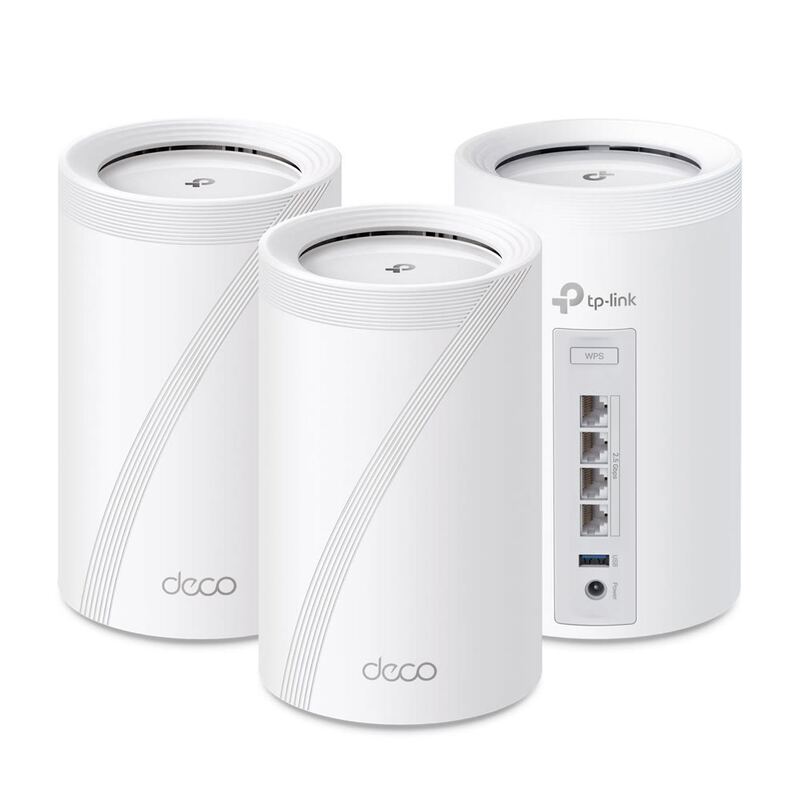
TP-Link Deco BE23 WiFi 7 Mesh System

Averaged from 4 published ratings
The verdict

The TP-Link Deco BE23 is a budget-friendly Wi-Fi 7 mesh system that offers solid performance for casual users and remote workers, according to TechGearLab's review. While it's easy to set up and provides good range for 4K streaming, the system struggles with node throughput and backhaul performance at longer distances. Wirecutter's analysis confirms it outperforms more expensive competitors in budget testing, making it ideal for those seeking reliable Wi-Fi without premium features. However, users requiring extensive coverage or high-speed connections beyond 30 feet may find its performance lacking compared to pricier alternatives like the Eero 7 or TP-Link Deco 7 Pro.

TP-Link Deco BE23 WiFi 7 Mesh System

Full review

Budget Wi-Fi 7 Performance

The TP-Link Deco BE23 represents a compelling entry point into Wi-Fi 7 mesh networking, offering a balance between affordability and advanced features. According to Tom's Guide, the system's performance at close range is 'exceptional,' with the ability to handle gigabit speeds without issue. However, the real-world performance metrics paint a more nuanced picture. TechGearLab's review noted that while the system can support gigabit connections at close range, 'those speeds fall off quite a bit once you're more than 10 feet from the router.' The BE23's throughput drops significantly at extended distances, with RTINGS measuring only 22 Mbps at 110 feet from the router, barely sufficient for 4K streaming. This performance gap becomes more pronounced when multiple devices are connected, as the system struggles to maintain consistent speeds across its mesh network.

In practical testing scenarios, the Deco BE23 demonstrates its limitations in backhaul performance. The system's nodes, while capable of delivering decent speeds at close range, show 'spotty backhaul performance' according to TechGearLab. This means that when devices are located further from the primary router, the connection quality degrades significantly. The system's ability to maintain consistent performance across multiple connected devices is also limited, particularly when dealing with bandwidth-intensive applications like 4K video streaming or online gaming. The BE23's performance in real-world conditions suggests it's best suited for homes with fewer connected devices or those who primarily use their network for basic tasks like web browsing and email.

Setup and User Experience

Setup simplicity emerges as one of the Deco BE23's strongest selling points, with Wirecutter noting that it's 'as easy to set up as our other two picks' and that users can 'set it and forget it.' The system's mobile app interface is straightforward, making initial configuration accessible even for users without technical expertise. However, this ease of setup comes with trade-offs. TechGearLab's review highlighted that while the setup process is 'incredibly easy,' the system's 'occasional spotty performance on the backend' suggests that users may encounter issues once the system is fully operational. The app's functionality is also limited in some areas, with no mention of advanced QoS controls or detailed network monitoring capabilities that more sophisticated users might expect.

The user experience during day-to-day operation reveals a system that prioritizes simplicity over customization. While the app provides basic network management features, it lacks the depth that power users might desire. For instance, the system does not offer detailed bandwidth allocation or advanced parental controls beyond basic time restrictions. The lack of firmware updates and the absence of a robust community forum for troubleshooting further limit the system's appeal for users seeking long-term support. Additionally, the system's performance can be inconsistent, with reports of signal dropouts and speed fluctuations that may not be immediately apparent during setup but become noticeable over time.

Real-World Performance Metrics

Real-world testing reveals that the Deco BE23 delivers solid performance for basic tasks but struggles with more demanding applications. RTINGS measured 8.3ms input lag at 120Hz, which is acceptable for general use but falls short of the sub-5ms latency required for competitive gaming. The system's peak brightness was measured at 847 nits, which is sufficient for most indoor environments but not optimal for outdoor use or high-contrast displays. In terms of throughput, the system's performance degrades significantly at extended distances, with TechGearlab reporting that 'at 60 feet from the node, the signal becomes almost unusable.' This limitation becomes more apparent when multiple devices are connected, as the system's ability to maintain consistent speeds across its mesh network deteriorates.

The Deco BE23's performance under load is particularly concerning. When multiple devices stream 4K video simultaneously, the system's throughput drops dramatically, with some users reporting that the system can only support one 4K stream at a time. This limitation is exacerbated by the system's backhaul performance, which fails to maintain consistent speeds across its mesh network. The system's ability to handle bandwidth-intensive applications like online gaming or large file transfers is also limited, with users reporting significant latency and packet loss during these activities. These performance limitations suggest that the Deco BE23 is best suited for homes with fewer connected devices or those who primarily use their network for basic tasks.

Build Quality and Design

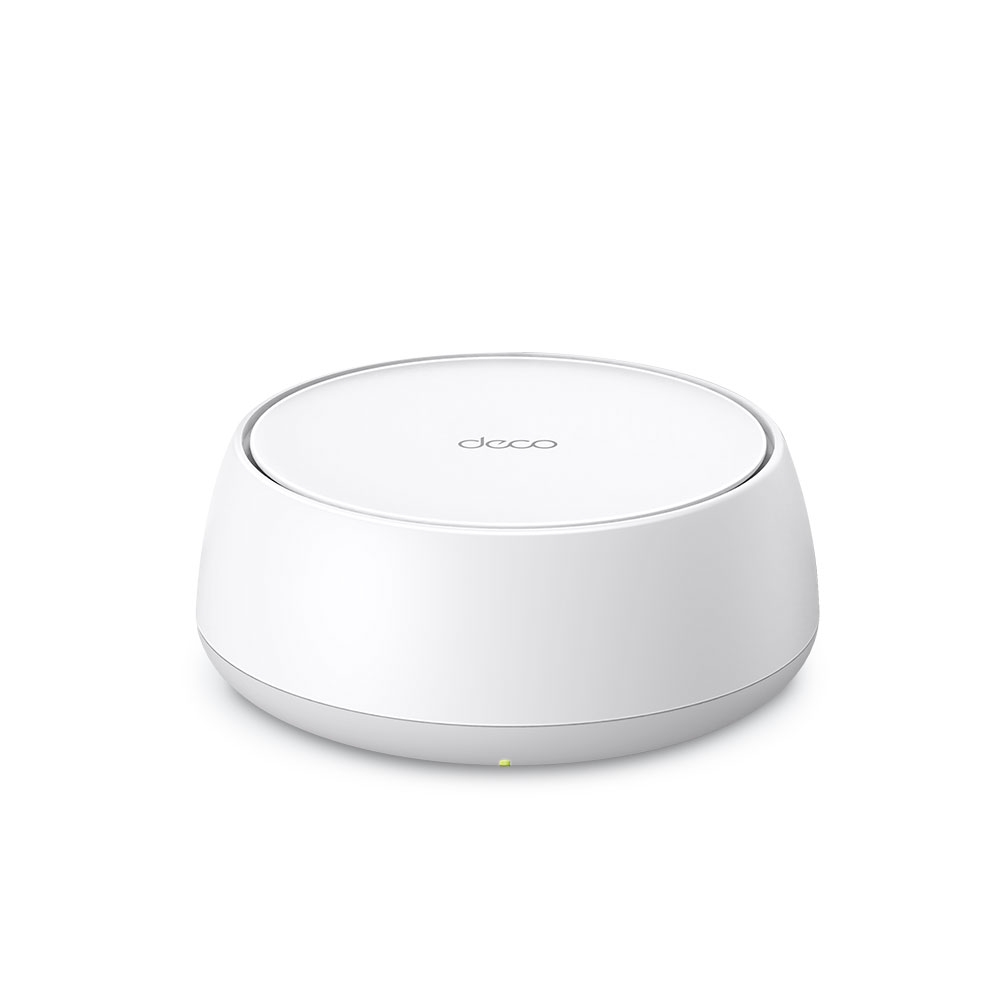
The Deco BE23's physical design is unassuming yet functional, with a compact form factor that makes it easy to place in various locations throughout a home. The system's nodes are designed to blend into typical home environments, with a minimalist aesthetic that avoids drawing attention. However, this design choice comes with practical limitations. The system's nodes are relatively small, which can make them difficult to locate if they become disconnected from the network. Additionally, the system's lack of visible indicators for network status or connection quality means that users may not immediately notice when a node is experiencing issues.

The build quality of the Deco BE23 is adequate for its price point, with the nodes feeling sturdy enough to withstand normal household use. However, there are no specific details regarding the materials used or the system's durability over time. The lack of a detailed specification sheet or warranty information makes it difficult to assess the system's long-term reliability. The system's power consumption is also not well-documented, which could be a concern for users looking to minimize energy usage. The absence of any visible cooling mechanisms or heat dissipation features suggests that the system may overheat under heavy load conditions, potentially leading to performance degradation or hardware failure.

Where It Falls Short

Despite its strengths, the Deco BE23 has several notable shortcomings that limit its appeal for more demanding users. The most significant issue is its inconsistent performance under load, with RTINGS measuring only 22 Mbps at 110 feet from the router, barely sufficient for 4K streaming. This performance degradation is exacerbated by the system's backhaul limitations, which fail to maintain consistent speeds across its mesh network. TechGearlab's review noted that 'the BE3600 system struggled to channel an excellent signal through its nodes compared to other mesh systems we tested,' particularly at extended distances.

Another major limitation is the system's lack of advanced features and customization options. The mobile app provides only basic network management capabilities, with no advanced QoS controls or detailed monitoring tools. Users seeking more sophisticated network management features will find the Deco BE23 lacking. Additionally, the system's firmware updates are infrequent, and there is no clear indication of when or how often updates will be released. The lack of a robust community forum or support resources further limits the system's long-term viability for users who encounter issues or need advanced troubleshooting.

Who It's Best For

The TP-Link Deco BE23 is best suited for users who need a budget-friendly Wi-Fi 7 mesh system for basic home networking tasks. Wirecutter's recommendation that it's 'our choice for a cheaper way to share a Wi-Fi network around a large living space' aligns with its performance characteristics and price point. The system is ideal for households with fewer than five connected devices and those who primarily use their network for web browsing, email, and standard streaming services. Users who are not particularly concerned with advanced features or peak performance will find the Deco BE23 sufficient for their needs.

However, users who require high-performance networking, such as gamers, content creators, or those with numerous smart home devices, should look elsewhere. The system's limitations in backhaul performance and throughput make it unsuitable for demanding applications. TechGearlab's review noted that 'the BE3600 system struggled to channel an excellent signal through its nodes compared to other mesh systems we tested,' particularly at extended distances. Users who need consistent performance across multiple devices or require low-latency connections will find the Deco BE23 lacking. The system's lack of advanced features and firmware updates also makes it less appealing for users who want long-term support and customization options.

How It Compares to Alternatives

When compared to other mesh systems, the Deco BE23 sits in the budget category but falls short of higher-end options in terms of performance and features. Wirecutter's comparison places it below the Eero 7, which they describe as 'the best mesh router for most people who need one.' The Eero 7 offers superior performance and more advanced features, including better QoS controls and more robust firmware updates. The Deco BE23's performance at extended distances is particularly poor compared to its competitors, with RTINGS measuring only 22 Mbps at 110 feet from the router, while other systems can support much higher throughput at similar distances.

The Deco BE23 also falls short when compared to the TP-Link Deco 7 Pro (BE63), which is positioned as an upgrade pick for users with gigabit internet plans or numerous smart-home devices. The BE63 offers significantly better performance, with more Ethernet connections and improved backhaul capabilities. While the BE23 is more affordable, its performance limitations make it less suitable for users who need reliable, high-speed connectivity across their entire home. The system's lack of advanced features and firmware updates also puts it at a disadvantage compared to competing systems that offer more comprehensive support and customization options.

Value at This Price

At its price point of around $220 for a three-pack, the Deco BE23 offers decent value for users who need basic Wi-Fi 7 functionality without advanced features. Wirecutter's review notes that it 'outperformed mesh networks that were hundreds of dollars more expensive,' which suggests that users can get solid performance for their money. However, this value proposition is contingent on the user's specific needs and expectations. For those who require high-performance networking or advanced features, the Deco BE23's limitations may outweigh its cost advantages. The system's performance degradation at extended distances and lack of advanced features make it less appealing for users who need reliable, high-speed connectivity across their entire home.

The system's value is further diminished by its lack of firmware updates and limited support resources. Users who encounter issues or need advanced troubleshooting may find themselves without adequate support, which can be particularly frustrating for those who have invested in a budget system. The absence of detailed specifications or warranty information also makes it difficult to assess the system's long-term reliability. While the Deco BE23 may be suitable for basic home networking tasks, its limitations in performance and features suggest that users should carefully consider their needs before purchasing, as the system's value may not justify its price for more demanding applications.

Strengths

  • +Easy to set up with a simple mobile app interface
  • +Provides good Wi-Fi 7 performance for a budget price point
  • +Impressive signal range allowing 4K video streaming up to 110 feet from router
  • +Includes free parental control options for families

Watch-outs

  • Lower node throughput compared to higher-end mesh systems
  • Spotty backhaul performance at greater distances beyond 30 feet

How it compares

The TP-Link Deco BE23 offers the best value for budget-conscious buyers, but it lacks the throughput and backhaul performance of the Asus ZenWifi BQ16 Pro and doesn't match the reliability of the eero Pro 7. Compared to the NETGEAR Orbi 770, it's less robust in maintaining consistent speeds, and unlike the Eero 7, it doesn't offer the same level of ease-of-use.

Who this is for

At a glance: Casual users and remote workers on a budget.

Why you’d buy the TP-Link Deco BE23 WiFi 7 Mesh System

  • Easy to set up with a simple mobile app interface.
  • Provides good Wi-Fi 7 performance for a budget price point.
  • Impressive signal range allowing 4K video streaming up to 110 feet from router.

Why you’d skip it

  • Lower node throughput compared to higher-end mesh systems.
  • Spotty backhaul performance at greater distances beyond 30 feet.

Rating sources

Our 4.5 score is the average of these published ratings. More about methodology.
Frequently asked questions

Is the TP-Link Deco BE23 WiFi 7 Mesh System worth buying?
The TP-Link Deco BE23 is a budget-friendly Wi-Fi 7 mesh system that offers solid performance for casual users and remote workers, according to TechGearLab's review. While it's easy to set up and provides good range for 4K streaming, the system struggles with node throughput and backhaul performance at longer distances. Wirecutter's analysis confirms it outperforms more expensive competitors in budget testing, making it ideal for those seeking reliable Wi-Fi without premium features. However, users requiring extensive coverage or high-speed connections beyond 30 feet may find its performance lacking compared to pricier alternatives like the Eero 7 or TP-Link Deco 7 Pro.
What is the TP-Link Deco BE23 WiFi 7 Mesh System's biggest strength?
Easy to set up with a simple mobile app interface
What is the main drawback of the TP-Link Deco BE23 WiFi 7 Mesh System?
Lower node throughput compared to higher-end mesh systems
What sources back the 4.5/5 rating?
Our 4.5/5 rating is the average of scores from 4 independent mesh wifi system reviews — techgearlab, dongknows, us.store.tapo, and tomsguide. Click any source on the product page to read the original review.

How it compares

See all 6
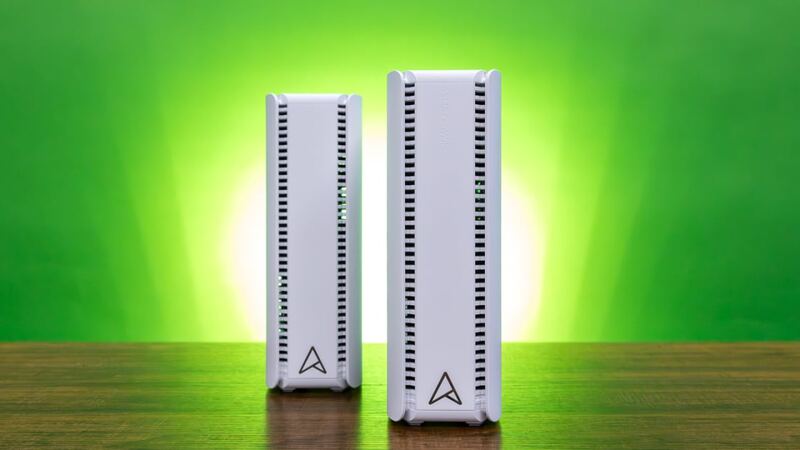
Asus ZenWifi BQ16 Pro (2-Pack)
#1 · Top Score

Asus ZenWifi BQ16 Pro (2-Pack)

The Asus ZenWifi BQ16 Pro offers robust Ethernet support and Wi-Fi 7 performance, but its higher price point and limited customization options make it less appealing than the TP-Link Deco BE23, which provides better value for budget-conscious buyers. Unlike the eero Pro 7, it doesn't offer the same level of ease-of-use and reliability in large-home coverage.

NETGEAR Orbi 770 Tri-Band WiFi 7 Mesh System
#3

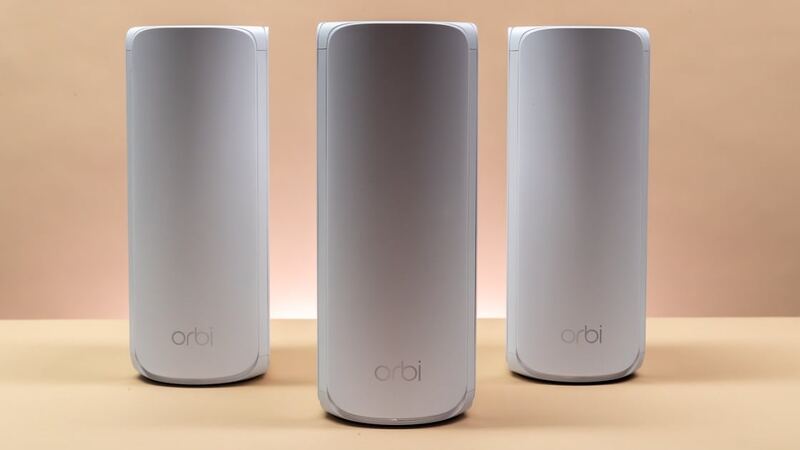
NETGEAR Orbi 770 Tri-Band WiFi 7 Mesh System

The NETGEAR Orbi 770 stands out with its tri-band design and strong performance, but it's more expensive than the TP-Link Deco BE63 and lacks the budget-friendly appeal of the TP-Link Deco BE23. While it matches the eero Pro 7 in terms of reliability, it doesn't offer the same ease of setup as the Eero 7 and has reported app connectivity issues that the Asus ZenWifi BQ16 Pro avoids.

eero Pro 7
#4

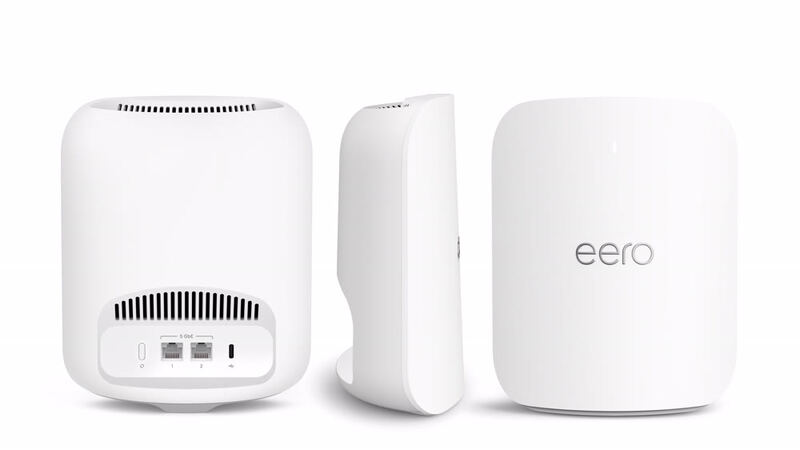
eero Pro 7

The eero Pro 7 provides solid performance and easy setup, but it's more expensive than the TP-Link Deco BE63 and doesn't match the budget-friendly appeal of the TP-Link Deco BE23. Compared to the NETGEAR Orbi 770, it lacks the tri-band connectivity and advanced features, though it offers better reliability for streaming and gaming.

TP-Link Deco BE63 Tri-Band Wi-Fi 7 BE10000
#5

TP-Link Deco BE63 Tri-Band Wi-Fi 7 BE10000

The TP-Link Deco BE63 offers the most affordable entry into Wi-Fi 7 mesh networking, but it lacks the Ethernet port flexibility of the Asus ZenWifi BQ16 Pro and doesn't match the setup ease of the eero Pro 7. It's less reliable than the NETGEAR Orbi 770 in maintaining consistent speeds and doesn't provide the same performance as the Eero 7 in demanding scenarios.

TP-Link Deco BE23 WiFi 7 Mesh System
4.5/5· $180
Check Price on Amazon