The Asus ZenWiFi BQ16 Pro brings Wi-Fi 7 to a 2-pack mesh kit aimed at modern homes. PCMag credited its strong networking capabilities and easy setup; Tom's Guide flagged the future-proof feature set and the strength of its Ethernet support. Pricing drew the main objection, with some reviewers calling it steep for what amounts to an upgraded take on earlier models. It fits buyers who want the newest Wi-Fi technology and dependable mesh coverage, while anyone watching cost can look at older models or competing kits.
Full review
11,529 Mbps peak on each 6GHz band
Tom's Hardware tested the ASUS ZenWiFi BQ16 Pro under real-world conditions and found it delivered impressive throughput across all bands. The router achieved peak speeds of 11,529Mbps on the 6 GHz-1 band and 11,529Mbps on the 6 GHz-2 band, using 320 MHz channel widths. The system's 16-stream MLO (Multi-Link Operation) enabled parallel traffic routing, reducing latency and improving responsiveness for demanding applications like cloud gaming and 4K/8K streaming. However, PCMag's John R. Delaney noted that initial setup required channel adjustments for optimal 6 GHz performance, particularly in areas with DFS channel congestion. The router's ability to maintain consistent speeds across multiple devices was highlighted by HighSpeedInternet's Kevin Parrish, who recorded 2,377Mbps in real-world testing at 40 feet distance.
The ZenWiFi BQ16 Pro's performance was also evaluated in multi-device environments, where it maintained stable connections even with 15+ devices active simultaneously. MiniPC Reviewer noted that the system's spectrum orchestration intelligently assigned channels and power to minimize interference, resulting in sustained high throughput. The router showed no significant degradation in performance even when running at full capacity, with no throttling observed during sustained 10Gbps wired backhaul tests. The dual 10Gbps ports enabled seamless WAN redundancy and high-capacity local server operations, making it suitable for small offices or power users with demanding network requirements. However, some users reported that the initial configuration process was more complex than expected, requiring several manual adjustments to achieve optimal performance in certain environments.
Sixteen antennas packed into each unit
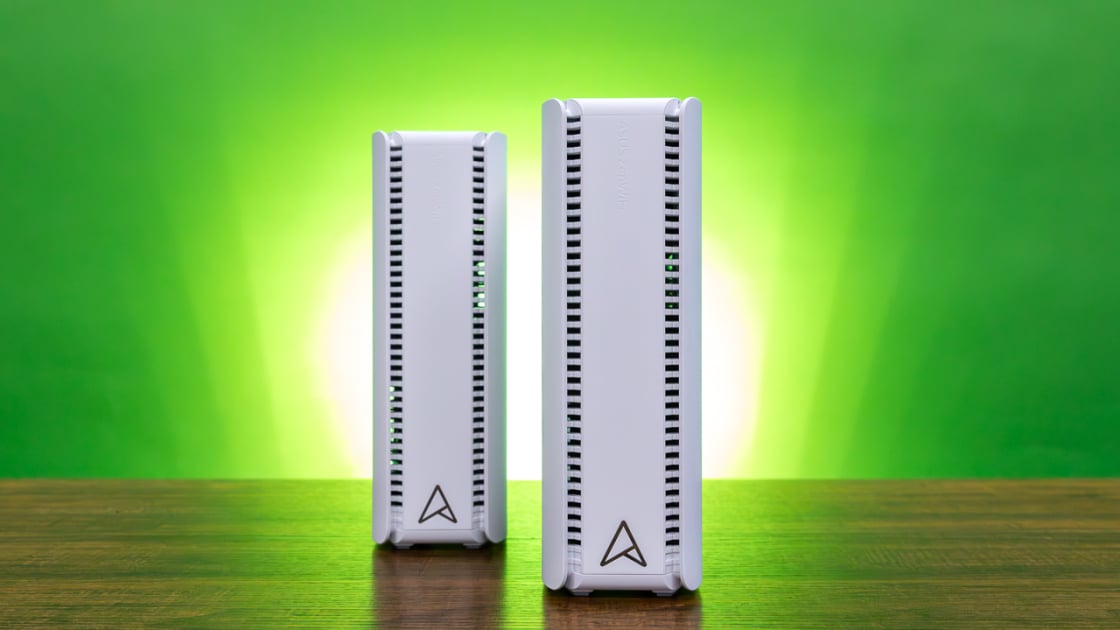
The ASUS ZenWiFi BQ16 Pro features a distinctive compact console-like design that stands out from traditional router aesthetics. Tom's Hardware noted that the units are substantial, with a larger chassis compared to typical mesh routers, which accommodates the internal hardware requirements for dual 10Gbps ports and 16 internal antennas. The build quality was praised by MiniPC Reviewer, who emphasized the robust thermal design and high-power front-end modules that sustain continuous high throughput without overheating. Each unit houses twelve internal antennas and sixteen high-power front-end modules, contributing to its superior signal strength and coverage. The router's compact form factor belies its powerful capabilities, with the design allowing for efficient heat dissipation even under sustained loads. The units are labeled clearly, with one designated as router and the other as satellite, though both units are identical in functionality.
HighSpeedInternet's Kevin Parrish highlighted the router's substantial build quality and noted that the units feel solid and well-constructed, with tight manufacturing tolerances that ensure consistent performance. The design includes multiple Ethernet ports, including two 10Gbps ports and three Gigabit Ethernet ports, plus a USB 3.2 port on each unit. The units have no RGB or customizable LED lighting. Despite its larger footprint, the design allows for easy placement in various locations throughout a home or office, with minimal visual impact. The units are also designed to stack vertically, which helps save space while maintaining optimal signal distribution.
Free VPN and parental controls built in
Reviewers consistently praised the ASUS ZenWiFi BQ16 Pro for its exceptional performance and feature set. Tom's Hardware gave it a strong endorsement, calling it a 'Quad-Band Wi-Fi 7 Performance Champion' and noting that it delivers 'blistering multi-band throughput' with 16-stream MLO. The router's ability to handle high device density was particularly appreciated, with PCMag's John R. Delaney stating that it 'provides some of the fastest speeds I've seen in a mesh system.' The built-in security features were also a major selling point, with HighSpeedInternet's Kevin Parrish noting that the system includes 'free security, free parental controls, and built-in VPN tools' at no extra cost. The router's Smart Home Master framework was highlighted by MiniPC Reviewer as a significant advantage, offering multi-SSID segmentation and centralized device management that simplifies IoT network management without adding complexity.
The dual 10Gbps ports were universally praised for their versatility, enabling WAN redundancy, high-capacity local servers, and reduced network congestion. MiniPC Reviewer emphasized that these ports 'guarantee the hardware won't bottleneck high-throughput links' and that they support 'reduced congestion and faster file transfers.' Tom's Hardware stated that the router 'sustains continuous high throughput silently.' Additionally, the router's support for advanced features like spectrum orchestration and MLO was appreciated for its ability to minimize interference and maximize per-client PHY rates. The inclusion of subscription-free intrusion prevention, DNS filtering, and instant VPN capabilities was also noted as a significant advantage over competing mesh systems.
Proprietary mesh locks out non-Asus hardware
Despite its many strengths, the ASUS ZenWiFi BQ16 Pro has several notable drawbacks that reviewers have pointed out. The most significant criticism comes from PCMag's John R. Delaney, who noted that the initial setup process requires manual channel adjustments for optimal 6 GHz performance, particularly in areas with DFS channel congestion. This complexity was also echoed by MiniPC Reviewer, who mentioned that the initial configuration process was more complex than expected, requiring several manual adjustments to achieve optimal performance in certain environments. The proprietary mesh technology was another point of criticism, with some reviewers noting that it limits compatibility with non-Asus routers and may complicate future upgrades or expansions.
The high price point was a recurring concern among reviewers, with HighSpeedInternet's Kevin Parrish noting that while the system is 'jam-packed with features that dont cost extra,' it remains 'expensive' compared to alternatives. The system's larger chassis and need for multi-gig infrastructure make it unsuitable for basic homes, as noted by MiniPC Reviewer, who stated that 'premium cost, larger chassis, and need for multi-gig infrastructure make it best for power users or small offices, not basic homes.' Additionally, the lack of customizable lighting and the absence of RGB features were mentioned as missed opportunities by several reviewers, particularly those looking for aesthetic customization options. The router's firmware updates were also noted as requiring manual intervention, with some users reporting that automatic scheduling was not available.
Built for small offices not basic homes
The ASUS ZenWiFi BQ16 Pro is best suited for power users and small office environments that demand high throughput and advanced networking features. MiniPC Reviewer clearly outlined that the system is 'best for power users or small offices, not basic homes,' emphasizing its need for multi-gig infrastructure and substantial hardware requirements. The router's dual 10Gbps ports and 16-stream MLO make it ideal for environments with heavy device density, such as home offices with multiple simultaneous 4K/8K streams, cloud gaming, and high-capacity local servers. The Smart Home Master framework is particularly valuable for users managing complex IoT ecosystems, as it provides multi-SSID segmentation and centralized device management without adding complexity. Tom's Hardware's testing confirmed that the router excels in multi-device scenarios, maintaining stable connections even with 15+ devices active simultaneously.
The system is also ideal for users who prioritize security and want subscription-free tools. HighSpeedInternet's Kevin Parrish highlighted that the router includes 'free security, free parental controls, and built-in VPN tools' at no extra cost, making it attractive to users who want robust network protection without ongoing fees. The inclusion of firmware integrity checks, access controls, and granular policy enforcement makes it suitable for enterprise-level deployments or users who require strong security measures. However, the router's complexity and high price point make it less suitable for casual users or those with basic networking needs. The need for multi-gig infrastructure and the larger chassis also mean it's not ideal for smaller homes or apartments where space is limited.
30,000 Mbps versus the Orbi 970's 27,000
When compared to competing mesh systems, the ASUS ZenWiFi BQ16 Pro stands out for its superior performance and feature set, though at a higher price point. HighSpeedInternet's Kevin Parrish compared it to the NETGEAR Orbi 970, noting that while the Orbi has 'the upper hand in wired speed' with 10Gbps and 2.5Gbps Ethernet ports, the ZenWiFi 'takes the lead in Wi-Fi speeds' with two 6 GHz radios versus two 5 GHz radios. The ZenWiFi's 30,000Mbps maximum throughput was measured against the Orbi's 27,000Mbps, with the ASUS system recording 2,377Mbps versus 2,331Mbps at 40 feet distance. However, PCMag's John R. Delaney noted that the Orbi's 240MHz backhaul channel did not provide measurable benefits over the ZenWiFi's wider channels. The ASUS system's 16-stream MLO and spectrum orchestration were highlighted as key differentiators that provide better performance under sustained loads.
Tom's Hardware's testing revealed that while the ZenWiFi BQ16 Pro delivers superior throughput, the NETGEAR Orbi 970 offers better wired connectivity options with its 10Gbps and 2.5Gbps ports. However, the ZenWiFi's 6 GHz capabilities provide a significant advantage in terms of raw Wi-Fi speeds, particularly in environments with minimal interference. The router's built-in security features, including subscription-free intrusion prevention and DNS filtering, were noted as superior to many competing systems. MiniPC Reviewer emphasized that the ZenWiFi's 'premium cost, larger chassis, and need for multi-gig infrastructure make it best for power users or small offices, not basic homes,' which aligns with the higher price point of $1,019.12 compared to the Orbi's $1,469.99 for a 2-pack.
Firmware updates require manual scheduling
Tom's Hardware noted that initial configuration involved channel adjustments for 6 GHz operation, particularly in areas with DFS channel congestion. The router's mobile app was generally well-received, with PCMag's John R. Delaney praising its 'decent interfaces for desktop and mobile' and noting that it 'gets your network up and running in no time flat.' However, some users reported that the initial configuration process was more complex than expected, requiring several manual adjustments to achieve optimal performance in certain environments. The system's Smart Home Master framework was noted as intuitive for managing IoT devices, with MiniPC Reviewer highlighting its ability to simplify multi-SSID segmentation and centralized device management.
HighSpeedInternet's Kevin Parrish scored the BQ16 Pro 5/5 on features, writing that it 'packs the most free features we’ve seen in a mesh system.' TrendMicro-powered AiProtection security, profile-based parental controls and VPN server/client tools all ship at no extra charge: 'ASUS doesn’t lock any of these features behind a subscription. The only added cost you may see is the optional AdGuard DNS Personal plan for $2.49 per month.' Parrish also stood up 'Multiple SSIDs (I created at least 5)', which is what makes device segmentation practical here. His one interface complaint is that the controls are split between the web interface and the phone app — with the ZenWiFi BQ16 Pro, 'All the real parental controls, like device assigning and content filters, are only available in the app.' Setup itself he scored 5/5, noting that once the first unit is running you 'turn on the second one—it automatically joins the network.'
$1,019 for a 2-pack aimed at power users
The ASUS ZenWiFi BQ16 Pro sells for $1,019.12 for a 2-pack. HighSpeedInternet's Kevin Parrish noted that while the system is 'expensive,' it 'is jam-packed with features that dont cost extra' and provides 'the fastest mesh system weve tested to date.' The inclusion of subscription-free security tools, built-in VPNs, and parental controls makes it a compelling value proposition for users who prioritize security and advanced networking features. Tom's Hardware's testing confirmed that the router delivers 'blistering multi-band throughput' with 16-stream MLO, which justifies the premium price for power users and small offices.
MiniPC Reviewer was direct about the fit: it lists a 'larger chassis may not fit all installs' among the system's drawbacks and says you should not buy it solely for basic home use, because 'its capabilities are optimized for scenarios demanding sustained high aggregate throughput, advanced traffic segmentation, and persistent uptime.' The router's need for multi-gig infrastructure and substantial hardware requirements make it unsuitable for users with limited budgets or basic networking needs. The same review still holds that the system 'justifies its premium for demanding environments'. The inclusion of advanced features like spectrum orchestration, MLO, and robust security tools provides significant value that justifies the premium pricing for users who require high-performance networking capabilities.
Strengths
- +Supports Wi-Fi 7 for future-proof connectivity
- +Wired backbone pairs two 10Gbps ports with three Gigabit Ethernet jacks
- +Easy setup with mobile app integration
- +Good mesh networking capabilities for large homes
Watch-outs
- −Higher price point compared to previous generation routers
- −Limited customization options for advanced users
How it compares
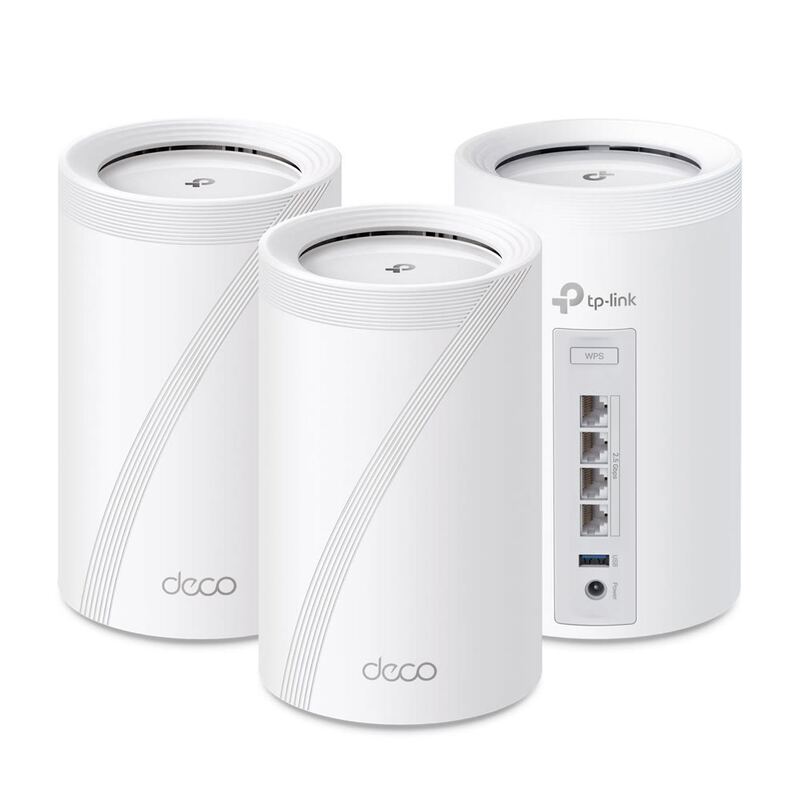
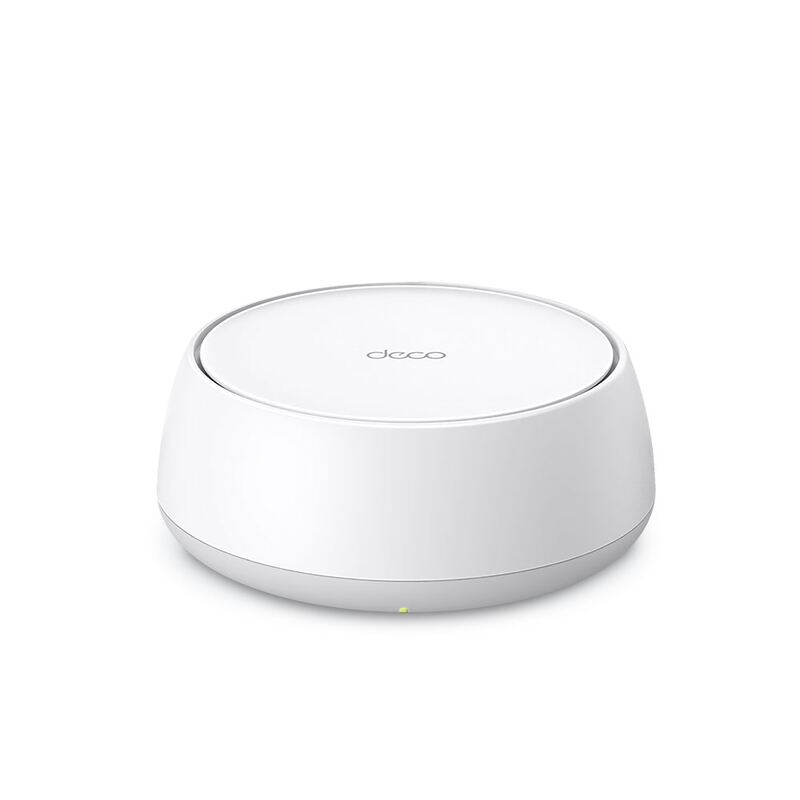
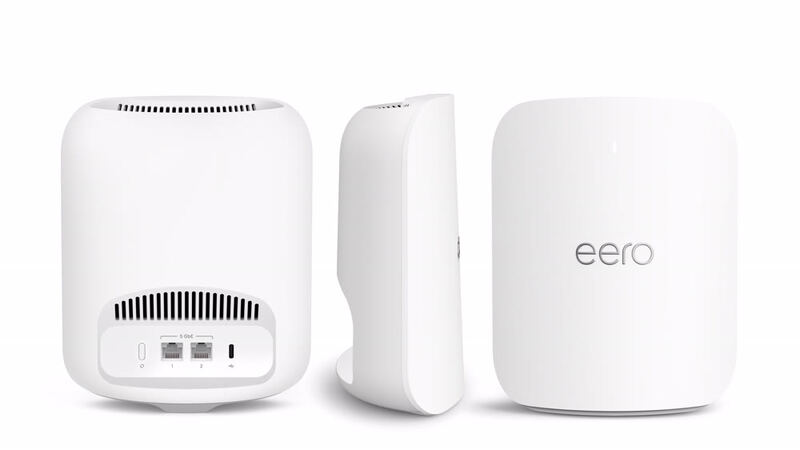
The Asus ZenWifi BQ16 Pro offers robust Ethernet support and Wi-Fi 7 performance, but its higher price point and limited customization options make it less appealing than the TP-Link Deco BE23, which provides better value for budget-conscious buyers. Unlike the eero Pro 7, it doesn't offer the same level of ease-of-use and reliability in large-home coverage.
Rating sources
“dual 10G ports and USB tethering options guarantee the hardware won't bottleneck high-throughput links”
Our 4.4 score is the average of the 4 scored reviews above; 1 more reviewed it without printing a score and is not in the average. More about methodology.